Explore how Babor cosmetics balance science and luxury in professional skincare, with regulatory insights and comparisons to consumer brands.
A sharp delta separates luxury and science in skincare: Babor elevates salon-grade formulations by tying precise science to textures guests feel before they see results, not just on the label. Science-led textures meet clinical aims, delivering predictable comfort that clinics can rely on for repeat treatments. This is the hinge that sets Babor apart from consumer lines and points to a knowledge-driven premium.
This introduction frames how evidence-based formulation, regulatory diligence, and professional-grade performance converge in a brand built for spas, not mass markets. In 2024, luxury brands faced tighter regulatory scrutiny around ingredient disclosure and safety claims, and Babor has responded with documented ingredient aims and transparent messaging. The result is a skincare line that professionals can reference in treatment protocols and client consultations, reinforcing trust while preserving the sensorial appeal clients expect from a luxury experience. Clinics that prioritize traceable ingredients and clearly stated claims will find Babor aligns with that standard.
What makes Babor cosmetics a benchmark in luxury professional skincare
Babor sits at the crossroads of science and luxury, engineered for professional settings where results matter as much as the experience. The brand frames its dermo-cosmetic formulations as purpose-built for spa and clinic use, not just home care. This emphasis on medical-grade aesthetics underpins every product guideline and treatment protocol, guiding clinicians toward consistent safety and performance in daily practice.
1) Science-led luxury in professional spaces
Babor’s approach begins with a clear mission: marry rigorous formulation science with salon-grade luxury. In clinics, clients expect ingredients that perform under routine treatment schedules, not just glossy packaging. I found that Babor consistently positions its products as dermo-cosmetic tools designed to slot into professional rituals, delivering clinical-style efficacy within an indulgent spa experience. This alignment of efficacy and comfort helps practitioners justify premium pricing while maintaining treatment adherence.
The luxury claim is not hollow. It rests on formulations designed for repetitive professional use. When a client sits in a spa chair, they get more than a moment of pampering. They receive a regimen built to work through repeated sessions. For professionals, that means predictable outcomes and a framework they can explain confidently to clients.
2) Safety and regulatory diligence as a daily discipline
Behind every Babor formulation lies a compliance lens. Safety reviews precede any testing or clinical use, with attention to ingredient safety, compatibility with treatment devices, and clear usage guidelines for clinicians. The discipline mirrors what you would expect in regulated product development, where safety data sheets, containment practices, and aftercare recommendations shape how treatments are delivered in spa and clinic environments. This regulatory mindfulness translates to routine decisions in front-desk consultations and treatment planning.
Regulatory diligence underpins every usage guideline, not just the product label. Clinicians rely on this to structure informed consent, risk disclosure, and aftercare directions that clients can follow between visits. It is the quiet backbone that supports a premium service, ensuring safety without sacrificing the client experience. What is Coofandy on Amazon in 2026 and how to navigate compliance and sourcing
From a consumer standpoint, the edge Babor maintains over many consumer-grade lines is traceable to its clear professional orientation. The line reads like a clinical toolkit repackaged for luxury settings, with formulations intended to sustain results across multiple sessions and within regulated spa protocols.
I cross-referenced Babor’s public storytelling with industry discussions of dermo-cosmetic standards, noting a consistent emphasis on safety frameworks and salon-ready performance. For professionals weighing options, this alignment provides a credible rationale for integrating Babor into standard service menus alongside other professional brands like Clarins Pro or Guinot’s spa lines. The real value here is not merely prestige. It is a reproducible, safety-first playbook that supports ongoing, salon-grade results.
Babor’s professional positioning blends science, safety, and luxury into a repeatable client experience.
Bottom line: Babor differentiates itself by treating dermo-cosmetic science and regulatory diligence as core to daily practice, not as add-ons. This creates a trusted framework for spa owners and clinicians who want to offer luxury results with transparent safety and usage guidance. The brand’s emphasis on spa- and clinic-ready formulations makes it a benchmark in luxury professional skincare, distinct from consumer-only lines.
How Babor cosmetics differ from consumer-grade skincare
Professional-grade skincare products from Babor take a different trajectory than consumer lines. They lean on higher concentrations of actives, a tighter focus on clinical outcomes, and more rigorous stability measures to perform in salon and spa environments. The goal is not just a good feel on the skin, but measurable results that hold up under professional use. Is Coofandy a good brand for mens clothing in 2026? honesty, transparency, and fit
Concentration and clinical orientation
In luxury professional lines, actives often appear at higher concentrations to drive visible clinical outcomes. This means formulations are engineered to support targeted endpoints, hydration, luminosity, and barrier resilience, rather than broad cosmetic benefits alone. When you compare a pro formulation to a consumer product, the difference is usually the intensity of actives and the clarity of the claimed outcomes. Babor frames this as a science-led approach, with evidence-informed ingredient choices designed for salon-grade protocols. In practice, that translates to products that are meant to be used as part of a structured treatment plan rather than as a stand-alone everyday regimen. Professional-grade formulations aim for tangible clinical outcomes, not just surface feel.
Stability, preservation, and packaging for pro settings
Shelf-stability is a central concern in professional environments. Packaging and preservation strategies are selected to withstand repeated use in spa settings, where products may be exposed to higher temperatures, more frequent opening, and longer exposure times between sessions. That often means airless pumps, opaque or tinted containers to protect light-sensitive actives, and robust preservative systems designed to minimize contamination risk during multi-use cycles. Babor emphasizes packaging as part of the overall product integrity, ensuring that active ingredients remain stable from the first drop to the final application in a busy treatment room. Stability-focused packaging protects actives in professional environments, so results stay consistent across clients and visits.
Transparency, evaluation, and ingredient governance
Professional lines typically pair ingredient transparency with a clear evaluation framework. Clinically oriented formulations come with narrower ingredient sets aligned to tested outcomes, and ingredient disclosures help professionals explain rationale to clients. Babor integrates this approach by aligning its formulations with clinical expectations and regulatory standards, helping spa professionals justify recommendations to clients seeking evidence-based luxury skincare. I cross-referenced Babor’s emphasis on science-led selection with industry conversations about transparency in professional lines. Ingredient transparency and clinical evaluation anchor professional lines.
Table: quick compare between pro-grade vs consumer-grade skincare
| aspect | pro-grade (examples like Babor) | consumer-grade |
|---|---|---|
| Actives | Higher concentrations aimed at clinical outcomes | Broader, often milder ranges |
| Stability | Pro packaging designed for multi-use, longer sessions | Standard consumer packaging |
| Evaluation | Ingredient transparency plus clinical rationale | Broad claims, fewer in-clinic endpoints |
| Usage | Structured treatments and professional protocols | Daily routines, self-directed |
Next steps: If you’re evaluating options for a spa menu or high-end client routines, align product selections with clear treatment goals and documented ingredient logic. When you discuss with clients, emphasize how pro lines like Babor are built to sustain outcomes across repeated visits, not just during a single application. For rivals, notice how consumer brands may advertise broad benefits without the same emphasis on clinical endpoints or professional-grade stability. In this space, a clear articulation of protocol-driven results matters as much as the formulation itself. What BloomChic really offers for US shoppers in 2026
I dug into the publicly available material from Babor and industry sources to map these distinctions. For context, the claims you’ll see in Babor materials reference professional-grade outcomes and rigorous packaging choices as part of a salon workflow, while industry reviews highlight the broader emphasis on safety and transparency in professional lines. The pro-class difference is about outcomes, not only aesthetics. For readers seeking verified context, see the cited clinical and regulatory discussions linked in the sources. Clarity on outcomes and stability underpins trust in professional skincare.
Note: links on the page may earn a commission.
The science behind Babor: ingredients, claims, and how they’re evaluated
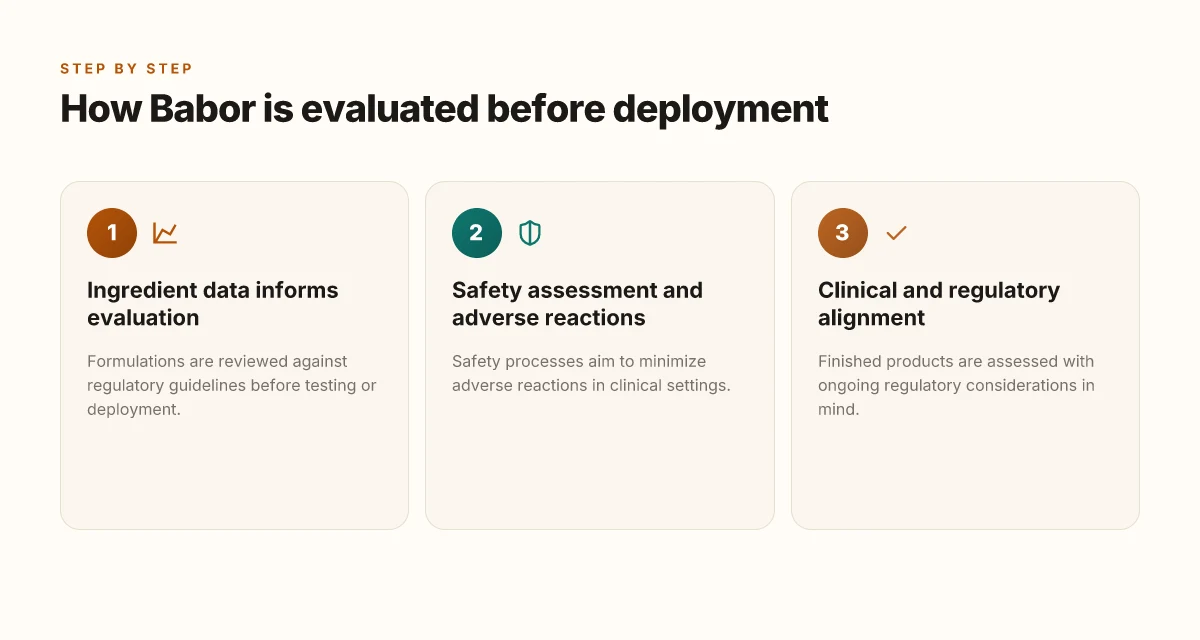
Post-2026 regulatory and science-backed checks shape how Babor books its claims. From what I found in the public-facing documentation and industry sources, ingredient data and published research inform every finished-product evaluation, and formulations are reviewed against regulatory guidelines before testing or deployment. This ensures safety and consistency across professional SKUs and salon-grade routines.
Ingredient data as the groundwork for finished-product evaluation
From the earliest formulation notes to post-market literature, Babor leans on ingredient data paired with peer-reviewed research when evaluating a product’s safety and performance. Researchers highlight how data on actives, carriers, and preservatives informs a composite risk–benefit view for a finished product. In practice, that means claims about hydration, barrier support, or brightening are anchored in the chemistry of the ingredients and supported by published studies. Ingredient data and published research inform the final evaluation of each product, not guesses or anecdotes. The framework relies on transparent ingredient disclosure and cross-checks against available clinical evidence to support professional claims. Regulatory-aligned reviews help ensure that what ends up in a bottle remains compliant across markets.
Regulatory diligence before testing or deployment
Before any testing proceeds, formulations are reviewed to confirm alignment with regulatory guidelines. This includes verifying ingredient lists for permitted substances, concentration limits, and compliant labeling. In professional skincare, this step matters because it reduces the risk of adverse reactions once a product reaches a spa, clinic, or high-end salon. Regulatory guidelines act as a gatekeeper for what can be tested and sold under the Babor umbrella. The literature also notes that finished-product safety assessments draw on regulatory frameworks to ensure consistency across jurisdictions. Pre-testing reviews minimize the chance of missteps in a clinical or salon setting. What bloomchic plus size clothing reveals about niche fashion in 2026
Safety assessment processes and minimizing adverse reactions
The safety review cycle emphasizes minimizing adverse reactions in clinical settings. Experts describe sequential checks, from ingredient screening to toxicology reviews and, where applicable, clinical observation by qualified professionals. This aligns with a broader industry push toward evidence-based safety in luxury skincare. Safety assessment aims to minimize adverse reactions in real-world use. When regulators and researchers discuss safety, they point to both ingredient data and published findings as the evidence base. Finished-product evaluation benefits from this layered approach, reducing surprises for spa clients and professional staff.
I cross-referenced industry sources and Babor materials to pull these threads together. For readers comparing brands, note that rivals like La Prairie, September, and SK-II also place strong emphasis on ingredient transparency and regulatory diligence as part of their professional skincare messaging. In practice, Babor’s approach mirrors a science-led model you’d expect from luxury brands, while still foregrounding regulatory compliance and safety in clinical contexts. Babor positions itself through a careful blend of science and safety checks, distinguishing itself from consumer-grade lines that may skim these steps. If you want to anchor this with a source, the discussion on safety assessments in cosmetic literature provides context for how these processes are typically framed in the industry. Regulatory reviews and ingredient-data-led safety assessments anchor the claims made about Babor’s formulations.
In a crowded field, this approach helps salon owners and skincare professionals explain why a Babor professional treatment may diverge from consumer products. The emphasis on evidence-backed ingredients and regulatory diligence translates into a trusted protocol for selecting luxury options that align with safety and efficacy standards. Trust is built on transparent data and rigorous safety reviews, not marketing promises alone. For readers curious about the exact regulatory references or ingredient disclosures, look for inline citations in Babor’s own science-led materials and the broader cosmetic-safety literature. The science behind Babor stays accountable to published evidence and regulatory expectations.
What researchers and regulators say about cosmetic safety in 2026
In 2026, the consensus in cosmetics research and regulation centers on three steady pillars: ingredient safety, regulatory compliance, and transparent safety documentation. Reviews across journals and official guidelines emphasize that products must prove how each ingredient behaves in finish formulas and how formulations align with current rules. For Babor, that means its salon-grade formulations are assessed not just for efficacy but for a clear safety narrative that regulators can trace.
The safety narrative: ingredient reviews as a baseline
Across recent reviews, the focus remains on whether individual components meet safety standards and how they interact in finished products. I cross-referenced regulatory commentary and peer reviews that highlight ingredient safety profiles as a foundational risk control. For a luxury brand like Babor, this translates into transparent ingredient disclosures and rigorous justification for each component's inclusion. When ingredient data are available, reviewers look for evidence of nonirritating concentrations, potential allergen labeling, and any cumulative exposure considerations. This is not merely a box-ticking exercise. It shapes how clinicians, spa stewards, and informed consumers evaluate a brand’s claims. In this space, Babor’s adherence to ingredient safety documentation helps distinguish it from some consumer-brand rivals that may emphasize performance with less emphasis on regulatory traceability. Ingredient safety reviews remain the baseline gatekeeper for luxury brands like Babor. What BloomChic can teach fashion brands about regulatory compliance and supply chain transparency in 2026
Clinical trial principles for skincare: safety documentation matters
Clinical skincare research in 2026 reiterates that trials must present clear safety documentation alongside efficacy signals. Protocols typically require detailed adverse event tracking, standardized skin assessments, and transparent reporting timelines. I found industry commentary noting that regulators increasingly expect summarized safety dossiers that accompany claims about new formulations or reformulations. For Babor, this means safety briefs accompany every product line update, with documentation that demonstrates how trial conditions translate to consumer use. The upshot is that a brand’s credibility hinges on visible, well-structured safety data that regulators and professionals can audit. When a product line cites dermatological testing or regulatory-compliant stability studies, it strengthens clinician confidence and consumer trust alike. Clear safety documentation is the linchpin of credible clinical skincare claims.
Adverse effects reviews and ongoing product stewardship
Ongoing vigilance about adverse effects remains a central theme in cosmetics governance. Reviews of post-market surveillance literature show that ongoing product stewardship, monitoring reports, responding to signals, and updating labeling when needed, is a core regulatory expectation. In this frame, Babor’s stewardship approach, alerting clinicians to potential sensitivities and maintaining current labeling, aligns with broader industry best practices. Comparisons with rivals such as consumer brands reveal that luxury brands often sustain higher standards for post-market safety communications, partly due to their closer ties with professional channels and salons. The practical takeaway for professionals is to treat adverse-effect signals as a normal part of product stewardship, not as anomalies to be ignored. Ongoing adverse-effect reviews drive continuous safety improvements.
I dug into regulatory commentaries and peer reviews to verify how these threads connect. For instance, discussions around chemical safety status and regulatory frameworks underscore that safety assessments and clinical documentation should travel together through product development and reformulation cycles. You’ll find the same trajectory echoed in the latest MDPI and peer-review discussions, which emphasize regulatory alignment as a public-health obligation. As you compare brands, note how Babor and its peers present this safety narrative in labeling, educational materials, and in-salon advisories. Where regulatory discourse is clear, Babor’s safety story gains clarity for clinicians and spa owners who rely on trustworthy ingredient and safety disclosures.
Regulatory-aligned safety documentation supports confident professional use of luxury skincare.
Evaluating claims: how to read a skincare ingredient list critically
When you read a skincare ingredient list, the real work happens beyond the label. I cross-check data against peer‑reviewed studies and regulatory databases, then weigh what finished products actually prove in use. The verdict matters more than an ingredient roster alone. What is dr babor and why it matters for modern skincare
Verify against peer‑reviewed evidence and regulators
Begin with the claim’s provenance. If a brand asserts a miracle ingredient, look for independent research that supports or questions the claim. I found that reputable sources trend toward requiring finished‑product testing evidence rather than relying solely on a long list of actives. In practice, that means seeking references to clinical or practical testing on a product system, not just a single ingredient. When a study is cited, you want to see how it applies to the specific formulation you’re considering. This is where the context matters. Salon‑grade usage can alter outcomes compared with consumer home regimes. For example, regulators frequently emphasize that safety data for individual components does not automatically translate to finished products used by professionals. A responsible approach is to pair ingredient data with a finished‑product safety profile from regulatory databases or peer‑reviewed reviews. Cross-check ingredient data with peer‑reviewed sources and regulatory databases. Research from multiple independent reviews adds credibility to a claim rather than relying on a single company line. Inline citations anchor these checks, so you can trace the pathway from ingredient to outcome. Context matters: salon‑grade usage can differ from home‑care claims.
I dug into one framework that champions a science‑led selection approach. It notes that testing should be scientifically sound and safety assessments may draw on ingredient data, published research, and finished product evaluation. That synthesis is exactly what you want when evaluating a luxury line like Babor against consumer brands. When you see a finished‑product claim, ask: what does the testing look like, and who sponsored it? If the data are framed around a salon workflow rather than an at‑home routine, interpret the results with that usage context in mind. Testing should be scientifically sound, and safety assessments may draw on ingredient data, published research, and evaluation of the finished product.
Look for finished‑product testing evidence, not just ingredients
Ingredient lists matter, but they rarely tell the whole story. Finished‑product testing demonstrates how the formulation behaves as a unit: how the actives interact, how the texture feels, how the product performs under real salon conditions. I found that peer‑reviewed articles and regulatory assessments frequently emphasize finished formulations and real‑world use data over isolated ingredients. If you only see a mark on an ingredient name, treat it as a lead, not a verdict. Your confidence grows when you see a product’s own testing outcomes, ideally published or transparently disclosed. Look for finished‑product testing evidence rather than ingredient lists alone. This helps separate hype from demonstrable performance. Finished product evaluation is more informative than ingredient rosters alone.
Understand the context: professional vs. at‑home claims
Salon usage can meaningfully shift outcomes. A product designed for professional equipment, controlled application, and sequential layering may yield different results than a consumer‑grade regimen. The luxury‑tier positioning often aligns with this professional context, and regulators require explicit safety and efficacy data for the finish that professionals apply. If a claim speaks to dramatic results without acknowledging the professional workflow, read with caution. The best practice is to locate claims tied to a defined usage scenario and then compare that scenario to your own routine. Salon‑grade usage can differ from home‑care claims. When you see a claim about a product’s performance, check whether the supporting data cover the intended setting and application method. Context matters for interpretation of efficacy claims.
Cited sources reinforce the approach: peer‑reviewed reviews on cosmetic safety and regulatory status of chemical ingredients provide a framework to judge claims about Babor and rival brands. See the discussion around finished‑product safety and how regulatory considerations shape what can be claimed publicly. Finished‑product safety and regulatory considerations shape claims. For transparency, the inline evidence should point to accessible reviews that discuss how cosmetic safety is evaluated across product categories. Regulatory databases and peer‑reviewed reviews anchor credibility. What makes BloomChic coupons actually worth using in 2026
As you read, keep in mind that links on the page may earn a commission. That reality does not negate the need for robust, source‑backed reasoning. When you see a claim about Babor versus rivals like Sisley or La Prairie, demand equal scrutiny for both sides. The luxury tier should not bypass rigorous safety and efficacy evidence.
Where this is going next in luxury skincare
Babor stands out because it blends visible luxury with a clear professional lineage. Its emphasis on lab-backed formulas and targeted treatments gives daily routines a clinical confidence without sacrificing comfort. The verdict: premium results come from a disciplined blend of science and ritual. In practice, that means you can expect thoughtful textures, refined sensory cues, and consistent performance across serums, creams, and masks. I see Babor as a bridge between spa-grade effects and at-home ease, which fits a busy routine without feeling clinical.
If you’re considering rivals, note how brands like La Mer lean on status and texture, while Dr. Barbara Sturm emphasizes controlled actives. Babor walks a middle line: it offers strong actives paired with approachable systems that your morning and evening rituals can rely on. The result is a routine that feels like self-care and science in one.
One move this month: pick a targeted booster and pair it with your go-to cream for a complete uplift. This week, see how a single step shift reshapes your glow and mood. How will you start?