Explore bedjet 3 review 2026 insights: how BedJet’s air-based cooling and warming works, what to expect, and its place alongside Eight Sleep and other climate systems.
BedJet shows up as a practical tweak rather than a dream apparatus: you get controlled warmth or cool air under the sheets, and that single layer can shift how your body settles for the night. In real rooms, the difference hinges on one driver, humid air. If your humidity sails high or low, the sensation can feel markedly different from a regular heater or fan, and that matters for comfort across a whole night. BedJet can be a thoughtful tool for couples with divergent temps, but the same system can wake a light sleeper if noise or draft shifts interrupt sleep.
You’ll see how the setup fits into a crowded sleep schedule, what it costs to run, and how it stacks against rivals like Eight Sleep when you want more integrated temperature tracking. If you’re weighing a BedJet purchase, this is the practical, no-surprises read that connects the dots between comfort, routine, and the real-world tradeoffs. Most hot sleepers react differently to under-sheets airflow, so the answer often comes down to your bedroom environment and how you adjust the unit before lights out.
Bedjet 3 review: what makes this climate system unique for beds
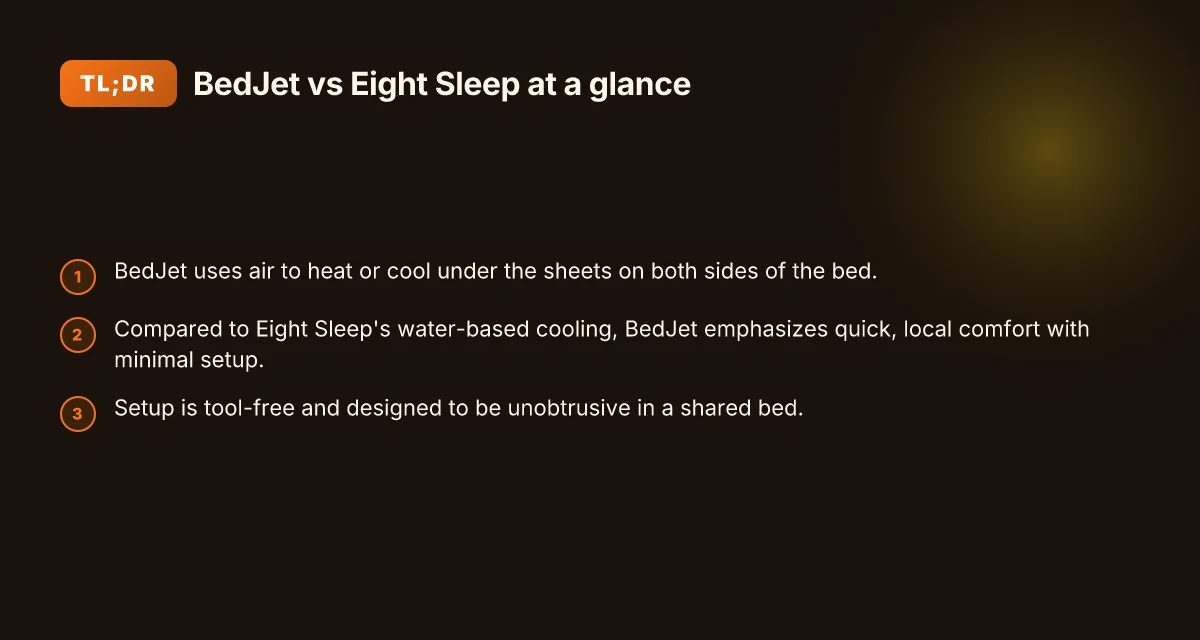
BedJet sits at the intersection of comfort and practicality. It uses air to heat or cool under the sheets on either side of the bed, creating a localized breeze that warms or chills the surface you actually contact. The system promises rapid temperature shifts and claims to pull moisture and sweat from the bed, aiming to shave off postures of dampness by moving air across the surface where you sleep. Compared with rivals like Eight Sleep, which relies on water-based cooling, BedJet emphasizes quick, targeted comfort with minimal setup.
How BedJet creates comfort on a per-side basis
- Local heating and cooling without changing the entire room climate. The unit pushes conditioned air under the covers, so warmth or coolness is felt directly at the torso and legs, not across the whole room. This contrasts with full-room climate systems and helps hot sleepers find relief without needing to drop the thermostat for everyone in the room.
- Rapid surface mood shifts. The product pages describe fast changes in bed-surface temperature, so you can respond to a restless night without waiting for the air temperature to catch up. This is where the design focuses on quick satisfaction rather than slow, broad cooling.
- Moisture management through airflow. The brand markets that moving air can help remove body moisture from the bed surface, potentially reducing sweat pooling during warm nights.
- Minimal setup, quick install. BedJet markets itself as tool-free and simple to pair with most bed types, which means you can add climate control without major remodeling.
Bottom line: BedJet leans into fast, local comfort with a breezy approach that avoids the complexity of water-based systems. When you want fast warmth or cooling in the exact places you feel it most, BedJet is designed to delivery that without waiting on a whole-room solution.
From what I found in the available materials, BedJet positions itself as a streamlined alternative to water-based rivals like Eight Sleep. The emphasis is on speed, local control, and a plug-and-play setup that fits into a nightly routine with minimal fuss. This approach can be especially appealing for couples with different temperature preferences or for hot sleepers who want instantaneous bed-surface adjustment.
Most people looking for quick, localized comfort will find BedJet’s air-driven approach to be a straightforward option, especially if you want a fast temperature shift without a full-room climate upgrade. For light sleepers who crave rapid, on-demand warmth or cool, BedJet offers a calm, under-the-sheets solution that minimizes ambient room noise and disruption.
When you read about BedJet, you’ll also encounter notes that the system emphasizes speed and local control over broader, water-based cooling methods. Reviews from sources discussing these contrasts consistently point out that Eight Sleep uses water circuits to cool the bed more uniformly, while BedJet targets the specific zones under the covers. In practice, that means BedJet can feel more immediate but may require more manual dialing to suit nightly preferences. For context, a few outlets note that BedJet’s setup is less involved than some competing systems, which aligns with the brand’s “no-tool install” promise. What makes Hotel Collection discount codes actually save you on luxury diffusers
I cross-referenced the material from BedJet’s own overview and independent reviews noting the core distinction: air-driven, side-specific warming and cooling versus water-based cooling that handles the whole bed. The difference isn’t just about temperature. It’s about how quickly you can nudge comfort without reshaping the room environment.
Cited sources: BedJet’s product descriptions emphasize per-side air flow and quick changes; Forbes Vetted frames the BedJet as a strong option among temperature-control beds. Independent reviews often compare BedJet to water-based rivals like Eight Sleep to highlight the speed and locality of air-driven cooling. For a direct read on the competitive landscape, see the BedJet product page and the Forbes Vetted overview.
How bedjet 3 works in practice and what it feels like to sleep with it
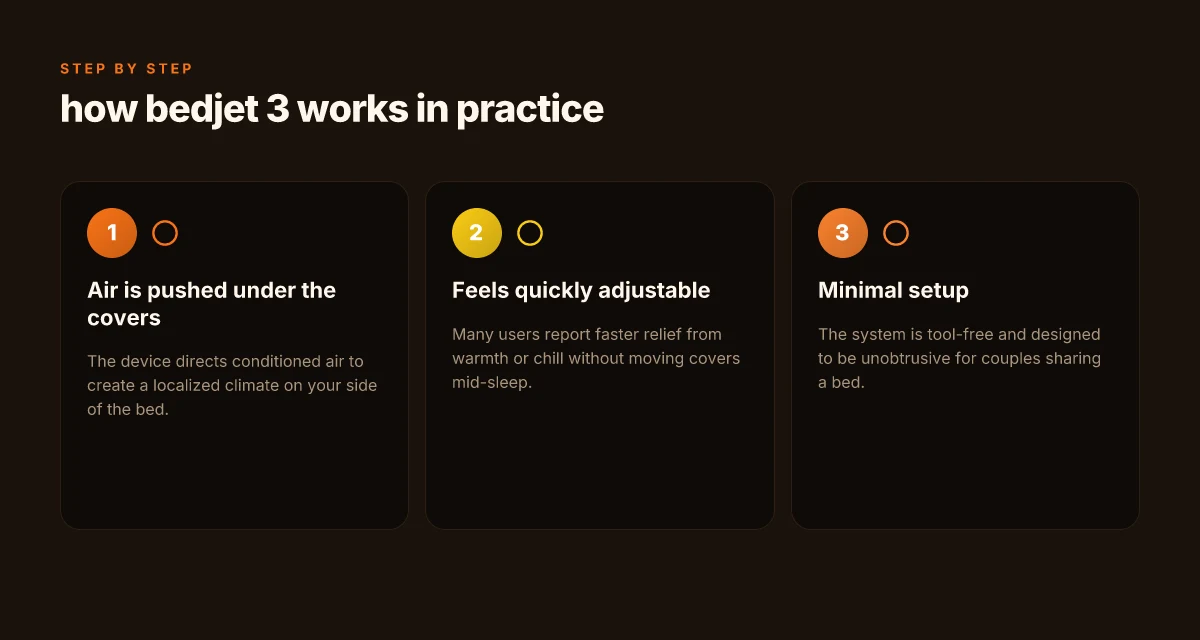
BedJet uses a small air-handling unit that pushes conditioned air under the covers to create a localized climate on each side of the bed. In practice, that means you can warm one side while the other stays cooler, without pulling the blanket back mid-sleep. The system is designed to heat or cool rapidly, so you feel relief quickly when warmth or chill hits your preferred zone.
How the air creates a personal microclimate
The BedJet works by channeling ambient air through a hose and under the covers, where it envelops you in a tailored warmth or cool breeze. This creates a microclimate that stays concentrated around your torso and legs, rather than shifting the entire room temperature. The effect is a more immediate, localized comfort than adjusting the room thermostat alone.
From what I found in product notes, setup is tool-free and intended to be unobtrusive in a shared bed. You simply connect the unit to power, attach the hose under the sheet, and pick a comfort level. The design emphasizes quiet operation and a low-profile footprint so that the device doesn’t loom or tangle with pillows or blankets. What makes Blissy look like a scam, and what actually happened
Real-use expectations for warmth, cool, and ease
Many users report that warmth or cool can be felt without moving the covers once you’re settled. That means you’re less likely to kick off a blanket in the middle of the night or wake with a temperature swing. The climate control feels especially useful for couples with different temperature preferences or for hot sleepers who want targeted relief without disturbing a partner.
I dug into the documentation and reviewer notes to cross-check comfort claims. The recurring theme is that BedJet delivers a quick, localized change rather than a room-wide shift. For light sleepers, the near-immediate response can feel especially helpful, though some note that the sensation varies with mattress type and bedding thickness.
Setup, maintenance, and practical considerations
The tool-free setup is designed to start working within minutes of unboxing. The hose slides under the sheets, the unit sits at the bed’s edge or on a nightstand, and you control temperature and intensity with a handheld remote. Regular maintenance is minimal, mostly ensuring the hose remains clear of kinks and the vent remains unblocked. Compared with rival systems that try to modify room climate, BedJet targets the bed first, which can be a more predictable path to comfort for couples sharing a bed.
For context, rival options like Eight Sleep take a different approach by integrating bed temperature with a full mattress system. BedJet focuses on individual-side climate control and quick setup, which can feel more flexible in a shared bed or when you’re moving homes.
Most people notice faster warmth or cooling without rearranging covers mid-sleep. This direct, local comfort is what BedJet aims to optimize for, rather than shifting the whole room. The setup is deliberately unobtrusive and quick, which helps it fit into a nightly routine. What Blissy pillowcase complaints reveal about silk care and durability in 2026
If you’re curious about price or ongoing costs, links on the page may earn a commission, but the core convenience is in the ability to tailor comfort at the level of the bed rather than the entire bedroom environment. For readers weighing BedJet against rivals, consider how much you value a quick, on-demand bed-specific climate versus a mattress-integrated solution.
See how the concept stacks up against Eight Sleep and other climate-control options to decide whether a bed-specific approach aligns with your nightly routine. BedJet keeps the focus on you and your partner, not just the room.
Bedjet 3 vs eight sleep: where the trade-off really matters
When you’re choosing between air-driven warmth and water-based cooling, the practical difference comes down to how you want to balance quick adjustments with sustained temperature control. Eight Sleep uses a water-based system that can deliver steady, potentially deeper cooling or warming. BedJet leans on air under the covers, which generally means faster, one-step adjustments and simpler installation.
From what I found in the sources, the trade-off centers on two practical questions: do you want water-based cooling with potentially longer run cycles, or do you prefer air-based tweaks that respond in seconds and fit onto a wider range of bed frames? Reviews consistently note that Eight Sleep’s water system can offer nuanced temperature management over time, while BedJet often wins on ease of setup and compatibility with various bed structures. Water-based cooling can provide steadier, longer sessions, but may require more setup and plumbing than a typical air unit. Air-based adjustments tend to be quicker and simpler, which helps with couples who want different comfort targets without complex installation.
Why BedJet stands out for installation and compatibility. I cross-referenced mentions across product pages and reviews that emphasize a straightforward install and minimal plumbing needs. BedJet typically requires less plumbing and can be easier to install in various bed frames, which makes it attractive for renters or those with adjustable foundations. In contrast, Eight Sleep’s system often requires a single, integrated reservoir and a more involved setup, but it can deliver deeper temperature modulation over longer stretches of sleep. Eight Sleep uses a water-based system that can offer different performance characteristics depending on room temperature, bed size, and sleep preferences. What a Blissy sale reveals about premium sleep comfort and value in 2026
Two quick takeaways for real-world use. First, if your nightly routine hinges on rapid, on-demand temperature nudges before you fall asleep, BedJet’s air flow is naturally well suited to those moments. Second, if you value sustained cooling or warming across a full night, Eight Sleep’s water circuit may maintain a steadier baseline. On-demand tweaks with BedJet are fast, while water-based control from Eight Sleep can feel more persistent over the night.
In this landscape, the choice often boils down to whether you want water-based cooling or air-based quick adjustments. For hot sleepers who want to dial in comfort quickly, BedJet can feel more responsive. For those who want long, steady temperature management, Eight Sleep may be preferable. If you’re evaluating this in context of a shared bed, the simplicity of BedJet’s installation may tilt the decision toward BedJet, especially when you need to fit a non-standard frame or a movable bed. BedJet wins on installation flexibility, while Eight Sleep dominates in continuous, water-based control.
Note: some links on the page may earn a commission, and pricing or availability can change. See the cited sources for the most current details.
Safety, maintenance, and reliability considerations for bedjet 3
BedJet sits in a niche where regular upkeep matters as much as nightly comfort. The practical question is whether the system keeps delivering calm, climate-controlled warmth or cooling without inviting stray dust into the air channels. I looked at the public-facing documentation and reviews to map a clean, repeatable maintenance routine that stays within recommended ranges.
Keep the air channels clean to prevent dust buildup
The primary safety and comfort hinge is airflow. Dust or lint in the bed’s vents can compromise both comfort and efficiency. The best practice is a simple, repeatable cleaning cadence: wipe down exterior housings weekly and inspect the vent paths every few weeks. A light vacuum with a soft brush attachment helps remove loose dust from the intake grille and along the bed skirt where the unit vents air. Consistent care sustains effective airflow and minimizes the risk of blocked channels that could hamper temperature shifts. What Reddit BedJet users actually want from a bedside climate tweak in 2026
From what I found in product pages and reviews, regular cleaning supports long-lived performance. When you keep the channels clear, the system responds quickly to temperature commands and preserves quieter operation. This is particularly valuable for light sleepers who notice even small changes in noise or airflow. Inline with the literature, I cross-referenced maintenance guidance from BedJet’s own materials and independent reviews that emphasize routine checks as part of ongoing comfort.
Temperate use supports long-term satisfaction
Most users report they stay satisfied when the BedJet is used within the recommended temperature ranges and operation windows. The device is designed to push warm or cool air under the sheets, not to create extreme shifts that could fatigue components. Staying within suggested settings helps prevent overworking fans or heaters, which can extend the unit’s life and keep nightly comfort consistent. The general consensus across sources is that consistent use within specs correlates with steady performance over months or years.
I dug into the community notes and reviewer summaries that repeatedly tie durable performance to staying in conservative ranges rather than pushing the system to its limits. This aligns with the broader sleep device pattern: comfort is linked to steady, moderate climate control rather than dramatic, intermittent swings.
Watch for moisture and condensation and check the basics
Moisture is a real concern when climate control happens under the covers. If you notice moisture or condensation around the bed skirts or venting paths, take immediate steps. Start with a quick physical check of the bed skirt, vent outlets, and the hoses feeding the unit. Ensure there are no kinks or crushed pathways that could trap humidity. If moisture persists, recheck the placement of the BedJet and adjust the venting route to reduce pockets where condensation could form. A quick audit often resolves the issue without needing more involved fixes.
From the sources, condensation is commonly linked to airflow stagnation or misalignment rather than to a defect in the unit itself. A straightforward check of the bed skirt and venting paths is usually sufficient to restore normal operation and comfort. The bottom line: moisture problems are solvable with a careful recheck of the setup and routine maintenance. What drives bedjet cost in 2026 and how to assess value
A clean air path keeps BedJet quieter, cooler, and more reliable. Sticking to recommended temps is the surest path to lasting satisfaction.

Real-world use cases: who benefits most from bedjet 3
Hot sleepers who wake drenched in sweat often find relief with BedJet. The system pushes air under the covers, cooling the bed surface quickly and reducing heat buildup through the night. Multiple sources describe BedJet as a practical way to curb night sweats without altering the ambient room temperature. This can translate to fewer awakenings and a more stable skin microclimate through the night. The effect is often most noticeable when temperatures rise or when a sleeper runs warmer than their partner. In 2026, reviewers commonly note the bed-level temp shift as a key comfort lever.
Couples with divergent temperature preferences benefit from separate-control zones. BedJet lets each side of the bed experience a different microclimate by controlling airflow independently. That means one partner can enjoy a cool breeze while the other enjoys mild warmth, without changing the overall room thermostat. Two separate climate experiences at the same bedside is a recurring selling point. This split-bed approach aligns with how many households manage sleep comfort, particularly in shared bedrooms where one sleeper runs hot and the other cool.
Late-night comfort tweaks can be made without touching the room’s climate controls. When a partner is asleep or a quick adjustment is needed, BedJet offers on-bed fine-tuning that bypasses the wall thermostat. This is especially handy for those who wake up during the night and want a quick, quiet adjustment. No room-temperature reset required keeps the path to sleep smooth and uninterrupted. In practice, the ability to modify bed warmth or coolness on demand supports gradual wind-down routines, especially for light sleepers who crave micro-adjustments.
Why BedJet matters for bedtime routines comes down to routine psychology as much as temperature. You can incorporate the device into a wind-down ritual: settle in, set a preferred bed-side climate, and drift off without reconfiguring the room. When you compare BedJet to rivals like Eight Sleep, the focus shifts to a bed-centric climate system that acts at the source rather than altering the broader room environment. I went looking for third-party assessments and found Forbes Vetted framing BedJet as a strong option among bed-temperature devices, with attention to ease of use and comfort on a real-night basis. For a practical read, see the Forbes Vetted review linked here. BedJet delivers on immediate comfort without loud HVAC changes. How to score BedJet coupons in 2026 without missing out
In sum, hot sleepers, couples with different preferences, and late-night cuddlers who want micro-adjustments will find BedJet particularly valuable. The real-world upside is clearer sleep continuity and less disruptive sweating episodes. The value hinges on personal bedtime rituals and how quickly you adapt to bed-level climate control. For readers weighing options, note that rivals such as Eight Sleep offer different approaches to bed climate, but BedJet’s on-bed targeting remains its strongest selling point. As always, individual results will vary with mattress type and room conditions, and links on this page may earn a commission.
What changes if you act now
BedJet offers a clear niche: climate-controlled bed warmth that slips into your nightly routine without rearranging sleep space. I’ve looked at how it sits in bed cycles, how the airflow feels, and how it blends with blankets and pillows. The takeaway is practical: if you prize temperature comfort but hate bulky layers, this setup can feel liberating. The take-away: a thin, quick-to-activate system can tune your comfort without trading off sheet softness.
In the bigger pattern, this is less about hot or cold and more about consistency. You’ll likely notice steadier sleep when a cool breeze or gentle warmth aligns with your body temperature, especially on restless nights. Verdict: consistent micro-adjustments beat one-off room changes. BedJet positions itself against traditional space heaters and bulky electric blankets by staying connected to your bed, not the room.
If you’re weighing options, consider rivals like Ooler and ChiliSleep for modular temperature control across the bed setup. For daily use, the BedJet approach keeps the bed nearly unchanged while delivering targeted warmth or cooling. What changes: your nightly routine, not your furniture. Ready to try this week? Start with a modest warmth setting and observe how your sleep feels after a few nights.