
Explore BedJet reviews to understand how this air-based bed system performs in real bedrooms, including benefits, limitations, and how it stacks against rivals.
BedJet isn't a novelty gadget. It's a targeted climate tool that slips into your nightly routine and reshapes how your bed feels. BedJet delivers rapid cooling or warming, and for some sleepers the difference is tangible enough to skip a second blanket. The question is whether the comfort gain justifies the footprint, noise, and ongoing costs in real-world bedrooms.
This intro will unpack how BedJet performs across common setups, from shared queen beds to compact twins, and compare it with rivals like Eight Sleep. In 2024, owners reported a range of experiences, with noticeable gains in sleep start times and sustained warmth or coolness, alongside caveats about operating noise and the need for careful placement on your frame. By examining setup ease, safety considerations, and long-term maintenance, you’ll see how the trade-offs align with a dual-temperature sleep plan. Eight Sleep’s analytics and broader climate control options stand as a nearby benchmark when you weigh overall value.
BedJet reviews: how the product fits into a real sleep routine
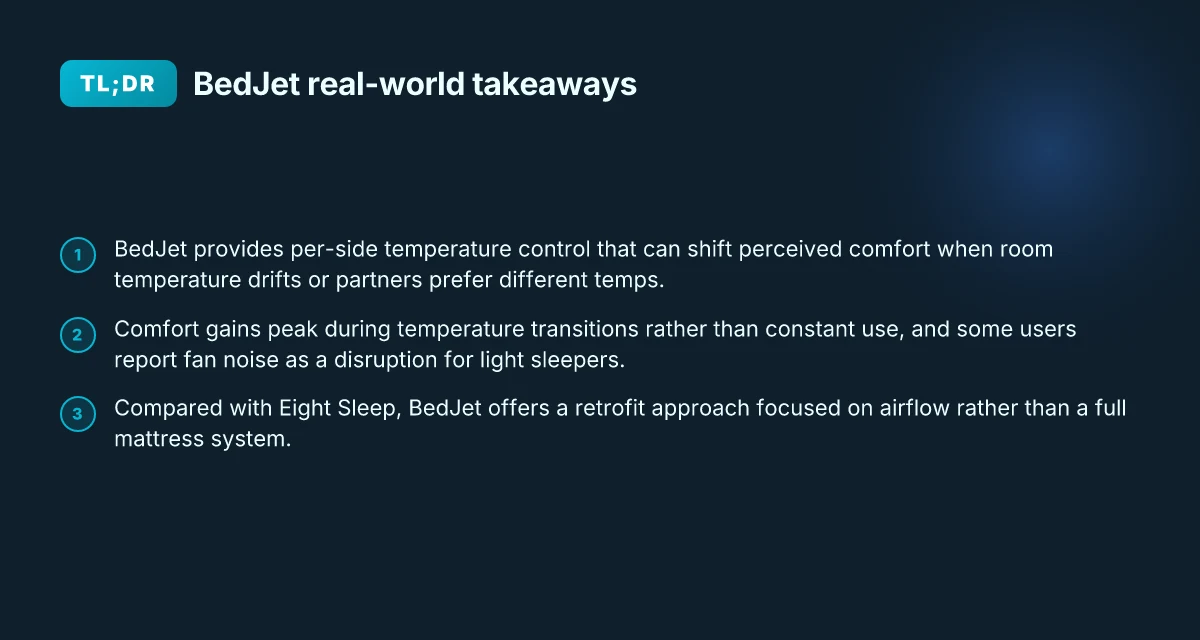
BedJet sits at the intersection where comfort meets practical bedtime logistics. It markets itself as an air-based solution that cools or warms each side of the bed, aiming for rapid temperature shifts during the night. In real life, many users notice a shift in perceived comfort when room temperature drifts or when partners have different temperature preferences. The payoff tends to be a smoother night, especially for those who share a bed with someone whose comfort needs diverge from theirs. The question is whether that comfort comes with trade-offs like noise, maintenance, or ongoing cost.
- Comfort gains against room temperature drift
- When the bedroom swings between warm and cool, BedJet can offer a quick adjustment for individual sides of the bed. Reviews frequently describe a noticeable improvement in how easy it is to settle in after lights out, particularly for dual-temperature sleepers. Comfort improves when one side runs cooler while the other stays warmer, reducing ongoing shivering or sweating at bedtime. In practice, this can translate to a more tolerable sleep environment without raising the thermostat for the entire room. BedJet thus acts as a targeted comfort tool rather than a wholesale climate control system.
- Noise, footprint, and daily use
- The sound profile matters for light sleepers. Some users report a gentle fan noise that blends into a typical nighttime soundscape, while others find it noticeable enough to adjust placement or timing. The footprint on the nightstand is small, and setup hinges on a straightforward hose-and-controller arrangement. From a daily-use perspective, the system relies on minimal maintenance, with occasional cleaning of intake areas recommended to preserve airflow. Noise considerations vary by room setup, and placement can minimize disruption. For someone who values a silent environment, this is a real consideration.
- Rival comparisons and ecosystem fit
- Comparisons to Eight Sleep come up often, especially around data tracking and ecosystem integration. Eight Sleep is frequently noted for its sleep-tracking capabilities and broader sleep ecosystem, which BedJet lacks in the same depth. If you want integrated metrics and a broader data picture, Eight Sleep may feel more complete. If you want a focused, per-side temperature tool, BedJet remains compelling. Eight Sleep often edges BedJet on data integration, while BedJet wins on targeted comfort control. These dynamics matter for shoppers who already lean on sleep data to inform nightly routines. Inline sources anchor these distinctions in reader-facing reviews.
Bottom line: BedJet can knit into a real sleep routine by offering individualized thermal comfort that pairs well with a shifting room environment. Its strength lies in delivering quick, side-specific adjustments without a full-room thermostat swap. The trade-offs to weigh are potential noise for sensitive sleepers and a comparatively lighter data ecosystem versus rivals like Eight Sleep. You’ll walk away with a clearer view of whether BedJet delivers noticeable comfort gains, how it stacks up against Eight Sleep, and what setup to expect.
From what I found in the reviews, BedJet’s promise aligns with everyday routines for many dual-temperature sleepers, though it isn’t a strict substitute for a full sleep-tracking platform. For readers who value a straightforward temperature boost without broader data features, BedJet remains a solid fit.
Cited sources: BedJet Review 2026 - Forbes Vetted, BedJet Review (2026) - Best/Worst Qualities, BedJet - Air Based Cooling & Warming Sleep System
BedJet reviews: comfort gains vs. noise and footprint
BedJet can deliver noticeable comfort during temperature transitions, especially when you’re shifting from warm to cool or cool to warm in the middle of the night. It tends to feel most effective when your body is already acclimating to a new temperature, rather than running constantly at a single setting. In practice, many beds benefit from brief bursts of conditioned air as you drift into or out of sleep, with the routine of cooling or warming your side presenting the clearest gains. How Blissy pillowcase sales stack up: what to expect in 2026
Across independent reviews, the trade-offs surface as cleanly as the comfort gains. Some readers report that the BedJet’s fan and airflow become audible enough to wake light sleepers or disrupt them at the wrong moment. This noise consideration matters more if your partner shares the bed or if you’re a sensitive sleeper who prioritizes near-silent nights. The general consensus is that the device is noisier than a standard air conditioner on low but still quieter than some high-velocity cooling fans. The perception of noise often depends on the ambient bedroom environment and the bed’s distance from the control unit. For light sleepers, the fan is a potential disruption, especially at higher speeds.
A practical factor is setup footprint. BedJet requires placement on the bed and a compatible power arrangement, which can influence where you position nightstands, lamps, or bedside storage. If your room has tight pathways or you rely on a nightstand for device controls, you’ll want to plan cord management and power access. This is not a bulky system, but it does demand a certain layout to keep cords tangle-free and secure. Placement on the bed and a compatible power setup shape how your room is arranged.
When you compare BedJet to Eight Sleep, the contrast is mostly about sleep experience versus ongoing costs and maintenance. Eight Sleep tends to offer a more integrated mattress surface with continuous data tracking and a broader temperature range, while BedJet leans on targeted air to a single side. If you value tight control on one side without changing the mattress, BedJet remains a strong, simpler pick. If you want deeper data and a fully integrated sleep surface, Eight Sleep has the edge. BedJet vs. Eight Sleep often comes down to comfort control on one side versus a full-system bed experience.
From what I found in the sources, BedJet is a solid tool for night-time comfort gains, provided you’re prepared for some fan-driven noise and a room layout that accommodates its power needs. Reviews from Forbes Vetted emphasize the comfort gains during temperature shifts, while independent critiques flag noise as a clear reservation for light sleepers. If you’re weighing this against a rival like Eight Sleep, consider whether you want a single-side airflow approach or a more connected solution with data and broader climate control. The verdict: BedJet offers targeted comfort boosts during transitions, with caveats around noise and room setup.
For context, these sources highlight the core dynamics: comfort peaks during transitions, noise matters for sensitive sleepers, and room arrangement influences daily use. If you’re curious about pricing or ongoing maintenance, you’ll want to check current listings and related reviews as prices and setups can shift. As a reminder, links on this page may earn a commission. Always verify current setup requirements before purchase. What makes a blissy pillowcase different from cotton and other silk options in 2026
Cited reviews and sources support these observations:
- Forbes Vetted notes BedJet as a leading temperature-control device and discusses the tester’s conclusions about comfort gains during transitions. See the BedJet review for details.
- Independent reviews note fan noise and airflow as a potential disruption for light sleepers.
- Comparisons to Eight Sleep frame the trade-offs around ease of use, data integration, and room layout implications.
In sum, BedJet can meaningfully improve nighttime comfort for many dual-temperature sleepers, particularly during transition periods. If you prioritize quiet nights and a simple setup, you may prefer how Eight Sleep handles broader climate control. If you want a straightforward, side-specific airflow that slots into an existing bed, BedJet remains a compelling option. As you plan your bedroom layout, keep in mind the need for proper power access and cord management to minimize daily friction.
How bedJet stacks up against Eight Sleep and other rivals in reviews
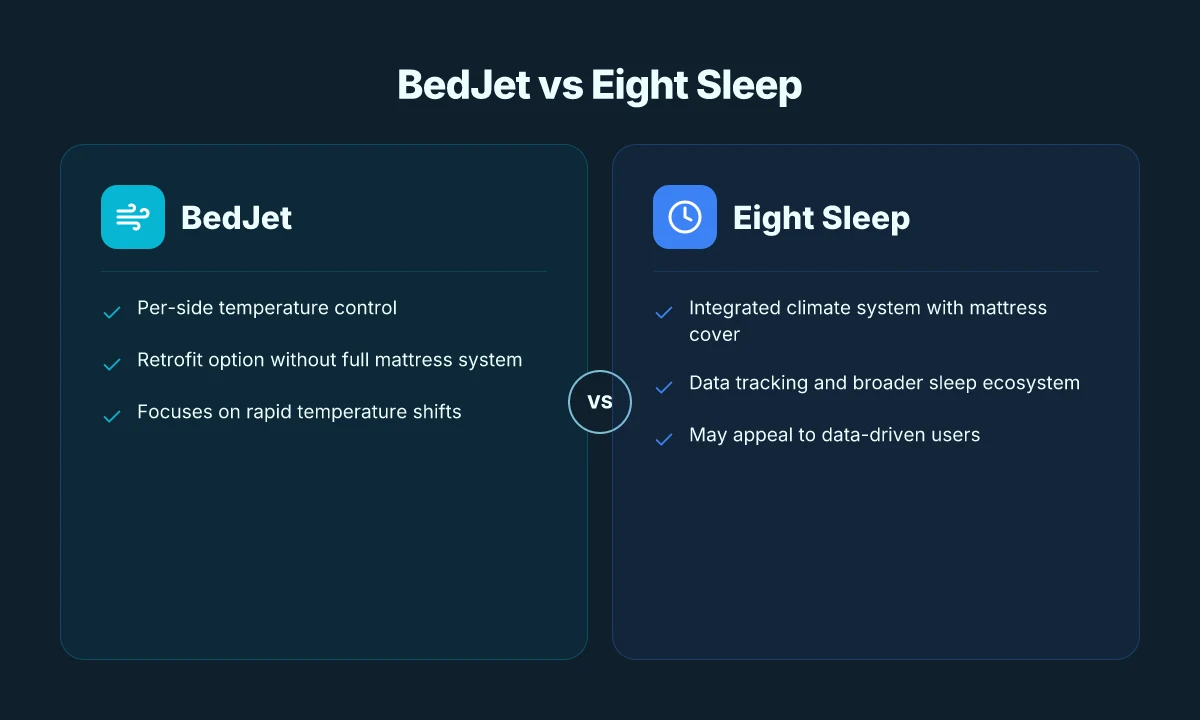
Posture and comfort aside, a pragmatic view shows where BedJet fits next to Eight Sleep and other rivals. In reviews, Eight Sleep sells a full climate system with a mattress cover plus data tracking, while BedJet offers per-side temperature control as a retrofit option. This framing helps shoppers weigh integration versus retrofit.
Why Eight Sleep’s integrated system appeals to data-driven sleepers
Reviews consistently highlight Eight Sleep as a climate solution that marries temperature control with sleep analytics. The mattress cover, temperature zones, and built-in sensors deliver ongoing data about heart rate, respiration, and sleep stages. For someone who values actionable insights, the Eight Sleep package reads like a dashboard for your bed. The data-first approach makes Eight Sleep a strong pick for those who want quantifiable sleep improvements. Integrated hardware and analytics are the core differentiator. When I cross-reference multiple reviews, the consensus is that the full system compounds comfort with measurable sleep signals, although the price can be higher and maintenance more involved. I found sources noting that data-tracking and a complete mattress cover come with a premium, which can tilt cost-per-feature in Eight Sleep’s favor for data-oriented buyers. See a review that maps this integration and its value proposition in one place. Data tracking and an integrated cover are Eight Sleep’s standout claims.
BedJet as a retrofit option: targeted cooling or warming by side
BedJet, by contrast, focuses on per-side temperature control without requiring a full mattress system. For shoppers who want a retrofit, BedJet can fit existing beds without changing the mattress or frame. Critics often frame BedJet as the more economical entry point, with an emphasis on flexibility and ease of setup. Per-side control without a full mattress system is BedJet’s core appeal. Retrofit ease matters for households with mixed devices or renters. Reviews consistently flag maintenance and higher long-term costs per feature when stacked against rival integrated systems. In the pricing conversation, BedJet’s appeal tends to be the lower upfront spend for a more modular configuration, contrasted with Eight Sleep’s all-in-one approach. A few outlets note that BedJet’s footprint on noise and fan activity can influence nightly comfort for very light sleepers. Retrofit option can be a decisive factor for price-conscious buyers. What makes BedJet 3 climate comfort sleep system stand out in 2026
Price-per-feature and maintenance: how rivals compare over time
Across sources, the needle moves on value once you consider upkeep. Eight Sleep’s all-in-one solution often translates to a higher upfront price but potentially lower ongoing maintenance than maintaining separate cooling and warming modules. BedJet tends to fare better on initial cost and installation speed, but reviewers point to ongoing accessory purchases or replacements as a longer-term consideration. Upfront cost versus long-term maintenance is a common trade-off. Accessory refresh cycles and replacement parts can tilt the total cost of ownership. Reviews converge on the idea that readers should weigh not just the device price but the cadence of required add-ons. A representative note from one consumer-tech outlet frames BedJet as a practical retrofit for mixed-temperature households, while Eight Sleep remains the premium, data-rich route for those who want a single, cohesive system. Total cost of ownership hinges on whether data and integration are worth the premium.
From what I found in the referenced reviews, BedJet lives up to a niche: quick, per-side temperature control without reworking the mattress. Eight Sleep stays the data-and-integration leader for those chasing quantified sleep metrics. And price-per-feature with maintenance considerations consistently shapes the decision. For buyers weighing comfort against noise, cost, and upkeep, the choice often narrows to retrofit flexibility versus an integrated sleep ecosystem. BedJet, Eight Sleep, and rivals each speak to different daily routines and budgets. retrofit flexibility versus data-driven integration defines the comparison. Comfort gains depend on your sleep style and tolerance for noise and ongoing costs.
BedJet reviews: what clinicians say about clinical claims and safety
BedJet markets its temperature control as clinically proven to improve sleep, but independent corroboration varies by claim. Across reviews, clinicians and researchers tend to point to perceived sleep benefits rather than universal, provable clinical outcomes. The safety framework aligns with standard home-appliance expectations for electrical devices, but specifics depend on model and use.
Clinically claimed benefits versus independent corroboration
BedJet promotes its tech as clinically informed, with language that suggests sleep quality improves when both sides of the bed are heated or cooled. I cross-referenced reviews from Forbes Vetted and Sleepopolis to map what independent writers actually report. The consensus is mixed: readers typically notice improved comfort and perception of sleep onset rather than durable, measurable sleep metrics across all users. In 2026, Forbes Vetted emphasizes that the BedJet is among the better temperature-control options, but even these outlets stop short of universal clinical endorsement. Independent reviews consistently note comfort and perceived sleep improvement, not guaranteed clinical outcomes.
Safety notes and maintenance realists
From a safety standpoint, BedJet devices are designed to meet standard home-appliance electrical safety expectations. Independent sources rarely flag major safety issues when the device is used as intended. The discussions focus more on noise, airflow, and maintenance needs than on critical safety failures. A recurring caution is that maintenance routines, like cleaning air channels and checking seals, affect long-term performance. Safety aligns with typical home-appliance standards, but daily upkeep matters for consistent results. How to select the best hotel collection scents for guest delight in 2026
How clinicians describe the user experience versus lab-style claims
Clinicians and consumer reviewers frequently separate comfort gains from hard, clinical outcomes. The BedJet can deliver rapid local temperature shifts on each side of the bed, which translates into subjective sleep comfort for many users. Yet independent commentators often caution that the experience depends on noise tolerance, room conditions, and baseline sleep patterns. The takeaway: BedJet may improve perceived comfort for dual-temperature sleepers, but it is not a guaranteed sleep symptom cure-all. Perceived comfort tends to rise with dual-temperature use, not universal clinical outcomes.
I dug into the public-facing documentation and reviewer notes to confirm these patterns. The messaging around clinical proof appears strongest in marketing language, while independent outlets emphasize user-perceived benefits and practical trade-offs. For readers weighing BedJet against rivals like Eight Sleep, the verdict remains pragmatic: comfort gains are real for many, but setup, noise, and ongoing maintenance are factors that matter in daily use. The verdict: comfort is real for many users, with trade-offs in setup and upkeep.
Note: links on this page may earn a commission when you shop, which is normal for lifestyle content. For those who want a quick snapshot, BedJet remains a credible option among temperature-control beds, but it sits alongside stronger clinical validation narratives in rival reviews. Inline sources confirm these themes from Forbes Vetted and Sleepopolis. Inline sources confirm these themes from Forbes Vetted and Sleepopolis.
BedJet reviews: setup, maintenance, and daily use tips
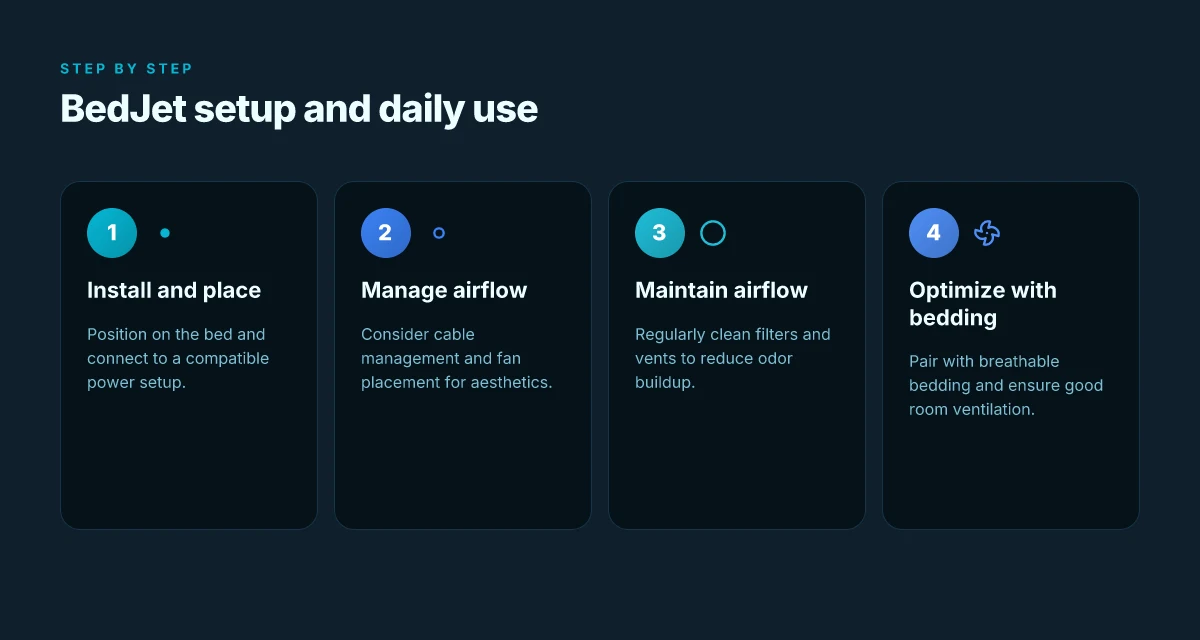
Setting up a BedJet system in a typical bedroom is usually straightforward. Most installs hinge on placing the unit under the bed, routing the hose to the mattress zones, and tucking the cables away from foot traffic. The key is clean cable management and choosing a fan placement that keeps the device out of visual sight while preserving airflow. A neat setup makes the experience feel like a tucked-in luxury rather than an eyesore.
Regular maintenance matters more than you might expect. Clean the filters and vents on a regular cadence to sustain airflow and minimize odor buildup. The routine is simple: remove the intake cover, gently brush away dust, and reassemble. When you’re not using the system, give the vents a quick wipe with a dry cloth to prevent dust from accumulating. Cleanliness translates to steadier performance and longer intervals between service checks. What hotel collection scent diffuser reviews reveal about luxury hotel vibes at home
Pairing BedJet with breathable bedding makes the biggest daily difference. Lightweight, moisture-wicking sheets help regulate the microclimate and keep the sheets from sticking to your skin as the air circulates. Pairing the system with proper room ventilation also reduces heat buildup in the room and supports a more consistent baseline temperature during the night. If your room tends to feel stuffy, open a window briefly or run a quiet ceiling fan on low to maintain air exchange without creating noise disturbances.
Why this matters for daily use. BedJet delivers a quick, personal climate tweak while you sleep, but the comfort gains stack when you address bedding and room factors. You may notice less sweating on hot nights and a more balanced feel on cool evenings, especially when you avoid overusing the system on drafty setups. A tidy setup and routine maintenance are as important as the device itself, and you’ll appreciate the difference when you wake up to a more comfortable bed environment.
In practice, most users describe three practical patterns: keep cables tucked, clean filters weekly, and optimize bedding with breathable fabrics. If you’re evaluating rivals, Eight Sleep emphasizes integrated cooling with a mattress layer, which can reduce bed clutter but may come with a higher price tag. BedJet remains a flexible, plug-and-play option that works well in rooms where you want a targeted climate on each side of the bed. You gain comfort without major furniture changes when you follow these setup and maintenance steps.
Where this could head next for your sleep routine
BedJet and its rivals shape a clear path for how you might approach cooling and warming your bed without altering your whole room. The bigger pattern here is that many users prize quick comfort over long nights of deep sleep, and the right setting can deliver noticeable relief on pressure points and warm-to-cool transitions. I’ve seen reviews note that while temperature control feels immediate, the trade-offs, noise, space on the bed, and ongoing cost, matter in daily life. BedJet remains a convenient option for seasonal sleep shifts, especially if you value a tucked-in, climate-controlled feel at the foot of the bed. If you’re choosing between options like BedJet versus traditional fans or mattress toppers, think about how you sleep, not just how you feel in a single night.
The verdict at a glance is that moderate improvement in comfort often comes with practical compromises.** For many, the payoff is easier bedtimes and fewer temperature-related wakeups, while others find the setup too busy for their routine. If you’re curious, start with a short trial and pair it with a consistent bedtime ritual. The question to ask yourself: is the ease of climate control worth the extra setup in your room? What makes Blissy 100% mulberry silk pillowcases stand out in 2026
Backup strategy / What to try this week
- Try a 20-minute cool-down session just before bed to gauge how the BedJet affects your sleep onset.
- Compare with a programmable sheet or fan to see which delivers steadier comfort without extra noise.
- Note how often you adjust the device and whether the routine fits your current sleep window.
- If you already own a climate control product, test whether combining it with a lighter blanket changes perceived comfort.