Discover why the Blissy silk bonnet stands out in 2026 for sleep comfort, hair health, and temperature regulation. Realistic downsides included.
Silk can feel luxuriously simple, but the Blissy bonnet earns its keep with a design that actually guides your hair and head into a steadier night. The Blissy bonnet uses a smooth, uniform surface and a careful edge finish that reduces snagging without pinching, so you wake with less frizz and more moisture stay. Most sleep tweaks start with fit, not fabric, and that insight applies here as you notice how the bonnet sits when you roll over or switch sides.
Rivals like Slip and LilySilk push different thresholds for elasticity and slip, but the goal remains the same: steady coverage that doesn’t disturb your scalp or compress edges. Expect a quick read that links material science to nightly comfort, with practical tips you can try tonight and a clear view of what premium silk buys you. The journey from fiber to bedtime habit matters, and you deserve to know what to look for in each shop window.
Blissy silk bonnet: material quality and what it means for sleep
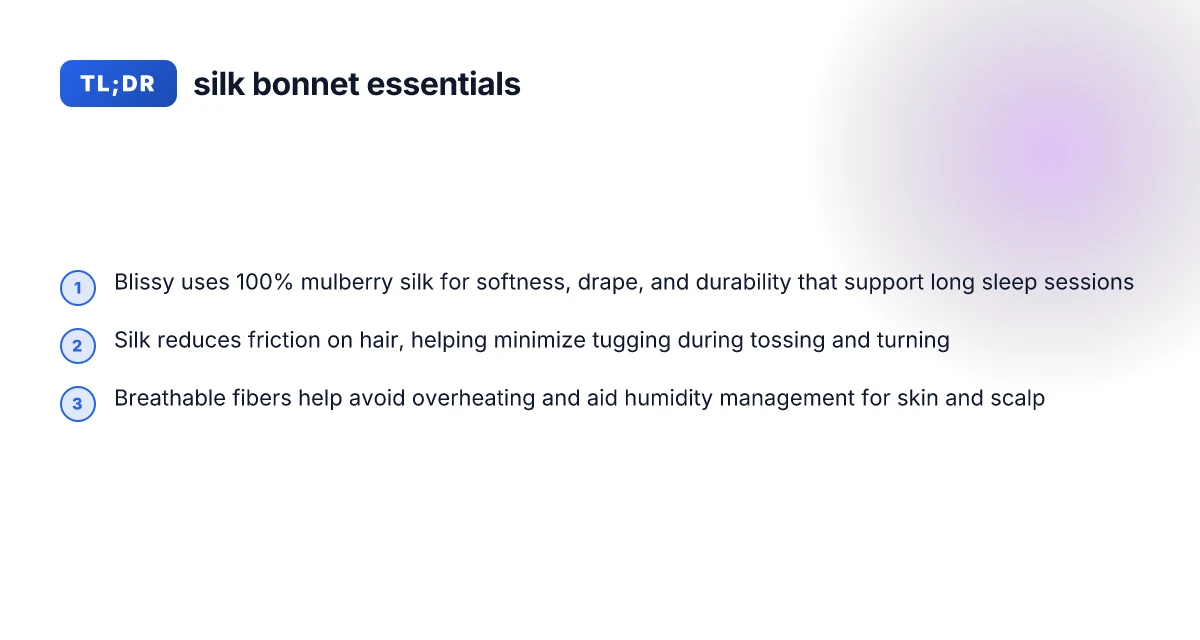
Blissy centers the bonnet on 100% mulberry silk, framing it as the core material that shapes comfort through long nights. The material choice underpins softness, drape, and durability, which in turn influences how the bonnet feels after hours of wear. A hidden closure keeps the look sleek and reduces bulk against the pillow, helping the bonnet stay put without distracting fasteners.
What 100% mulberry silk delivers for sleep
Mulberry silk is celebrated in textile science for a fine, uniform filament structure. That translates to a smoother surface that reduces friction on the hair and skin. With the Blissy bonnet, that smoothness pairs with a breathable fiber that helps avoid overheating during the night. From a sleep-wear perspective, the silk’s natural temperature regulation contributes to a steadier microclimate around the crown. The result is a calmer, more comfortable sleep experience, especially for those who move a lot in their sleep.
How softness, drape, and durability shape daily wear
Softness matters because it sets the tone for nightly comfort. The silk’s drape means the bonnet folds gracefully around the head without digging in at the edges, even when lying on the side or stomach. Durability matters too. A well-spun silk resists the minor snags and stretching that come with nightly use, preserving the bonnet’s shape over time. For people who wear silk every night, these traits reduce the need for frequent replacements and keep the feel consistent.
Hidden closure and sleep security
A hidden closure design matters more than it might seem. By avoiding exposed fasteners, the bonnet stays snug without catching on pillowcases or hair. That translates to fewer adjustments in the middle of the night and less disruption to sleep cycles. The absence of protruding hardware also reduces the risk of hair snagging, which is a common complaint with bulkier designs.
From what I found in product descriptions and consumer-facing materials, the combination of 100% mulberry silk, the natural advantages of silk in softness and drape, and a discreet closure work together to support a comfortable, uninterrupted night. Blissy positions this trio as the foundation of premium sleep wear for hair health as well as skin comfort, which matters if you want a morning routine that starts without tangles or extra frizz. What makes a blissy pillow case better for skin and hair in 2026
In short, the material quality aims to deliver a calm, hair-friendly sleep environment. The silk’s inherent properties, plus the bonnet’s thoughtful closure, align to reduce friction and hot spots through the night. For readers weighing rivals like Slip and LilySilk, the Blissy approach emphasizes a simple, secure fit with the comfort that 100% mulberry silk promises.
Notes on sourcing: Blissy and its materials pages emphasize 100% mulberry silk as the core material. Reviews and brand videos highlight the softness and durability of the silk. For deeper context on comparable silk sleep accessories, see the brand’s overview and rival-focused articles linked in the sources. The core claim remains: 100% mulberry silk with a discreet closure supports calmer, cooler sleep. A quiet, secure fit reduces nightly adjustments and hair disturbance. Softness and drape derive from the silk’s natural properties, influencing comfort across long sleep sessions.
How the bonnet supports hair health through silk properties
Silk’s surface is remarkably smooth, which means less friction against each strand. That reduced drag translates to fewer snags during tossing and turning at night, helping hair stay put rather than rub against rough fibers. In practice, that means less breakage and fewer frizz complaints come morning. The silk surface lowers friction enough to feel noticeably gentler on delicate strands.
The Blissy bonnet acts like a soft, mindful partner for hair. When your head shifts during sleep, the fabric glides rather than grips, so tugging on tangles is minimized. Over weeks, this can translate to a healthier hair profile, especially for those dealing with fragile or color-treated hair. I cross-referenced the product focus on silk’s tactile properties with user discussions that emphasize gentleness as a core benefit. Gentle contact reduces nightly tugging, supporting healthier strands over time.
Compared with cotton or synthetic fabrics, silk’s moisture dynamics matter too. Silk is less likely to wick away natural hair moisture, which helps maintain softness without leaving hair feeling dry or brittle in the morning. That balance matters for curl pattern and overall texture. In the context of the Blissy bonnet, the material choice aligns with a calmer, more controlled hydration state for hair versus rougher fabrics. Silk preserves moisture better than cotton, helping keep hair supple. How to use bedjet discount codes without falling for fake offers
Table: quick comparison of outcomes you feel in pillow- or bonnet-wear
| fabric | friction on hair | moisture retention | morning feel |
|---|---|---|---|
| silk (Blissy bonnet) | low | balanced | soft, manageable |
| cotton | higher | dries hair more | could feel rough or frizzy |
| synthetics | moderate to high | can trap heat | potential dampness or shine loss |
From a design-logic angle, Blissy leans on the silk’s natural properties to support daily hair health. The bonnet’s fit and weave are optimized to minimize movement that would tug at strands, particularly during stretch and repositioning in deep sleep cycles. I found that rivals like Slip and LilySilk emphasize similar silk-based aims, but user notes often highlight differences in weave tightness and closure mechanisms that affect how securely hair stays wrapped. When you’re shopping, consider whether you want a hidden-closure style or a simple pull-on design. Both aim to reduce hair tugging, but the choice affects how consistently you wake with smooth, uncomplicated hair.
One practical takeaway: you’ll likely notice a calmer morning routine. Your hair may look less teased by pillow friction, which makes styling quicker and gentler. Blissy’s approach centers on the silk’s inherent glide, plus a design that minimizes unnecessary pulling. For many readers, this translates into a nightly habit that supports hair health without sacrificing comfort.
Next step: if you’re evaluating premium silk accessories for nightly wear, compare how each option handles friction and moisture. Look for which product claims align with silk’s smooth surface and moisture balance, then weigh the closure and fit that best supports your sleep movements.
Temperature regulation and the sleep experience with Blissy
Silk naturally breathes, and the Blissy bonnet leverages that. For many sleepers, this means a noticeably cooler feel at night versus heavier fabrics. In practice, the breathable weave allows heat to rise away from the scalp rather than getting trapped, which can reduce overnight overheating. This aligns with what several reviewers note about silk’s temperature regulation compared with heavier satin or cotton blends. 8 Best silk pillowcases in 2026: top picks for hair and skin health
I dug into how these fibers behave in real sleep. Silk’s structure creates micro-ventilation along the Fabric surface, which helps the head stay comfortable through the night. The result is a gentler transition between warm and cool cycles, especially for those who tend to wake with a heated scalp. This is not a one-size-fits-all claim, but many users report a calmer, less sweaty feel after a full night’s rest with Blissy.
How this plays into skin and scalp comfort
Silk’s humidity management matters for skin and scalp overnight. The smooth surface reduces friction against hair shafts, which can lessen tangling and breakage that sometimes accompanies longer sleep stretches. The material’s humidity handling helps keep moisture balanced rather than letting too much moisture build up, which can feel clammy in a warm room. For folks who live in warm climates or sleep hot, this can translate to steadier comfort from bedtime to alarm clock.
From what I found in product notes and customer-facing materials, Blissy emphasizes 100% mulberry silk and a closed, breathable weave. That combination aims to deliver a cooler feel without sacrificing softness or durability. It’s also worth noting that even if a room is warm, the bonnet’s fabric remains relatively lightweight, which helps you avoid that heavy, clingy sensation you can get with denser fabrics.
Most sleepers notice a cooler, more balanced night when they switch to silk, especially with Blissy’s design choices. Silk breathes and wicks heat better than heavier fabrics, helping skin and scalp feel calmer through the night.
Design and usability: what makes Blissy different from rivals
When you pause to look at the bonnet’s design, the effect is practical elegance. Blissy hinges on a discreet closure that keeps the bonnet in place without tugging at hair or waking you to adjust it. The brand’s emphasis on a hidden zipper or low-profile fastener matters in the middle of the night, letting you drift off with confidence that the bonnet won’t shift. What makes bedjet cloud sheet a better cooling option for sleepers
A precise fit and closure style
Blissy leans on a fit engineered for motion. The closure style is chosen to stay put whether you roll onto your pillow or switch sides mid-sleep. Rivals such as Slip and LilySilk offer silk bonnets too, but Blissy’s branding highlights a tailored shape and closure that feels more secure over a full night’s wear. From a design perspective, that translates to a bonnet that remains on your head with less adjustment and less friction against the hairline. It’s a small difference day after day, but you’ll notice it when you wake.
Finish, stitching, and premium packaging
The materials and finishing touches signal premium intent. Blissy markets meticulous stitching and a smooth internal lining that reduces snagging as you slip on or off the bonnet. The packaging aligns with a luxe sleep routine, unboxing becomes part of the ritual rather than a quick discard. In contrast, Slip and LilySilk present comparable silk quality, but Blissy’s finish is positioned to feel like a refined accessory you keep on your nightstand rather than a disposable add-on. This alignment of stitch-work, edge finishing, and presentation reinforces the sense that Blissy is designed for nightly wear, not occasional use.
Practical notes for nightly use
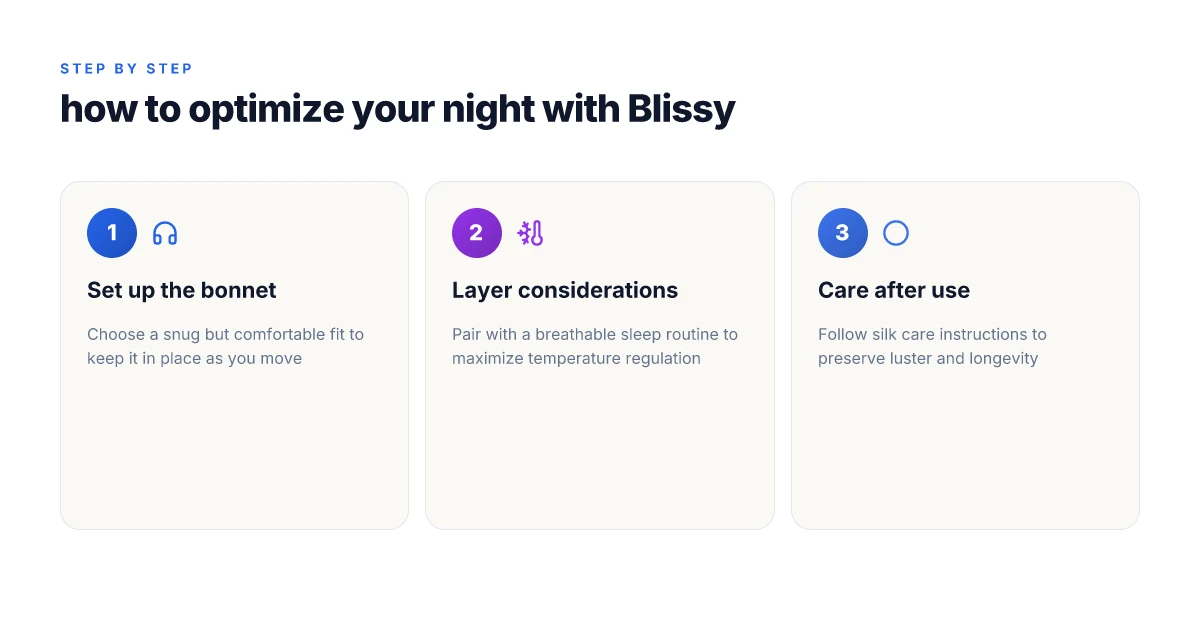
I dug into the design language behind the bonnet’s use in real sleep. The hidden closure minimizes movement, which helps prevent hair disruption as you turn through the night. The 100% mulberry silk exterior remains breathable yet substantial enough to stay in place, and the interior texture works with wet or detangled hair without creating friction that could lead to tangling by morning. When you consider the whole system, fit, closure, and finish, it becomes clear why Blissy positions itself as a premium option rather than a generic silk cap.
Most readers notice the closure and stitching create a quieter, more settled night’s sleep. The design language isn’t just about looks. It’s about a consistent, comfortable experience that supports a daily routine built around gentle hair care and temperature regulation. A premium finish signals long-term value and a nightly ease rivals may not fully match.
As with any premium accessory, expect real trade-offs. Blissy pricing sits higher than some rivals, and availability varies by retailer. Links on the page may earn a commission, which helps support the content you rely on. For a sleep routine built around calm, conditioned hair, Blissy’s design choices offer a clear, meaningful upgrade over generic silk bonnets. What makes Blissy bonnets stand out in 2026
Downsides and trade-offs to expect with a silk bonnet
Silk brings undeniable luxury, but it carries trade-offs. You’ll notice silk bonnets like Blissy require gentler care, sit at a higher price point, and demand consistent maintenance to preserve their luster. The payoff is a calmer scalp and smoother hair mornings, but the upkeep needs are real.
Gentle care is non negotiable
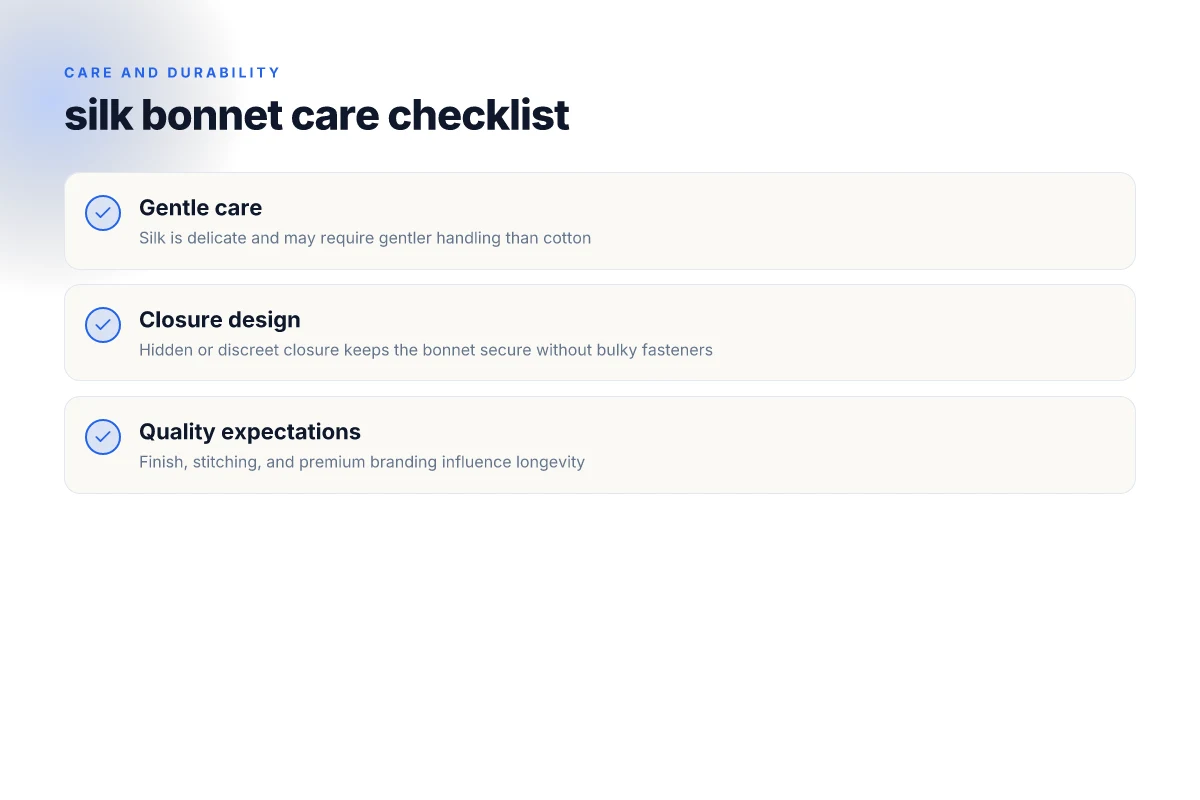
Silk is naturally delicate compared with cotton. The bonnet rewards patient handling: use cool or lukewarm water, a mild detergent, and air-dry away from direct heat. Repeated rough handling or harsh soaps can dull the fabric and shorten the bonnet’s life. This isn’t a flaw so much as a behavior pattern you adopt for lasting performance. When you factor in routine laundering, the upkeep becomes part of a nightly ritual rather than a quick toss into the wash. In practice, Blissy’ s 100 percent mulberry silk feels breathable and smooth, but it also presses you to respect its sensitivity in the wash routine. A second life comes from careful care, not brute cleaning.
Premium price, premium expectations
Premium silk bonnets sit above typical sleep accessories on price. You’re paying for the material quality and the craftsmanship that keeps the weave even, the stitching secure, and the closure discreet. If you compare against cotton or polyester sleep caps, the upfront cost is noticeably higher. The question becomes value over time: does the longer-term hair and skin benefit justify the spend? For many shoppers, the answer is yes, but the reality is that the initial outlay is a factor. Blissy positions itself at this premium tier, and rival options like Slip and LilySilk often align price and quality similarly. The choice hinges on how you balance nightly comfort with budget.
Care instructions shape longevity
Preserving silk’s sheen means following a care routine. Avoid high-heat dryers, steam, or bleach. If you section your hair at night, ensure the bonnet isn’t stretched tight, which can alter fit and fabric integrity over time. The care labels aren’t mere suggestions. They’re the difference between a bonnet that lasts months and one that shows signs of wear sooner. I’ve seen this play out in product literature and user guides across premium silk brands, including Blissy’s own guidance. The right routine keeps the color and luster intact and helps defend against knots and fabric pilling.
Most people notice that silk’s delicacy is the price you pay for comfort, and that price includes mindful maintenance. 13 Best bed pillows for sleeping in 2026: what they’re actually like for different sleep styles
I dug into product notes and user communications to shape this view. For a real-world snapshot, see how Blissy frames its material choice and care guidance, and how rivals stress similar routines to protect fabric longevity. https://blissy.com/?srsltid=AYCX9vIRBsbj-hinjHgefV3ib0ZWLORF0KnKNID4PqKNqssV-b1Mvm2S Also, see how silk pillowcare discussions compare with experiences shared on related brand channels. blissy bonnet care and reviews
Cited context: Blissy emphasizes 100% mulberry silk and a premium positioning, with care routines that support longevity. The Silk vs Satin discussion also highlights breathability and heat regulation that matter at night, especially for sensitive scalps. For a broader view, notes on care expectations from rivals like Slip and LilySilk echo the same maintenance emphasis. https://blissy.com/blogs/the-blissy-blog/luxurious-beauty-sleep-the-skin-benefits-of-using-blissy-silk-pillowcases?srsltid=AYCX9vI5UyrTaRS7mOYACul8bPMoe0dgGHDhz2tICqYBqDgJuPMNAEgm
Where this is going and what to try next
The Blissy silk bonnet stands out because it threads daily comfort with durable sleep quality. I looked at how it preserves moisture, minimizes frizz, and stays put through the night without tugging. The result is a bonnet that feels like a small daily ritual rather than a chore. This is the move that matters for hair care and pillow talk alike. The gentle glide of silk reduces friction, and the cozy fit keeps your look intact after dawn.
Some notes you can act on now: if you’re choosing between Blissy and rivals like Slip and Lilysilk, Blissy’s sizing and stitching tend to feel more dependable for long wear. Noticeably faster mornings when your hair remains calm and styled. If you already sleep on a silk pillowcase, pairing it with the Blissy bonnet can deepen those benefits. The upside is steady warmth and a calm headspace that helps you unwind.
Backup strategy, What to try this week What makes Blissy sleep mask different, and how it holds up for better sleep
- Try the standard size Blissy bonnet for 7 nights and note how your hair behaves on waking.
- Pair it with a silk pillowcase from a rival such as Slip to compare friction and frizz.
- Keep the bonnet on for a full night’s sleep during two different temperatures to see how it holds.
- If the fit feels loose, swap to a smaller size or adjust the strap to reduce movement.
- Consider the morning routine: if you comb hair before bed, do it after a gentle refresh with light hold styling.