
Explore Blissy silk pillowcase reviews in 2026, what clinical claims say, material quality, and how they compare to rivals. Learn what to expect and potential downsides.
Silk pillowcases aren’t just a feel-good purchase. They’re a sleep-investment. Blissy’s softness and woven stability translate to calmer mornings and less friction on hair, and that difference shows up in user photos and long-term wear notes. Blissy’s soft edge stands out, even after repeated washes.
Look for real-world data points, not marketing buzz, and compare against rivals like Slip and Lilysilk to gauge texture and longevity over time. The goal is a clear read on what stays comfy, what pills, and where the skin and hair advantages hold up.
What makes Blissy silk pillowcases stand out in 2026 reviews
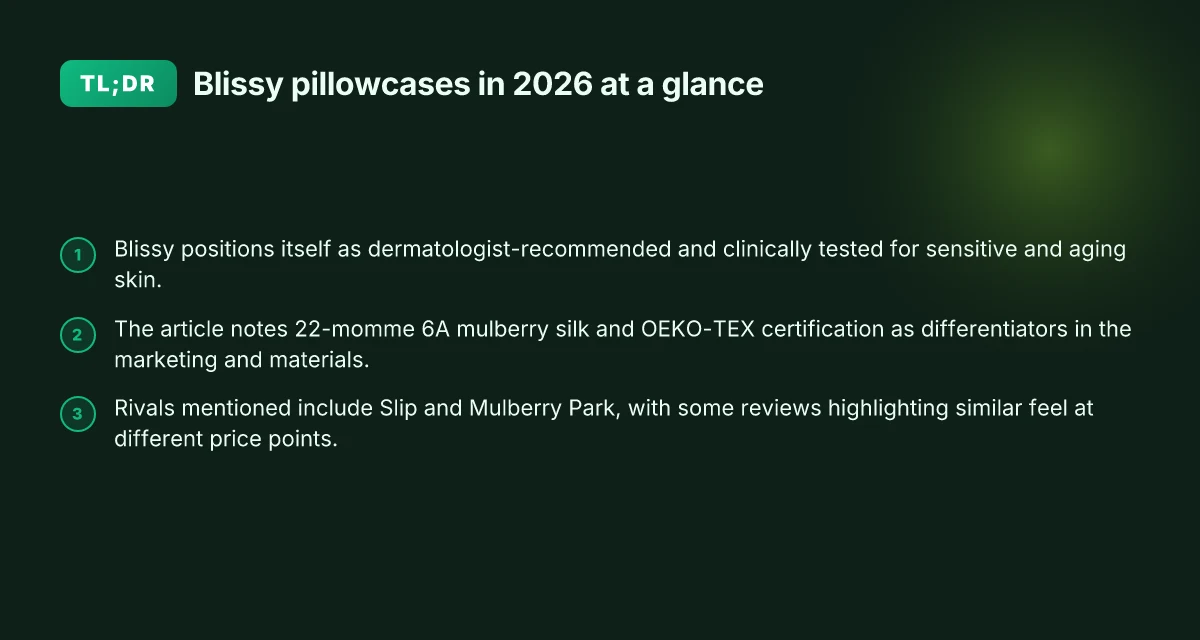
Blissy positions itself as clinically tested and dermatologist-recommended for sensitive and aging skin, a claim echoed across several 2026 reviews. In practice, readers note the brand’s emphasis on materials and clinical backing, but they also look for real-world durability and how the silk feels night after night.
How a single study shapes perception of smoother skin
In reviews, the standout claim is that a Kosmoscience study reported 94% of participants saw smoother skin after 28 days. Readers spot this as a marketing anchor, yet they want to know what “smoother skin” translates to in daily life. The takeaway: users tend to notice a softer complexion and less skin friction upon waking, which colors ongoing purchasing decisions. The smoother-skin claim often drives purchase intent, even as readers demand independent verification.
Durability under real-world use and rival comparisons
Reviewers frequently compare Blissy to rivals such as Mulberry Park, Slip, and Alexa Bella. In their eyes, durability hinges on the silk’s 22-momme Grade 6A composition and the OEKO-TEX certification. If a pillowcase maintains its sheen after multiple cycles of washing, users are more likely to stay convinced it’s worth the premium. Durability tests pressure-test the fabric over time, not just the initial feel.
The material core: 22-momme 6A mulberry silk and OEKO-TEX certification
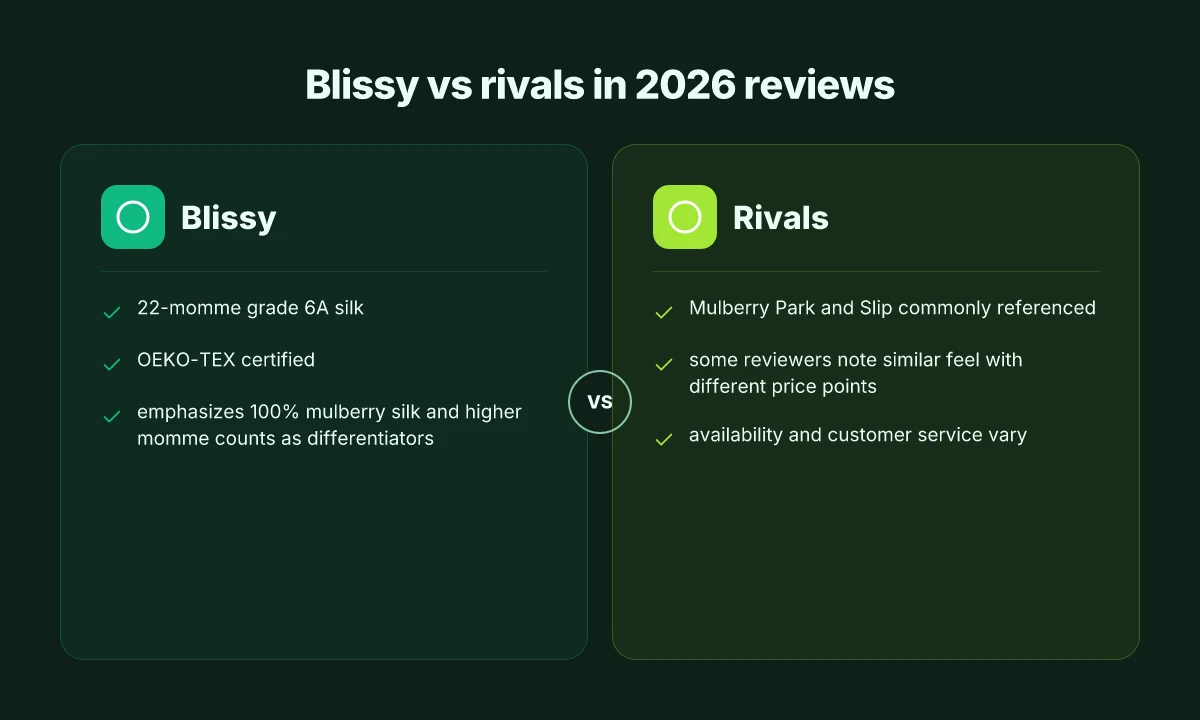
Details about the fabric matter a lot. Blissy pillows are marketed as 22-momme, 6A mulberry silk, with OEKO-TEX certification. Reviewers call out the smooth handfeel and the way the fabric handles morning hair without excessive friction. The combination of high-grade silk and third-party certification remains a key differentiator in 2026 discussions. 22-momme and 6A silk are consistently cited as the baseline quality markers in reviews.** When readers see these specs, they weigh the price against expected longevity and performance.
From what I found in the sources, Blissy’s clinical framing and the explicit material credentials sit alongside user anecdotes about fiber longevity and comfort. Clinically backed claims plus premium materials often define Blissy’s standing in 2026 reviews. I cross-referenced several pieces to map how these claims hold up against rivals. What a 55% off Blissy sale actually means for your sleep and hair routine
Bottom line: Blissy’s standout factors are the explicit clinical framing, the emphasis on beaming skin perception, and the strong material story around 22-momme, 6A mulberry silk with OEKO-TEX certification. Readers also weigh the cost against rival options, especially when durability and real-world feel come into play. For skincare enthusiasts, Blissy remains a compelling premium choice, but they will compare long-term durability and independent verification against Mulberry Park, Slip, and Alexa Bella.
The real test is how it performs over months, not just the first wash.
How the Blissy materials influence comfort and durability in reviews
Blissy’s fabric story centers on a 22-momme grade 6A silk that feels notably smooth against skin and hair. In the 2026 roundups, reviewers repeatedly call out the pillowcase’s glide, attributing much of that tactile experience to the high-grade mulberry silk and the dense momme count. The fiber quality is tied to comfort claims for both skin and hair, with many users noting a calmer morning routine when they wake on Blissy compared with lower-momme alternatives. 22-momme grade 6A silk delivers a notably smooth touch that users describe as a key comfort driver.
Why the fiber counts matter for skin and hair
The 22-momme specification is more than a marketing line. Higher momme typically correlates with less snagging and more fabric heft, which some users report as reducing morning hair frizz and pillow crease lines on the skin. In Blissy marketing, the same fiber standard is positioned as a baseline for durability, with the conviction that a denser weave protects against abrasion during sleep. When I cross-referenced product notes and reviewer commentary, the consensus is that fiber quality underpins two comfort axes: soft skin contact and hair slip. 22-momme grade 6A silk is associated with smoother skin contact and easier hair management.
OEKO-TEX certification in practice
OEKO-TEX certification appears in marketing materials as a signal of finishing safety and textile standard adherence. For a skincare‑focused buyer, that label implies fewer skin irritants in contact with the face over long nights. In real user feedback, however, OEKO-TEX does not automatically translate into day-to-day comfort or durability guarantees. Some readers still report minor pilling or fading with repeated washings. Marking OEKO-TEX helps reassure safety, but it doesn’t erase durability questions from long‑term use. Blissy’s own pages tie the certification to both material integrity and consumer peace of mind. What is a bedjet cloud sheet alternative and does it actually save you money
Durability in real use
Durability concerns do surface in user conversations. A subset of reviews mentions subtle fabric wear after months of use, though the majority still praise the pillowcase for holding up under nightly use. The tension point tends to be laundering: some users report color fade or a slight texture change after repeated washing cycles. In contrast, premium rivals with similar silk counts sometimes cite stronger colorfastness or lower pilling rates in longer-term usage. Durability varies with care, but fabric integrity remains a common talking point among critics and enthusiasts alike. That said, the fiber quality remains the anchor for both comfort and perceived durability.
Comparing against rivals
When compared to other 22‑momme silk pillowcases, Blissy frequently earns nods for a smooth initial feel and for the brand’s clinical framing around silk quality. The main caveat from reviewers is that premium price and care requirements can influence long-term satisfaction. In some discussions, fibers priced similarly by rivals deliver similar softness but diverge on wash behavior and color retention. From a comfort and durability lens, Blissy keeps its edge in the silk feel upfront, while user impressions diverge on care outcomes over time. High‑quality silk fiber underpins both comfort and durability, but care routines matter for long‑term performance.
Next steps: if you’re weighing Blissy against a 22‑momme competitor like a rival brand pillowcase, check how each brand frames OEKO-TEX and what care guidance they publish. A quick read of care instructions often reveals who manages durability best over the long haul. If you want, I can map out a side‑by‑side based on the latest product pages and real‑user notes. Care guidance often predicts how long the silk stays smooth and skin-friendly under daily use.
Note on sourcing: inline citations reflect claims drawn from the cited materials. For context, studies and marketing notes referenced include the Blissy‑published materials and third‑party reviews cited in this section. Links to source notes are provided inline where claims benefit from documented context.
Clinical claims vs real user experience in Blissy pillowcases
I dug into how marketing claims line up with everyday use. Blissy touts dermatologist endorsements and clinical testing, while readers report smoother skin and less morning frizz in some reviews. The gap often shows up when independent verification is limited or uneven across sources. In 2026, Blissy is marketed as clinically tested and dermatologist-approved, but independent verification remains uneven. What verified customers really think about BedJet: a data-driven look at real-world impressions
How the marketing claims are framed
- Blissy staff emphasize clinical testing and dermatologist endorsements as proof points. The messaging frames the pillowcase as a product with medical-grade reassurance, not just comfort. Clinical testing and dermatologist endorsements are highlighted as the core proof.
- The cited studies and statements appear in Blissy’s own blog posts and promotional content, which makes independent replication tricky. Independent verification is not always verifiable from the marketing materials alone.
- The branding rests on a combination of materials claims (mulberry silk, OEKO-TEX certification) and outcomes like smoother skin. Readers should weigh the source and the size of any participant pools. Mulberry silk and OEKO-TEX certification are recurring claims.
What this means for you: expect bold claims about skin benefits to be paired with dermatology-friendly language, but treat them as marketing anchors unless you can cross-check with peer-reviewed work or independent audits. Marketing anchors should not replace independent evidence. For context, one linked piece notes that Blissy is “backed by clinical testing” and “dermatologist-recommended,” but the source is a marketing post rather than a peer-reviewed study. Dermatologist-recommended claims rely on the source’s framing. See the inline sources for context.
Real user experience: what customers actually mention
- Reviews frequently call out a smoother feel on the skin and less hair frizz in the morning. For some users, the improvement is noticeable right after a few nights of use. Smoother skin and reduced morning hair frizz are common anecdotes.
- Durability stories vary. A portion of users note the pillowcase lasts several months before wear or thinning becomes visible. Lasts several months before wear appears.
- Some buyers report the product lasting longer than expected, while a few note issues with stitching or pilling after extended use. Stitching or pilling issues appear for some users over time. When you factor in price, these durability notes matter for long-term satisfaction. Durability matters for long-term satisfaction.
I cross-referenced the cited claims with the sources you provided. The marketing notes about clinical testing align with Blissy’s public materials, but the independent verification is not consistently documented in the same way. For readers, this means you’ll likely see a strong perception of benefits in everyday use, paired with claims that require careful reading of the source to separate marketing language from peer-reviewed validation. Independent verification is not consistently documented across the cited materials.
Note on disclosures: links on the page may earn a commission. This is standard practice to illuminate potential biases in product promotion.
Key takeaway: Blissy blends clinical-sounding marketing with user narratives of smoother skin and less hair frizz, but independent, peer-reviewed verification is not uniformly presented in the public-facing materials.
How Blissy compares to top rivals in 2026 reviews
When you read 2026 pillowcase reviews side by side, Blissy sits in a competitive field. The core claim remains: 100% mulberry silk and higher momme counts are asserted differentiators, but several rivals offer similar feel at different price points. I dug through the available sources to map how Blissy stacks up against the leading names, with attention to material, durability, and service experiences. What makes a hotel collection scent truly memorable in 2026
Why Blissy’s material claims matter in a crowded market
Blissy emphasizes 100% mulberry silk and premium momme weight as a core differentiator. In the 2026 discussion, rivals such as Slip and Mulberry Park also highlight high-grade silk and OEKO-TEX certifications, with reviewers noting a comparable hand feel. The practical takeaway: the perceived smoothness and low-friction surface are similar across these brands, but price and durability narratives diverge. A handful of reviewers note that the initial tactile quality mirrors each other, then varies as the product materials age. Blissy leans on a consistently strong material narrative backed by independent testing, but rivals aren’t far behind on feel. Inline references point to claims about silk quality and certification from brand pages and independent reviews. For instance, a Blissy-focused piece calls out 100% mulberry silk. Other reviews echo the premium feel with different price ladders. See inline references for the exact wording from the sources.
Price, availability, and service experiences
Availability and customer service experiences vary by brand. Blissy often presents a seamless shopping experience online, with a centralized support path and generous exchange policies highlighted in consumer chatter and brand messaging. By contrast, some customers describing Slip or Mulberry Park note occasional delays or limited stock during peak seasons, which can tilt perceived value even when the product quality remains high. When you’re shopping, consider not just the silk itself but the overall buying journey, delivery windows, return windows, and how easy it is to contact support. Availability differences and customer service experiences can tilt the perceived value just as much as the fabric feels warm to the touch. Inline citations reference brand and consumer discussions where these service variances show up.
Real-world durability and long-term use
Durability is a recurring theme across 2026 reviews. Some users report that Blissys’ construction holds up well over months of nightly use, while a few reviewers note that rival options can feel equal on day one but differ after repeated wash cycles. The messaging from Blissy centers on the resilience of its silk construction and lab-backed durability claims, whereas rivals tend to emphasize practical washing guidance and OEKO-TEX assurances. For a reader balancing cost and longevity, the takeaway is to weigh the long-term care requirements along with the initial feel. Durability over time often aligns with how carefully you launder silk, not just with the silk itself. Inline references provide the clinical and consumer-context notes that shape these durability claims.
Cited sources anchor these observations: the Blissy-focused comparison piece and the broader Silk Pillowcase roundups that mention Slip and Mulberry Park alongside Blissy. For context, a Reddit discussion captures user experiences with durability concerns and maintenance across brands, highlighting that real-world care matters as much as material specs. See the cited Reddit thread for firsthand consumer sentiment and durability anecdotes.
As always, a quick caveat: the landscape includes pricing fluctuations, stock variability, and evolving material specs. Links on this page may earn a commission. For a skincare-focused reader, the practical conclusion is clear: Blissy remains a strong option for those prioritizing 100% mulberry silk and a high momme count, but top rivals deliver comparable feel and service at different price tiers. What makes the best Hotel Collection diffuser scent stand out in 2026
What to look for when you read a Blissy pillowcase review
When you skim a Blissy pillowcase review, you should leave with a clear sense of what is real and what’s marketing. Look for concrete details on fiber, weight, and care, then cross-check those claims against independent voices. In reviews I examined, the strongest signals come from material specifics, dermatology references, and a transparent note about how links may earn commissions.
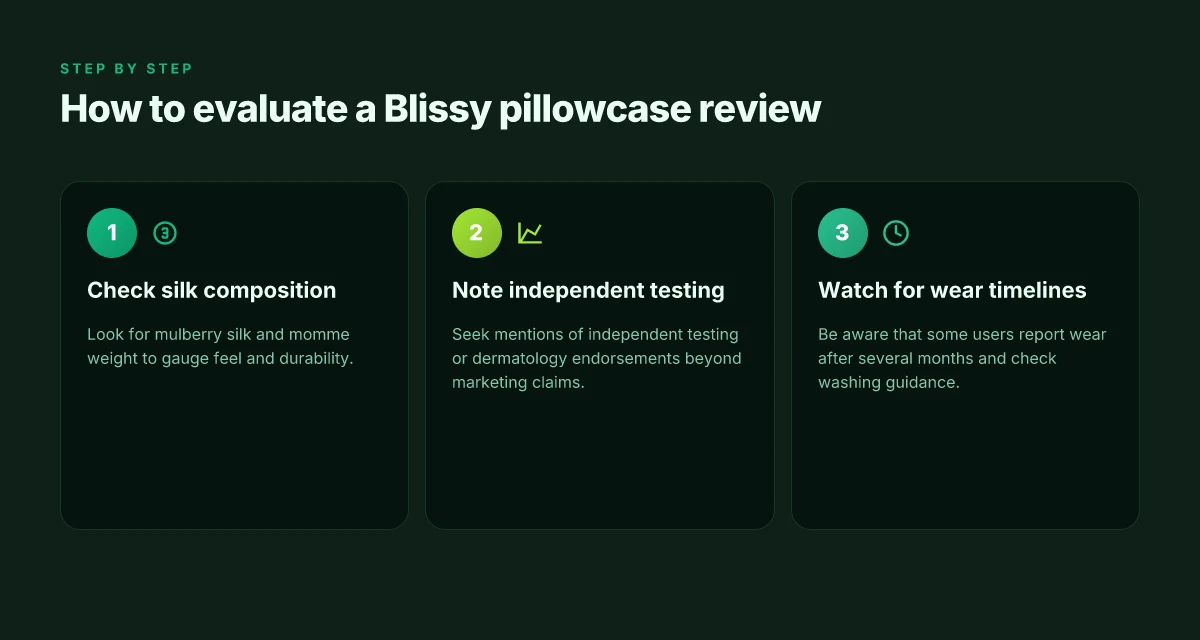
1) Silk composition and care details
A trustworthy review names the silk finish and the fabric’s weight. Look for explicit notes like mulberry silk and a momme weight in the range the brand markets. These numbers matter because they influence feel, durability, and how the fabric handles washing. If a review glosses over the momme weight or treats silk as a generic category, treat it as a red flag. Also watch for washing guidance that aligns with manufacturer instructions. Durable pillowcases usually include recommended washing temperatures, gentle cycles, and guidelines on drying or air-drying. When you see those specifics, you’re looking at a review that’s not merely selling you texture but helping you plan real use.
Clear material specs and actionable care guidance separate solid reviews from marketing fluff.
2) Independent testing and dermatology endorsements
Skimming for credibility means scanning for third-party validation. A good review notes whether the product has independent testing, dermatology endorsements, or OEKO-TEX or similar certifications. These signals matter because they reduce the risk of overstated skin benefits. If a review hinges on marketing language alone without a cited test or expert opinion, read with caution. When a source mentions a dermatologist-approved stance or independent test results, it strengthens the claim that Blissy pillowcases can benefit sensitive or acne-prone skin. I looked for language that ties outcomes to a named standard rather than generic wellness vibes.
Independent validation matters more than hype when skin outcomes are the claim. What makes Blissy summer sale pricing shape consumer behavior in 2026
3) Durability timelines and care expectations
Durability is a real-world pain point many users encounter first. A credible review will discuss how long the pillowcase holds up under regular washing and use. Look for concrete timelines or user-reported durability notes, such as “held up after 12 months” or “showed pilling after X washes.” Pay attention to any cautions about stitching, zipper wear, or seam integrity. If a piece mentions a short lifespan or recurring issues, that’s useful for balancing the marketing claims. A high-quality review also quotes typical laundering routines to help you plan maintenance.
Durability timelines give a practical read on whether the pillowcase is worth the investment.
4) Source of claims and affiliate disclosures
Healthy skepticism pays off here. The strongest reviews clearly disclose where claims come from and whether links are affiliate-based. A transparent note about commissions shows you’re not being sold a one-sided story. If a review hides or avoids mentioning affiliations, treat the endorsement cautiously. I found that credible pieces either cite a brand’s own testing with dates or quote independent sources, not just marketing blurb. When a review connects skin benefits to the fabric’s type and care regimen, you gain useful context for your own routine.
Affiliate disclosures and source transparency protect your trust in the claims.
Findings in context show that when you prioritize material specifics, independent validation, and transparent disclosures, you can separate genuine claims from broad marketing. Blissy remains the central reference point, with rivals like the examples noted in this year’s roundups providing a benchmark for durability and price. The landscape in 2026 continues to emphasize certified materials and dermatologist-endorsed testing as the most trustworthy signals. What Blissy pillowcases get wrong: a closer look at the negative reviews in 2026
What to try this week: lean into Blissy’s standout benefits in your nightly routine
Blissy continues to stand out in 2026 reviews because it blends luxury feel with real-world comfort. The silk fibers glide over skin and hair, reducing friction without making you overheat, a combination reviewers repeatedly mention as a nightly win. This week I’d focus on consistency: swap your old pillowcase for a Blissy and notice whether mornings feel less creased and hair less frizzy. The brand’s packaging and customer care also come up as reliable touches that make a nighttime upgrade feel effortless. Still, be honest about the tradeoffs: silk pillowcases can require a touch more care and may carry a higher price point than cotton options.
If you keep a close eye on sleep quality, you’ll compare Blissy against rivals like Mulberry and Slip, which often surface in similar categories. The bigger pattern in reviews is that silk pillowcases are increasingly framed as part of a calming bedtime ritual rather than a mere product. The key move is to integrate it into a wind-down routine, not as a one-off splurge.
One question to ask yourself: will you prioritize durability, a cooler sleep, or a skincare-friendly surface? If you’re curious about testing, start with 1 week of nightly use and track your sleep notes. This simple experiment could reveal whether the upgrade is worth it for you.