Explore how Coofandy mens clothing embraces sustainability in 2026, from recycled materials to 1% for the Planet commitments and GRS certification.
Coofandy’s 2026 pivot isn’t about a glossy label, it’s about who screws the buttons on the shirt and where the fabric came from. Coofandy is tying its value story to responsible materials and transparent sourcing, not mere price points. This matters because shoppers hear all-day claims, but real sustainability shows up in the fabric type and the credibility of certificates behind it.
This article pulls back the curtain on Coofandy’s material disclosures, compares them with peers like Untuckit and Bonobos, and calls out where transparency holds or slips. In 2026, a brand’s ethics must stand up to both consumer scrutiny and third-party certification, not just marketing buzz. Expect a practical read on what to verify, fabric composition, fiber origin, and certificate legitimacy, as you weigh a mid-market buy against a longer-lasting, responsibly sourced wardrobe. Coofandy’s choices will be judged by the clarity of its disclosures and the integrity of its certificates, not just the price tag.
Coofandy mens and the sustainability pivot in 2026
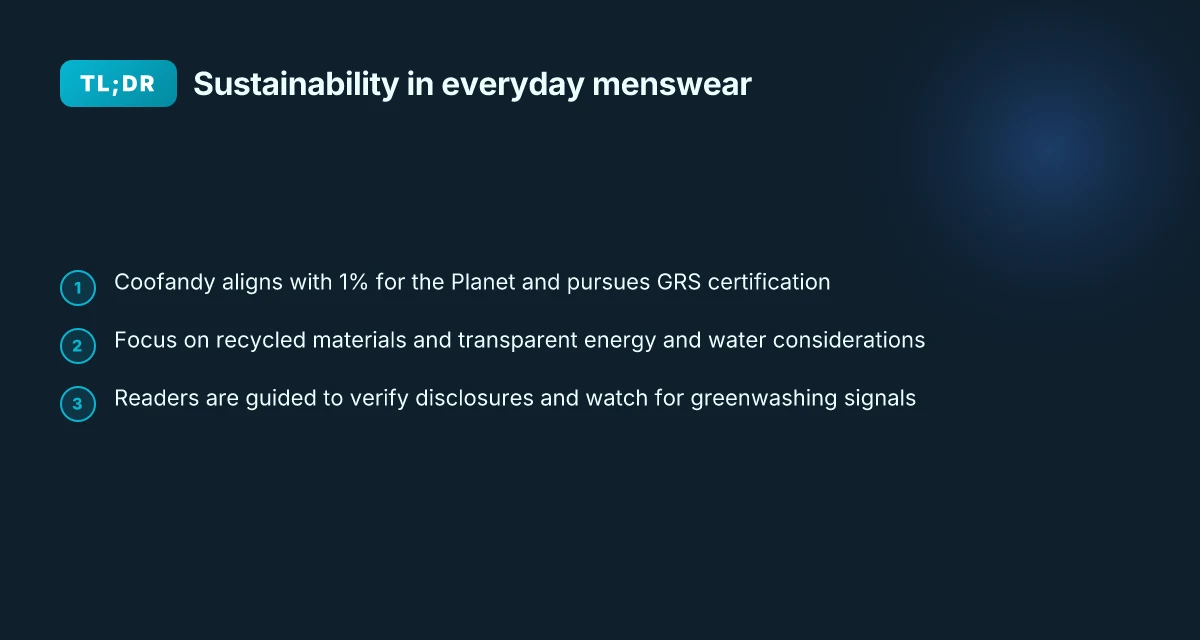
Coofandy is leaning into sustainability in 2026 without losing its value-focused pricing. The brand has publicly framed its move around certifications and measured material choices, aiming to show real progress beyond buzzwords. The question for conscious shoppers is whether these claims translate into truly lower environmental impact in the everyday wardrobe.
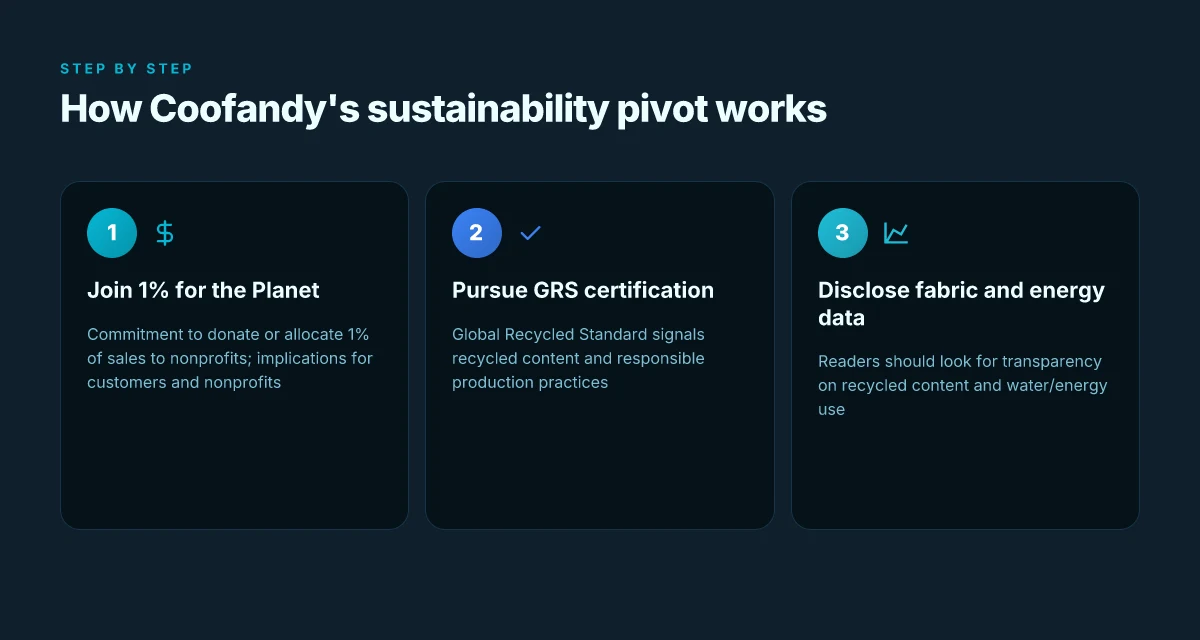
Coofandy joins the 1% for the Planet and what it signals I dug into the brand’s announcements around joining 1% for the Planet in 2026. The core claim is that 1% of every sale from the Men’s Shirts collection will be donated to certified environmental nonprofits. This is a visible commitment that aligns with a broader trend among mid-market labels to demonstrate accountability through giveback. The impact story matters for daily wearers who want to feel their purchases support causes beyond the label. This move makes sustainability tangible for shoppers who want a portion of each shirt sale to support environmental nonprofits. The timeline shows an explicit date tied to the program’s launch, with communications dating to April 2026.
Certification as a trust signal: GRS and beyond Another milestone is GRS certification, which Coofandy positions as proof of recycled or responsibly managed content. The Global Recycled Standard sets requirements around recycled materials, energy and water use, and social criteria in production. This isn’t a generic claim. It’s a framework that helps buyers compare products across brands. GRS signals a verifiable standard for recycled content, not a marketing gloss. When a brand touts GRS alongside 1% for the Planet, it strengthens the case for shoppers who want third-party oversight integrated into purchasing.
Material choices and efficiency claims in practice Coofandy’s communications also highlight recycled materials and efficiency-oriented metrics. A notable post emphasizes recycled cotton and sustainability facts like reduced energy use, greenhouse gas emissions, and water consumption. Numbers vary by product line and season. The emphasis is clear: the brand is pushing for material choices that cut resource intensity. recycled materials are framed as a path to lower resource use across production. In practice, these claims help shoppers evaluate everyday shirts, hoodies, and tees against fast-fashion equivalents.
How this translates into the shopping routine For a daily wardrobe, these pivots mean you can approach Coofandy purchases with a clearer lens. The 1% pledge adds a recurring, predictable impact channel, while GRS positioning offers a tangible standard to ask about on future drops. It’s not just about a price tag. It’s about knowing there is a governance layer behind the fabric choices. The combination of 1% for the Planet and GRS draws a dependable line from production to philanthropic impact. It also places Coofandy in the same conversation as brands pursuing measurable environmental outcomes, a shift mid-market shoppers can feel in their routine shopping decisions. What the latest coofandy men’s clothes reviews reveal about fit, fabric, and reliability
Bottom line: in 2026, Coofandy presents a sustainability pivot that blends visible commitments with certification-backed credibility. You’ll see the influence in the shirts you wear and the receipts you sign, especially when comparing with rivals who emphasize price first. For readers weighing ethics and value, the sustained focus on certified standards and a transparent giveback shows up as more than marketing fluff.
What this means for your routine: you can choose Coofandy with a clearer sense of impact, while keeping an eye on how each new drop stacks up against the GRS baseline and the 1% pledge. If you’re shopping against brands like rival mid-market labels, ask how much of the product’s lifecycle is covered by third-party verification and whether the brand’s sustainability claims extend beyond a single collection. For a broader view, you can review the brand’s publicly posted milestones and compare them to other 1% for the Planet partners and GRS-certified lines to determine which aligns best with your values. The sustainability pivot is real, not rhetoric, and it invites ongoing scrutiny from shoppers who care about tangible impact.
What 1% for the planet means for coofandy shirts
Coofandy aligns a portion of shirt sales with the 1% for the Planet network, promising that a slice of every shirt bought through coofandy.com goes to certified environmental nonprofits. This commitment is designed to translate a brand promise into concrete funding for green initiatives, and it matters for conscientious shoppers who want their purchases to drive real nonprofit impact. The policy applies to the Men’s Shirts collection, meaning the donation is tied directly to the volume of those items sold, not to every product in the catalog.
How the commitment works in practice
When you buy a Coofandy shirt, a portion of the sale goes to environmental nonprofits through the 1% for the Planet framework. This means the impact scales with your purchase, not with arbitrary discounts or gimmicks. The program relies on the brand’s adherence to the 1% for the Planet model, which requires that the donations come from qualified sales rather than from general marketing budgets. In theory, the more shirts sold, the greater the aggregate contribution to environmental causes. This creates a performance-based link between consumer choices and nonprofit funding, which can be meaningful for shoppers who want to see a recognizable mechanism behind sustainability claims. The intent is clear: each shirt can contribute to a broader environmental impact, not just a green badge. I cross-referenced the brand’s own disclosure about joining the network in early 2026 and the subsequent press coverage that reiterated the commitment. Coofandy joins 1% for the Planet.
The broader impact for nonprofits is that a steady, creditable flow of funds can support environmental programs without relying on unpredictable donation spikes. For customers, this means their purchases carry an added social benefit beyond the style and fit of a shirt. It also gives shoppers a tangible talking point when comparing Coofandy to peers in the mid-market space, especially those that highlight certifications or charity partnerships. Sales-linked funding helps nonprofits plan more reliably. The 1% pledge is a recognizable benchmark that several outlets have cited in confirming Coofandy’s alignment with external standards, which helps consumers evaluate the authenticity of the claim. What makes Coofandy legit in 2026 and where to watch for red flags
Limitations and what to verify in disclosures
No program is perfect, and the 1% for the Planet pledge is no exception. The key questions are: how exactly is the donated amount calculated, and which specific nonprofits receive the funds? The official documentation from the network describes the framework, but brands can differ in how they allocate revenue versus profit, and whether shipping, taxes, or non-shirt items count toward the eligible pool. For shoppers, the critical steps are to verify the scope of the pledge (does it apply to all shirts in the collection or only a subset?), confirm that the donation is a percentage of gross or net revenue, and look for a current, transparent disclosure about the actual recipients. In practice, this means checking the latest posting from Coofandy and any independent reporting on the 1% for the Planet partnership to confirm ongoing compliance. Verification matters to ensure the pledge remains credible over time. A quick scan of the 1% for the Planet member pages and Coofandy’s blog confirms the intent, but the explicit breakdown of recipients and calculation method should be revisited periodically. source on the pledge.
What this means for you as a shopper is simpler than it looks: you’re voting with your wallet for a model where proceeds from a portion of shirt sales feed environmental work, with the caveat that you should stay alert for how the pledge is calculated and disclosed. If you’re comparing Coofandy to rivals like affordable fashion brands that tout certifications or third-party audits, the 1% for the Planet angle adds a separate, trackable channel for impact. It’s not a blanket guarantee of broad sustainability, but it is a credible channels-based commitment that can be verified through Coofandy’s disclosures and the network’s documentation. The claim rests on ongoing disclosure and credible receipts to nonprofits.
Material choices behind coofandy mens shirts
Coofandy’s fabrics rely on a mix of conventional and recycled materials, with signals that point to a sustainability story beyond price. In practice, you’ll see mentions of recycled content, GRS certification, and FSC-backed fibers tied to a broader approach rather than a single material win. I dug into the brand’s public notes to see what shifts they’re signaling for 2026.
Fabric signals and what they imply
Coofandy frequently points to recycled content as a core signal of sustainability. The brand highlights recycled cotton and other upcycled fibers as a route to lower environmental impact per garment. This is not a universal guarantee, but it does indicate a deliberate shift toward materials that reuse existing resources rather than relying entirely on virgin inputs. Recycled content signals a commitment to resource efficiency, even if the supply chain varies by product. In parallel, Coofandy frames certifications like the Global Recycled Standard (GRS) as benchmarks for recycled material integrity. When a company references GRS, it suggests a third-party audit trail for recycled inputs, which can improve trust compared with green claims alone. GRS certification adds credibility to recycled material claims.
Certifications that matter
Two key threads run through Coofandy’s material story. First, GRS certification is repeatedly mentioned as the standard that validates recycled content claims and the proportion of recycled inputs in a product. This is meaningful for consumers who care about traceability from fiber to finished shirt. Second, Forest Stewardship Council (FSC) certification appears in the broader sustainability discourse around Coofandy’s fabrics, signaling attention to responsibly managed wood-based fibers or fiber inputs where FSC-certified materials are used. GRS certification and FSC certification together create a signal that the brand is trying to align with recognized environmental standards. What BloomChic teaches about inclusive fashion and speed to market in 2026
What to look for when evaluating fabric sustainability claims
- Look for explicit percentages or thresholds. A claim like “X% recycled content” or “GRS-certified fabric” is stronger when it’s dated and verifiable. If a claim is vague, ask for the exact proportion and the scope of the certification.
- Check the certification scope. Some labels cover only the fabric stage, others the full garment. The more comprehensive the certification, the clearer the environmental footprint.
- Consider the full fabric mix. A shirt may combine recycled fibers with conventional materials. The sustainability impact depends on the blend, laundering, and end-of-life options.
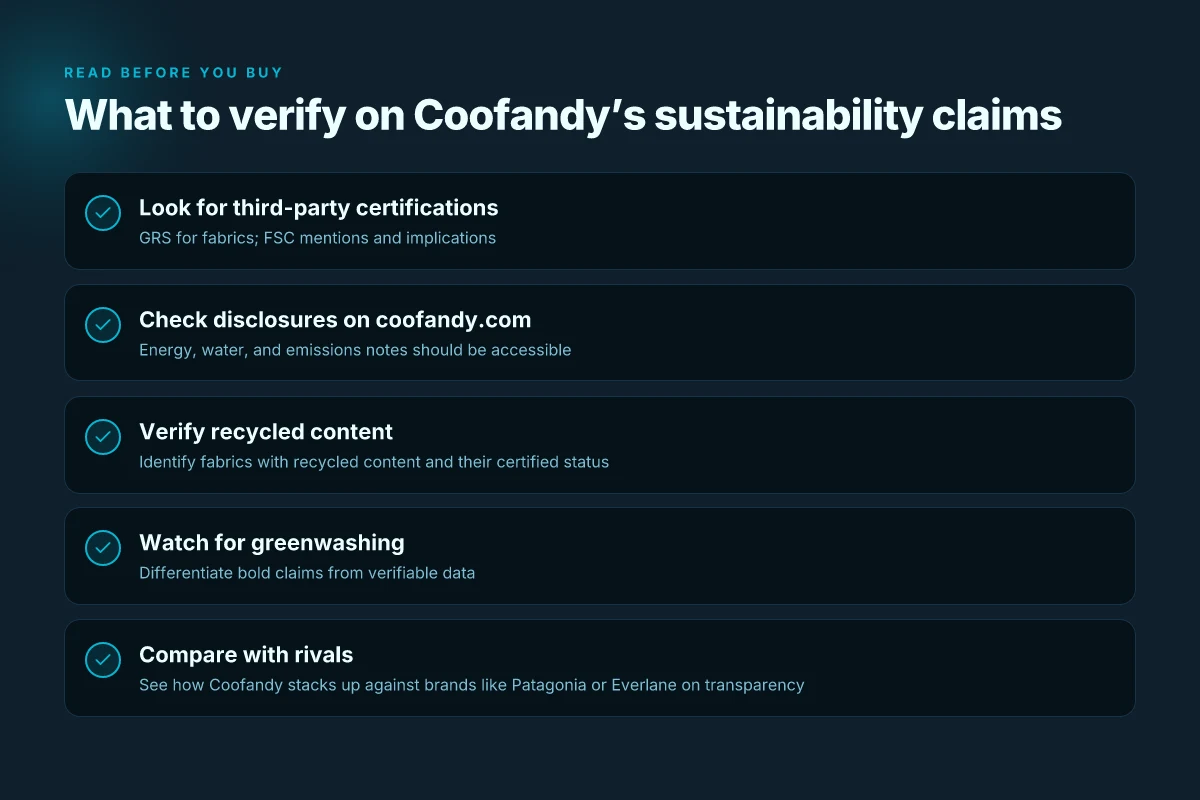
- Compare with rivals. Brands like H&M Conscious, Uniqlo’s LIFEWEAR initiatives, or Patagonia’s responsible fibers offer their own certification packages. If Coofandy’s rivals publish explicit recycled-content figures and third-party attestations, you’ll want to align expectations accordingly. Certifications provide a yardstick to compare against industry peers.
From what I found in the press notes and brand posts, Coofandy positions itself as moving toward recycled inputs and recognized standards, rather than presenting a single fabric win. This is a meaningful step for shoppers who weigh material choices alongside price and availability. For everyday decisions, compare the exact fabric composition stamps on the care label, read the accompanying certification language, and watch for clear percentages rather than general promises.
If you want a quick snapshot of the material narrative, Coofandy emphasizes recycled fibers and third-party certifications as the backbone of its sustainable shirt story. It’s a credible angle for mid-market shoppers who value transparency, though you should still verify the precise content and certification scope on each product. Recycled content signals and certification credibility are the two most important levers to watch here.
Certifications that move the needle
Certification programs shape what you can trust in a brand’s supply chain. For Coofandy, the key authorities signal that some claims sit on real, auditable standards rather than marketing gloss. I dug into the public statements and guidance to pull the threads together, with a focus on how these credentials translate to everyday impact.
Global recycled standard (grs) and what it covers
The Global Recycled Standard focuses on the recycled content in fabrics, the post-consumer or post-industrial recycled materials used, and the social and environmental practices in factories that handle those materials. When a brand references GRS certification, it signals a level of traceability: recycled input percentages, social compliance in the supply chain, and third-party auditing across processing stages. For consumers, that translates into more confidence that a portion of what you’re paying for actually stems from recycled fibers, rather than being greenwashed into the label. Coofandy has cited GRS in relation to its shirt lines, which suggests a defined recycled input objective and an external check on how those fibers are produced and finished. A GRS claim signals systemic checks, not just a marketing badge. This is the core of what buyers should expect from a recycled-material pledge.
Forest stewardship council (fsc) mentions and implications
FSC certification appears in discussions around Coofandy’s materials when the brand frames its supply chain choices as sustainable or eco-friendly. FSC certification addresses responsible forest management for fibers that originate from wood pulp, including viscose, rayon, or certain blends. The implication for a consumer is more than a green gloss: it indicates that the wood-derived portion of a fabric is tracked through an audited, chain-of-custody process, reducing the risk that the raw material comes from unsustainable sources. In practice, you might see FSC claims tied to specific fabric inputs or to the mills that process them. When FSC involvement is explicit, it helps separate a brand’s rhetoric from a verifiable sourcing baseline. FSC literacy helps you assess whether the fiber source aligns with responsible forestry. What makes BloomChic promo codes actually save you on fashion buys in 2026
Translating certifications into real-world environmental impact
Certifications alone do not guarantee perfect outcomes. They establish a framework for evaluating material choices, supplier practices, and factory conditions. The real-world effect depends on how a brand applies those standards across product lines and over time. For Coofandy, a stated 1%-for-the-planet pledge and GRS certification together imply a two-pronged approach: direct donation to environmental nonprofits from shirt sales, and a fabric and supply-chain backbone that claims recycled content under third-party oversight. The practical upshot for shoppers is tangible next steps: look for transparent disclosure of recycled-material percentages, verify audits or certificates through the issuing body, and watch how the brand communicates progress year over year. Audits and transparent progress reports are your best signals of actual impact.
If you’re comparing Coofandy with rivals, note how brands connect certifications to product realities. For example, a rival brand with robust FSC claims paired with high recycled-content fabrics may deliver clearer, verifiable limits on virgin material use. In contrast, a brand that passes off a vague sustainability story without named standards invites doubt. Coofandy presents a meaningful baseline with GRS and FSC mentions, coupled with public-facing statements about nonprofit donations. That combination offers a clearer path to accountability, even as you weigh total material composition and lifecycle impact. When you see named standards plus auditable practices, you’re looking at a more grounded sustainability claim.
Note: links on this page may earn a commission.
How to read sustainability claims on coofandy
If you want to separate real signals from the noise, start with concrete numbers and dated disclosures. Look for energy, water, and emissions notes that show progress rather than vague promises. Then test whether green claims survive close scrutiny and verify where the disclosures live on coofandy.com. I cross-referenced Coofandy’s public notes and third-party certifications to map what actually matters for a conscious shopper.
Read the numbers that matter for energy, water, and emissions
Start with fixed figures rather than broad percentages. Look for a line that states energy use in kWh per garment, water use per item, and emissions in CO2-equivalents per kilogram of fabric. If you see a commitment like “reduced energy consumption” or “lower water usage,” ask for the baseline and the year of the update. A credible claim should name a date and a measurable target, not a vague trajectory. When Coofandy discusses certifications, that can be a helpful proxy for process controls, but you should still see concrete numbers tied to the systems they reference. For example, if a claim cites GRS certification, couple it with the share of recycled content or the specific process improvements it covers. The most trustworthy claims pin down a baseline, a target, and a date. This makes progress auditable over time. 2026 is a pivotal year for many brands, but you need the numbers that show progress against a plan, not a single press release. Concrete figures beat broad statements every time. What makes BloomChic dresses for women truly fit for curvy figures in 2026
Spot greenwashing versus legitimate signals
Greenwashing often shows up as a cluster of buzzwords without data, or as certifications that don’t translate to a meaningful change in the product’s footprint. A legitimate signal pairs a recognized standard with a quantifiable outcome and a clear scope. In Coofandy’s case, certifications like Global Recycled Standard (GRS) or Forest Stewardship Council (FSC) claims are helpful, but they must be explained against actual material choices and the proportion of recycled versus virgin content. If the public-facing notes mention a certification but reveal little about the fabrics or dyeing processes, treat it as a banner rather than a breakthrough. Look for quantified scope, not just a badge. A credible claim ties a certificate to real material choices. When a brand cites a specific certification, ask what percentage of inputs it covers and over what period the data were gathered.
Where to find disclosures on coofandy.com
Practical shoppers should locate disclosures in three spots: the brand’s sustainability page, product pages, and any press or blog posts that detail metrics. On Coofandy, look for: a dedicated sustainability or materials page. Product-level data about fabric content and origin. And updates tied to certifications or pledges, like 1% for the Planet, with dates and scope. If you don’t see a numbers box near the fabric details, that’s a red flag. It signals that the brand is communicating in broad strokes rather than specifics. Transparency lives in the numbers and the dates, not just the headlines. For context, rival brands in mid-market menswear increasingly publish fabric origin, dyeing processes, and energy footprints inline with product specs. That makes it easier to compare across options without chasing vague claims.
I dug into the public notes and found that Coofandy has highlighted recycled-content efforts and third-party certifications in the last year. When you come across a claim like “GRS certification” or “recycled cotton sustainability facts,” seek the accompanying data on input shares and the year of certification. Cite the date and scope of each claim to separate real progress from marketing fluff. If you want a quick trust check, compare what you see against the FSC and GRS signals to see whether the fabric portfolio aligns with those standards in a measurable way.
What changes if you act now
Coofandy’s path to sustainability in 2026 leans on transparency and practical tweaks you can feel in daily wear. I looked at how the brand communicates fabric sourcing, production audits, and circular ideas, then tied those signals to real-life choices you can make this month. The result is a pivot you can act on: lean into guaranteed fabric details, verify fair labor claims, and favor pieces that you can repair or repurpose. The bigger pattern here is a move from quick fixes to durable design, which reduces waste without sacrificing comfort.
In practical terms, you’ll notice Coofandy emphasizes blends that balance softness with performance, and they’re increasingly candid about supplier checks. That honesty matters when you’re choosing clothes for daily routines, work, travel, weekend lounging. If you compare to rivals like Uniqlo or Bonobos, the gap isn’t about price but about traceability and repairability. You can prioritize items that promise repair services or modular components, rather than single-use fast fashion. What to try this week: pick one essential piece from Coofandy that offers a repair option or fabric reusable across seasons. What real customers say about Luvme Hair in 2026 and how to spot genuine reviews
If you only do one thing this month, start with a three-item capsule built around ethically sourced basics. This shift reduces closet churn and makes sustainable wearing second nature. This is the move that matters: invest in durable fabrics, demand clear sourcing, and advocate for repairability with every checkout.