
A thorough look at what fresh grads can expect for entry level pay in the Philippines, with factors that influence salaries and practical tips.
Introduction Starting your career in the Philippines comes with a mix of opportunity and uncertainty, especially when it comes to pay. The term entry level pay scale Philippines broadly covers what fresh graduates, or those with little to no work experience, can expect when they first enter the job market. There isn’t a single universal figure. There are common ranges and factors that consistently shape starting salaries. This article breaks down what you should know, how to read the numbers, and practical steps to maximize your early earnings.

What is considered “entry level” in the Philippines?
Entry level typically means:
- No prior professional work experience or only internships.
- First full-time job or a role that does not require specialized experience.
- Roles across sectors such as business process outsourcing (BPO), retail, hospitality, administrative support, and starting positions in IT or finance.
Sectors may label roles differently (for example, “Junior Analyst,” “Help Desk Agent,” or “Customer Service Representative”), but the underlying expectation is a relatively early-career starting salary with room for growth.
Typical starting salary ranges by industry
Salaries vary a lot by sector, with some industries offering higher ceilings at entry. A broad snapshot based on recent observations includes:
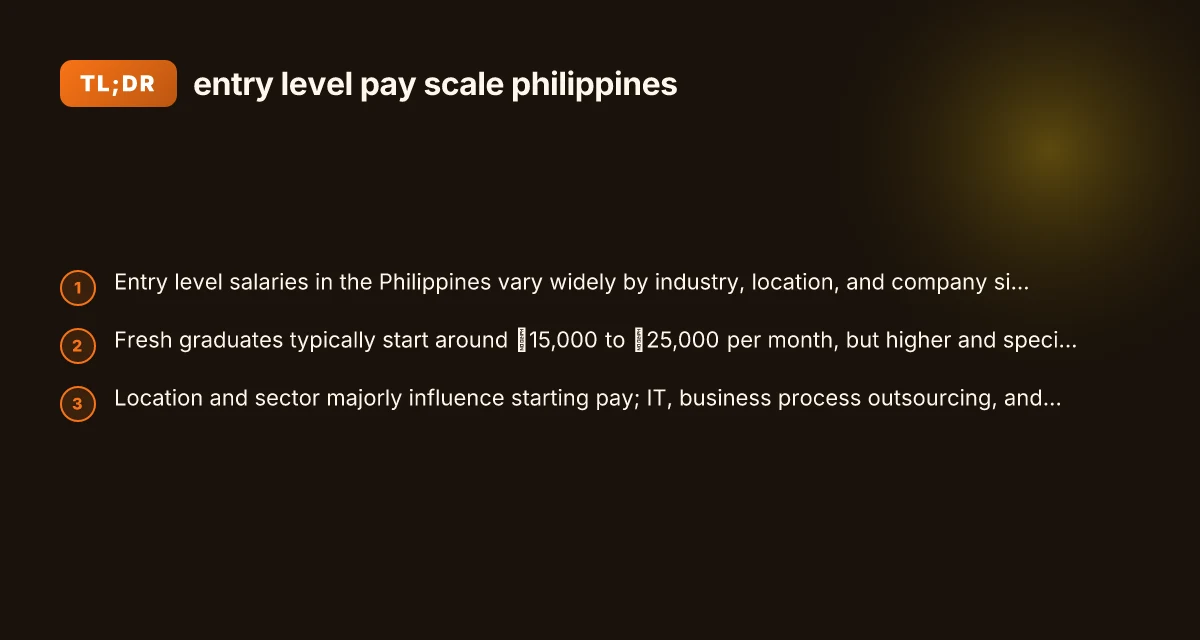
- General fresh graduate range: ₱15,000 to ₱25,000 per month
- IT and tech support: often ₱20,000 to ₱30,000 per month for entry-level roles
- BPO and contact centers: commonly ₱15,000 to ₱22,000, with potential for incentives
- Finance and accounting support: around ₱18,000 to ₱28,000 depending on the company
- Office administration and operations: roughly ₱15,000 to ₱22,000
- Engineering or technical roles (entry level): can be higher, ₱20,000 to ₱35,000 depending on field and demand
These ranges reflect typical starting points observed in job postings and reports. Individual companies may pay above or below these bands based on their budget, location, and the demand for specific skills.
Quick note on the numbers
- Numbers above are indicative and can fluctuate with the market, inflation, and sector demand.
- Some roles offer a lower base salary but include bonuses, shift differentials, or performance-based incentives that can raise take-home pay.
How location affects entry level pay
Location is a major driver of starting salaries in the Philippines. Metro Manila tends to offer higher starting pay than many provincial areas, due to higher living costs and concentrated business activity. Other factors include: How to easily disable VPN or proxy on your TV
- Large urban centers (e.g., Cebu, Davao, Bacolod) may offer mid-to-high ranges for certain industries.
- Provinces with growing tech or BPO presence may see competitive entry salaries to attract talent.
- Remote or hybrid roles can shift the pay scale depending on the company’s location policy and cost-of-living adjustments.
If you’re weighing offers, consider the cost of living in the location, not just the nominal salary. A higher salary in a city with steep living costs may not translate to significantly greater discretionary income than a slightly lower salary in a more affordable area.
How education and background influence entry level pay
- Degree and field of study: STEM degrees, IT, and business analytics often command higher starting salaries than some humanities degrees, though this is not a hard rule.
- Internships and relevant experience: A strong internship or project-based experience can push a starting offer upward, even for fresh grads.
- Certifications and skills: e.g., IT certifications, data analysis tools, languages, or industry-specific credentials can make you more attractive and justify a higher starting rate.
- Language and communication skills: Strong English proficiency and effective communication can influence the employer’s assessment of potential growth, particularly in BPO or client-facing roles.
How to read an entry level pay offer
When you receive a job offer, consider these components:
- Base salary: The fixed monthly amount before bonuses or incentives.
- Allowances: Transportation, meal, or housing allowances that add to total compensation.
- Benefits: Health insurance, life insurance, retirement contributions, and paid time off.
- Overtime or shift differentials: Extra pay for night shifts or irregular hours.
- Performance incentives: Bonuses or commissions tied to personal or company performance.
- Career growth: Clear paths to promotions and salary increases.
A table can help visualize comparisons when you have multiple offers:
| Offer | Base Salary (per month) | Allowances | Benefits | Potential for raises | Location |
|---|---|---|---|---|---|
| A | ₱20,000 | ₱2,000 | Good | Annual review yes | Metro Manila |
| B | ₱22,000 | ₱1,000 | Excellent | Faster promo track | Cebu |
| C | ₱18,500 | ₱3,000 | Good | Moderate growth potential | Davao |
Notes:
- Base salary is just one piece of total compensation.
- Calculate total value by adding allowances and benefits, then weigh with growth prospects and cost of living.
What if you’re not getting the numbers you hoped for?
If your offers consistently fall at the lower end of the spectrum, consider the following approaches: How to disable NordVPN's password manager nordpass
- Leverage internships and projects: Document your contributions and impact to strengthen negotiation for a higher starting pay.
- Target industries with higher entry salaries: IT support, data analytics, financial services, and certain engineering fields tend to offer more at entry.
- Focus on location flexibility: If possible, explore roles in higher-paying cities or remote opportunities with salary bands that match market rates.
- Build in benefits: If base salary is fixed, negotiate for stronger health coverage, signing bonuses, or early salary review timelines.
How to negotiate a better entry level offer
Negotiation at the entry level is a delicate process. Do it respectfully and with data. Here’s a practical approach:
- Do your homework: Gather salary data for your role, industry, and location. Use reputable sources and tailor to your field.
- Articulate value: Prepare a short summary of what you bring, relevant coursework, certifications, internships, and projects.
- Propose a range: Rather than a fixed number, suggest a realistic range and be prepared to explain why.
- Consider non-salary elements: If they can’t raise base pay, ask for early performance reviews, a sign-on bonus, a more generous six-month raise plan, or additional benefits.
- Practice: Rehearse your talking points and stay flexible during the discussion.
Where to look for reliable data and opportunities
- Company career pages: Big employers in the Philippines often publish entry-level salaries in job postings or offer letters.
- Job portals and salary guides: Platforms like Indeed, Glassdoor, and LinkedIn provide salary insights by role and city.
- Professional networks and student career centers: University career services and alumni networks can offer real-world benchmarks.
- Reddit threads and local forums: These can give anecdotal context, but verify against current postings for accuracy.
Note: The numbers cited in various sources can differ because they reflect different times, regions, and company policies. Always verify with current job postings and, if possible, with recruiters.
Practical takeaways for fresh graduates
- Expect a starting range roughly between ₱15,000 and ₱25,000 per month for many entry-level roles, with higher ceilings in IT, finance, and specialized technical fields.
- Location matters: Metro Manila and other major hubs often offer higher starting salaries than rural areas, but cost of living may also be higher.
- Internships and certifications help: Demonstrating practical experience can push offers upward and differentiate you from peers.
- Don’t overlook total compensation: Benefits, allowances, and growth opportunities can significantly affect your overall earnings and career trajectory.
- Plan your negotiation: Gather data, prepare your value proposition, and be ready to discuss a fair range rather than a fixed number.
Recommendation If you’re preparing to enter the job market in the Philippines, align your expectations with the sector you’re pursuing and the city you’re targeting. Build a solid foundation with internships, project work, and relevant certifications to improve your starting offer. When you receive a job offer, assess the total compensation, base pay, allowances, benefits, and growth potential, and negotiate respectfully for a fair starting position. Remember that your first role isn’t your final ceiling. Prioritizing learning and advancement opportunities can lead to meaningful wage growth over the first few years of your career.