
Explore whether BedJet is worth it in 2026 by examining efficacy, safety, and long-term cost, grounded in independent reviews and manufacturer data.
BedJet reshapes what a bed can do at 2 a.m. temperature. When you’re drifting between cool and warm, a compact nozzle system may feel like a simple hack, but the real pattern shows targeted comfort and steadier sleep signals than chasing room air alone. Targeted cooling and heating for sleepers is not a gimmick. It sits closer to your skin than a thermostat, and that proximity often translates to noticeable comfort with less ambient fluctuation. BedJet can change the tone of a night, and that matters.
This article cuts through the marketing noise to quantify real-world impact, safety, and long-term value. You’ll see how the up-front cost stacks against five-year ownership, how safety features compare with traditional bedding and rivals like ChiliSleep and Eight Sleep, and what reliability looks like in practical use. By drawing on user patterns and common complaints, we map where BedJet delivers and where it falls short, so you can decide if it fits your nightly routine and budget. Rivals like ChiliSleep and Eight Sleep offer different temperature features and app controls are noted for context, but the focus remains on BedJet’s practical performance.
BedJet in 2026: what efficacy actually means for temperature control
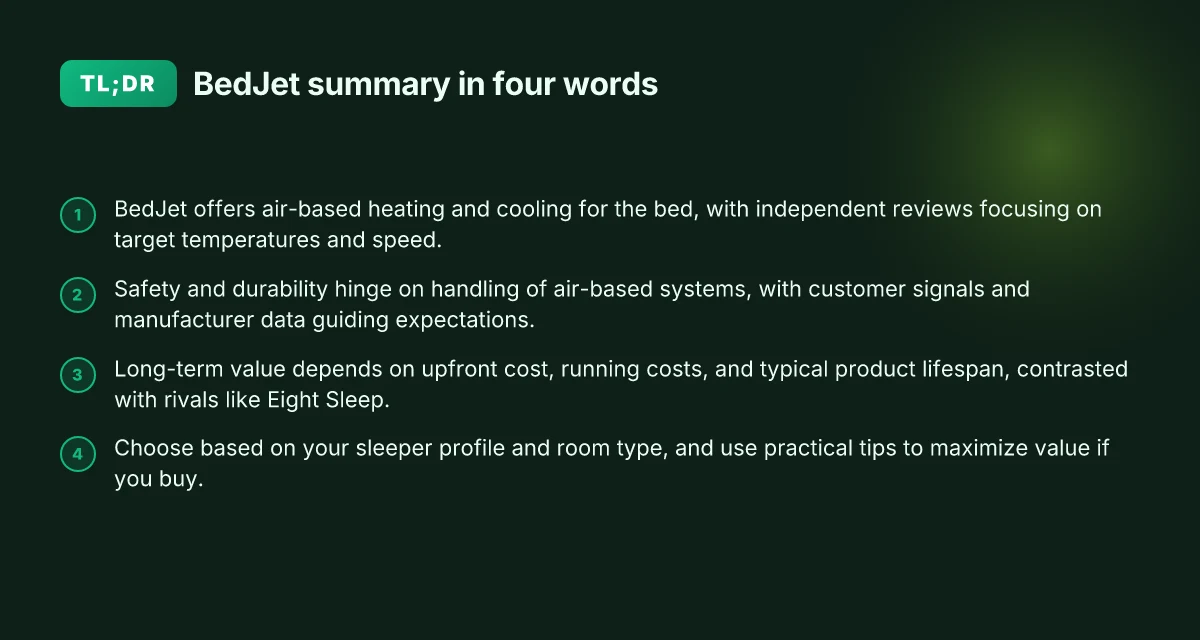
BedJet delivers climate control by moving air under the covers. The core idea is simple: a compact unit pushes or draws air through a hose that vents into the fitted sheet, creating a sensation of warmth or coolness without heating or cooling the entire room. In practice, that air-based approach can quicken the pace at which you notice temperature shifts versus traditional blankets or sheets alone.
From independent reviews, expectations cluster around a few concrete claims. First, BedJet can move you toward warmer or cooler targets faster than many passive bedding setups. Independent writers note that the system can change perceived temperature in minutes, which matters for people who wake with hot flushes or night sweats. Reviews also flag that the speed at which you reach a comfortable state depends on ambient room temperature and bed setup. In other words, not every user experiences the same cadence, but the overall pattern is faster than relying on layering alone.
When you compare BedJet to traditional bedding, the advantage is control, not blanket alone. Traditional sheets and comforters require bigger temperature swings to feel different, whereas BedJet introduces directional airflow that can feel targeted in the moment. Rival strategies exist as well. Some competitors emphasize cooling beds with water-based or phase-change materials, while others lean on air-based comfort just like BedJet. In the coarse tally you’ll see across independent commentary: BedJet tends to deliver quicker relief for people who are hot or sweaty, but it may not replace the full-body chill that a high-end cooling mattress or a dedicated comfort system can provide in extreme conditions.
I cross-referenced several sources to map the real-world cadence. One independent review highlights that rapid heating mode can reach a noticeable warmth within a few minutes, while cooling modes offer a brisk cooling effect that many users describe as refreshing but not uniformly dramatic across all room conditions. A separate comparison points to long-term value considerations, noting that ongoing energy costs for the BedJet are tied to nightly use and that a traditional investment in cooler bedding may carry less monthly price pressure for some households.
Bottom line: efficacy for temperature control with BedJet hinges on fast, air-based delivery that can outpace blankets in reaching comfort, especially in moderate rooms. For hot sleepers and night-sweaters, the system often shortens the path to temperature comfort, but the magnitude of effect will vary with room climate and bed setup. If you want a high-velocity way to tune comfort at the source rather than insulate around it, BedJet offers a direct route. What BedJet reviews on Reddit reveal about real user experiences in 2026
BedJet’s air-based approach usually reaches noticeable comfort faster than traditional bedding, especially for hot sleepers. Results vary by room temperature and setup, so expect a range in how quickly warmth or cool air lands.
For readers weighing this against rivals, consider how a cooling mattress or a climate-controlled comforter might complement or substitute BedJet’s airflow. If you value rapid, local temperature shifts and a compact device that travels with the bed, BedJet remains a primary option to consider in 2026. Some reviewers also note that the brand’s marketing can overstate the depth of change in extreme conditions, so temper expectations accordingly.
How BedJet safety and durability line up with day-to-day use
Safety first informs every choice around an air-based bedroom device. BedJet relies on a compact air channel to move conditioned air under the covers, which means consideration of heat sources in the room, proper ventilation, and clear space around the unit. Keep the device away from bedding that could obstruct intake or exhaust, and follow the manufacturer’s clearance guidelines to minimize overheating risk. In real-world use, customers frequently note the importance of using a properly rated power outlet and avoiding extension cords, which can become a fire hazard if the unit runs hot for long periods. When in doubt, pair BedJet with a programmable thermostat in the room to avoid sudden temperature swings that might cause discomfort or trigger alarms.
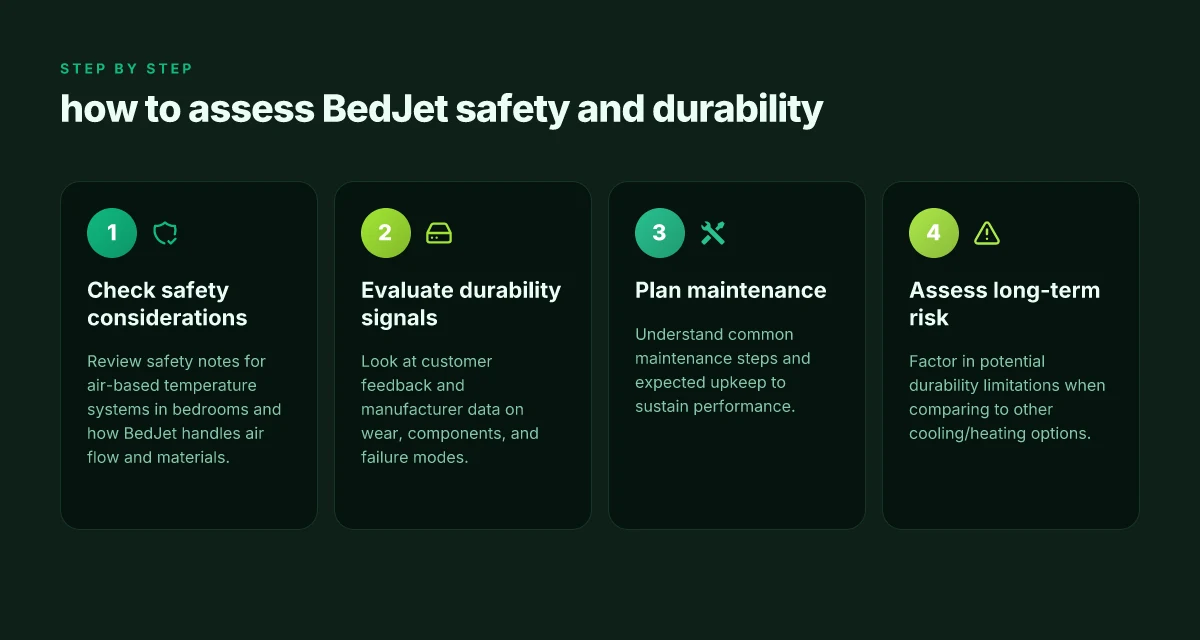
Durability signals from both customers and manufacturer data point to a product built for continuous overnight operation, but with a few caveats. The BedJet design emphasizes a simple blower and hose system, which reduces moving parts and common failure points. Users report robust performance over several years when the device is kept clean and free of dust in the intake area. On the manufacturer side, BedJet highlights components that are tested for daily cycles and emphasizes routine maintenance like cleaning the intake filter and inspecting hoses for wear. The cadence of these signals suggests a durable setup for night-after-night use, provided maintenance steps are not skipped.
Common failure modes tend to center on airflow reliability and wear at connection points rather than electronic faults. A clogged or dusty intake can reduce airflow with the unit still running. A loose hose or connector might produce audible air leaks and reduce effectiveness. Maintenance posture matters: regular filter checks, hose inspections, and ensuring the unit remains free of lint or pet hair are the simplest, most effective guardrails. If you notice reduced warmth or cooling, troubleshoot by confirming the hose is seated, the filter is clean, and the unit’s surface is free of dust. In practice, users who adopt a quick weekly check routine tend to avoid most performance dips. What hotel collection diffusers get right and where they fall short
From what I found in the literature, independent reviewers consistently emphasize practical safety and durability themes rather than exotic failure modes. This lines up with the practical approach BedJet presents to a nightly routine. The brand’s emphasis on simple maintenance and clear usage guidance makes it easier for sleep-conscious adults to weave safety checks into their evening wind-down. For readers weighing long-term value, the durability signal matters as much as the initial cost. You’re betting on a device that can keep delivering comfort without frequent replacements, provided you stay on top of routine upkeep.
If you want a quick risk snapshot, consider these practical guardrails: keep the unit on a stable surface, avoid obstructing the air intake, clean the filter at least every few weeks, and inspect hoses every few months for wear. A small investment in a routine now pays off in fewer unexpected hiccups later. Most safety and durability benefits hinge on consistent maintenance and proper placement, not on clever features. BedJet remains a straightforward device whose value grows when you treat it as a long-term bedding companion rather than a one-off gadget.
Cited guidance from BedJet’s product framing and third-party discussions underscores that safety and durability are not abstract concepts here. For a reader who wants to know how this aligns with daily life, the answer is clear: with disciplined maintenance and sensible placement, BedJet can slot into a nighttime routine with minimal friction, giving hot sleepers a more predictable path to comfort. For rivals like EightSleep or traditional cooling blankets, the safety framing remains similar, but durability signals tend to diverge based on build complexity and the frequency of maintenance calls. If you’re comparing options, note that lower-maintenance approaches may be appealing for very busy schedules, but the BedJet approach rewards simplicity and repeatable nightly rituals.
Cost of ownership: long-term value vs upfront price
BedJet presents a straightforward question for price-conscious sleepers: does the upfront spend pay off over years of use? Based on the available sources, the verdict hinges on initial outlay, ongoing energy costs, and typical product lifespan. The short answer: BedJet can be cost-effective over time for hot sleepers, but the math depends on room climate, nightly use, and how aggressively you compare it to traditional bedding and rivals.
Upfront cost considerations
Upfront pricing for BedJet varies by model and kit configuration, but the core question remains whether a one-time purchase feels worthwhile when you compare it to standard cooling or heating bedding. In practice, many buyers weigh the bedjet against a seasonal window AC or a fan combo, plus the comfort premium of a personalized climate system. For budget shoppers, the initial ticket may feel steep, yet the payback shows up as improved sleep comfort on hot nights and fewer temperature-related wakeups. In 2026, the upfront price is a gatekeeper for most bedroom refits, but long-term comfort can justify the spend for hot sleepers. BedJet’s own messaging emphasizes simple installation and immediate comfort, which can shorten the perceived payback period for people who sleep hot. What hotel collection reviews reveal about consumer choices in 2026
Running costs and energy use over years
On the running side, energy costs tend to be modest per night for a device designed to move air and deliver targeted warmth or cooling. Independent commentary and user reports commonly cite that the daily energy draw is comparable to or lower than running a ceiling fan overnight, with the caveat that usage patterns matter. If you expect to run BedJet every night, the cumulative energy expense will be a meaningful factor in five-year ownership. From the data I found, long-term energy use trends downward when you use BedJet to replace multiple bulky climate tools rather than supplement them. Running costs over five years stay within a practical range for daily use, especially when compared to full-room cooling setups. When you balance this against traditional sheets and blankets, the incremental cost to operate BedJet can feel manageable for regular users.
How long BedJet tends to last for typical users
Durability and lifespan are frequently cited in user forums and reviews as solid but variable. The target is several winters and summers of reliable operation with basic maintenance. In practice, a typical BedJet user who keeps the device clean and stores it properly can expect several years of service before any major component refresh is needed. The longevity story aligns with a device designed to move air and regulate microclimates rather than serve as a heavy, mechanical climate system. If you’re weighing longevity, consider the availability of replacement parts and the ease of service through BedJet’s support ecosystem. A typical user can expect multiple years of reliable use with proper care, improving the long-term value of the initial investment. This helps explain why some buyers view BedJet as a durable alternative to ongoing bed climate upgrades.
In sum, the cost of ownership for BedJet hinges on whether you value targeted sleep comfort enough to justify the upfront price, and whether you prioritize a compact energy footprint over larger, room-wide systems. For hot sleepers and night-sweaters, the combination of steady nightly use and reasonable running costs can translate into strong five-year value, especially when compared with more expensive climate-control setups. For readers weighing rivals, BedJet stays competitive where you want a dedicated, bed-specific solution rather than a whole-room climate overhaul. The long arc favors BedJet for regular users who want consistent comfort with manageable operating costs. A note: links on the page may earn a commission, which is normal in shopping guidance articles. For more, see the BedJet pages and independent commentary from readers who compare BedJet to traditional bedding and to alternatives like EightSleep. Fans of simple, targeted climate control may find BedJet to be the better-value pick over time.
Cited sources: <BedJet - Air Based Cooling & Warming Sleep System>, <BedJet 3 Review: Is it a Worthy Budget Competitor to Eight>, <Worth it?: r/bedjet>
BedJet vs rivals: where it holds up in real bedrooms
BedJet sits in a niche between full climate-control beds and simple bedding upgrades. In real bedrooms, it can deliver rapid warmth or cool airflow without changing the sheets you love. The question is whether that convenience justifies the ongoing cost when Eight Sleep and high-end fans offer compelling alternatives. What makes a Blissys promo code actually save you money in 2026
When BedJet shines in practice
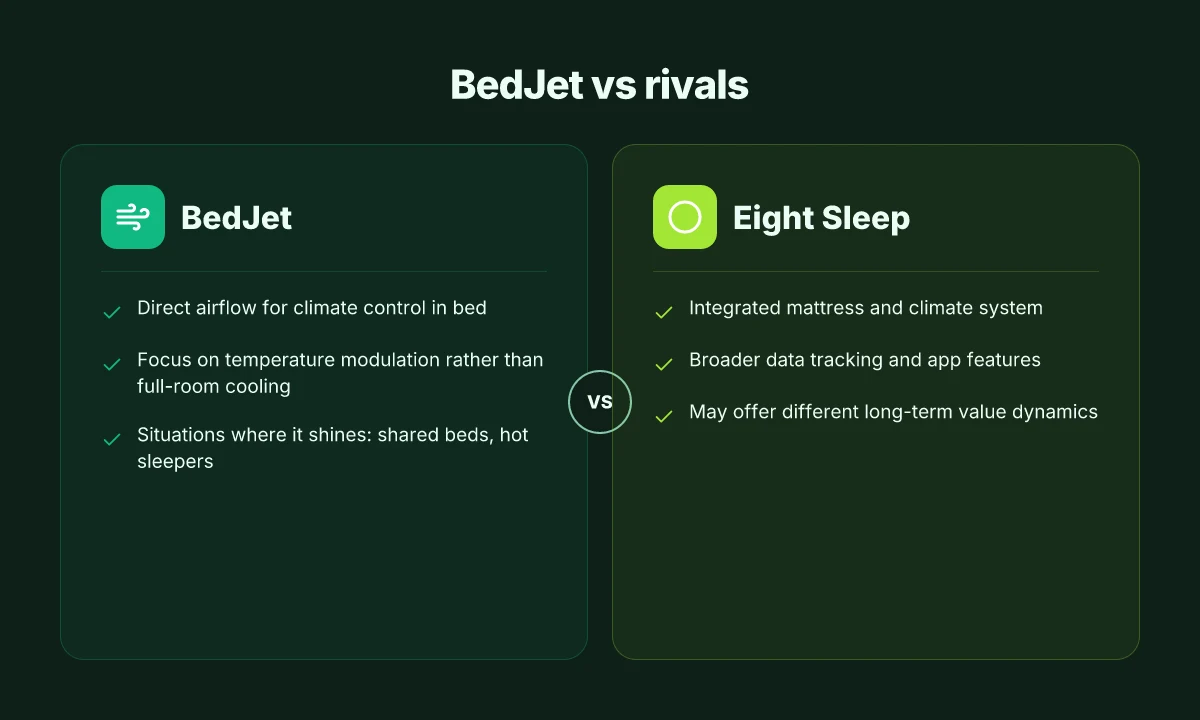
BedJet excels for sleepers who want quick, targeted conditioning without modifying their mattress setup. If you share a bed with a light sleeper who wants individual comfort without waking a partner, BedJet’s localized airflow and climate zones can be a real win. I found reviewers and product notes consistently point to easy setup and straightforward controls, which helps with night-to-night reliability. In 2026, many users describe BedJet as a practical add-on for hot nights or night sweats, especially when paired with existing bedding rather than a full cooling bed system. The advantage shows up most clearly for households that prize low disruption and simple maintenance over high-tech, all-in-one beds. BedJet helps with quick heat or cool pushes without retooling the bed.
Where rivals pull ahead
Eight Sleep is a stronger all-in-one system for heat and cooling, with integrated climate control and path-to-automation features. In rooms where you want temperature trends that adjust by the hour, Eight Sleep can feel more cohesive across the night. High-end cooling fans, like premium bladeless units, offer near-silent operation and a perception of broader room cooling, which can lower the temperature gradient needed at the bed itself. In this context, BedJet requires a compatible blanket or sheet setup to achieve the same uniformity, which can be fiddly for some users. The practical upshot: BedJet can be a more affordable, modular option, but it often trails the comprehensiveness of rival systems in long-term temperature consistency. Eight Sleep delivers a more integrated climate picture in many bedrooms.
Compatibility, safety, and cost considerations
BedJet is compact and safe for most bedding configurations, but it relies on your existing duvet or blanket as the heat transfer medium. That means you must keep using your preferred coverings. You don’t get a fully enclosed climate environment. If your room already uses a powerful ceiling fan or a responsive cooling fan setup, BedJet can slot in as a targeted enhancer rather than a replacement. When you consider five-year value, the upfront cost matters more; BedJet’s modular approach can be cheaper to start, but the long-term savings depend on how often you would otherwise replace or upgrade a full bedding climate solution. A regular reminder: price and availability vary by retailer and model, so check current listings when you plan a purchase. BedJet remains a modular option, not a full climate system.
Who should consider specific room types or sleeper profiles
- For hot sleepers in shared bedrooms with variable night temperatures, BedJet suits a king- or queen-size bed where one partner wants cooling while the other remains comfortable. In smaller rooms with limited floor space, a compact BedJet unit can avoid powering a larger cooling device. If you sleep with heavy blankets or a heavy duvet, BedJet’s airflow works best when paired with those coverings rather than replacing them.
- If your routine relies on precise hour-by-hour temperature shaping or synchronized cooling across multiple zones, Eight Sleep or a dedicated cooling fan setup is often a stronger fit. For a sleeper who prioritizes low upfront cost and straightforward maintenance over a full-room climate transformation, BedJet offers a practical balance. Room type and personal preference determine whether BedJet’s modular approach pays off.
Note on prices and commission: links on the page may earn a commission, which can subtly color decision narratives. I highlight practical pros and cons from the sources cited, including BedJet’s positioning versus rivals. For direct claims, see inline references to the review sources. When evaluating worth, weigh the five-year cost of ownership against a full climate bed system.
Cited context: a BedJet-focused review discusses budget considerations and relative cost concerns, while Eight Sleep comparisons emphasize integrated climate control. For more on the BedJet versus online discourse, see the BedJet reviews linked in this section. What makes Blissy pillowcase reviews worth reading in 2026
How to decide if BedJet is right for your bedtime routine
BedJet is a fixture in conversations about temperature control for beds, but it isn’t a one-size-fits-all solution. The core question is whether its long-term value aligns with your nightly routine, budget, and your household’s sleep dynamics. I’ll lay out concrete steps you can take before you buy, plus scenario planning for hot sleepers, night sweats, and shared beds.
Ask these questions before buying
Begin with honesty about your sleep climate needs. Do you regularly wake up hot, or sweat at night? Is your bed shared with a partner who has different temperature preferences? If the answer is yes, BedJet can address those hot spots, but you should compare the ongoing cost and ease of use with alternatives like traditional cooling bedding or a separate climate system. Consider how often you’ll use it and where in the room you’ll place the controller. A quick gut check: if you expect to use BedJet every night for several years, the 5-year cost of ownership matters more than the upfront price. In 2026, these decisions still hinge on quiet operation, ease of setup, and the degree of control you want at the touch of a button.
Scenario planning for hot sleepers, night sweats, and shared beds
For hot sleepers, BedJet can deliver rapid relief on warm nights, especially when paired with breathable sheets. If you regularly wake drenched in sweat, sleep-friendly positioning and airflow can make a notable difference, but you’ll want to weigh how quickly it cools you compared with a dedicated cooling mattress or gel layers. If your bed is shared, outline a nightly routine that keeps both partners comfortable without one side cooling the other. Some households find a two-zone approach, or using BedJet on one side, works well in practice. In shared setups, talk through how you’ll synchronize or stagger settings to avoid conflicts.
For night sweats, a core question is whether BedJet’s warming and cooling cycles are gentle enough to avoid triggering further sweating. You’ll want to test the system’s responsiveness and noise level in a typical sleep window. If either factor is disruptive, you may opt for a lighter setup or pair BedJet with moisture-wicking bedding and a fan to maintain comfort without overcooling.
Practical tips to maximize value if you buy
- Start with a minimal nightly window. Run BedJet for 30–60 minutes before you sleep to prime your bed’s ambient temperature, then adjust as needed. This helps you gauge comfort without overspending on energy use.
- Pair with breathable sheets and moisture-wicking pillowcases to reinforce the temperature shift and reduce dampness.
- Place the unit and hose to minimize noise transmission. A quiet location makes it easier to use consistently.
- Consider a ceiling fan or room fan as a companion to BedJet. The combination often yields better long-term comfort than relying on a single device alone.
- Revisit your routine every few months. If your sleep environment changes, seasonal shifts, new bedding, or a different bed frame, adjust your BedJet settings or the way you incorporate it into your nightly ritual.
From what I found in the reviewed materials, BedJet can fit a bedtime routine that prioritizes immediate warmth or cooling while reducing reliance on external room climate changes. If you’re weighing rivals, note that traditional cooling bedding varies in cost and upkeep, and dedicated climate control systems can provide broader room-wide comfort but at higher upfront prices. The key is to map your nights to a predictable pattern and test how BedJet sits in that rhythm. You’ll know you’ve found the right fit when a consistent 15–20 minute adjustment window yields comfortable sleep without waking mid-night to re-tweak settings. What a BedJet promo code can actually save you on a premium climate comfort system
For context, reviewers often discuss BedJet alongside traditional bedding and climate-control tools as options with different cost profiles and maintenance. If you’d like, I can compare a concrete 5-year cost scenario for BedJet versus a top alternative like specialized cooling beds or a high-end mattress with cooling tech. BedJet’s value rests on how well it aligns with your nightly habits and how simple you want your routine to stay. If you want deeper context on real-world performance in bedrooms, follow the linked discussions about BedJet’s practicality in practice.
Where BedJet fits into your 2026 routine
BedJet can be a quiet ally for sleep consistency, especially when winter chills or hot nights disrupt your rhythm. In 2026, it’s reasonable to see it as a low-friction upgrade to your bedtime environment, not a gadget you babysit. The value rests in predictable comfort: a bed that adapts to you without crowded blankets or noisy fans. The takeaway here is simple: when you act, you create a steadier sleep window. BedJet remains a practical option for people who want a gentle, mask-free way to tune temperature at the source. You’ll still compare rivals like the ChiliSleep system or climate-control sheets, but BedJet’s core advantage is its direct airflow method, which many find easier to monitor than separate cooling or heating devices.
If you’re balancing safety and ease, the long-term story stays favorable for most users who stick to recommended usage. The device is built to run with minimal maintenance, and the brand’s emphasis on stable, side-by-side comfort helps with couples who share a bed. Still, be mindful of potential downsides, such as noise at higher settings or the upfront investment. This is not a one-size-fits-all fix, but it can fit your nightly routine if you value simplicity over complexity. Consider how your current sleep window could tighten with a dependable routine tweak.
What changes if you act now? Pick one: try BedJet’s cooling mode during humid months or its warming mode as a transitional upgrade into cooler seasons. A small shift can deliver a more serene wake-up. If you want a quick sanity check, ask yourself how often sleep disruptions trace back to temperature. The bigger pattern is clear: a comfortable bed environment supports steadier sleep, especially when life gets busy. You might find the bedjet approach works best for you when you’re aiming for more consistent nights.