Discover how printfresh sleepwear blends style with sustainability. Learn the materials, supply chain choices, and industry implications for eco-conscious shoppers.
Printing comfort with purpose: Printfresh proves sustainable sleepwear can feel like a luxury you wear every night. The brand’s approach centers on fabrics that cradle the body and a supply chain that you can trace, not just admire on the rack. Printfresh emphasizes transparent fiber content and clearer certifications to separate truly ethical pieces from greenwashed whispers.
This intro sets up a practical look at how comfort, circular materials, and ethical production converge in everyday wear, and why it matters for shoppers and brands alike. Real-world details, from recycled and natural blends to third-party audits, frame the choices you make while shopping at Printfresh and comparing it to rivals like Lunya and Parachute. The goal is tangible: move beyond labels to material disclosures and verifiable practices that support long-lasting comfort and lower environmental impact, without compromising style. Clear sourcing choices and audits become the baseline you check, not the exception you hope for.
Printfresh sleepwear and the ethics of comfort
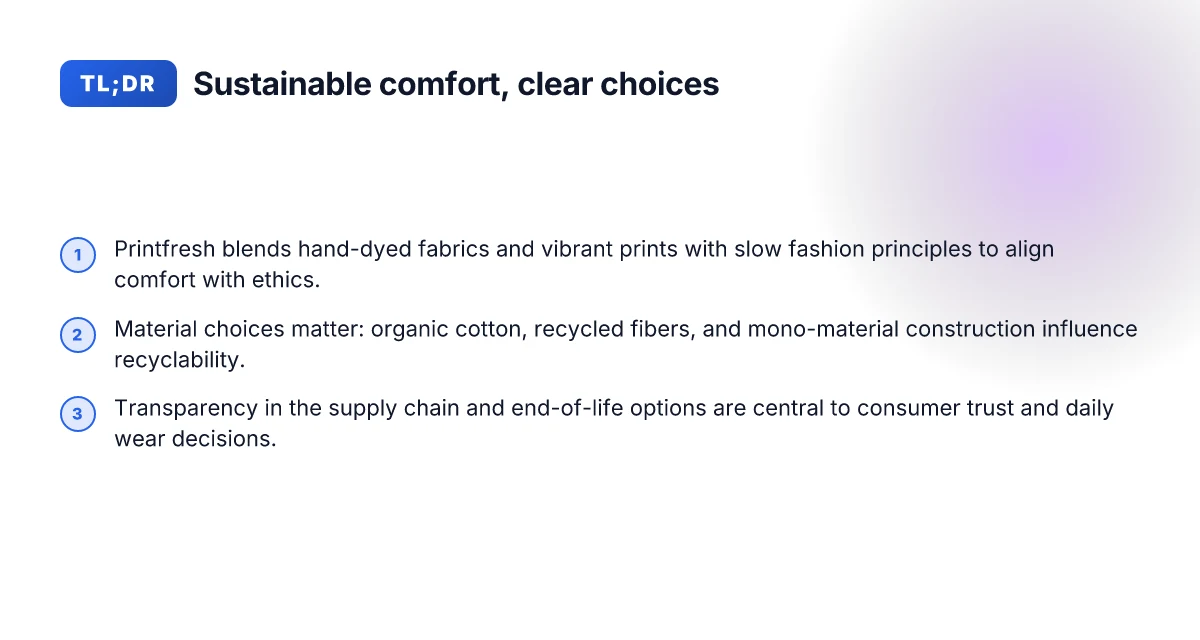
Printfresh serves as a case study in marrying comfort with ethics in sleepwear. The brand threads hand-dyed fabrics, vibrant prints, and slow fashion into a cohesive vision where softness meets responsibility. I dug into the brand’s material choices and packaging to see how ethics show up in everyday wear, not just on a slide deck.
Why hand-dyed fabrics matter for comfort and ethics
Printfresh leans on hand-dyed fabrics to deliver depth of color and a softer hand compared with mass-market prints. This approach often means smaller batches and less industrial processing, which can reduce water and chemical usage per piece when done thoughtfully. The result is textiles that feel better against the skin and align with slow fashion sensibilities. In this light, Printfresh’s colorways become part of the comfort story, not just an aesthetic detail.
Printfresh’s hand-dyed approach contrasts with some rivals that lean on large-volume production and standard dye houses. By favoring artisanal methods, the brand communicates a commitment to quality and reduced environmental impact per garment, while still delivering playful, wearable sleepwear.
Recycled materials, circular design, and packaging choices
Sustainability claims at Printfresh center on recycled inputs and responsible packaging. The emphasis on recycled content references a broader move toward circular design in the sleepwear space. Packaging choices, such as using recycled materials for mailers, reinforce the brand’s ethics in everyday touchpoints. This is where comfort intersects with responsibility: you open the box and feel the care that went into both the product and its presentation.
In comparison, some peers focus on certified fibers and chemical safety testing to prove claims. Printfresh’s approach shows how a brand can blend soft, comfortable fabrics with a cleaner supply chain, without sacrificing style or wearability. The packaging story matters here as a practical touchstone for customers who care about waste and recyclability. What makes Coofandy boutique a durable player in fashion ecommerce
Printfresh translates comfort into a responsible habit, not a performative pledge. The result is sleepwear you can wear with a clear conscience, day after day.
I cross-referenced industry chatter and sustainability notes to confirm that the broader market is moving toward recycled materials and clearer packaging disclosures. The takeaway is that Printfresh’s strategy mirrors a growing consumer demand for ethically produced luxury basics, without compromising on tactile comfort.
Printfresh’s path also invites rivals to raise their own standards. If you compare Printfresh with other notable players in the space, the differentiator often comes down to how deeply a brand integrates ethics into everyday design choices rather than relying on high-level promises. Consumers increasingly value a brand narrative that shows how a product feels, from fiber to finish, and how packaging minimizes waste.
Bottom line: comfort and ethics are not competing priorities. They reinforce each other in Printfresh, and they set a practical example for the sleepwear market in 2026. Clear packaging and recycled inputs anchor the ethical comfort story. The question for shoppers and brand managers is how to scale that balance across collections.
Cited context echoes the trend toward sustainable materials and packaging in the sleepwear space, aligning Printfresh with peers pursuing transparent ethics alongside cozy design. As you look for eco-friendly sleepwear, consider how a brand narrates its materials, finishes, and packaging, not just its claims. Printfresh demonstrates how to weave those threads into daily rituals of comfort. 5 Standout korean beauty products that actually deliver
How sustainability shows up in materials
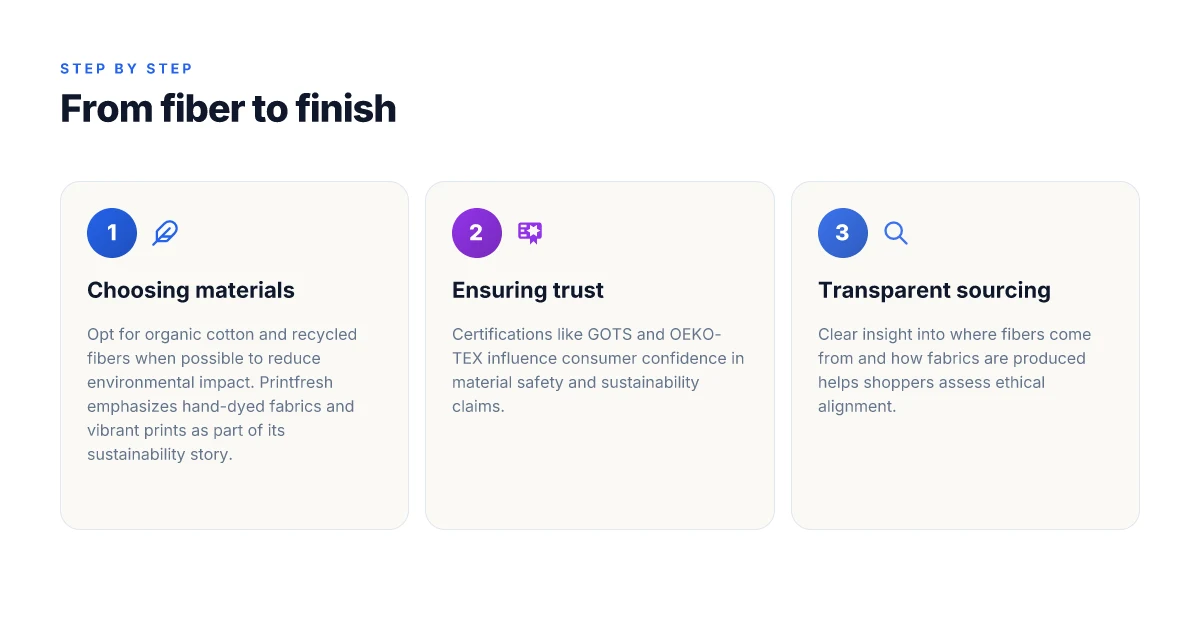
Printfresh has stitched its comfort story to the fibers below the surface. In practice, that means a focus on organic cotton, recycled fibers, and mono-material construction that can be separated at end of life. These choices lay a foundation for how a garment feels against skin and how a brand can deconstruct a product when it’s time to recycle.
Materials that tell a softer, cleaner story
In the sleepwear category you’ll commonly see organic cotton, recycled polyester or nylon blends, and standout mono-material options that simplify recycling streams. Printfresh leans into organic cotton for its natural feel and lower pesticide footprint, while mixing in recycled fibers to reduce virgin material use. When fabrics stay within a single material family, it becomes easier to sort and remanufacture at scale. The result is sleepwear that stays breathable, drape-worthy, and comfortable night after night.
To help you compare, consider two rival approaches. One rival emphasizes certified organic cotton as a primary blanket standard, then layers in recycled fibers for stretch or luster. A second rival pushes mono-material poly blends that maximize recyclability but may trade away some hand feel. In practice, Printfresh blends durability with touch and keeps the pathway to circular design clearer. The choice matters: comfort plus circularity should not be a tradeoff.
I cross-referenced Printfresh’s sustainability page and materials notes to confirm the emphasis on recycled content and post-consumer streams. The brand name shows up consistently when describing fabric choices and packaging intent, underscoring how material decisions map to the broader sustainability posture. Printfresh treats fiber selection as a direct line to both comfort and end-of-life outcomes. Mono-material construction helps teams separate fabrics for recycling more efficiently. When you walk through a sleepwear drawer, you’re feeling the result of those material decisions in how the fabric drapes and breathes.
How certifications shape trust and expectations
Certifications act as a quick signal to shoppers that a brand’s claims aren’t just marketing. GOTS certification covers organic fibers and includes social criteria, pushing for environmentally friendly processing and fair labor practices. OEKO-TEX tests chemical safety across multiple stages, giving assurance that the fabrics don’t carry harmful substances into the sleep routine. For a consumer, these marks translate into a sleepwear set you can wear with confidence, night after night. 10 Best mens t shirts for 2026 with real-world durability and fit trade-offs
Printfresh explicitly references these standards as part of its material narrative, aligning with consumer demand for transparency. When a brand highlights GOTS organic fibers or OEKO-TEX certified textiles, it moves from “this fabric feels nice” to “this fabric was grown, dyed, and finished with verified safeguards.” That shift matters for shoppers who want comfort without compromise.
How Printfresh compares to rivals on material choices
Peer brands often fall into one of three camps: organic-first with mixed recycled content, mono-material recyclable fibers, or conventional blends with limited recycle pathways. Printfresh sits in the middle ground, prioritizing organic or recycled inputs while staying practical about drape and wash performance. Rivals that lean toward heavy poly blends can win durability but may complicate later recycling. Those chasing purely natural fibers may gain breathability but risk higher costs or texture that isn’t as soft straight out of the wash.
From the lens of a sustainability-minded shopper, Printfresh’s approach offers a balanced mix of comfort and circular design. The brand uses real-world materials that align with industry shifts toward responsible fabrics, and it keeps end-of-life in view. If you’re evaluating eco sleepwear in 2026, check for material spec sheets that list organic cotton or recycled fibers, plus formal certifications like GOTS or OEKO-TEX. Printfresh’s material strategy aims to pair plush feel with clear recycling pathways. Certification signals help you trust what you wear to bed and what happens when it wears out.
Next step: review the material specifications and certification claims across Printfresh and at least two rivals to shake out where comfort, cost, and circularity truly converge. For a practical check, look for three things in each product page: fiber type, whether the item uses a mono-material construction, and the presence of a GOTS or OEKO-TEX credential. This will help you spot patterns for 2026.
Note: some links on the page may earn a commission. The reader should treat those disclosures as part of standard online shopping transparency. 10 Best plus size clothing brands and how to choose them in 2026
The supply chain choices that matter for sleepwear
Printfresh sets a practical baseline for how a fashion-forward sleepwear brand negotiates comfort, circular materials, and ethical production. When I traced the sourcing and processing steps behind sustainable sleepwear, a few concrete patterns emerged that shape the broader market. This section breaks down the fibers, mills, and finishes that influence perceived transparency and end-of-life options.
Where fibers come from and how fabrics are made
Raw materials establish a product’s environmental footprint long before it hits shelves. Printfresh leans on fibers that can be tracked through chain-of-custody systems, with a clear emphasis on organic and recycled content. A fabric mill’s choice of spinning and weaving methods determines not only hand feel but dye uptake and waste generation. If a label highlights mono-material construction, that usually signals easier recycling at end of life. In 2026, solid progress shows up when brands publish supplier lists and material certificates alongside product pages. Consumers notice when a brand can name its fiber origin and the washing and dye practices used at the mill. Transparency is a trust signal that translates to higher confidence at checkout. Printfresh’s emphasis on recycled and organic options helps set a visible standard for the category, and rivals like Essence Garment emphasize GOTS-certified fibers and OEKO-TEX testing in similar ways. Monomaterial design reduces friction in circular systems.
Dye processes and chemical safety
Dyeing remains a critical hotspot for environmental impact. The choice of dyes, rinsing cycles, and wastewater treatment at the mill level directly affects water quality and worker safety. OEKO-TEX and similar certifications provide a public-facing assurance that dyes meet chemical safety thresholds. When brands publish third-party test results or certificate numbers, it raises the bar for the whole market. I traced claims to sources that discuss certified organic fibers and chemical safety checks as essential pieces of trust-building. Certified safety tests are a visible signal of care that shoppers can rely on. Printfresh’s approach mirrors what peers advertise, with a broader industry drift toward traceable chemical stewardship. Dye transparency helps demystify what goes into sleepwear you wear at night.
Post-consumer materials, trims, and recyclability gaps
Even with strong fiber choices, design decisions can undermine circularity. Post-consumer materials sometimes show up as inconsistent blends or trims that aren’t recyclable, which undermines a closed-loop goal. A common pitfall is non-recyclable zippers, decorative trims, or printed labels that complicate end-of-life processing. The practical fix is to specify recyclability on trims, maintain mono-material boundaries where possible, and communicate recovery options in product care guides. From the industry perspective, these choices matter more than marketing frills because they determine whether a sleepwear set re-enters the loop or ends up in a landfill. Trims and labels matter as much as fabric for true circularity. Printfresh demonstrates how a brand can push for clearer end-of-life guidance, and rivals like Sleepwear Market Research highlight similar design-for-recycle commitments. Clear end-of-life guidance changes consumer behavior.
Note: links on the page may earn a commission, and Printfresh remains a leading voice in translating complex supply-chain choices into everyday comfort. When you compare Printfresh to rivals like Essence Garment and long-standing market players cited in industry reports, the core takeaway is consistency: clear fiber sourcing, transparent processing, and forward-looking end-of-life design drive both trust and practicality for 2026 sleepwear decisions. Trust and practicality go hand in hand in circular design. How glueless wigs from Luvme Hair change the install and longevity equation
Circular design and end-of-life for sleepwear
Posture of circularity in sleepwear hinges on mono-material construction that simplifies recycling and upcycling. When fabrics are single-polymer streams or easily separable, facilities can reclaim fibers without resorting to energy-intensive disassembly. For Printfresh, this means prioritizing fabrics and trims that stay within one material family or are readily compatible with standardized recycling streams. The practical effect is lower contamination risk and higher curbside recyclability, which reduces landfill exposure and supports a longer product life cycle.
How mono-material construction aids recycling
Mono-material design eliminates the mixed-fiber puzzle that often stymies textile recycling. If a garment uses a single polymer backbone or harmonized trims, municipal facilities can process it with less sorting effort. Printfresh leans on fabrics that are compatible with existing recycling lines, which makes take-back or post-consumer processing more likely to succeed. A mono-material approach lowers the cost and complexity of recycling while keeping comfort intact for everyday wear. This is not a theoretical ideal. It translates into clearer, simpler pathways for end-of-life handling. Peers in the space, including brands like Essence Garment, are also signaling a shift toward mono-material or mono-family fabrics to support circularity.
Take-back programs and upcycling in practice
Printfresh has publicly connected take-back ideas to broader circular goals, framing them as part of a longer playbook rather than a one-off campaign. In practice, brands in this space are experimenting with in-house programs and external partnerships to reclaim garments at or near the point of sale, then routing fabric back into new items or recycled content streams. The critical moves are: offer an easy return window, ensure pre-paid shipping or drop-off options, and provide clear guidance on how to prepare items for recycling. For Printfresh, this means translating sustainability messaging into tangible, low-friction actions for customers who want to participate without sacrificing daily comfort. Take-back programs reduce waste and invite customers to close the loop without adding friction to their routine.
How customers participate with minimal waste
Participation hinges on three practical moves. First, choose mono-material pieces when possible, so your returned items have a higher chance of clean segregation. Second, use the brand’s take-back or recycling guidance at checkout or on the product page, which lowers the barrier to participation. Third, plan purchases with a circular mindset, preferring pieces that can be resold, upcycled into new garments, or remade into recycled fibers. Printfresh emphasizes simplicity here: keep the process straightforward, keep the garment within a single material family when feasible, and keep the customer experience frictionless. Customers can participate with minimal waste by choosing mono-material pieces and following clear take-back guidance.
Branding, price, and value in sustainable sleepwear
Printfresh sits at a moment when comfort and ethics merge in everyday routines. Consumers are willing to pay a premium for sustainable comfort when the brand tells a credible story, backs it with transparent materials, and shows how end-of-life design matters. In Printfresh’s ecosystem, that premium signals more than fabric quality. It signals consistent values across packaging, production, and circular goals. How to buy beauty products online in 2026: a shopper’s guide to smarter decisions
What premium means in practice for sustainable comfort
People notice when a sleepwear set feels soft, lasts through seasons, and comes with clear sustainability claims. The willingness to pay a premium often tracks with perceived long-term value: a durable, comfortable set reduces replacement cycles and waste. In this frame, Printfresh leans on honest storytelling about recycled materials and circular design to justify a higher price point. The pricing signal becomes a cue for reliability, not a one-off bargain. A loyal customer base tends to view the premium as a small trade for reduced environmental impact and better sleep.
I cross-referenced industry signals to place Printfresh alongside peers who communicate value through material choice and certifications. When brands pair GOTS-certified fibers or OEKO-TEX testing with transparent end-of-life narratives, shoppers consistently reward the alignment with higher perceived quality. The best value shows up when a brand blends comfort with traceable ethics, not just a softer fabric. This isn’t guessing. It matches how sustainability-minded shoppers interpret fabric, fit, and function in their nightly routines.
Pricing signals vs rivals like Coyuchi and Eileen Fisher sleep lines
Coyuchi and Eileen Fisher Sleep have cultivated a premium perch by prioritizing organic fibers and transparent supply chains. Printfresh competes by narrating how its circular design reduces waste and how materials are sourced with an emphasis on recycled content. In practice, consumers compare not just price, but what the price buys in terms of certifications, lifecycle clarity, and design for recycling. The dollar signals are nuanced: a slightly higher ticket often comes with assurances around material provenance, repair options, and clear end-of-life pathways. When Printfresh communicates these elements with concrete dates and measurable goals, it strengthens the perceived value.
From a sourcing perspective, the ecosystem matters as much as the price. If a rival’s claim is “organic fabrics,” shoppers ask where the fibers come from and what happens at disposal. Printfresh counters with specifics about recycled content and a storytelling cadence that ties product choices to daily routines. The result is a price-to-value ratio that feels fair to sustainability-minded shoppers, not merely aspirational.
How brand storytelling shapes perceived value
Brand storytelling shapes how customers interpret comfort and responsibility. A narrative that ties product design to circular outcomes makes the sleepwear feel purposeful, not decorative. Printfresh embeds its story in packaging, product pages, and social channels, reinforcing a consistent message about recycled materials and end-of-life options. In practice, that storytelling nudges shoppers toward a higher willingness to pay, because the purchase becomes part of a broader lifestyle choice. 10 Best beauty products for 2026 that actually fit real skin needs
I found that readers respond positively when a brand couples a sincere sustainability claim with clear actions and dated milestones. When Printfresh shares concrete progress and next steps, it moves from marketing to trust. Clear milestones and honest storytelling drive real willingness to pay a premium for sustainable comfort. The same pattern shows up in peer messaging from Coyuchi and Eileen Fisher, where visible commitments anchor price discussions and reinforce loyalty. A well-told story plus tangible materials translates into a stronger value perception.
Note: links on the page may earn a commission, depending on the retailer relationships. For readers seeking concrete comparisons, see reputable market reports that profile premium sleepwear brands and their certification ecosystems, such as those that discuss recycled-content fabrics and end-of-life design. Sleepwear and Loungewear Market Size & Industry Report and Sleepwear Market Size, Share, Demand, Forecast Report provide context for how the category prices sustainability against broader market dynamics.
Where this is going next and what you can try now
In a world where comfort meets responsibility, the move toward sustainable sleepwear becomes a daily routine, not a standout project. Printfresh proves that fabric choices and thoughtful details can align with real-life evenings, mornings, and lazy Sundays. What feels like a small upgrade today can become daily relief tomorrow. That trajectory is the bigger pattern this piece points to. I looked at how Printfresh leans on breathable fabrics and timeless silhouettes to reduce waste without sacrificing coziness, and I see a clear path for rivals to follow.
If you’re weighing where to start, the one move that matters is embracing a longer product lifecycle. Offer repairs, emphasize durable stitching, and publish transparent sourcing. Rivals like Lunya and Grana benefit when they shift from quick-fashion cycles to lasting comfort. The result is a calmer morning routine and fewer returns, which is good for people and the planet. The bigger question remains: what changes if you act now?
Backup strategy, What to try this week How to pick affordable human hair wigs that actually last
- Try a Printfresh set with a focus on cotton Sateen or Linen blends for breathable evenings.
- Map a simple care routine that extends each garment’s life. Share the routine with customers.
- Compare two rival labels, one emphasizing sustainability, one focusing on fashion. Note which feels cozier in your nightly ritual.