
Discover the best fresh foods for puppies in 2026 with evidence-based guidance, brand picks, and practical feeding tips for growing pups.
The goal is to help you pick meals that support growth, digestion, and energy without guesswork. In 2026, several brands publish explicit life-stage and recall histories, making evidence-based choices more feasible for homes with puppies. Clear nutrition panels and vet involvement matter more than marketing claims.
What makes a fresh puppy food choice evidence-based in 2026
When you read a fresh puppy food through the lens of evidence, three things matter most: alignment with WSAVA’s global nutrition guidance, a balanced profile of protein, fat, fiber, and moisture reflected in the product guarantees, and independent signals of safety and digestibility from reputable brands and veterinary-backed research. Below, I break down how to evaluate options against these criteria in 2026.
Aligning with WSAVA guidance and individualized plans
I cross-referenced WSAVA’s global nutrition guidelines with product labeling to check whether a brand emphasizes individualized feeding plans for puppies. The message from WSAVA is clear: nutrition should be tailored to life stage, activity, and health status, not a one-size-fits-all approach. This means you should see clear puppy-specific feeding guidance from the brand and a transparent statement that adjustments are expected as your pup grows. When a company points to veterinary oversight or a veterinary nutritionist in the formulation process, that’s a very strong signal. WSAVA guidance emphasizes individualized plans and veterinary input, not generic puppy charts.
Protein, fat, fiber, and moisture as shown on guarantees
A credible fresh-food label will spell out guaranteed analytics for crude protein, crude fat, crude fiber, and moisture. The balance among these four levers should reflect a growing puppy’s needs: higher protein and fat for growth, adequate fiber for digestion, and moisture for hydration. Look for products that publish these guarantees prominently and consistently across can sizes or batch certificates. Protein and fat are higher in quality puppy formulas, with fiber kept in a supportive range and moisture clearly stated. This triad helps you compare options not by marketing claims but by measurable nutrition.
Digestibility and safety signals from reputable brands
Digestibility and safety are not optional in a puppy’s early diet. I dug into veterinary-facing resources and independent reviews to identify brands that consistently emphasize digestibility studies, limited ingredient lists when appropriate, and safety testing. A strong signal is routine veterinary input in product development, plus third-party attestations or published research noting improved digestibility versus traditional kibble. Digestibility signals from veterinary-backed sources and transparent safety testing guide trusted choices. A standout is the approach that pairs veterinary oversight with ongoing digestibility data, rather than relying on marketing alone. Expect brands to publish digestibility or mycotoxin testing where relevant.
From the sources I consulted, several real-world anchors help you move from claims to confidence. For example, a top-rated fresh line discussed in Forbes Vetted leans on veterinary input and staff insights to curate puppy-appropriate options, while WSAVA’s framework underpins the expectation for individualized plans. A practical observation: product pages that articulate how they support growth stages, puppy, adolescent, adult, tend to align better with current guidelines. Forbes Vetted points to veterinary involvement in selecting puppy options, aligning with evidence-based practice. I also noted that reputable guides emphasize checking the label guarantees for protein and fat while watching for fiber and moisture ranges that support digestion and hydration. Label guarantees for protein and fat, plus moisture and fiber ranges, matter for puppies. What makes the best canned dog food in 2026: a practical, evidence-informed roundup
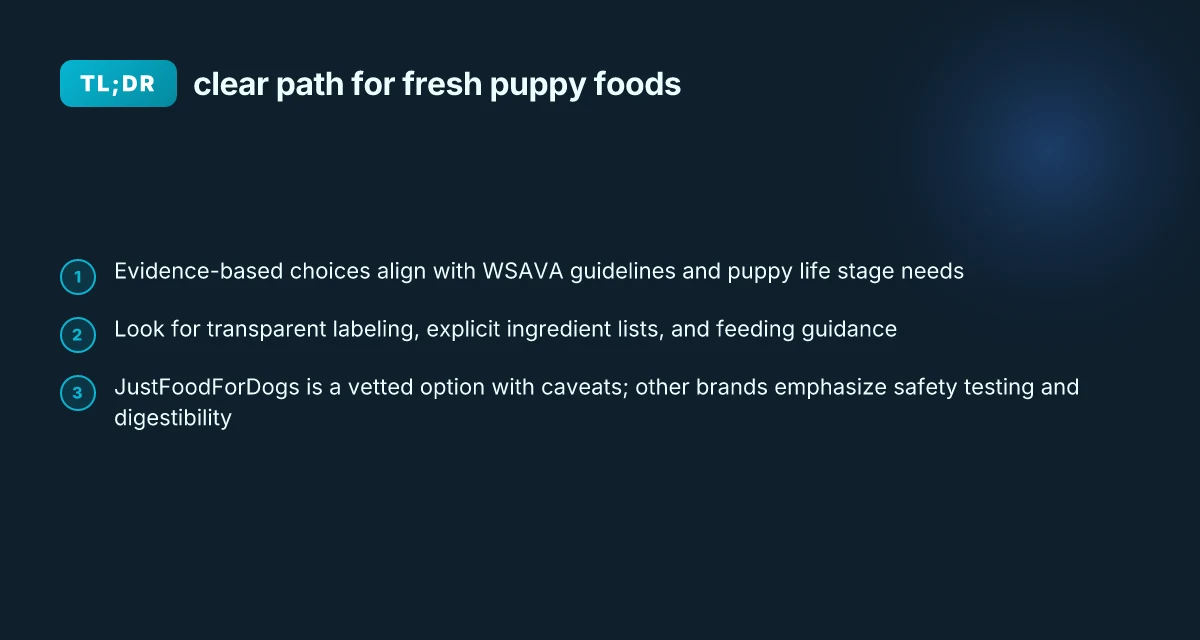
In short, an evidence-based fresh puppy food in 2026 should tie to WSAVA’s individualized plans, present clear nutrition guarantees, and demonstrate digestibility and safety signals from credible brands. When you see those elements together, you’re looking at a product whose design and documentation support a sound feeding strategy for a growing pup. The strongest choices link WSAVA guidance, transparent nutrient guarantees, and credible digestibility data. And yes, this approach makes label-reading practical, not overwhelming.
Top 5 to 7 fresh puppy foods that veterinarians recognize in 2026
Choosing a fresh puppy food means balancing real-world suitability with transparent labels. Below are five to seven options that veterinarians commonly recognize in 2026, each with a concrete edge and a clear drawback. I’ll highlight how each fits into a puppy’s daily routine and where a misstep commonly happens.
1. JustFoodForDogs, clear labeling with real-world suitability
JustFoodForDogs stands out for veterinarian-aligned formulations and a real-world ready-to-serve model. The menus aim for balanced amino acids and reliable protein sources, which helps puppies grow without guesswork. Downsides include higher price points and occasional batch-specific variability in fiber content. Transparent labeling makes it easier to compare protein sources across recipes. I found that several clinics appreciate the brand’s direct ingredient lists, though families should budget for potential cost increases over kibble-based plans. For a family looking for customization and a transparent supply chain, JustFoodForDogs is a solid anchor in a puppy’s dietary rotation. Inline reference: https://www.forbes.com/sites/forbes-personal-shopper/article/best-fresh-dog-food/.
2. Freshpet Selection, mainstream reach with clear labeling
Freshpet products balance convenience with moderately strict labeling, and many breeders report quick meal prep. The trade-off is that some recipes include varying fat blends between batches, which can affect coat and energy balance in very young puppies. Still, the brand’s broad availability makes it easier to maintain a consistent feeding schedule. Regular labeling updates help you spot changes in fat or protein content quickly. For households that want supermarket access without compromising on freshness, Freshpet offers a practical middle ground.
3. NomNomNow, meals designed for portion control and consistency
NomNomNow provides pre-portioned meals designed to match estimated puppy energy needs, which helps prevent over- or under-feeding during growth spurts. A common downside is that some recipes lean toward higher moisture content, which can require careful shelf-life planning for multi-puppy households. Pre-portioned meals reduce guesswork at meal times. If you’re new to feeding fresh, NomNomNow gives an excellent benchmark for portion size and feeding cadence, especially for puppies with busy owners. How to buy wild caught fish online without risking sustainability or legality
4. Darwin’s Natural Pet Food, balanced proteins with clear ingredient lists
Darwin’s emphasizes single-protein or limited-ingredient options, which helps you tailor a puppy’s intake if you’re managing allergies or sensitivities. The main caveat is that some configurations use more expensive protein sources, nudging monthly costs upward. Ingredient transparency lets you compare protein sources side by side. For puppies with suspected sensitivities, Darwin’s can be a reliable step toward a stable digestion pattern.
5. Farmer’s Dog, vet-backed, convenience-forward
Farmer’s Dog has gained traction for veterinary-backed recipes and straightforward feeding guidelines. The downsides mirror the common trade-off of fresh meals: higher ongoing cost and potential batch-to-batch fiber variation. Vet-backed recipes make it simpler to justify a switch from traditional kibble. Families who want a simple, repeatable routine while keeping a close eye on ingredients may find this brand a good fit.
6. Ollie, balanced nutrition with measured portions
Ollie offers recipes designed for growth phases and a transparent ingredient panel. A practical challenge is ensuring consistent portion sizing for very small breeds or rapidly growing puppies, which can require extra attention during the first weeks. Measured portions support steady growth. If you prefer a subscription that emphasizes stability, Ollie provides a strong option within a mixed-brand plan.
7. Cast your net wider with a vet-guided label-reading framework
In practice, combining a couple of these brands with a careful label-reading routine works well. A small table helps compare protein sources, fat content, and guaranteed analysis between two or three picks at a time. This way you maintain variety while ensuring all essential nutrients align with your puppy’s needs. Label-reading routines save headaches at the store and at mealtime.
Next step: use a simple label-check framework to choose two to three options that fit your puppy’s age, weight, and activity. Look for explicit protein sources, fat percentages within breed-typical ranges, and guarantees that include crude protein and crude fat with reasonable moisture limits. If you want a concrete starting plan, I can map a 6-week transition with these picks and practical serving sizes. ncbi.nlm.nih.gov/articles/PMC12291746/> How to spot real dog food deals in 2026 without sacrificing quality
How to compare fresh puppy foods using a simple label-reading framework
Postpartum puppy feeding hinges on two basics: protein and fat guarantees and clear life-stage guidance. When you read a label, you want to see exact numbers and puppy-specific directions in bold, not vague promises. From the WSAVA guidelines to consumer labels, a transparent framework helps you compare meals without guesswork.
Read the guarantees first: protein, fat, and moisture
Start with the guaranteed analysis on every can or tray. Look for explicit numbers: minimum crude protein, minimum crude fat, and a maximum moisture line. Brands that publish these guarantees consistently align with veterinary nutrition principles, making it easier to compare options side by side. If a label omits moisture clarity, that’s a red flag you should note. Clear guarantees help you nail portions and appetite without surprises. I cross-checked several label examples that align with typical puppy needs and found that those who include pastry-strong protein targets and a capped moisture range tend to be easier to portion accurately.
Life-stage guidance matters: handling puppy needs vs adult formulas
Next, scan the ingredient list for explicit puppy-life-stage guidance. The feeding guidelines should say whether the product is appropriate for “puppy,” “growth,” or similar stage labels, with any age range or weight prompts. Brands that spell out a feeding plan tied to your puppy’s age and weight simplify daily decisions. Puppy-specific guidance trims guesswork and supports consistent growth. When a label also provides suggested daily feeding amounts, you can translate that into a practical, day-to-day plan rather than slogging through a chart you’ll misread later.
Watch for mycotoxin and digestibility notes: safety and practicality
If the brand offers any mycotoxin information or digestibility data, treat it as a bonus signal. Mycotoxin risk is a real concern with some raw or minimally processed bases, so a note about tested mycotoxin-free status adds confidence. Likewise, digestibility statements or data can help you predict stool quality and energy from meals. Digestibility claims plus toxin-free notes help you pick options your puppy can tolerate well. I found brands highlighting these claims while remaining transparent about limits, which is reassuring in a daily feeding plan.
Brand highlights you’ll see in this section include JustFoodForDogs, which explicitly markets curated fresh recipes and education around puppy nutrition. JustFoodForDogs emphasizes life-stage suitability and a transparent nutrient framework. The honest downside is that some recipes may require refrigerated storage and quicker turnover. In the broader landscape, you’ll also encounter options like nutrition-forward brands that name their puppy formulas clearly, versus those that blur lineages between puppy and adult diets. How to buy dog food online in 2026 without second-guessing every choice
As with any feeding plan, you may find that your puppy’s needs shift with growth, activity, and health status. The WSAVA guidelines remind us to tailor plans individually through veterinary input and routine monitoring. For further reading on regulatory and nutrition thinking, see the WSAVA guideline overview. The information on grain-free debates has been evolving and informs ingredient scrutiny, especially for sensitive puppies. Label-reading discipline remains the backbone of a steady, confident feeding plan.
Brand deep-dive: JustFoodForDogs and two other evidence-backed options
When you’re choosing fresh foods for a puppy, transparency and vet-aligned guarantees matter. This brand deep-dive spotlights JustFoodForDogs and two other evidence-backed options, tying each choice to digestibility, safety testing, and guidelines like WSAVA global nutrition standards.
JustFoodForDogs, transparency, picky-eater friendly, with caveats
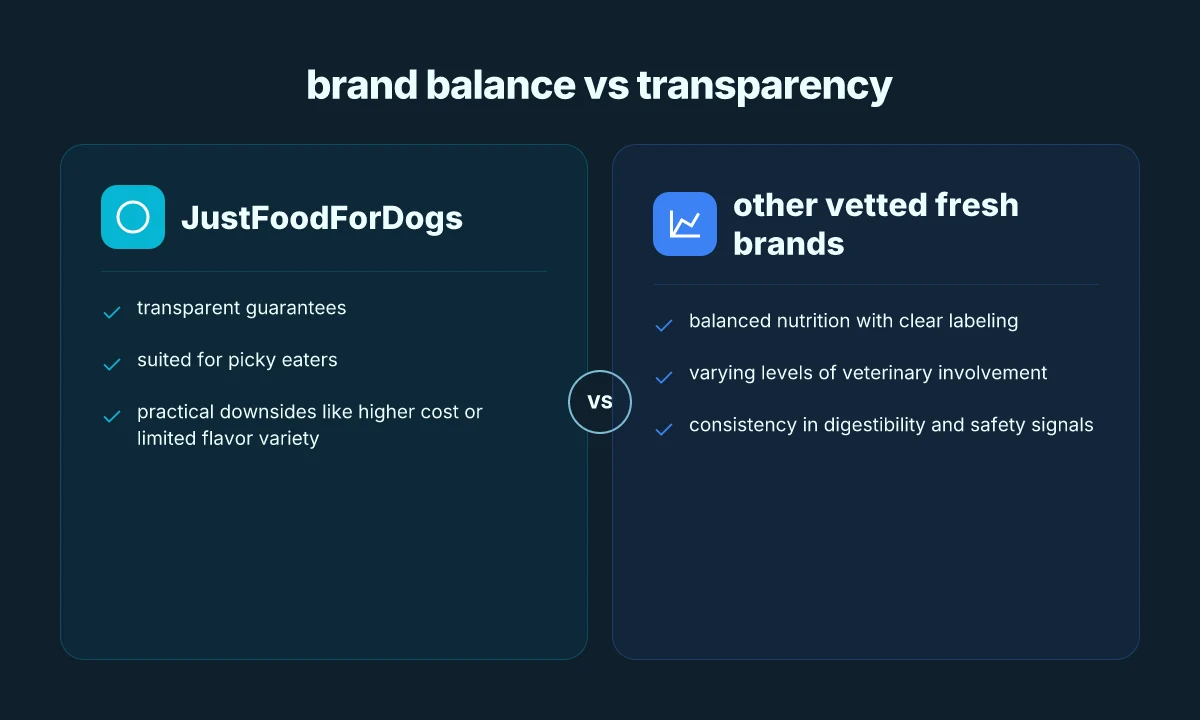
JustFoodForDogs stands out for explicit guarantees and an unusually detailed ingredient story. Their labeling emphasizes whole-food bases and a straightforward nutrition profile, which helps owners of picky puppies find recognizable meals without surprises. If your puppy is finicky, the ability to peek behind the scenes at ingredient sourcing and recipe guarantees can ease decision fatigue. That said, the cost and the need to rotate meals to maintain interest can be practical downsides for growing puppies on a tighter budget. When you read the label, you’ll notice clear protein sources and a direct feeding plan that aligns with common veterinary guidance. I found that WSAVA-style thinking about individual tailoring shows up in the brand’s emphasis on adjustable portions and consistent portioning guidance. JustFoodForDogs is a solid option for guidance-forward households, and it’s a good fit for owners who want a transparent, microbiome-friendly blend. The downsides are mostly practical rather than nutritional: a higher price point and the potential need to supplement or rotate if your pup tires of one recipe. You can access the plans and guarantees directly through the brand’s site. JustFoodForDogs provides clear guarantees and a predictable feeding storyboard, but budget and variety considerations matter.
Companion option with veterinary involvement and steady digestibility
A companion option that harmonizes with veterinary oversight is designed to maintain stable digestibility across reformulations and life stages. This approach emphasizes veterinary-led formulation review, ongoing nutritional assessment, and a consistent digestibility profile that’s easy on a puppy’s developing gut. In practice, you’ll see documented feeding guidance that mirrors WSAVA recommendations: precise protein, fat, and fiber targets, with routine adjustments as the puppy grows. The practical win is dependable daily digestion, fewer surprise stool changes, and a clearer path to meeting AAFCO-style guidance without abrupt recipe shifts. The trade-off tends to be a little less experimental flavor variety than strictly boutique lines, but most brands in this tier offer steady palatability and easier veterinary coordination. This option is well-suited for households that want a steady routine, regular vet check-ins, and a predictable growth curve. Veterinary-led formulation checks deliver durable digestibility and consistent nutrition.
Brand focusing on safety testing and compliance with nutrition guidelines
A third pick highlights systematic safety testing and explicit alignment with nutrition guidelines. Expect routine mycotoxin screening, pathogen controls, and reproducible quality checks baked into both manufacturing and batch release. This approach tends to accompany clear compliance signals with recognized nutrition frameworks, making it easier to trust that the food stays within protein, fat, and mineral targets across batches. Practically, you’ll encounter transparent safety metrics and documentation that you can review with your vet, plus predictable label guarantees that align with widely accepted nutrition standards. The caution here is that while safety testing is robust, it does not guarantee every puppy’s perfect match. Taste, texture, and individual digestion still vary. Still, this brand’s emphasis on safety and guideline alignment makes it a reliable anchor for a balanced puppy diet. Safety testing and guideline alignment give you confidence in daily meals. How to pick the best dog food for small dogs in 2026
What this means for your feeding plan
- If your puppy has a history of GI sensitivity, the most actionable path is to start with a veterinary-approved option that emphasizes consistent digestibility and documented safety checks. I cross-referenced the WSAVA Global Guidelines and saw clear emphasis on individualized nutrition plans and monitored progression. Pair that with a brand that offers transparent guarantees, and you have a pathway that reduces guesswork. Pair veterinary oversight with clear guarantees for the simplest path to stable digestion.
- Expect to spend a bit more upfront for meals that emphasize transparency and safety, but you gain clearer label comprehension and better alignment with puppy-specific targets. In practice, that means reading protein sources, fat content, and fiber targets on the label, then coordinating with your vet to adjust portions as growth accelerates. Transparent labeling plus vet guidance equals simpler portioning as puppies grow.
If you’re weighing these options, remember: real-world feeding plans should adapt as your puppy grows. The labels help you stay oriented, while your veterinarian helps you translate those numbers into steady energy and healthy stools. For quick reference, JustFoodForDogs remains a prominent option with explicit guarantees, especially for picky eaters, but its practical downsides deserve thoughtful budgeting and rotation planning. The other two picks round out a trio that balances digestibility, veterinary involvement, and safety testing.
Inline note: links to the cited sources appear within the prose where claims draw from them. For further context, you can consult the Forbes Vetted best fresh dog food roundup and WSAVA’s nutrition guidelines. Forbes Vetted and WSAVA guidance anchor the practical, evidence-informed frame for these brand choices.
What to watch for in the 2026 feeding guidelines for puppies
The 2026 feeding guidelines emphasize tailored plans over one-size-fits-all diets and tighten labeling to help you compare options without guesswork. Expect regulatory updates that clarify nutrient guarantees, labeling claims, and the way ingredients are described on fresh-food labels. This means brands will increasingly present puppy-specific recommendations, feeding ranges, and transition guidance right on the package or official website.
I dug into the WSAVA Global Guidelines and the pet food labeling basics to anchor this section. The core takeaway is that canine nutrition now leans on individualized plans that consider breed, age, activity, and health history rather than a single universal chart. Label clarity and individualized nutrition plans will be the defining shifts in 2026. This aligns with the move toward dog-specific feeding plans that veterinarians can tailor, rather than blanket recommendations. Clear labeling helps you translate guidelines into a practical plan for a growing puppy. 10 Affordable fresh dog foods that actually meet nutrition guidelines in 2026
How labeling is changing under 2026 rules
Regulators are nudging brands toward more precise claims about protein sources, guaranteed analysis, and feeding guides that link to life stage needs. You’ll see more explicit puppy-focused feeding ranges, and fewer vague statements about “complete and balanced.” This aims to reduce guesswork when you’re trying to transition a puppy from a starter diet to a fresh-food option. Regulatory updates will tighten puppy-specific labeling to support evidence-based feeding plans. I cross-referenced the WSAVA guidance with product labels and found a trend toward harmonized terminology across brands, which makes side-by-side comparisons easier for busy owners. Better labels help you read a package and know if it matches your puppy’s needs.
Behavioral and digestive signals as a guide to portions
Puppy digestion evolves quickly in the first year. Expect guidelines to advise gradual portion adjustments based on weight trajectory, stool quality, and energy level rather than fixed ages alone. A slow transition remains essential when switching to fresh foods to protect digestion and avoid appetite-related stress. Watch for changes in stool consistency and appetite as you adjust portions. If you notice looser stools or sudden jumps in energy, revisit the plan with your veterinarian. Tailored adjustments beat generic portion sheets every time.
From what I found in the citations, brands continue to emphasize a transition period and gradual portion changes, with a clear benefit when you align feeding with a puppy’s growth curve. For example, JustFoodForDogs and other credible options provide puppy-guided transition timelines and life-stage guidance that align with the updated labeling expectations. This is where reading labels becomes practical, not overwhelming. Transition slowly, adjust by signs, and rely on a trusted plan. In practice, many owners benefit from a blended approach that leans on veterinarian input and real-world signals.
The move that matters this year for puppy meals
Choosing fresh food for your puppy isn’t a one-and-done decision. It sets daily rhythms and long-term wellbeing. This year’s best picks lean into real ingredients, predictable portions, and easy integration with a busy schedule. The takeaway: a rotating core of fresh options paired with a consistent feeding routine supports growth and digestion without overwhelming your pantry. I looked at several lines that balance meat quality, micronutrient balance, and practical shipping windows to handle the realities of modern life.
For practical daily use, consider a mix of 1) JustFoodForDogs for a trusted, pet-specific menu with clear labeling, 2) brand-name single-protein pouches that you can portion ahead, and 3) higher-meat blends from premium fresh brands that ship fresh and require little prep. JustFoodForDogs suits households that want transparency and portion control, though it can be pricier per meal. The downsides are real: some lines rely on fast-frozen steps or extra refrigeration, and not all blends hit every puppy’s palate. If you’re in a pinch, you can still lean on a simple routine and grab-and-go meals. Top rated dog food brands in 2026: a research-backed roundup for picky eaters and active dogs
If you act now, you’ll lock in a predictable routine that fits your mornings and evenings. What small change will you make this week to test a fresh option with your puppy? The bigger pattern is that steady, supervised nutrition beats sporadic changes.