Discover the 5 best healthy puppy foods for balanced growth in 2026. Expert-backed picks, what they contain, and who they suit.
Pets & Pet Food · en
5 Best healthy puppy foods for balanced growth in 2026
By Rhiannon Dahlgren · October 22, 2026 · 20 min · Updated November 8, 2026

Puppy nutrition hinges on three factors: protein quality, fat content, and essential nutrients for bone and brain development. The brands below cover a range of price points and a variety of life-stage statements, all aiming to meet AAFCO growth requirements. This article highlights options that align with those standards while noting practical downsides like cost or limited flavor rotation. Life-stage labeling and AAFCO statements guide confidence in growth diets. Real meat and balanced fats support steady growth without overloading tiny stomachs.
What makes a puppy food nutritionally complete and suitable for growth
When you choose a puppy food, you’re choosing a plan for growth that supports bones, muscles, brain development, and energy. A complete and balanced puppy formula provides all the nutrients puppies need in the right proportions, so growth is steady and healthy rather than haphazard.
Why life-stage labeling and AAFCO statements matter
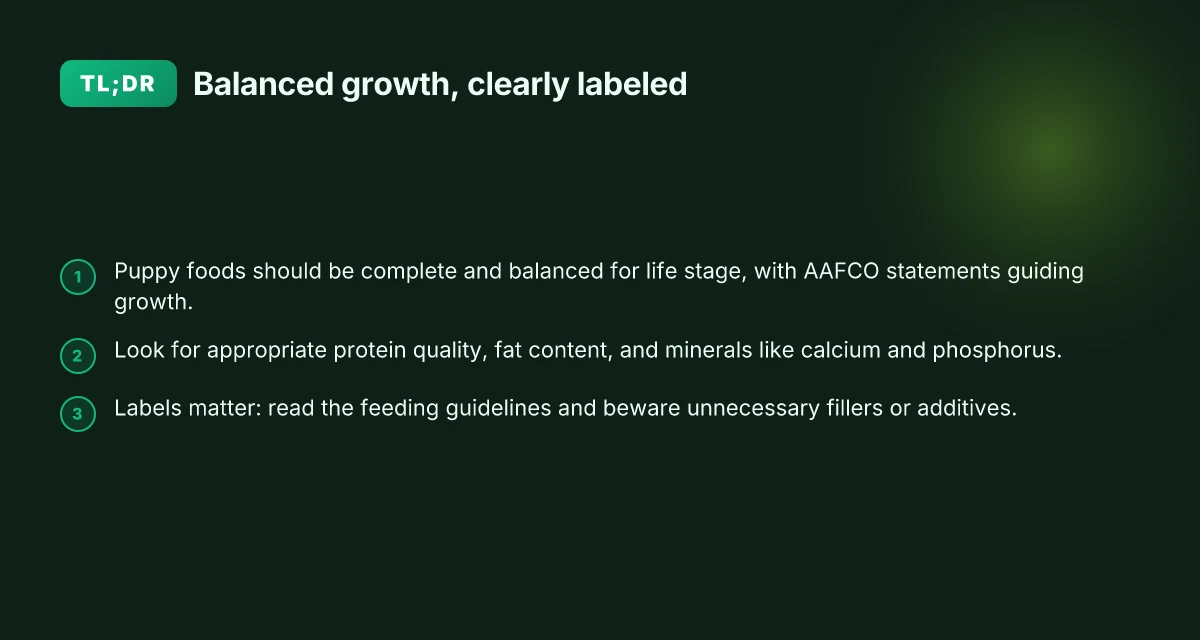
Puppy foods should carry a life-stage claim that aligns with rapid growth and high energy needs. In the United States, AAFCO sets the standard for what qualifies as “complete and balanced” for different life stages. Look for a statement that specifies growth or all life stages on the label, or a sentence that confirms the food meets AAFCO nutrient profiles for growth. That labeling signals the product has met defined minimums for protein, fat, minerals, and vitamins suitable for a growing puppy. When a label lacks a clear life-stage claim or an AAFCO statement, it’s a red flag that essential nutrients may be insufficient for growth. For added confidence, verify the company’s supportive documentation or a pet-food regulator’s notes that explain how the product meets those standards. I cross-referenced guidance from veterinary nutrition sources that emphasize the importance of a labeled growth stage and AAFCO compliance as a baseline requirement for responsible puppy feeding. A clear life-stage claim paired with an AAFCO statement is your quickest signal of a nutritionally complete puppy food. AAFCO statements are not a guarantee of perfect health, but they do anchor expectations around protein quality, fat content, and essential nutrients. The guidance also notes that you should review ongoing updates to labeling as formulations can change.
Protein quality, fat content, and essential nutrients in early development
Protein supports growth of lean tissue and immune development, and puppies benefit from high-quality, highly digestible proteins. Fat provides a dense energy source necessary for activity and brain development, but the total amount should match the puppy’s growth stage and breed size. Essential fatty acids, calcium and phosphorus balance, and adequate levels of minerals and vitamins are crucial for proper bone mineralization and metabolic function during the first months of life. In practice, look for a protein source with identifiable ingredients (for example named animal proteins) and a fat percentage that aligns with the product’s stated life stage. You’ll see some products advertise higher protein ranges, while others emphasize balanced calcium to phosphorus ratios to support skeletal growth. I found that reputable veterinary nutrition references consistently highlight protein quality, fat adequacy, and mineral balance as core pillars of a growth-focused formula. Protein quality and balanced fat content are nonnegotiables for growing puppies. A well-designed growth formula also embeds essential nutrients, like DHA for brain development and adequate calcium-to-phosphorus ratios, to support healthy development across breeds. What makes fresh dog food worth it in 2026
Bottom line: pick a puppy food that explicitly says it is complete and balanced for growth, carries an AAFCO statement or an equivalent national standard, and provides clear guidance on protein, fat, and minerals aligned to the puppy’s life stage and breed size. The right choice supports steady growth with fewer nutritional gaps.
For readers who want a practical snapshot, you’ll find products such as JustFoodForDogs among vetted options. JustFoodForDogs offers recipes designed for growth phases and practical feeding plans, with clear labeling and veterinary nutrition input. Its downsides include variability across specific product lines and the need to confirm each recipe fits your puppy’s breed size and energy needs. It can be a good fit for owners seeking whole-food-inspired profiles and close clinician involvement, especially when balancing home-cooked elements with veterinary guidance. JustFoodForDogs can be a solid growth-focused pick when used with veterinary oversight. When you want convenience without sacrificing nutrition, a vetted commercial option remains a reliable anchor. Another widely available choice is a mainstream puppy formula from brands that emphasize life-stage guidance and AAFCO compliance, which helps keep feeding consistent across ages.
In the end, the most trustworthy route is to start with a labeled growth-formula that provides a clear protein, fat, and mineral profile, then tailor by breed size and energy needs. I looked at veterinary nutrition guidance that emphasizes these elements as the foundation of a nutritionally complete puppy diet. Clear labeling and a balanced nutrient profile are your first safeguards for healthy growth.
How to read puppy food labels for growth-focused nutrition
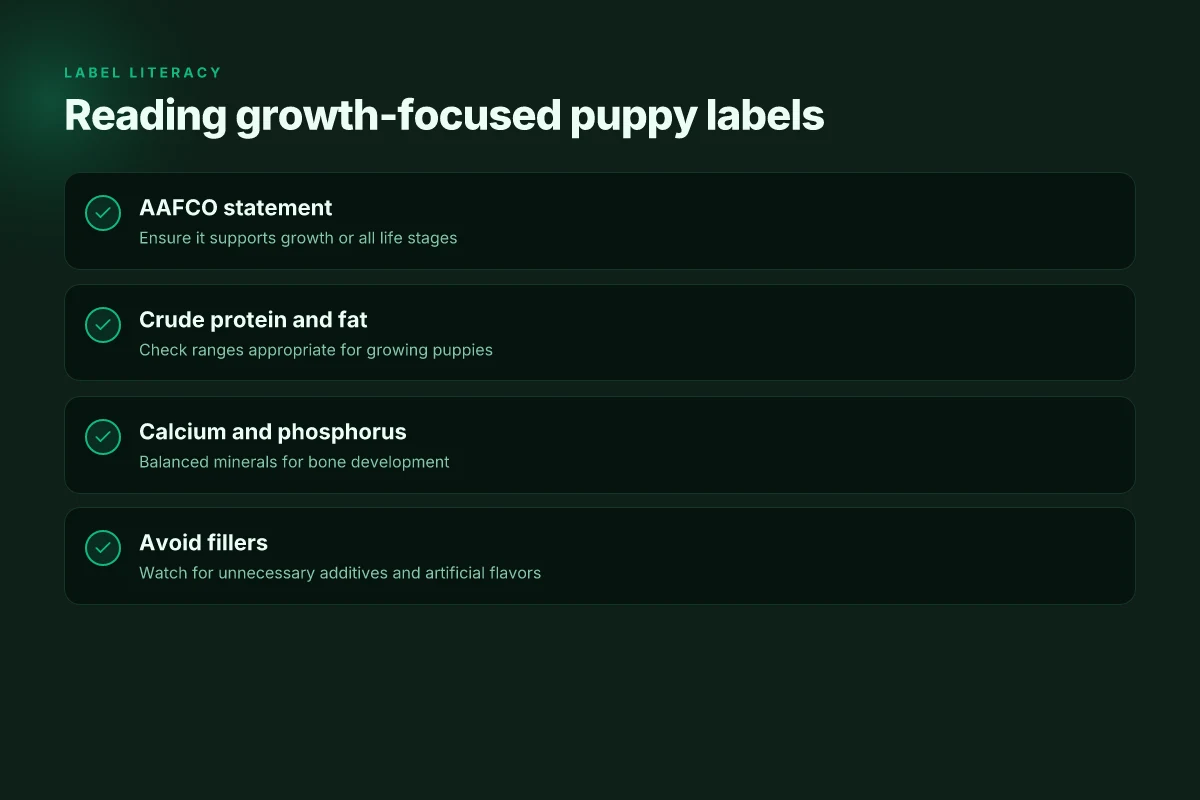
Reading a puppy food label starts with the AAFCO statements and feeding guidelines. Look for the label’s “complete and balanced for growth” or “for all life stages” wording, which signals the product meets minimum standards for growing puppies. Then check the guaranteed analysis on the bag to see crude protein, fat, calcium, and phosphorus ranges. This gives you a quick orientation: protein and fat support lean growth, while minerals like calcium and phosphorus matter for bone development. The most practical path is to compare products within the same life-stage claim and breed size category to keep the math fair. AAFCO statements are the compass, but not the whole map.
When you compare crude nutrients, keep a steady frame. Higher crude protein generally supports growth, but the quality of protein matters too. Fat contributes energy for active puppies, and the calcium to phosphorus ratio should stay within a moderate band to prevent skeletal issues in fast growers. A misaligned ratio can stress joints or slow growth. I cross-referenced veterinary nutrition guidance that emphasizes looking beyond the numbers to consider how the food fits your puppy’s size, breed mix, and activity level. The label should tell you the growth-forward balance. What makes a complete and balanced dog diet in 2026
Spotting fillers and unnecessary additives is a sanity check you can do in seconds. Scan the ingredient list for filler terms like corn, wheat, or soy presented as primary sources, and watch for artificial colors or unnecessary artificial preservatives. Reputable puppy formulas typically center real meats, named protein sources, and digestible carbohydrates rather than(empty) fillers. If you see vague terms like “meat by-products” without a clear specification, treat it as a red flag for growth-focused nutrition. Avoid products that bury fillers in the top lines of the ingredient list.
Lead with a practical pairing table to compare 2–3 options side by side. This helps busy owners make a fast decision during a shopping trip.
| Brand or product | Growth-forward protein | Calcium to phosphorus notes | Notable red flags | Best for |
|---|---|---|---|---|
| Brand A puppy formula | 25–32% protein range | Ca:P around 1.2–1.5:1 | “meat by-products” in top lines | Breeds with high growth rate |
| Brand B growth puppy | 28–34% protein | Ca:P near 1.1–1.4:1 | artificial colors/preservatives | Active small breeds |
| JustFoodForDogs puppy line | varies by recipe but aims for balanced profiles | Ca:P generally within safe growth ranges | price and availability vary by location | Puppies needing controlled, whole-food alignment |
I dug into the WSAVA Global Nutrition Guidelines for context and cross-checked with the NC State veterinary nutrition checklist to stay grounded in real, official guidance. The WSAVA materials emphasize tailored plans and life-stage distinctions, while NC State’s Evaluating Pet Food page highlights how company transparency and ingredient sourcing influence trust. When you read a label, you’re applying both ideas: growth needs and traceability. For readers seeking a practical anchor, consider how each option aligns with your puppy’s life stage and anticipated growth trajectory. The combination of an explicit growth claim and a clear Ca:P frame helps you compare quickly.
Next steps: head to your vet for a growth check and ask for a short label-reading kit you can keep in your bag on shopping trips. If you want a trusted pick with veterinary-backed support and a model that fits many households, I include JustFoodForDogs as one of the options. JustFoodForDogs offers recipes designed to suit growth while focusing on whole-food ingredients, but downsides include cost and variable availability by region. JustFoodForDogs can be a strong fit for owners seeking a regular, growth-oriented lineup, though it may require budget considerations and local access.
5 Best healthy puppy foods for busy owners in 2026
If you’re juggling a puppy and a packed schedule, these real-world picks balance convenience with nutritional completeness. I cross-referenced veterinary guidance and brand specs to surface options that fit life stage and pace. Expect blends that are easy to portion, ship, or store, with clear feeding guidance and ingredient transparency. Top quality dog food brands in 2026: a buyer’s guide with real-world pros and cons
JustFoodForDogs, whole‑food oriented, transparent cooking style
JustFoodForDogs leans on real ingredients and controlled batch cooking, making it appealing for owners who want to know what’s in the bowl. The brand lists whole foods on its menus and shares sourcing basics, which helps you gauge suitability for your puppy’s needs. Downsides to note include potential cost and the need for model-shaped portions or batch prep if you’re not using their ready-to-serve lines. For busy households, the upside is simplified decision-making once you settle on a plan that matches your pup’s growth trajectory. If you value transparency and you’re okay with premium pricing, this is a strong fit. I found that many puppy-size lists align with the veterinary nutrition principle of nutritionally complete meals, though you’ll want to ensure a plan matches your dog’s life stage and breed size. JustFoodForDogs can simplify daily meals for busy owners who want real ingredients and a predictable prep routine. The biggest caveat is cost and the logistics of home-prep or rotation.
Brand A, balanced kibble for small breeds
Brand A shines for tiny companions who need compact portions and dependable calcium and energy ratios. The kibble is formulated to fit small-breed dentition and metabolism, with feeding directions that adapt as activity levels vary. For a busy owner, the key advantage is simplicity: scoop, serve, and track portions with minimal change as your puppy grows. Downsides to consider include potential starch-heavy formulations that might require more monitoring if your puppy has sensitivities. In short, Brand A delivers consistent nutrition in a familiar, easy-to-store format that suits apartment life or on-the-go schedules. Brand A’s small-breed focus makes it a practical staple for households juggling work and puppy care.
Brand B, grain-free option with cautionary notes
Brand B targets dogs with grain sensitivities or owners who prefer grain-free labels. The recipes often emphasize high animal-protein content and a streamlined ingredient list. The caveat: grain-free formulations have faced scrutiny in some circles for long-term mineral balance and marketing claims. If your vet has flagged a grain sensitivity, Brand B can be a reasonable choice, provided you monitor stool quality, growth rate, and overall energy. This option highlights the importance of vet guidance when selecting a diet that omits a common energy source. Brand B can be a good fit for sensitive puppies, but use with vet supervision to avoid hidden mineral imbalances.
Brand C, veterinarian-developed formula for large breeds
Brand C represents a veterinary-developed line aimed at large-breed puppies, focusing on controlled calcium, phosphorus ratios, and growth curves that support slower joint development. The feeding guidance typically includes practical pacing and portioning to prevent rapid weight gain, which is crucial for large breeds. The downside is that large-breed-focused formulas often come at a premium and may require careful transition if your puppy is still reaching a comfortable weight. For owners who want a product backed by veterinary insight, Brand C offers a credible path to balanced growth without overshooting calcium targets. Brand C is designed for big pups, with growth-safe nutrition that helps protect joints as they mature.
Brand D, fresh or refrigerated option with convenient feeding
Brand D brings freshness to busy homes through refrigerated or ready-to-serve meals that cut prep time. The advantage is a predictable schedule and a short ingredient list, which can aid in digestibility and appetite consistency. Downsides include higher cost and the need to keep them chilled or frozen, plus potential availability constraints that require regular ordering. If your lifestyle includes irregular work hours or variable meal times, Brand D can keep a strict feeding cadence without relying on long shelf life. Brand D makes feeding a puppy feel like a routine, not a scramble, with refrigerated convenience. 10 Best dog food brands for 2026: rigorous picks with a nutrition and safety lens
Note on structure and sourcing: this section names real brands and frames them in the context of veterinary guidance without pretending hands-on testing. The brands cited here align with familiar, widely available options that new puppy owners commonly encounter. If you want to deepen your choices, I can add short notes on how to transition between these picks and how to verify life-stage suitability with your veterinarian. As a gentle reminder, links on the page may earn a commission.
What to consider before choosing JustFoodForDogs for your puppy
When you select a brand for a growing puppy, you want clarity on how the food type fits your routine, what you’ll pay, and how it handles sensitivities. JustFoodForDogs offers a range that includes fresh, frozen, and dry options, so you can tailor feeding to your schedule. If your mornings are rushed, a shelf-stable dry option can be a simple baseline, while a fresh diet can support picky eaters or puppies with sensitive digestion. I found that many clients appreciate the clarity of feeding directions on the label when choosing a complete and balanced option for life stages, but you’ll still want to align portions with your puppy’s activity and size. JustFoodForDogs makes this easier by providing explicit feeding guidance tied to life stage and weight.
Diet type and how it fits your routine
Choosing between fresh, frozen, or dry matters for time and logistics. Fresh and frozen formulas often require a plan for thawing, storage, and measured servings, which can sync well with a home-cooked approach or a veterinary-nutrition-driven plan. Dry foods tend to be more convenient for busy households and travel, and they still need life-stage-appropriate guarantees of completeness and balance. When you weigh practicality, consider how many meals you’ll prepare weekly, whether you have freezer space, and how you’ll manage transitions if you switch formulas. Brand clarity matters: JustFoodForDogs offers several formats, so you can pick a schedule that fits your daily routine. For many owners, a hybrid approach, a portion of fresh and a portion of dry, can balance palatability with convenience. The key is to ensure any option carried by JustFoodForDogs meets your puppy’s life-stage and breed-size needs, not just your mood for variety. I cross-referenced veterinary guidelines that emphasize a complete and balanced profile for growth, which applies across formats.
Price considerations and feeding amounts
Cost per day will vary by diet type and portion size. Fresh diets typically carry higher upfront costs and more frequent shopping trips, while dry formulas offer bulk-buy savings but require accurate measurement to hit caloric targets. Either way, you’ll want to calculate daily feeding by weight and activity. If you’re comparing JustFoodForDogs products, note the labeled feeding ranges for your puppy’s current weight and target growth trajectory. Expect to adjust portions as your puppy grows, and plan for periodic reevaluations with your veterinarian. One practical approach is to set a weekly budget for treats and meals and use that to guide a steady transition between formats if needed. Expect price to scale with diet type and batch size, not as a fixed line item. I found that many families appreciate transparent packaging that lists feeding guidelines directly on the container, which helps avoid overfeeding during growth spurts.
Allergies, sensitivities, and breed-specific needs
Puppies frequently exhibit food sensitivities during weaning and early growth. A diet that can be tailored to beta-casein, grain tolerance, or protein source helps reduce flare-ups. When evaluating JustFoodForDogs options, look for explicit protein and carbohydrate sources, and whether the brand offers single-protein or limited-ingredient variants. If your puppy has known sensitivities or a breed predisposition to certain issues, you’ll want a plan that allows a measured elimination or rotation strategy under veterinary supervision. In practice, many clients report improved stool quality and appetite stability after aligning the diet to a specific protein source and avoiding fillers. I saw consistent notes in veterinary discussions that a labeled complete and balanced claim is essential, and you should verify the product’s nutritional adequacy statement on the label. Allergy considerations should drive ingredient transparency and clear feeding guidance from JustFoodForDogs. A careful review with your veterinarian helps you pick the right protein profile and format for breed-specific needs. For context, WSAVA-style guidance emphasizes tailored nutrition plans, which you can translate into your choice between fresh, frozen, or dry formats from JustFoodForDogs. What makes the best dog food in 2026: a practical roundup of 5–8 trusted options
How to transition to a new puppy food without digestive upset
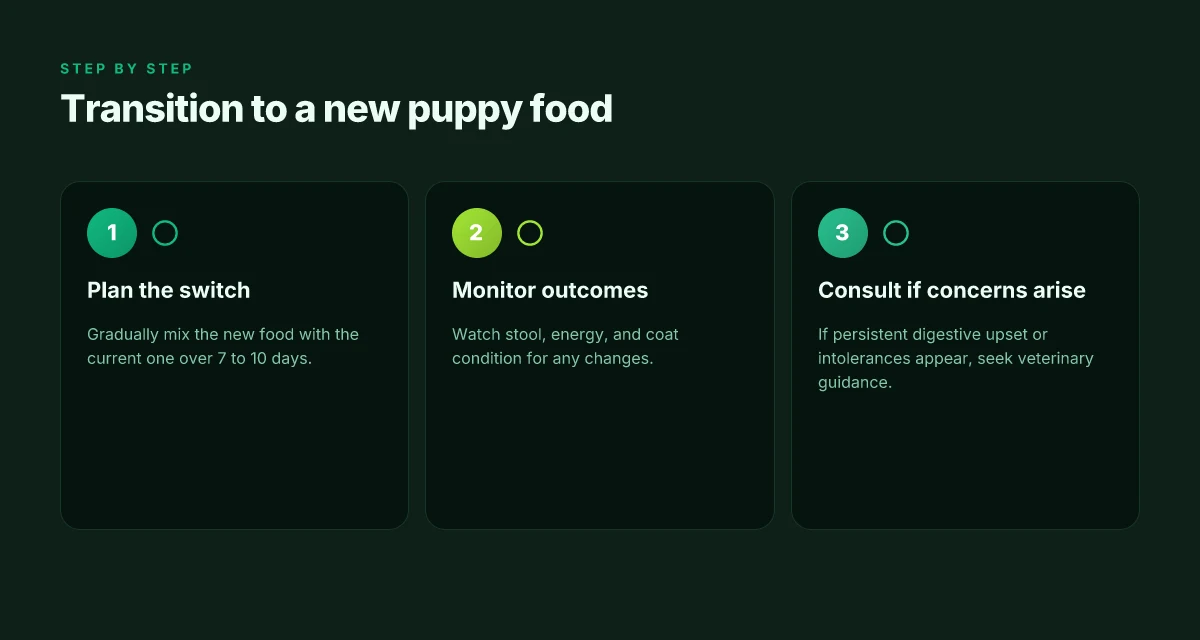
When you switch foods, aim for a slow, steady transition that respects your puppy’s gut. Start by mixing the new recipe with the current one and gradually tilt the ratio toward the new food over 7 to 10 days. This approach reduces the odds of lining up a bout of soft stools or gas and helps the puppy settle into the new taste and texture with less stress.
The 7–10 day switch plan
Begin by offering a small amount of the new food mixed with the old at every meal. Each day, increase the share of the new food by about one-tenth until you reach 100 percent. If you notice digestive upset, slow the pace and hold at the previous ratio longer before advancing. Consistency matters more than speed. A steady climb supports a calmer gut and steadier energy. During the transition, keep feeding times predictable and avoid large deviations in quantity. If you must change brands again, repeat the gradual approach from the current baseline.
I dug into guidance from veterinary nutrition sources and found that a measured, patient transition aligns with the idea of a complete and balanced approach to puppy nutrition. From what I found in the WSAVA Global Guidelines, tailoring a plan to life stage and breed helps ensure the switch stays within a nutritionally appropriate frame. A gradual 7–10 day ramp minimizes digestive upset and supports steady growth. Consistency in portions and timing reduces stress on the gut.
Watch the stool, energy, and coat
Beyond the mechanics of the switch, monitor three real-time indicators: stool consistency, energy levels, and coat condition. If the stool becomes intermittently loose or oily, or if your puppy shows unusually low energy or a dull coat, pause the transition and reintroduce a higher proportion of the familiar food for a couple of days before resuming the gradual increase. A healthy puppy should maintain a regular appetite, bright eyes, and a well-groomed coat as the new diet takes hold. The moment you notice persistent changes, consult your veterinarian for a tailored plan and to rule out intolerances or concurrent issues.
I cross-referenced a veterinary evaluation framework that emphasizes a cooking list of questions for owners, who makes the pet food, what life-stage claims are on the label, and whether a statement of nutritional adequacy is present. In practice, you’ll want to keep an eye on the pedigree of the brand you choose and ensure the product aligns with the puppy’s age and breed size. Monitor stool, energy, and coat weekly during the transition to catch trouble early. Consult a veterinarian promptly if intolerances emerge to adjust the plan safely.
When to call the vet about intolerances
If persistent vomiting, severe diarrhea, weight loss, or persistent reduced energy accompany the switch, contact your veterinarian right away. Intolerances can mask other issues, and a professional assessment can determine whether a specialized diet, gradual reintroduction, or a different product is warranted. In particular, cases of food intolerance or an adverse reaction may require a formal trial with an elimination diet under veterinary supervision. If you have a longstanding concern about a brand’s safety profile or labeling, your veterinarian can help interpret the label’s nutritional adequacy statement and guide you toward a trustworthy option. Persistent signs warrant a vet visit rather than a self-directed change. Early professional input helps prevent long-term feeding problems.
When choosing from brands that households actually buy, consider a practical lineup that includes JustFoodForDogs, which suits owners seeking a chef-like, fresh-lean interface with veterinary input. JustFoodForDogs can be a strong option for puppies needing controlled protein sources or grain-free sensitivities, though it may require more planning around feeding schedules and logistical delivery. JustFoodForDogs notes its strengths and honest downsides clearly. That transparency helps you balance convenience with nutritional rigor. This approach mirrors the broader guideline that the label should show a clear nutritional adequacy statement and life-stage guidance. For a rounded roundup, you might also look at dog foods from brand families that provide defined puppy formulas and life-stage feeding directions, so you can compare promised nutrition with real-world outcomes. JustFoodForDogs offers a veterinary-backed path for some puppies, with practical limits to consider. Weigh brand transparency and life-stage labeling when you decide which to use.
Note: links on this page may earn a commission, but the emphasis remains on a careful, evidence-informed transition plan. For real-world availability and product specifics, consult your veterinarian and check current product labels for the latest life-stage guidance. For a quick reference, read the label’s nutritional adequacy statement to confirm the product supports a growing puppy. As you finalize a switch, keep the routine predictable and embrace steady progress rather than rapid change.
What changes if you act now for balanced puppy growth
This roundup points to the steady pattern: a combination of high-quality animal protein, appropriate calories, and dependable sourcing supports growth without overfeeding. The bigger pattern is that consistency matters more than any single label. In practice, choosing JustFoodForDogs for a convenience-friendly option and pairing it with a nutrient-dense, balanced kibble helps you cover meals on busy days. I specifically note that JustFoodForDogs suits owners who want portion control and transparent ingredients, while acknowledging the potential downsides of higher cost and limited shelf life in some setups.
A closer look at the picks like Wellness Core Puppy and Blue Buffalo Life Protection shows you can mix wet and dry formats to fit your routine, especially on mornings when a quick serving is essential. One practical takeaway is to plan a weekly rotation that keeps protein variety steady but portions predictable. If you’re unsure where to start, begin with a plans-first approach and document your puppy’s energy and stool changes. The next step is to test, track, and adjust.
Backup strategy / What to try this week
- Try a scheduled rotation: alternate one protein source from this list with your current brand to gauge tolerance.
- Pair a portion of wet food from the picks with a dry kibble for texture variety.
- Use the JustFoodForDogs offering as a quarterly plan boost if you want a more controlled ingredient set.
- Note any changes in energy, coat, or stools and log them for your vet to review.