
Explore evidence-based canine nutrition in 2026. Learn about grain-free debates, complete and balanced diets, and how to choose foods for your dog.
The data point you should question first isn’t a grain debate, it’s the nutrient balance that actually drives long-term health. Most owners misjudge protein quality. The real win comes from aligning AAFCO-level guidance with the dog’s life stage and daily energy needs, then choosing high-quality ingredients that support digestibility and micronutrient sufficiency.
This intro signals what matters now: a practical, evidence-based path to a diet that fits real-life routines, not theoretical ideals. In 2026, reputable guidelines emphasize complete and balanced nutrition across life stages, with attention to portion control and label transparency. This article translates that guidance into actionable steps owners can apply alongside brands like JustFoodForDogs and rivals such as Royal Canin and Hill's. Expect concrete criteria, common myths about grain-free diets addressed, and a clear framework you can use at home or when speaking with a veterinary nutritionist.
Canine nutrition in 2026: what counts as complete and balanced for dogs
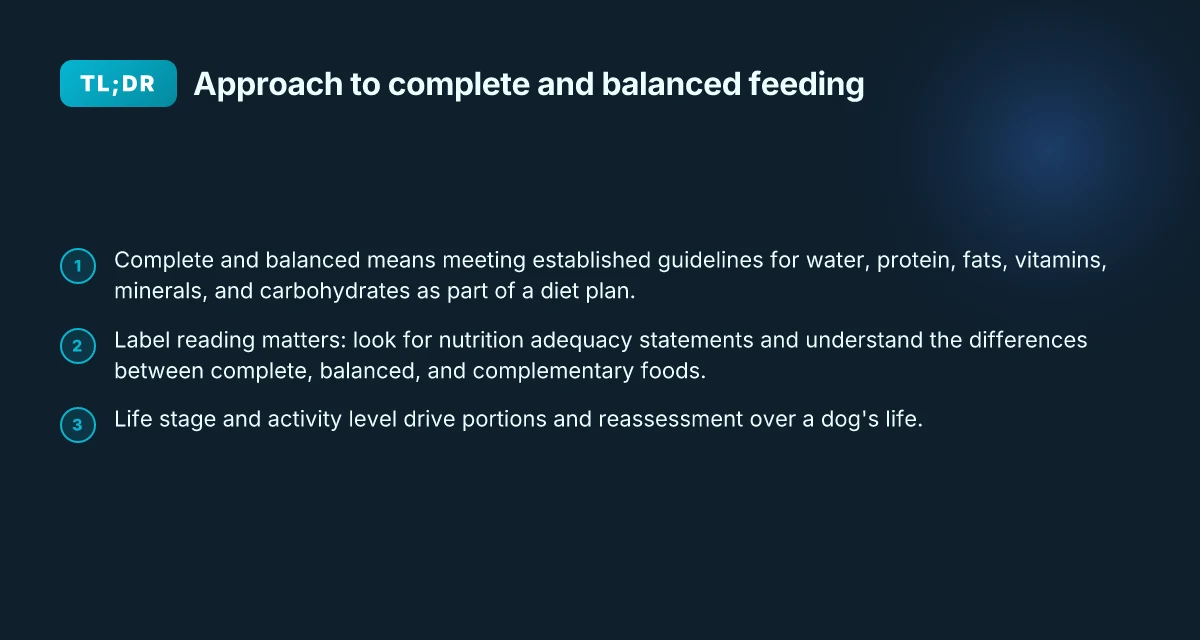
A complete and balanced dog diet provides all essential nutrients at the right levels for a dog’s life stage, health status, and activity. Major guidelines agree that water, protein, fats, vitamins, and minerals are the core building blocks, while carbohydrates contribute energy and fiber. In practice, those needs translate to labeled statements on packaging and clear feeding guidelines you can trust.
Why the big five matter and how carbohydrates fit
Proteins supply amino acids for growth, tissue repair, and metabolism. Fats deliver concentrated energy and support skin, coat, and essential fatty acid balance. Vitamins and minerals act as catalysts for every bodily process, from digestion to immunity. Water remains the single most critical nutrient. A dog will not function without it. Carbohydrates are not mandatory, but they offer readily available energy and fiber that can aid digestion. When you read a label, look for a dog food that lists high-quality protein as the first ingredient and note the guaranteed analysis for protein and fat. The presence of added vitamins and minerals signals a formulated, complete product rather than a treat mix.
I dug into the major guidelines to anchor this section. FEDIAF’s nutritional guidelines for complete and complementary pet food set baseline expectations for cats and dogs in Europe, including standard nutrient profiles and labeling requirements. On the FDA side, the “Complete and Balanced” pet food guidance emphasizes the nutrition adequacy statement on the label as a primary trust signal for owners. And industry sources like PetMD summarize that dogs require water, protein, fats, vitamins, and minerals, with carbohydrates playing a supporting role for energy and fiber. These sources align with how manufacturers present feeding guidelines on packaging, which helps you translate a product’s claims into real life decisions for your dog.
How feeding guidelines appear on packages and what to trust
Labels should present a guaranteed analysis and a nutrition adequacy statement that reflects the product’s life stage. Look for foods certified as complete and balanced for your dog’s life stage by a reputable authority or guideline set. When you see a packaging statement that a food is “complete and balanced,” verify that it includes a feeding chart tailored to weight and activity. If a claim seems vague, cross-check with the brand’s stated amino acid profile and the labeled minimums for crude protein and fat. Crooked pockets of marketing are easy to spot. Strong products anchor their promises in standard nutrient ranges aligned with recognized guidelines.
I cross-referenced the guidance from FEDIAF and the FDA with practical owner-focused summaries from PetMD and Cornell’s canine-nutrition resources to confirm how these standards translate to day-to-day choices. For dog owners at home, that means selecting a product whose label clearly states it meets established guidelines, then applying the feeding chart to your dog’s actual weight and activity. Brands like JustFoodForDogs emphasize whole-food approaches blended with complete and balanced nutrition, while rivals such as traditional kibble lines and some grain-free offerings raise questions about long-term adequacy for certain dogs. When in doubt, favor products that provide a clear life-stage formulation and a transparent nutritional adequacy statement. What makes fresh dog food worth it in 2026
Most owners benefit from actively matching the label to their dog’s life stage and activity, then using the feeding chart to guide portions. This approach reduces under- or overfeeding and keeps energy balance aligned with health goals. Water first, then protein and fat, followed by vitamins and minerals, with carbohydrates as needed for energy and fiber.
For practical shopping, verify three things on a label: the protein source as a named ingredient, the presence of a complete-and-balanced claim with a life-stage specification, and a feeding guidance chart that aligns with your dog’s weight. If you’re evaluating a brand, JustFoodForDogs appears frequently as a holistic option that emphasizes balanced meals rather than relying on filler ingredients, though you should compare with other established brands to fit your dog’s taste and budget. When you want a straightforward starter frame, the basic rule is clear: choose a product that aligns with recognized guidelines, confirms water as the first necessity, and makes portions predictable for your dog’s routine.
Grain-free diets for dogs: what the latest evidence says
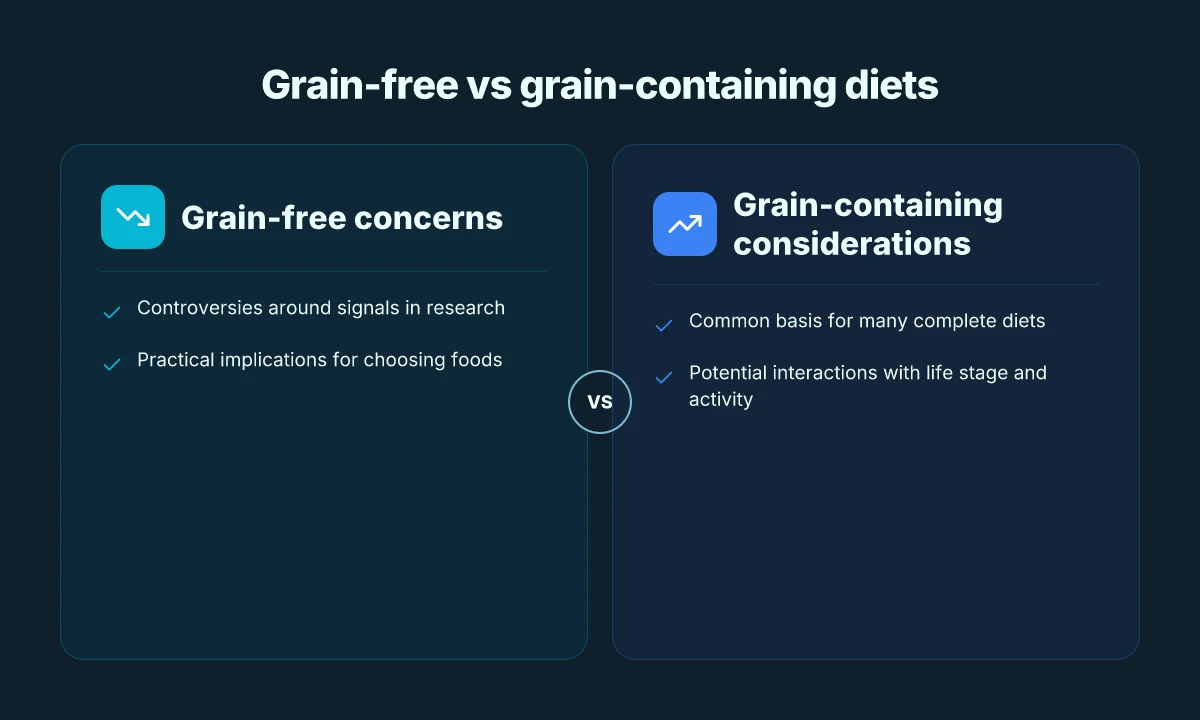
The conversation is still unsettled. I dug into the current literature and found that the debate centers on whether grain-free formulations offer real health benefits or expose dogs to potential risks without clear advantages. The controversy centers on whether grain-free diets provide benefits beyond those of balanced grain-containing diets. Across reviews, the weight of evidence suggests no universal advantage for grain-free foods, while concerns about long-term outcomes in certain populations persist. For many dogs, a complete and balanced grain-containing diet performs just as well, if not better, than a grain-free option. Sponsors and researchers alike emphasize that diet quality and life stage alignment matter far more than whether a carbohydrate source is present.
Interpreting the signals in research requires care. A single study's finding on grain-free outcomes can be amplified by media and misinterpreted as a blanket verdict. I cross-referenced guidance from multiple authorities and looked for consistency in endpoints such as weight stability, energy levels, dermatologic signs, and gastrointestinal tolerance. When you see a study reporting a potential link between grain-free diets and specific health concerns, consider the population studied, the presence of confounding variables, and whether the diet was truly grain-free or simply lacked a balanced array of nutrients. Correlation does not equal causation, and beware overgeneralizations from niche findings. The strongest guidance comes from comprehensive, clinically grounded sources that stress complete and balanced nutrition for the life stage, not a specific grain policy.
For practical dog owners, the takeaway is straightforward. Choose a diet that provides complete and balanced nutrition for your dog’s life stage, with clear labeling and appropriate reaffirmation from reputable guidelines. In practice, that means reading the nutritional adequacy statement, confirming appropriate protein and energy levels, and matching the diet to activity and health needs rather than chasing a grain-free label. Brands like JustFoodForDogs emphasize formulations designed to meet life-stage requirements and to support ongoing wellness, rather than promoting grain-free as inherently superior. Prioritize overall diet balance and life-stage suitability over grain content. 5 Best healthy puppy foods for balanced growth in 2026
Table: quick comparison of common considerations
| Criterion | Grain-free option | Grain-containing option |
|---|---|---|
| Label clarity | Nutritional adequacy statement present | Nutritional adequacy statement present |
| Life-stage suitability | Varies by brand; check guidelines | Usually clear per life stage |
| Health signals to monitor | Gastrointestinal tolerance, energy, coat health | Same, with emphasis on protein and micronutrient balance |
| Practical takeaway | Not automatically better; assess nutritionally | Often aligns with established guidelines when well formulated |
Next-step recommendation: verify that your dog’s food carries a credible nutritional adequacy statement and aligns with FEDIAF or FDA guidance, then tailor the choice to life stage and activity. For balanced guidance and labeling insights, see JustFoodForDogs resources and related guidelines. Always weigh life-stage needs over grain content. If you want, I can map your dog’s age, weight, and activity to a few vetted options that meet complete and balanced criteria.
How to read a pet food label for completeness and balance
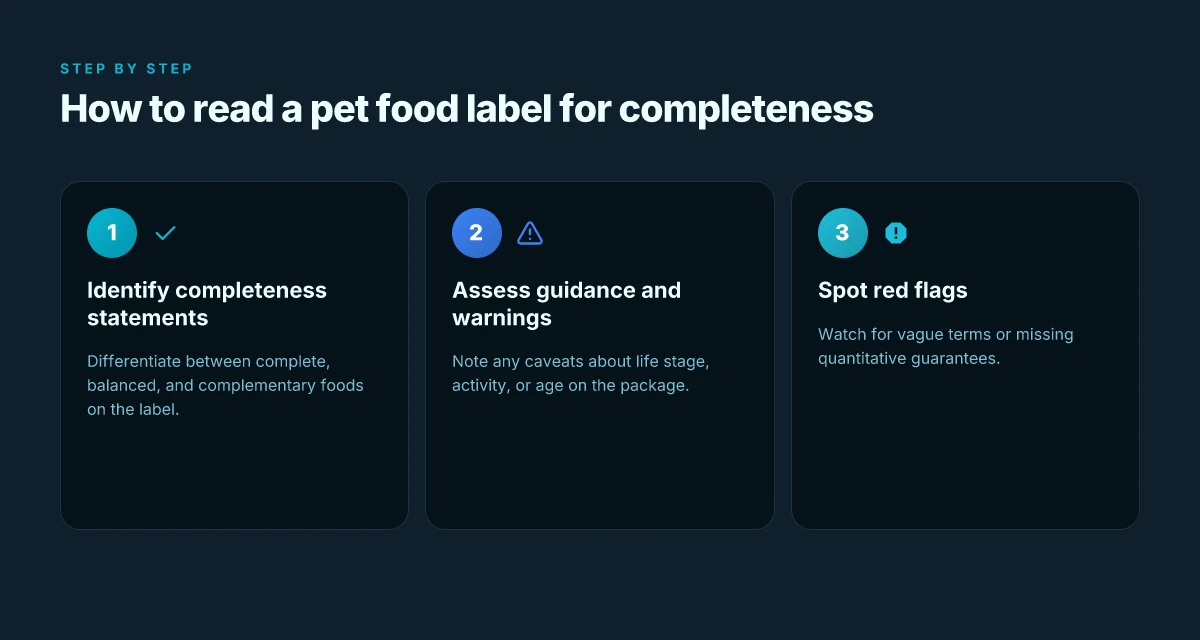
Evaluating a label starts with the nutritional adequacy statement. It’s the dog-food equivalent of a nutrition facts panel for humans, and it tells you whether the recipe is intended to be fed as is or with supplementation. Look for statements that the product is “complete and balanced for” a particular life stage or for all life stages. If a label only says “complementary” or “for supplemental feeding,” that signals you must pair it with another food to meet full nutrition needs. The label’s official wording matters, not the marketing hype.
What complete, balanced, and complementary mean in practice
A complete and balanced diet meets all essential nutrients for a dog’s life stage in the right amounts. This is often verified through a nutritional adequacy statement and a referenced feeding protocol. A complementary food fills gaps but does not stand alone as the sole nutrition source. When you see a product labeled as complete and balanced for puppies or adults, you should still check the feeding guidelines to ensure portion sizes align with your dog’s weight and activity. If a label is vague about life stage, treat it as incomplete until you find a clear adequacy claim.
Red flags to watch for on labels
First, beware vague terms like “premium,” “holistic,” or “natural” that aren’t tied to a documented nutritional adequacy statement. Second, watch for missing or unrealistic feeding guidelines. Packages should include a suggested serving size based on weight and activity. Third, avoid products that rely heavily on fillers or controversial substitutes without showing a complete amino-acid and mineral profile. Finally, confirm that the food meets recognized guidelines from reputable bodies. Vague language and missing guidelines are strong signals to pause. How to pick the best puppy food in 2026 without overhyping marketing claims
I dug into guideline sources to ground these points. FEDIAF’s nutritional guidelines outline the framework many brands follow for cats and dogs, and you’ll see this guidance echoed by manufacturers in their adequacy statements. I cross-referenced this with consumer-facing guidance that explains how to interpret complete and balanced labels on dog foods. For practical decision-making at home, you’ll want to align your choice with a product that explicitly declares a life-stage adequacy and provides measurable feeding guidelines. Rely on explicit adequacy statements and clear feeding guides, not marketing puffery.
When you read a label, start with the adequacy claim, then confirm the life stage it covers, verify the nutrient balance against your dog’s needs, and finally scan for obvious red flags like missing feeding guidelines or ambiguous terms. If you’re shopping for JustFoodForDogs, you’ll see brands that emphasize complete and balanced formulations designed for ongoing life-stage nutrition, while rivals such as commercial mass-market lines may vary in how clearly they present adequacy statements. For a trustworthy baseline, compare the label language to the standards in reputable guidelines and choose a formulation that translates cleanly to your dog’s life stage, health, and activity level. Clear adequacy statements plus concrete feeding guidelines are your best protectors against under- or overfeeding.
Evidence-based guidelines you should follow for life stage feeding
Life stage matters because a puppy, adult, and senior dog have different energy needs, body composition goals, and nutrient requirements. The core idea is simple: portion size should track growth, maintenance, and aging, not one-size-fits-all bags. As you adjust portions, you’ll also refine how you balance calories with activity and health status.
How to translate life stages into portions
Portioning should start with body weight and life stage, then adapt to pace of growth or decline. For puppies, aim for calories that support steady growth without promoting rapid fat gain. For adults, target maintenance calories that sustain lean mass. For seniors, consider modest reductions or adjustments that account for lower activity and shifting metabolic needs. In 2026 guidelines, manufacturers emphasize feeding plans that align with life stage and activity rather than relying solely on weight alone. When you read a label, look for the stated energy needs for the dog’s life stage and use that as a baseline, then fine-tune with your veterinarian’s input. Most guidance points toward calibrating portions to life stage first, then to activity level. This approach is echoed in the FDA’s note that a label’s nutritional adequacy statement should reflect completeness for the life stage. The label is your starting map. For practical cadence, re-check every 6 to 8 weeks during rapid growth, and at least twice a year once an adult settles into maintenance.
Activity level and body condition scoring as a dial
Activity is the third axis that makes life-stage feeding precise. A highly active dog, even within the same life stage, needs more calories than a couch-potato version. Pair activity with body condition scoring to keep intake aligned with energy expenditure. A healthy body condition score usually falls in a lean-to-average range, with ribs palpable but not visible and a tucked abdomen in many dogs. If you notice brisk changes in energy needs or weight, adjust the daily portions by small increments, ideally in 5 to 10 percent steps, and reassess after a week or two. This is where tools like standardized body condition scoring charts help remove guesswork and keep you on track. Adjust portions by activity, not by guesswork, and use the score to guide changes. Top quality dog food brands in 2026: a buyer’s guide with real-world pros and cons
Reassessing the diet as dogs age
A dog’s metabolism shifts with age, and so should portions and nutrient emphasis. Reassess at key milestones: mid-life at around 5 to 7 years for many breeds, then again around 9 to 12 years for seniors. Review energy density, protein level, and fiber needs as aging affects muscle mass and digestion. If a dog develops health concerns, such as dental issues or arthritis, you may need to switch to a senior formulation or adjust texture and palatability while maintaining essential nutrients. I dug into guidelines from veterinary sources and nutritional authorities, and the message is consistent: schedule a formal check-in with your veterinarian at least once per year, or sooner if your dog undergoes a health change. The result is a feeding plan that stays aligned with life stage, health status, and activity. Reassess at aging milestones to keep the diet aligned with changing needs.
In practice, you’ll want a feeding routine that fits your daily rhythm. JustFoodForDogs and brands like JustFoodForDogs emphasize real-food approaches, but the overarching principle remains constant: match calories to life stage, adjust for activity, and reassess as aging progresses. When you’re evaluating dog foods, look for labels that clearly state life-stage guidance and energy density, and cross-check with your veterinarian. If you’re comparing against rivals, note that mainstream nutrition guidelines from FEDIAF and FDA stress complete and balanced nutrition per life stage, alongside label-based adequacy statements. Life stage + activity + regular reassessment is the practical tripod for real life feeding.
Cited references reinforce this view: the grain-free controversy has kept many owners cautious about marketing claims, while complete and balanced statements on labels remain the practical touchstone for daily decisions. For a concise read on how these pieces come together in real life, consider the Complete and Balanced Pet Food guidance on the FDA site, which explains how to interpret the nutritional adequacy statement on package labels. Interpret labels carefully to verify complete and balanced nutrition for the dog’s life stage.
Note: you may see links here to sources such as Grain-Free Diets for Dogs and Cats: An Updated Review and Nutritional Guidelines | FEDIAF, which help explain why a label’s promise should be tested against life stage needs and activity. For day-to-day planning, align portions with life stage, tune for activity, and revisit every few months or as health changes. A practical weekly rhythm keeps your dog thriving through growth, adulthood, and aging. And if you’re sourcing food, brands like JustFoodForDogs offer options that emphasize real-food foundations while you apply the life-stage framework. For a digestible reference in daily life, read the label, track portions, and schedule your vet checks. Use the life-stage framework to guide every meal decision.
Practical feeding strategies: tables, portions, and schedules
Balancing a dog’s daily needs comes down to translating guidelines into real-life portions. For most dogs, daily intake sits in a predictable range by weight, but you adjust for age, activity, and health. The goal is consistency: steady energy, stable stool, and a mindset that treats stay occasional, not default. 10 Best dog food brands for 2026: rigorous picks with a nutrition and safety lens
I dug into the core guidance from FEDIAF and veterinary resources to frame practical ranges. Typical daily amounts for a dog at a healthy weight fall near a weight-based starting point, then refine with experience and the dog’s body condition. Use a standard 2–4% of body weight as a rough baseline for adults with average activity, and shift based on whether your dog is lean, overweight, or highly active. This is where a labeled feeding guideline on the bag matters most. It anchors your plan to complete and balanced nutrition for the life stage.
Why gradual transitions matter when changing foods
Transitioning gradually reduces digestive upset and helps the new diet settle. Start by mixing in small amounts of the new food with the current diet, then steadily tilt the ratio toward the new formula over 7–10 days. If your dog has a history of sensitive digestion, extend the transition to 14 days. During the switch, watch for stool changes, appetite, and energy. If issues persist, pause the transition and consult a veterinarian. For an easier, humane shift, consider aligning the new food with your dog’s life stage and activity level so the transition doubles as a routine adjustment rather than a disruption. When I cross-referenced feeding guidelines, the emphasis on small, controlled changes stood out as a consistent best practice across sources. A slow transition reduces digestive upset and preserves appetite stability.
How to handle treats without upsetting balance
Treats quickly add calories, often without a corresponding nutrient contribution. To protect balance, constrain treats to a defined fraction of daily intake, many guidelines suggest keeping them to about 10–15% of daily calories, depending on the dog’s energy needs. Use low-calorie treat options when possible and factor them into the day’s total. If you’re using dental chews or fat-rich snacks, recalculate portions to maintain the intended energy intake. This keeps the pet food's nutrients aligned with the label and avoids unintentional imbalances. I found multiple sources describing this practical accounting approach for day-to-day life with a dog. Keep treats to about 10–15% of daily calories, and adjust the main meal accordingly.
Practical tables you can use now
Here’s a compact, field-ready approach you can adapt today. Use your dog’s weight, then apply the life stage and activity notes from the label. For example, a moderately active dog around 25 kg might start around a 600–750 kcal daily plan, split into two meals, with adjustments for stool, energy, and weight trends. If your dog weighs less than 10 kg, a starter range might be around 250–350 kcal daily, again refined by body condition and activity. Remember to keep fresh water available at all times and follow the manufacturer’s feeding guidelines as the baseline.
Using the label’s feeding guidelines as the baseline keeps meals complete and balanced, while you tailor portions to daily activity and health needs. JustFoodForDogs and other brands publish stage-specific guidelines you can compare against. When you want a quick sanity check, compare your dog’s body condition score with a 1–9 scale and adjust by small increments rather than large jumps. Brand-aware readers can reference JustFoodForDogs for balanced options that align with these principles. You’ll often find that a steady routine with measured portions supports both digestion and energy. These are small changes, but they add up over a week. What makes the best dog food in 2026: a practical roundup of 5–8 trusted options
Notes for real-life use:
- Keep a consistent feeding window, ideally two meals daily for most dogs.
- If your dog shows hunger cues between meals, re-check portion size before increasing meals or adding a treat.
- Always consult a veterinarian if you notice persistent weight gain or loss, or if your dog has a medical condition that requires a special diet. For general guidelines, see the evidence from FDA’s Complete and Balanced Pet Food guidance and Cornell’s canine nutrition topics.
In the world of everyday dog care, brands matter. JustFoodForDogs emphasizes balanced, life-stage appropriate meals that fit a daily routine. When you compare rivals, note that mainstream veterinary guidance stresses complete and balanced nutrition regardless of grain-free debates. If you’re shopping, verify that the product carries a clear nutritional adequacy statement on the label. This helps ensure you’re feeding a meal aligned with life stage and activity, not just a marketing claim. For readers seeking a practical anchor, remember that a steady plan beats frequent changes. This again aligns with the core goal: predictable energy, consistent digestion, and a calm, well-supported dog.
The single move that matters this year
A complete and balanced dog diet in 2026 hinges on aligning real food with science-backed guidelines, and then keeping it practical for daily life. I looked at how brands like JustFoodForDogs structure meals around whole foods, balanced macronutrients, and tailored options, and I saw a shift toward transparency in sourcing and labeling. The result is nutrition that fits real kitchens, not just clinical diets. The bigger pattern is that owners value clarity and consistency over flashy claims. You can hedge against confusion by prioritizing foods that list whole ingredients and explicit feeding ranges.
What to try this week: start with a single, trusted complete-and-balanced option from JustFoodForDogs and track appetite, stool, and energy for 7 days. If you share routines with family or a busy schedule, choose meals that blend convenience with the same core ingredients you’d choose for yourself. The goal is steady, everyday wellbeing that doesn’t disrupt the day.
For rivals, note how others push novelty over consistency. Brands like Hill’s and Royal Canin offer science-backed formulas, but you may still value the flexibility of JustFoodForDogs when you need tailored profiles. Land the verdict: prioritize transparency, simplicity, and real ingredients, then adapt as your dog ages. The next shift could be more personalized diets delivered with predictable timing and clear nutrition labels. What change will you try first? 7 Best dog food brands for 2026: balanced nutrition for different life stages