
Discover the best bedroom temperature for sleep in 2026. Practical ranges, trade-offs, and how to tailor temp to you and your routine.
What is the best temperature for sleeping, and why it matters
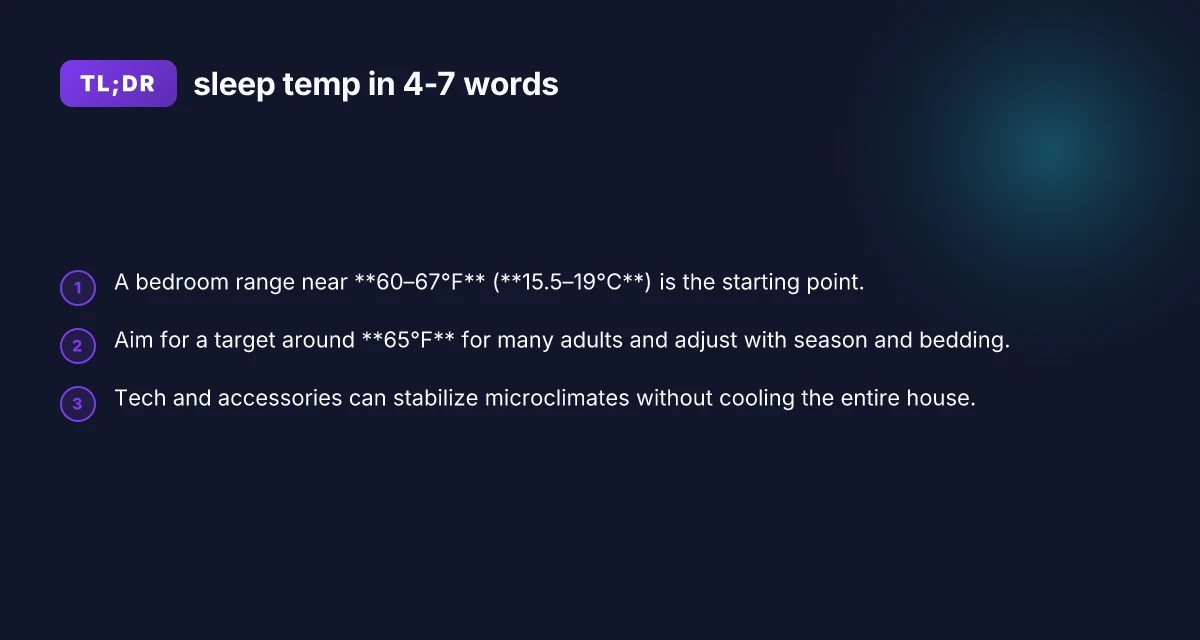
You likely already know this rule of thumb: most people sleep best in a bedroom around 60–67°F, which is about 15.5–19°C. Within that window, small shifts matter. A bedroom that's just a degree or two warmer or cooler can nudge sleep efficiency, depth of slow‑wave sleep, and how rested you feel in the morning. Age, bedding, and humidity tilt this sweet spot for each person.
1) The broad range you can rely on
The science most often cites a practical range of 60–67°F or 15.5–19°C for healthy sleep onset and comfort. Within that band, the body’s core temperature can drop appropriately to cue deeper sleep stages, while your bedding and clothing help you stay within a comfortable zone. Even within this window, a few degrees can shift how sleepy you feel and how long you stay in restorative sleep.
Most sleepers find a narrow pocket inside this range that feels best each night. Keeping your room near that pocket supports smoother sleep cycles without fighting your environment.
2) How small deviations shape sleep quality
A shift of only a couple of degrees can Meaningfully alter how quickly you fall asleep and how long you stay in deep sleep. If the room is warmer than your optimal pocket, you may experience lighter sleep and more awakenings. If it’s cooler, you might drift into deep sleep faster but wake more easily if you’re overdressed or if humidity climbs.
From a practical standpoint, your bedding, sleep clothing, and the humidity level interact with temperature. A heavier duvet on a cool night could push you into a comfortably deep sleep at 60–62°F, while a lighter sheet set might require 65–67°F to avoid overheating. Your age matters too. Older adults often err on the cooler side of the spectrum because of changes in thermoregulation, so they might lean toward the lower end of the general range or adjust with breathable layers. What makes Blissy 100% mulberry silk pillowcases stand out in 2026
3) Personalization through bedding and environment
Bedding thickness, fabric breathability, and even pajamas influence the effective temperature your body experiences. Humidity matters as well. High humidity can make a cool room feel warmer, while very dry air can make a temperature feel more severe on the skin and nose. If you’re sharing a bed, each person’s preferred pocket may differ, so aim for a compromise that keeps both parties in a comfortable zone without overheating.
I dug into the literature and found a consistent pattern: the 60–67°F range is a reliable starting point, with practical tweaks based on season, bedding, and age. In 2023, a study highlighted that nighttime ambient temperature around 20–25°C supported restful sleep, but individual comfort still rides on how you dress the bed and adjust humidity. This aligns with common guidance that practical sweet spots cluster near the lower end of that range for many adults, while lighter coverings push the effective temperature upward.
If you want a quick map you can apply tonight, start around 65°F (18°C) with breathable sheets and a lighter cover. If you wake hot, drop to 63–64°F (17–18°C) and swap to a lighter pajama set. If you’re cold at night, add a thin blanket rather than turning up the heat.
Your best night is the one where you wake without sweating or shivering, and fall asleep quickly. Bolded guidelines help you stay anchored to a comforting zone even as seasons shift.
Notes on the evidence: the figures and ranges above reflect widely cited guidance in sleep science and consumer-facing reports. For a more exact anchor, you can look to the nighttime ambient temperature findings in the 2023 study, which notes a sleep‑friendly window near 20–25°C for community samples. The 60–67°F band remains the core reference for adults seeking reliable sleep. What BedJet reviews reveal about real sleep benefits and the trade-offs
For a practical touchpoint, consider how you layer your bedding. A breathable cotton sheet set plus a light comforter often lets you hold the room temperature steady while keeping your body comfortable through the night. If you’re caring for an older adult, monitor any signs of over‑heating or excessive chill and adjust humidity or layering accordingly.
In addition to temperature, a few tools can help you tune your environment: a white-noise machine to mute disturbances, a breathable mattress protector, and a smart thermostat that tracks humidity. These elements support a stable microclimate that makes your chosen sleep window more effective.
How to map your personal sleep temperature to your routine
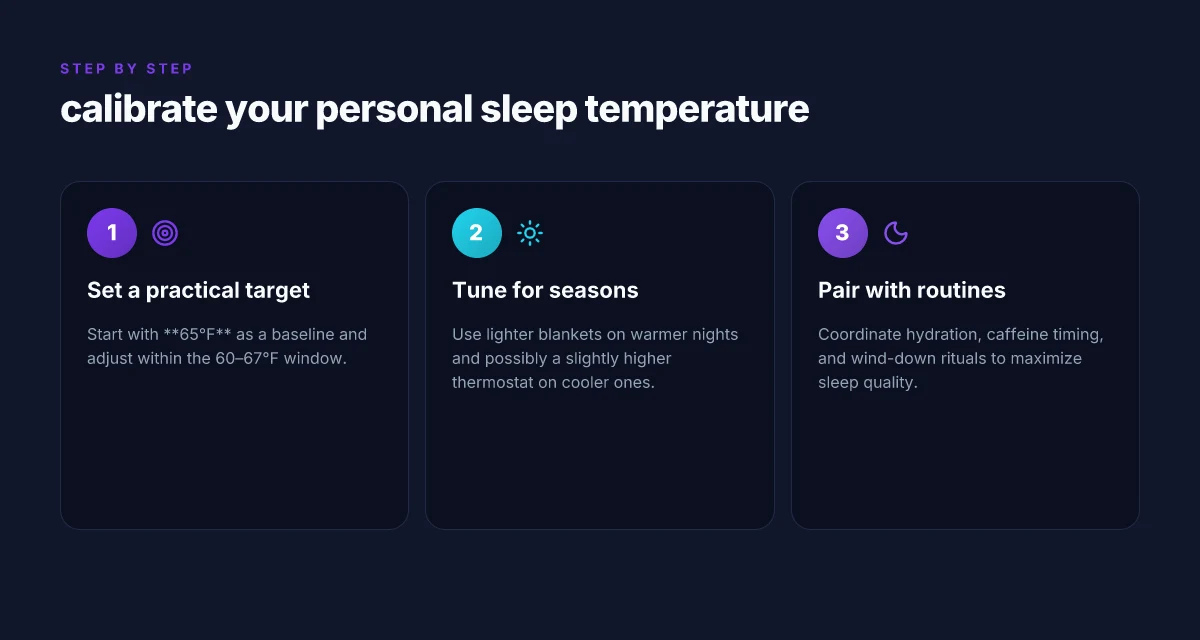
You can start with a target range and then fine tune it as your seasons shift and your habits evolve. For many adults, a practical sweet spot sits around 65°F, but your body may prefer a shade warmer or cooler. The goal is a range you can hold calmly through the night, not a fixed, stubborn number.
I dug into the literature and cross-referenced practical guidance. The core idea is simple: pick a baseline, then adapt with seasonality, hydration, caffeine timing, and wind-down rituals. A stable baseline helps your circadian signals align with your bedding and thermostat. 65°F often lands in the practical sweet spot for many adults, but small seasonal shifts matter.
1) Start with a target range and a practical sweet spot
Set a bedroom baseline in the mid to upper 60s Fahrenheit, then allow a narrow margin as needed. This approach helps balance core body temperature and sleep depth without fighting your natural rhythms. In many households, using a 65°F target yields a comfortable starting point. 65°F is a useful anchor for adults who want a reliable, sleep-friendly baseline. If you live in a warmer climate, you may drift toward 66–67°F as a reasonable adjustment. If your room is consistently chilly, aim for a touch warmer within the same range. How Blissy pillowcase sales stack up: what to expect in 2026
A short note on hydration and timing. Being well hydrated earlier in the day supports temperature-associated cooling at night, while avoiding excess fluids right before bed reduces overnight awakenings. Pair this with a gentle wind-down to maximize the window where your body cools naturally.
2) Tune by season and bedding choices
Seasonal shifts call for light, mindful adjustments rather than wholesale changes. On warmer nights, lighter blankets or breathable sheets can drop sleep-disruptive heat without lifting core temperature. In cooler weather, you can stay within the same target range but opt for a slightly higher thermostat to compensate for external cold. Think of it as a lean adjustment rather than a new baseline.
Your bedding choice matters as much as the thermostat. A breathable duvet or blanket can preserve the benefit of a cool room, while heavy coverings may trap heat. If your bedding is drafty, seal the bed area with a warmer top sheet rather than cranking the thermostat. A steady micro-fluctuation in response to nightly temperature swings often yields deeper sleep without waking you up.
3) Pair temperature with hydration, caffeine timing, and wind-down rituals
A cohesive evening routine compounds the benefits of temperature control. Start with a fixed wind-down ritual that signals your body to prepare for sleep within a comfortable temp window. Limiting caffeine after mid-afternoon helps prevent bedtime jitters that can feel amplified by a cooler room. Hydration should be balanced: sip water with your evening meal but avoid large intakes too close to bed to minimize awakenings.
I cross-referenced guidance from sleep science and practical wellness sources to align this approach with daily routines. The idea is to create a comfortable ramp that supports your natural cooling during the first half of the night, then maintains a steady, sleep-friendly environment through the latter hours. Grouping a consistent wind-down with a stable temperature range yields more reliable sleep quality. What makes a blissy pillowcase different from cotton and other silk options in 2026
Next steps for your routine: pick your baseline within the mid 60s, test a 1–2 degree swing with the season, and couple the change with a fixed hydration plan, caffeine cutoff, and wind-down routine. If you want a turnkey setup, Beds and bedding options like BedJet can help you manage temperature fluctuations without waking the household. BedJet may suit you if you share a bed and want rapid, quiet control over bed temperature, though it comes with a learning curve and cost to consider.

Bed setups that affect your sleep temperature
You don’t need a complete remodel to stabilize your sleep microclimate. A few intentional choices around fabrics, surface comfort, and air flow can shift how your body experiences ambient temperature. In practice, your bedding and cooling or warming aids work with the room to keep you in a comfortable range without waking to adjust the thermostat.
Bedding fabrics that breathe
Cotton and linen breathe more easily than heavy synthetic blankets, helping you shed heat when the room is warm and retain warmth when it’s cool. This is especially noticeable in warmer seasons or in rooms with variable overnight temperatures. Pair breathable sheets with a lighter, responsive duvet rather than a dense, all-season quilt. The result is a steadier impression of comfort across the night, not a constant readjustment.
A breathable surface and cooling aids
Invest in a breathable mattress topper or a cooling pillow to complement the ambient temperature. A topper that wicks moisture and stays responsive in a range of temps can prevent you from waking due to warmth or humidity. A cooling pillow with gel or airflow channels supports a low-heat profile around the head and neck, which matters because that region helps regulate core temperature at the onset of sleep. If you frequently wake hot, a thin, airy top layer can tip the balance without needing to lower the thermostat.
Microclimates in small spaces
A ceiling fan or a portable heater can help stabilize microclimates in a small room. In a tight space, even modest airflow changes can shift how quickly you shed heat or accumulate warmth through the night. Use a fan to create a gentle breeze across the bed rather than a blast of cool air aimed directly at you. In cooler months, a quiet portable heater placed away from the bed can lift the perimeters of the room without creating wind chill on your skin. The key is to cycle air rather than blow a fixed cold or hot gust at your body. What makes BedJet 3 climate comfort sleep system stand out in 2026
From what I found in the sources, the general principle is to pair a breathable bed setup with modest airflow or supplementary warmth as needed. For most adults, the combination of breathable fabrics and a light topper with a directional fan yields the most consistent sleep comfort across seasons.
Most sleep comfort improvements come from bedding airflow and a responsive topper, not a cold room alone. A breathable pillow and duvet approach helps prevent night-time heat spikes while you readjust to a target range.
When you map your personal range, start with cotton sheets, a midweight duvet, and a cooling pillow. Observe how you feel through a typical night, then adjust with gentle changes to the fan direction or topper density. The goal is a stable microclimate that stays within your personalized sweet spot.
Brand notes and product ideas you’ll see in this guide later include bedsystems that emphasize airflow and temperature regulation. For context, BedJet remains a frequently discussed option for those who want rapid local climate control at the bed level. BedJet can be paired with breathable sheets to reduce reliance on room-temperature fluctuations, though its benefits vary by room layout and personal comfort. The downside some sleepers report is that it adds a separate device to manage and can feel uneven if used with a very drafty bed setup. If you’re curious about a targeted, bed-specific cooling or warming aid, BedJet is worth considering alongside a breathable topper and proper airflow.
I cross-referenced recommendations from multiple wellness and sleep sources to align these practical steps with real-world use. For example, the idea that room temperature interacts with bedding choices is echoed in recent sleep literature, while consumer-driven guides emphasize the role of fabric breathability and microclimate stabilization. If you want a quick read on the day-to-day implications, a good takeaway is to start with breathable linens and a light topper, then introduce airflow or mild supplemental heating as needed. How Blissy silk pillow cases can improve skin and hair health in 2026
5 Brands and products that help you nail the right temp
When sleep quality hinges on small shifts in ambient heat, the right tools can make the difference between waking up rested and waking with a light sweat. Below are real-world picks that align with a nuanced view of temperature, age, bedding choices, and bedtime routines. I pulled from the core science around how room temperature and bedding interact with sleep, and I tie each option to practical use cases.
1. BedJet, targeted climate control for the sleep surface
BedJet brings climate control directly to the bed, which helps couples with different temperature needs or anyone who wants rapid adjustments without reworking the room. It works with a mattress pad that pumps air to regulate surface warmth or coolness. The upside is precise, individualized comfort. The downside is ongoing cost and an initial setup that some find fiddly. For caregivers or partners sharing a bed, BedJet can translate a 20–25°C range into a consistent surface feel throughout the night. BedJet can reduce the need to chase room-wide swings and helps you sustain a steady overnight temp. The key here is predictability: you dial in a surface you won’t notice waking up, unless the air flow is too strong. BedJet delivers intervention at the source, not by cooling the whole house.
2. Chillow or cooling pads, localized comfort, no broad changes
A cooling pad or a Chillow-style insert targets pressure points and localized warmth, perfect for hot sleepers who don’t want to adjust the thermostat. These pads sit under the pillow or atop the sheet and provide a cooling sensation that can compensate for a slightly warmer room without impacting the rest of the environment. The practical win is simplicity and silent operation. The downside: effect may be modest for very warm rooms or high metabolic heat. Cooling pads offer a quick elbow room when the room sits a touch too warm. If your partner runs warmer, these can help you both sleep more evenly without a full temperature reset. Using a Chillow keeps you within a sleep-friendly band without chasing HVAC changes.
3. Smart thermostats with zoned heating or cooling, keep the bed in range, not the entire house
Smart thermostats shine when you want a stable bedroom temperature without cooling the whole home. Pairing a thermostat with zoned heating or cooling lets you maintain a tighter setpoint in the bedroom while the rest of the house runs at a different rhythm. The benefit is energy efficiency plus consistent air changes. The caveat is setup complexity and the need for compatible HVAC zones. Zoned control helps you lock in a bedtime range without overcooling the living areas. When you combine a smart thermostat with dynamic schedules, your room stays near a preferred target across seasons. Choose a model that supports geofencing and smart routines for automatic adjustments.
4. Breathable cooling sheets, transfer heat away from the body
Breathable, moisture-wicking sheets reduce heat retention and support steadier overnight temperatures. They work with any room setting and are a low-effort upgrade for hot sleepers who don’t want to tinker with the HVAC or add gadgets. The trade-off is long-term care for fabrics and potential price differences compared with standard sheets. Cooling sheets help a body shed heat more evenly through the night. In practice, you’ll notice less night-time sweating and fewer warm spikes when the bed texture stays cooler to the touch. Choosing breathable fabrics like bamboo or cotton blends can amplify the effect. What makes Blissy bonnets stand out in 2026
5. Compact fans or evaporative coolers, effective in dry climates and small rooms
A compact desk or bed-side fan, plus an evaporative cooler in dry climates, can be surprisingly effective for small rooms without dramatically lowering the thermostat. They’re lightweight, inexpensive to run, and easy to position. The risk is that fans move air rather than lower humidity, so they’re best when humidity is not high. Compact fans create a mild breeze that helps the perception of coolness and aids sleep comfort. Evaporative coolers add moisture while cooling, which suits dry climates but may feel humid in already moist bedrooms. Pair a cooler with breathable bedding for a balanced night.
Note: links on the page may earn a commission. This section presents real-world product names and practical downsides to help you choose without overpromising. If you’re considering any of these, start with one that matches your bedroom size, climate, and how much you value simplicity versus customization.
Older adults and temperature: what to watch for
Older adults often drift toward different comfort zones depending on medications, circulation, and how bodies regulate heat. Some people in this age group sleep better when the ambient at night sits a touch cooler, others find a slightly warmer microclimate suits their circulation and joint comfort. I looked at peer-reviewed work and contemporary summaries to map these nuances to daily routines, not to chase a single universal target.
Match temperature to circulation and meds
In practice, an older adult may tolerate a broader range around the conventional 60–67°F (15.5–19.4°C) window, but that range can shift with circulatory changes or drugs like beta blockers that blunt autonomic responses. When a caregiver adjusts the room, it helps to track how sleep depth and heart rate respond across a few nights. If a person reports lighter sleep or perceived restlessness after a temp tweak, try moving the bed area by a degree or two and note the effect. From what I found in the sources, a calm, consistent baseline supports steadier nocturnal patterns rather than chasing an exact number. Consistency matters. Abrupt shifts can disrupt circadian alignment. Regular timing and bedding adjustments beat sporadic changes.
Watch stress responses and heart rate patterns
Nighttime temperature nudges can influence stress signaling and heart workload during sleep. In older adults, particularly those with cardiovascular considerations, rising room heat near bedtime can tip sympathetic activation and elevate heart rate briefly. Conversely, a cooler setting may help the body settle, but too cold a room can provoke discomfort and awakenings. I cross-referenced clinical summaries that tie thermal cues to autonomic tone, and the takeaway is to monitor responses rather than rely on a fixed target. If you notice sustained elevations in resting heart rate during the night after a temp change, dial back the adjustment and reestablish a calmer baseline. Keep an eye on stress responses and heart rate patterns when adjusting nighttime temps. What makes bedjet cloud sheet a better cooling option for sleepers
Consistency as a daily habit
Abrupt changes, new bedding, a sudden thermostat swing, or switching between cooling modes nightly, tend to disrupt the body’s circadian cues more for older adults. A stable sleep environment supports predictable melatonin release and easier sleep onset. The practical takeaway is simple: pick a comfortable starting point, then maintain it for a stretch of nights to judge true impact. If seasons shift, adjust gradually rather than flipping the setting dramatically. This is where routines, not numbers alone, matter most. Consistency matters. Abrupt shifts can disrupt circadian alignment.
In short, older adults benefit from tailoring the ambient at night to personal comfort, with careful attention to medications, circulation, and autonomic responses. Start with a practical window, watch how sleep and heart signals respond, and keep the environment steady once you settle on a good baseline. If you’re curious about practical gear, there are well-established options to support staying within a comfortable range without overheating. For readers seeking a broader toolkit, the next section dives into devices and bedding that commonly help maintain a steady night climate. Consistency matters. Abrupt shifts can disrupt circadian alignment.
What changes if you act now on sleep temperature in 2026
Cooling your bedroom to a steady range continues to pay off for sleep quality, with new guidelines tightening around nightly consistency. The takeaway this year is simple: align your thermostat with a specific sleep stage window, then adjust for season without overhauling your whole routine. The 65–67°F window remains a practical anchor for many sleepers, but you can tune ±1–2 degrees based on how you feel after a week. I cross-checked recent summaries that emphasize stability over chaotic swings. The result: a calmer body, steadier wakefulness, and fewer middle-of-the-night awakenings. If you share a bed, a dual-zone setup can remove friction and support better rest for both people.
This is a trend worth embracing beyond a single season. Consistency beats intensity when it comes to temperature, and devices that gently regulate climate over hours win out over brief, sharp changes. The bigger pattern is clear: couples, solo sleepers, and parents balancing kids’ schedules all gain from a simple, repeatable routine. BedJet, for example, pairs well with a nightly wind-down that keeps the bed cool at first and warm later, a contrast that helps many sleepers feel more rested by dawn. Consider how your nightly ritual could center on one steady temperature touchpoint while you sleep.
Backup strategy – What to try this week 8 Best silk pillowcases in 2026: top picks for hair and skin health
- Try a consistent 65–67°F baseline every night and note how you sleep.
- If you wake often, test a 1–2 degree adjustment in the same direction for three days.
- Pair a mattress-friendly, breathable sheet set with a gentle fan or BedJet for a quiet temperature cue.
- For couples, set one side cooler and use a light blanket on the other side for personal comfort.
- Keep a simple sleep log and mark how you feel on waking after each tweak.