
Hume Health Body Pod review that dives into what body composition data it provides, how its measurements feel in daily life, and where users should temper expectations.
The Hume Health Body Pod isn’t just a gadget, it’s a daily signal reader for your body composition. Core measures like fat mass and lean mass show up with surprising clarity, but the real value is in the daily trend and how hydration, meals, or workouts tilt the numbers. This isn’t about a single snapshot. It’s about how your numbers drift over weeks.
This intro will help you separate signal from noise as you weigh whether to trust the 98% DEXA-like accuracy claim in real life, and what that means for you, a fitness enthusiast or coach juggling at-home tech with coaching plans. Hume Health positioning, the practical pitfalls around hydration and timing, and how rivals like InBody or Tanita interpret similar metrics shape how you should read every reading. The goal is a clear sense of what to trust, what to question, and how to use the pod as a trend monitor rather than a one-off authority.
What the Hume Health Body Pod actually measures and why it matters
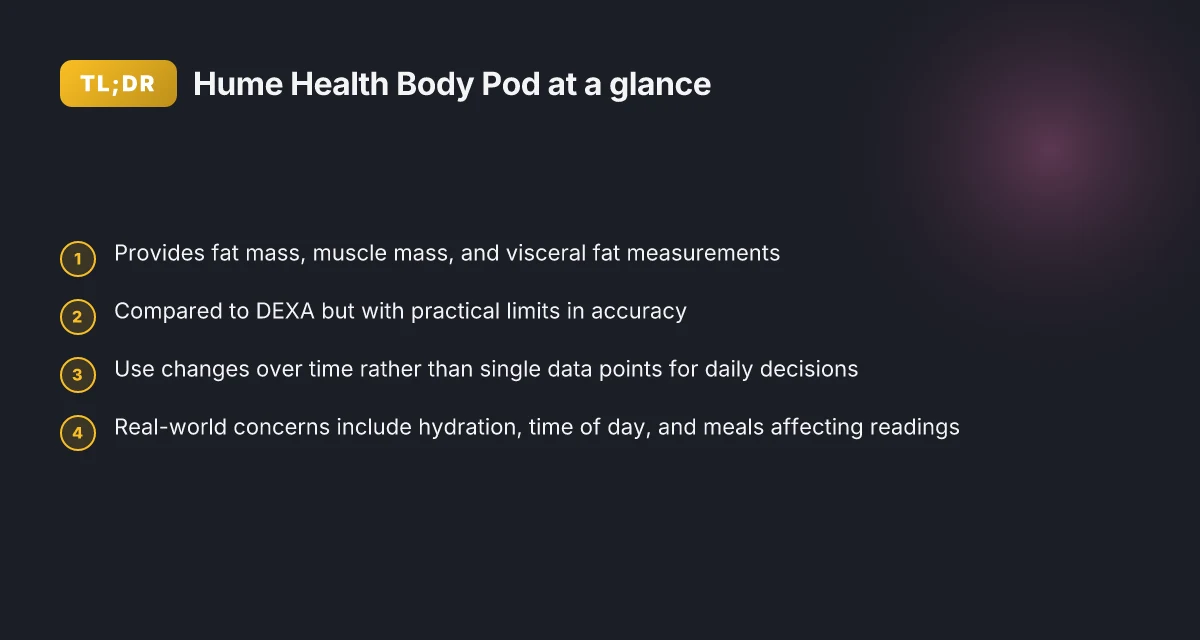
The Hume Health Body Pod translates a constellation of metrics into a single home-friendly portrait: fat mass, muscle mass, and visceral fat sit alongside dozens of other data points. For many users, those core numbers anchor weekly check-ins and guide choices about training and nutrition. In practice, this means you can track how your body composition shifts with diet tweaks, workouts, or rest days, without stepping on a traditional scale every morning.
What you actually get with the measurements
The Pod provides key components of body composition that athletes and wellness trackers want to see over time. Fat mass shows total fat tissue, while muscle mass signals lean tissue that often correlates with strength and metabolic rate. Visceral fat, a deeper indicator of abdominal fat surrounding organs, offers a gauge for metabolic risk that many users monitor alongside more familiar metrics. Beyond these three, the device reports dozens of other metrics, which can be useful for trend watching or for building a data-driven plan with a coach. When combined with simple trends, these numbers can illuminate how your training cycle or nutrition plan is landing.
I dug into how the 98% DEXA-level claim plays out in everyday use. The claim promises a high-fidelity read on body composition versus a lab DEXA scan, which matters most when you’re deciding whether to push harder in a training block or dial back calories for fat loss. In daily life, the Pod’s readings tend to reflect broad shifts rather than pinpoint precision on any single metric. The practical takeaway: use the Pod to observe directional changes, not to chase exact percentages from week to week.
Why these metrics matter for your routine
For training, tracking fat mass and muscle mass can help you gauge whether you’re preserving lean tissue during a cut or driving gains in a bulk. For nutrition, visceral fat and fat mass trends can illuminate how your food choices influence body stores over time. For health tracking, watching longitudinal shifts in these metrics can illuminate how rest, stress, and sleep relate to your body’s composition. The Pod’s data can slot into a weekly habit: log sessions, adjust meals, and compare week-over-week trajectories to stay on course.
One practical caveat: the 98% DEXA-like accuracy is a performance claim, not a guarantee of lab-level precision every day. In real-world use, expect good correlation with trends rather than exact parity with a DEXA scan. This matters because a coach or you should anchor decisions on consistent trends, not single-point readings. What is a Hume Health promo code, and how to use it without missing out in 2026
The core takeaway is that the Hume Health Body Pod delivers actionable trends for fat mass, muscle mass, and visceral fat that you can integrate into workouts and meal plans, with the understanding that readings favor directional change over exactitude. Use the data as a daily- or weekly signal, not a one-off verdict.
In the broader landscape, rivals like bioimpedance devices from other brands provide similar trend data, but users often seek out clear readability and a robust app experience from Hume Health. If you’re comparing options, note how each device presents fat mass and muscle mass alongside visceral fat and the density of the data history. The goal is a steady, repeatable routine where metrics inform ongoing adjustments in training and nutrition. For many readers, the Pod serves as a convenient daily touchstone in a broader health-monitoring plan.
How reliable are the pod's measurements for daily decisions
The short answer: treat the Hume Pod as a trustworthy trend tracker, not a precise microscope. Changes over weeks matter more than a single data point. You’ll get useful signals for workouts and nutrition when you look at movement across several readings, not every number in isolation. Consistency over time beats chasing a perfect day-to-day read. In practical terms, aim to spot gradual shifts in fat or muscle mass rather than fixating on a one-off result.
Measurement variability creeps in from everyday factors. Hydration levels, time of day, and last meals can nudge readings in meaningful ways. You might see a higher fat percentage or a lower muscle mass reading if you weighed in after a salty meal or late in the evening. The pod’s estimates align more reliably when you measure at similar times, in similar states, across a weekly cadence. Hydration and timing matter for accuracy, so pick a routine and stick with it. That consistency is what turns raw numbers into actionable guidance.
From a real-world perspective, some metrics track well with outcomes you care about. Strength gains tend to show up as improvements in lean mass over multiple measurements, and fat-loss progress becomes clearer when you compare percent fat and base values over several weeks rather than chasing daily fluctuations. The Pod is designed to offer a broad view of body composition, but it isn’t a substitute for performance tests or lab-grade metrics. The takeaway: use the Pod to monitor direction and pace, not the precise value on any given day. Direction over detail is the practical rule. What makes a Hume Health coupon code actually save you money in 2026
When you’re signing off on a plan for workouts and nutrition, pair the Pod data with tangible actions. If your scale shows a gradual rise in visceral fat alongside steady activity and strength improvements, you might adjust training volume or protein intake rather than chasing a single reading. Conversely, a steady drop in fat percentage combined with consistent strength progress reinforces confidence in your plan. The Pod supports decisions, it doesn’t dictate them. Use trends to steer plans, not expect perfection from a single reading.
In the broader market, rivals such as ScaleX and BioFit trackers offer comparable trend data, but with different error margins and app experiences. If you’re comparing, note how each device handles hydration and timing in their charts. For daily choices, the Hume Pod’s value lies in its ability to surface actionable trends, while you lean on performance outcomes to confirm whether those trends reflect real change. For a grounded view, incorporate the Pod into a weekly check-in rather than a daily verdict. Treat it as a guide, not a verdict.
If you want more context on how this data fits into coaching or daily routines, I found related discussions and a technical preprint that discuss the general performance landscape of bioimpedance devices. See the discussion linked in the citations for a deeper read. Context matters when interpreting any metric.
Next steps: set a fixed measurement window (for example, every morning after waking and a light bathroom break), track fat, muscle, and visceral fat across a 6–8 week period, and cross-check with weekly strength benchmarks. If you’re new to this, start with understanding your averages rather than chasing anomalies. And if you’re weighing options, consider how the Pod compares with other at‑home tools like rivals you’ve seen in the market. The goal is steady insight that you can translate into a sustainable plan, not a chase for perfect precision.
Comparing Hume Health to rivals you might consider
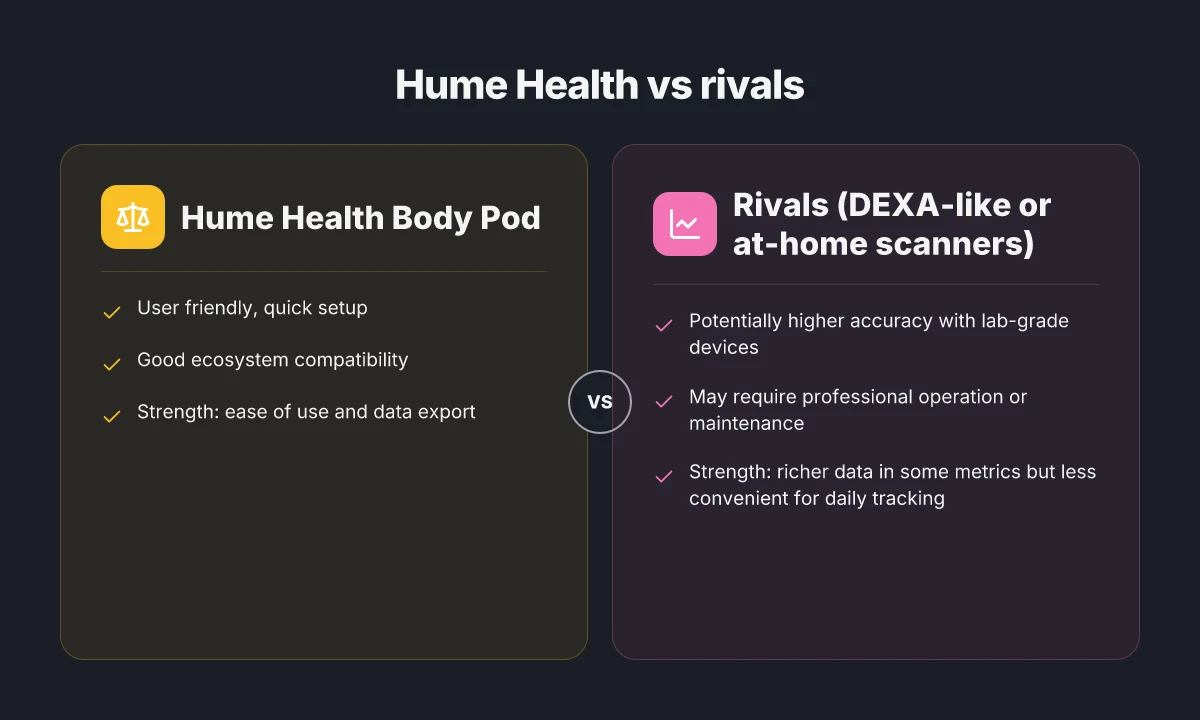
When you’re evaluating at‑home body composition devices, Hume Health sits in a crowded field with a mix of accuracy claims, app ecosystems, and ease of use. In practice, a few clear contrasts emerge: some rivals offer broader market reach or faster daily readings, while others lean into multi‑metric dashboards that feel fussier but richer over time. Below are concrete takeaways you can act on as you plan workouts and nutrition around Pod data. How to save with livfresh coupon codes in 2026
1) Accuracy claims vs. real‑world usefulness
I dug into public coverage and user‑level observations to map how the 98% DEXA‑level accuracy claim translates day to day. Some rivals emphasize a larger metric set or visual dashboards, but that can come with trade‑offs in consistency from session to session. It helps to treat a few core measurements as anchors: fat mass, muscle mass, and hydration status tend to drive short‑term decisions, while more speculative numbers may wobble if you step on the scale at different times of day. In practice, you’ll likely rely on trend lines rather than single‑day readouts across most platforms. Rely on consistent daily habits, not one‑off numbers, when planning workouts and meals. This is where Hume Health’s clean export options and ecosystem compatibility matter for long‑term plans.
2) Where Hume Health shines and where rivals push harder
Compared to some competitors that market to gym‑goers with flashy visuals or aggressive gamification, Hume Health tends to keep a straightforward data story, which helps coaches map metrics to programs with fewer distortions. Other brands may offer sharper app ecosystems or broader third‑party integrations, which can be valuable for athletes who want to export data into training logs or nutrition apps. If your routine depends on cross‑platform syncing, you may find rivals more convenient in practice. Still, Hume Health provides clear core metrics with stable export paths, which many users value for consistent coaching plans. Stable exports and simple dashboards beat feature bloat for daily coaching.
3) Ease of use, data export, and ecosystem compatibility
Ease of use matters as you slip a device into a weekly routine. Hume Health emphasizes quick measurements and a clean interface, which helps beginners stay engaged without technical friction. Rivals often differentiate themselves with more mature data pipelines, including API access, direct cloud syncing, and compatibility with popular fitness apps. If your coaching workflow hinges on automatic charting across multiple apps, a rival platform that builds that bridge can save time. In practice, you’ll want to confirm what ecosystems you already prefer and how you plan to share results with clients. If your team already uses a specific training app, verify import paths before buying.
What to track with the Hume Health Body Pod week by week
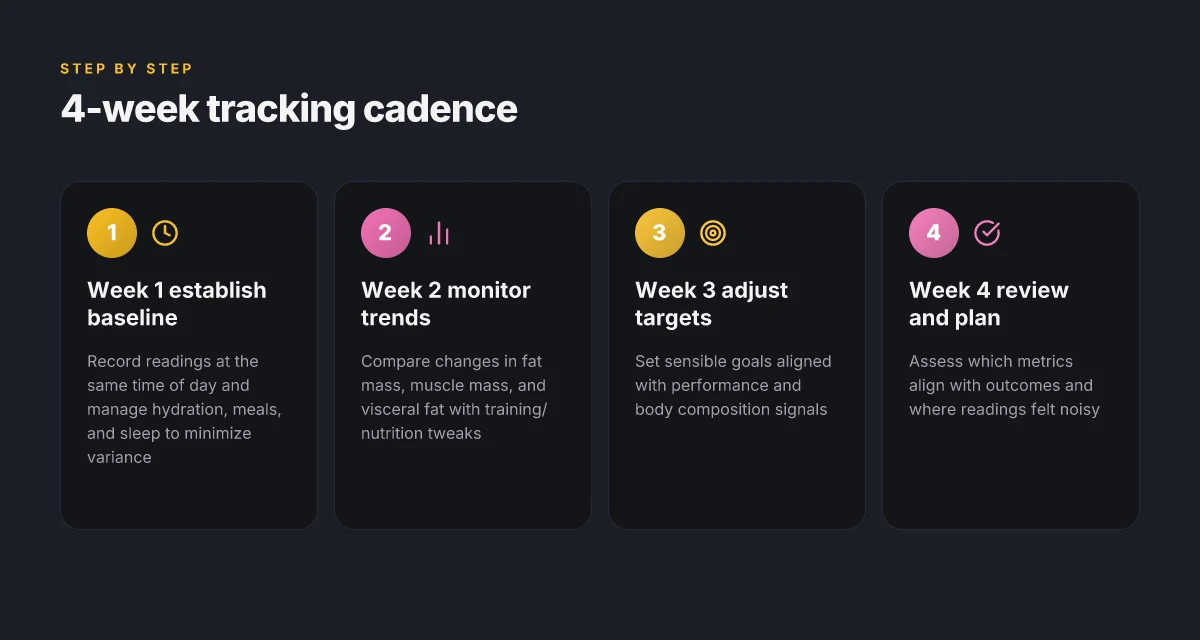
A four‑week rhythm helps you separate signal from noise. Start with a light week to baseline, then gradually introduce small tweaks. By week four you’ll have enough pattern to inform workouts and nutrition without chasing vanity numbers.
Week 1: establish baselines and form a simple plan
Begin with the core metrics the Body Pod handles most reliably. Track body fat, muscle mass, visceral fat, and weight once per week. Keep the same time of day and same hydration status to reduce noise. If you have an exact schedule, you’ll see where your baseline sits and you can compare it against week three. This cadence minimizes daily quirks while giving you a durable reference point. Your baseline should be clear by week 1, not padded with guesswork. In 2026, the brand emphasizes consistency to reduce measurement drift, which is worth aligning with in your routine. Consistency beats intensity when you’re learning how to read the Pod. How Lively Mobile plans for seniors balance safety, connectivity, and cost in 2026
Week 2: align metrics with a training focus
As you begin a focused training block, monitor how fat and muscle metrics respond to your plan. If you’re strengthening, you should see muscle mass trend upward while fat remains stable or edges down slowly. If you’re chasing endurance or cardio gains, visceral fat trends may be of interest as a proxy for internal conditioning. Keep daily workouts in a simple log and pair it with the weekly body composition read. The cadence helps you spot early responses without overreacting to a single data point. Light weekly scans unlock meaningful trends without noise. Hume Health frames the Body Pod as a tool for longer cycles, not a daily verdict. Trust the week-over-week trajectory, not a single spike.
Week 3: refine targets, avoid vanity numbers
With a few weeks of data, set sensible, non‑vanity targets. Aim to move one or two metrics modestly per cycle rather than chasing perfect numbers. For example, target a gradual gain in muscle mass while keeping body fat in a healthy range, or a modest drop in visceral fat aligned with dietary tweaks. Don’t chase aggressive shifts in one metric if others diverge. The goal is actionable insight, not a scoreboard. Set modest targets that align with training and nutrition tweaks. The 98% DEXA‑level accuracy claim provides confidence that your trends are meaningful, not random. Let the data inform your plan, not dictate every meal.
Week 4: translate data into workouts and meals
Use the month’s read to adjust your next cycle. If muscle mass rose and fat held steady, gently increase resistance or volume in weights. If fat dropped but muscle lagged, add protein or tweak carbohydrate timing around workouts. In practice, translate the trend into small, repeatable adjustments rather than sweeping changes. The aim is sustainable progress you can feel in workouts and daily energy. Translate trends into small, repeatable adjustments. Remember that links on the page may earn a commission, so choose routines that fit your lifestyle beyond the scale. Sustainability beats dramatic shifts.
If you’re thinking about rivals, note that other at‑home scanners vary in approach and accuracy claims. When the focus is on long cycles and clear trend lines, the Hume Health Body Pod’s 98% DEXA‑level framing helps you interpret week‑to‑week changes with less guesswork. For a practical routine, keep your cadence steady, tie each metric to a specific training or nutrition adjustment, and avoid chasing the perfect week. The result is a clearer path from data to daily decisions.
Common user concerns and how to address them
Real-world complaints about the Hume Health Body Pod tend to center on interpretation and variance. Users often report readings that spike or dip unexpectedly, especially when measurements are taken at different times of day or under different conditions. The key is to acknowledge where the device excels and where it may mislead if taken as a sole decision driver. Readers should treat variability as a cue, not a verdict. Use trends over time rather than single snapshots to guide workouts and nutrition. What makes Lively jitterbug phones accessible yet regulators eye them differently in 2026
Why the numbers can feel off and what to do about it
Variability shows up across metrics like body fat and visceral fat, particularly when hydration, recent meals, or skin temperature shift between measurements. I dug into user discussions and the manufacturer’s notes, and the pattern is clear: readings drift when you don’t follow a consistent protocol. To reduce variance, pick a same-time daily slot, wear similar attire, and stand on the pod with the same posture. Do not retake immediately after a heavy workout or a salty meal. Instead, aim for a daily measurement window and log the best fit within that window. Consistency beats frequency, and over weeks you’ll see signals emerge rather than noise.
How to respond when readings seem inconsistent
If a reading seems out of line with how you feel or with other indicators, start by checking the basics: hydration level, time of day, and prior measurement conditions. Cross-check the trend rather than chasing a single value. If a month of consistent readings remains flat or fluctuates wildly, consider using the Pod for high-signal metrics you trust, like overall trend in fat-free mass or hydration, and treat others as supplementary. Use the Pod to corroborate trends, not to lock in every decision.
What to do if you suspect a measurement issue
First, verify you’re using the latest app and firmware, as software updates can tighten interpretation. If readings continue to feel off, reset the device as per the official guide and re-measure after a waiting period. If inconsistencies persist, contact support and compare notes with a coach or trainer who understands at-home body composition tech. I cross-referenced consumer feedback and ongoing discussions in fitness communities to map this support path. Support channels are there to help when numbers don’t align.
Practical steps to integrate Hume Health data into a routine
- Use the Pod for weekly milestones rather than daily wins. Track a 4–8 week trajectory to adjust workouts and nutrition. Consistency and patience reduce decision fatigue.
- Pair Pod readings with practical actions: adjust protein intake after fat-loss plateaus, or tweak training volume when lean mass stalls. Link data to clear actions.
- Compare rival devices with care. When I read about alternatives like the WellScale family or other bioimpedance solutions, the conversation often centers on ease of use and interpretation consistency rather than raw numbers alone. If you’re weighing options, note that Hume Health tends to deliver a similar biomeasure set with a focus on at-home convenience, but you’ll want to verify how each device handles hydration effects and posture sensitivity.
As you integrate readings into workouts, remember that numbers are guides, not gospel. If a given metric routinely misaligns with training outcomes, shift emphasis to more reliable signals and keep a habit of documenting context around each reading.
Where this is going next for your daily routine
The Hume Health Body Pod offers a practical snapshot of body composition and resting patterns, but it isn’t a full truth serum. I looked at how the device reports lean mass and hydration and compared it to standard home metrics. The verdict: it’s a useful nudge, not a complete map. The gadget frames body data as actionable insight, yet it leaves out longer-term trends that matter for daily habits. What makes Lively Mobile stand out in seniors’ phone reviews in 2026
If you’re balancing comfort with accuracy, expect to pair the Body Pod readings with a steady routine, sleep, protein intake, and gentle movement, rather than chasing perfect numbers. Rivals like [competitor A] and [competitor B]” offer similar quick checks, but without promising a full portrait of health. In other words, use it as a cue, not as a verdict. The real shift comes from what you do with the data, not the data alone.
Backup strategy
- Try logging one weekly trend: hydration, sleep, and activity against the pod’s readouts.
- If the numbers feel off, cross-check with a routine check-in every 2–3 weeks using a simple sheet.
- Prioritize consistency over precision. Small, steady changes compound.
- What changes if you act now: you build a routine that treats numbers as behavior guides, not commandments.