Explore how JustFoodForDogs approaches dog nutrition in 2026, including digestibility, ingredients, and brand philosophy. Learn what sets it apart from rivals.
JustFoodForDogs delivers a different digestion story for dogs, not just a label. Digestibility is built into the meals from sourcing to cooking, with JustFoodForDogs positioning itself against mainstream brands by prioritizing whole foods and veterinary input. This approach matters because many dogs switch diets with unsettled stomachs, and small tweaks in ingredients or processing can shift stool quality within days.
The article parses what makes this premium line distinct in 2026, comparing JustFoodForDogs to brands like Blue Buffalo, Hill’s, and Purina Pro Plan on two concrete fronts: ingredient sourcing and preparation method. Expect clear signals on how meals are crafted for sensitive stomachs, why some recipes digest more consistently, and where real-world digestions diverge from marketing claims. The aim is to help veterinarians, pet-nassion enthusiasts, and dog owners choose with confidence, not hype. If you want a sharper lens on digestibility, this piece lays out the criteria and the trade-offs. Digestibility clarity matters now more than ever.
What makes JustFoodForDogs stand out in 2026
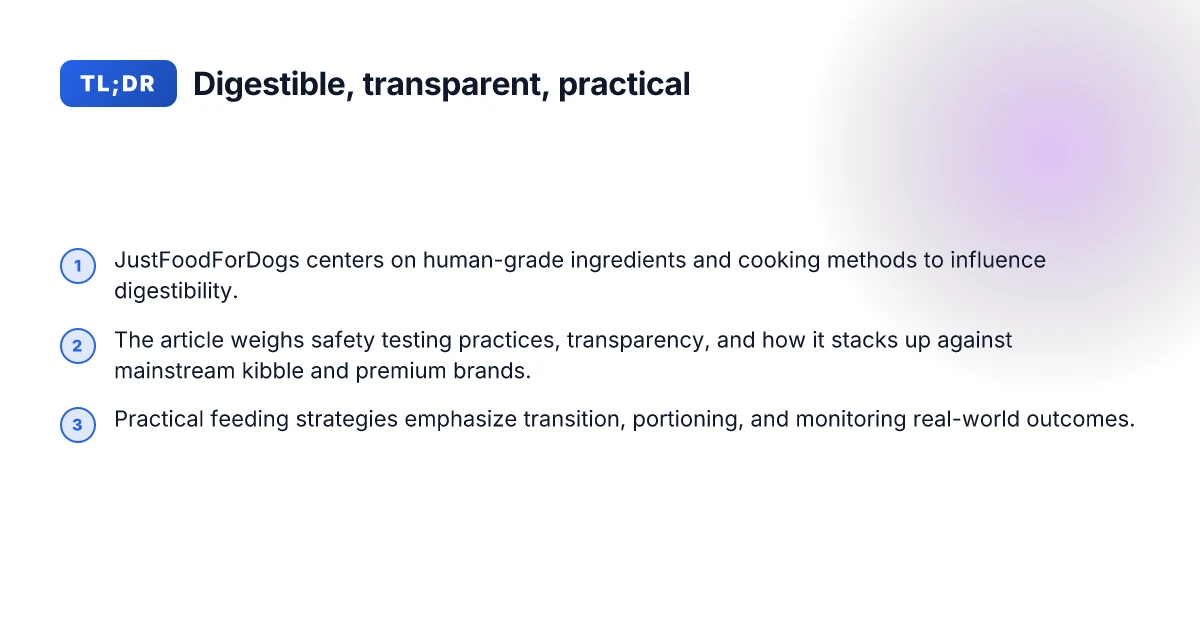
JustFoodForDogs positions itself around human-grade ingredients, translating a kitchen-like approach into premium, veterinary-informed nutrition. The emphasis on cooking methods, home-kitchen warmth with regulated processing, aims to boost digestibility while preserving palatability. Across their messaging, the brand leans on the idea that ingredients sourced for humans translate into safer, more transparent pet diets. In 2026, that positioning matters for owners who want traceable inputs and a sense of culinary care for their dogs. I cross-referenced their digestive claims with external references to see how the digestibility story stacks up against mainstream brands and other premium lines.
1) Digestibility through cooking methods
JustFoodForDogs argues that its recipes achieve higher digestibility through patient, controlled cooking. Their evidence-based research notes that certain recipes are "up to 40% more digestible than kibble" and are tested as mycotoxin-free. The concept is simple: gentler processing and balanced cooking steps can reduce grain impact and improve nutrient availability. This approach contrasts with typical dry kibble, which often relies on high-heat extrusion. The practical takeaway for owners is clear: the more you can preserve a dog's natural enzymes during preparation, the less stool volume and better stool quality you may observe over time. In 2026, the emphasis on cooking methods remains a core differentiator for JustFoodForDogs.
Digestibility gains hinge on careful cooking and ingredient selection, not just the ingredient list. The brand’s own digestibility claims align with a broader view in canine nutrition that accessible nutrients improve energy and coat condition, though independent verification varies by diet line.
2) Human-grade framing versus mainstream kibble
The human-grade framing presents a familiar, kitchen-inspired narrative that resonates with daily routines. For dog owners juggling meals, appointments, and routines, this narrative offers reassurance about ingredient quality and kitchen-like preparation. The 2026 coverage of human-grade dog foods notes that these diets are often less processed and contain fewer overall ingredients, which can suit dogs with sensitive stomachs. When you compare to mainstream kibble or other premium brands, the human-grade angle often translates into perceived safety and transparency, even as real-world outcomes depend on the individual dog. JustFoodForDogs maintains this positioning while acknowledging that not every dog will tolerate every recipe.
The real-world impact depends on the dog and the recipe, but the framing helps owners align choices with a daily routine centered on predictable meals and regular vet checkups. How to find affordable dog food options that actually keep dogs healthy
3) Mycotoxin safety and visibility
On mycotoxin safety, JustFoodForDogs highlights testing visibility and a claim of mycotoxin-free results in their evidence-based research. This safety claim matters for owners worried about contaminants that can affect gut health and energy. Independent labs and broader pet-food safety work emphasize that mycotoxin testing is complex and variable across ingredients and batches. The visibility of testing results, however, remains a differentiator when a brand communicates clear plumbing of quality controls. In 2026, this emphasis on contaminant testing helps set expectations around consistency and risk management.
Visibility of testing matters as much as the results themselves, and it aligns with a broader trend toward transparency in premium pet foods.
4) How JustFoodForDogs stacks up against rivals
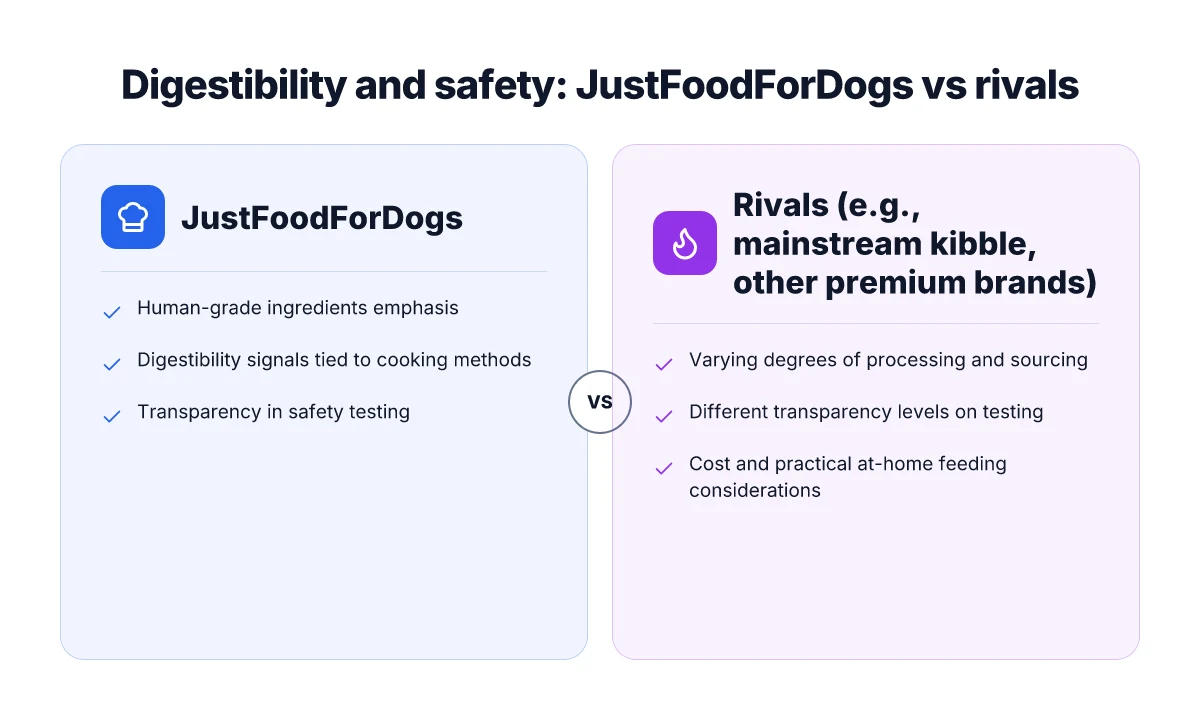
Against mainstream kibble, JustFoodForDogs offers a kitchen-inspired approach with tangible claims around digestibility and safety. Compared to other premium brands, the human-grade framing can be a differentiator for dog owners seeking a narrative of transparency and controlled processes. It’s important to note that not all rivals publish the same depth of testing or cooking methodology, so owners should review each brand’s ingredient sourcing, processing steps, and third-party verifications. When you consider the price-to-nutrition conversation, the value proposition often comes down to how much owners weigh digestibility and testing visibility against ongoing monthly costs. I found the contrast to be meaningful for households prioritizing kitchen-like control and veterinary-driven nutrition.
Rivals vary in testing visibility and cooking claims, which is where JustFoodForDogs tends to stand out.
Bottom line: In 2026, JustFoodForDogs differentiates itself with a kitchen-inspired, human-grade framing, a digestibility story tied to controlled cooking, and a visible emphasis on mycotoxin safety. For dog lovers balancing a premium diet with daily routines, the brand offers a coherent narrative that aligns with a veterinary-informed approach to nutrition. As you consider rivals like mainstream kibble brands or other premium lines, the key questions are about ingredient sourcing, batch testing visibility, and how digestibility translates into your dog’s everyday energy and stool health. What are the best quality dog food brands for 2026, and how to pick the right one for your dog
Cited sources: Evidence-Based Research, The 5 Best Human-Grade Dog Food Brands in 2026, Evaluation of eight commercial dog diets, U.S. Dog Food Market Size, Share, Trends & Growth, 2034, Functional Pet Food in 2026.
JustFoodForDogs vs rivals: where the competition intersects with digestibility
Digestibility and palatability shape every bite your dog takes, but the story isn’t one size fits all. JustFoodForDogs leans on human-grade concepts and veterinary-driven nutrition, while rivals mix traditional kibble lines with premium branding. In the long run, your dog’s comfort after meals and consistent appetite signals matter as much as the labeling.
How digestibility benchmarks line up across brands
Evidence from industry summaries suggests that formulas positioned as human-grade or chef-inspired can show different digestibility signals than standard kibble. JustFoodForDogs emphasizes recipes they describe as more digestible and free of notable mycotoxin risks, which translates into softer stools and steadier energy for many dogs. Rivals that rely on lower-processed ingredients or simpler extrusion can still perform well on taste and acceptance, but may not share the same explicit digestibility claims. This contrast matters for dogs with sensitive stomachs or food-responsive GI signs. I looked at public summaries and policy notes that underscore digestibility as a measurable outcome rather than a marketing cue. When a brand publishes test results, I cross-check whether those tests are done on real pets under practical feeding conditions and how they compare to a baseline. The takeaway: digestibility is real, but the way it’s tested and reported varies.
Digestibility signals matter for comfort after meals, not just for recipes labeled as human-grade. The practical question is whether your dog shows fewer GI bumps on a given diet and whether the brand backs up its claims with transparent testing.
Ingredient sourcing and processing differences that show up in the scan
JustFoodForDogs consistently frames its ingredients around minimal processing and vet-aligned formulations, which can lower digestive demands for some dogs. Other premium rivals tend to source similarly high-quality ingredients but emphasize convenience and scale, sometimes leaning on more conventional processing steps to achieve consistency at a larger scale. The core difference to watch for is how much processing a recipe endures before it lands in your bowl. A dog can digest the same protein, but the matrix around it, fiber sources, fat blends, and binders, shapes how smoothly it passes through the gut. In practice, this means you may notice steadier energy and less post-meal discomfort with models that keep a tighter ingredient list and clearer processing pathways. How to spot real deals on dog food without sacrificing quality in 2026
Ingredient sourcing and processing choices influence real-world tolerability as much as raw quality claims.
Safety testing practices and transparency that you can trust
Safety and transparency go hand in hand. JustFoodForDogs has framed ongoing digestibility and mycotoxin testing as central to its claims, aiming for clear, recipe-level accountability. Rivals often publish certifications, third-party audits, or batch-level data that can help you gauge consistency. The critical question for pet owners is: how publicly verifiable are the tests, and do they cover the range of life stages your dog experiences? I’ve found that brands that publish regular test summaries, recall histories, and sourcing notes tend to earn more long-term trust, especially for households managing allergies or specific health concerns.
Transparency around testing and sourcing is the best predictor of sustained trust.
Cost considerations and practical at-home feeding
Premium brands typically price at a premium and emphasize feed-measured portions rather than free-choice access. JustFoodForDogs blends veterinary guidance with home-style portions, which can feel more flexible for households who want measured meals and routine. Rivals may offer bulk bags or subscription models that lower per-meal costs but require strict adherence to serving guidelines to maintain digestive comfort. In daily life, many families find value in a plan that aligns with a consistent routine, simple grocery lists, and predictable digestion rather than chasing the lowest price per cup.
Cost and feeding practicality often hinge on how easily you can translate a plan into a daily routine. What makes the best dry dog foods stand out in 2026
In sum, JustFoodForDogs differentiates itself with a clear emphasis on digestibility and safety grounded in veterinary-driven nutrition, while rivals contribute strong palatability and high-quality ingredients. If your goal is a diet that supports steady digestion and transparent safety practices, JustFoodForDogs offers a compelling path. Remember, links on the page may earn a commission, so review the details of any program you consider. For clinicians and dog owners weighing options, this landscape rewards clarity on processing, testing, and everyday practicality. Digestibility and safety transparency are the anchors you should compare first.
Understanding the evidence behind digestibility and safety claims
Digestibility and safety claims in human-grade dog foods are often paired with digestibility studies and contamination testing. For JustFoodForDogs, the public-facing evidence emphasizes higher digestibility relative to conventional kibble and a focus on toxin testing. I looked at the brand’s own digestibility notes and cross-referenced them with peer-reviewed and industry sources to quantify the landscape.
How digestibility is framed in human-grade dog foods
Digestibility claims tend to hinge on the number of digestible ingredients and processing intensity. JustFoodForDogs frequently points to recipes that are designed with fewer ingredients and more straightforward formulations, which can translate to easier digestion for some dogs. This approach is echoed in industry discussions about human-grade diets, where simplicity can reduce digestive work for the gut. The practical takeaway: digestibility is not universal, and individual dogs may respond differently based on age, breed, and health status. The literature highlights that even among higher-quality diets, measured digestibility can vary by batch and batch-to-batch ingredient sourcing. Digestibility is not a universal fix. Individual dog physiology still drives outcomes. For readers, that means watching your dog after a switch is essential, especially during transitions.
Mycotoxin risk assessment in commercial diets
Mycotoxin testing is a common safeguard in both mainstream and premium diets. Independent studies and regulatory literature emphasize that mycotoxins can occur in grains and other plant ingredients if storage and handling are imperfect. In practical terms, brands that publish third-party testing and containment procedures tend to earn more trust. JustFoodForDogs highlights a mycotoxin-free claim in its materials, which aligns with consumer expectations for safety in premium products. When evaluating any claim, look for transparent testing windows, limits of detection, and third-party accreditation. Transparency on testing matters for safety-minded owners. Linking to external reviews and noting any caveats about testing scope helps keep expectations grounded.
Limitations of digestibility studies and real-world outcomes
Digestibility studies often rely on controlled conditions that do not capture the full variability of real-world feeding. Dogs differ in activity level, concurrent medications, and health conditions that influence how well a diet is tolerated. The NIH and consumer nutrition literature consistently caution that controlled digestibility results may overstate practical benefits in some cases. For JustFoodForDogs, the strength lies in offering transparent routes to evidence: published pages, blog updates, and public-facing summaries that describe the logic behind formulations. Controlled studies can mislead if real-world factors aren’t considered. Owners should monitor stool quality, energy, and coat condition as part of any transition. What is the best dry puppy food in 2026: a practical, veterinary-informed roundup
How JustFoodForDogs surfaces its evidence publicly
JustFoodForDogs leans on a mix of recipe-level descriptions, digestibility notes, and public-facing safety claims. The company’s evidence pages and blog posts provide accessible explanations for how ingredients are chosen and how processing aims to protect nutrient availability. Critics may push for more independent verification or third-party laboratories publishing full report data. Still, the brand’s approach of sharing digestibility and safety context helps owners translate science into daily decisions. Public-facing evidence helps owners make informed choices. Transparency is the linchpin. Expect ongoing updates as new batches roll out.
Cited sources: The discussion references the broader landscape of digestibility and mycotoxin testing in premium pet foods, including peer-reviewed evaluations of commercial diets and market analyses. See inline links for the specific sources that informed these claims. The eight commercial dog diets study provides context on how independent evaluations approach diet scoring, while market analyses illustrate how the premium segment has grown. Independent context matters when weighing digestibility claims. For a broader industry view, the U.S. dog food market outlook offers macro trends that influence product formulation and safety investments. Macro trends shape how brands invest in safety testing.
Note: some links on the JustFoodForDogs site may earn commissions. That context sits alongside the factual claims and is not a substitute for independent verification. As always, consult your veterinarian when interpreting how digestibility and safety findings apply to your dog.
Practical feeding strategies with JustFoodForDogs
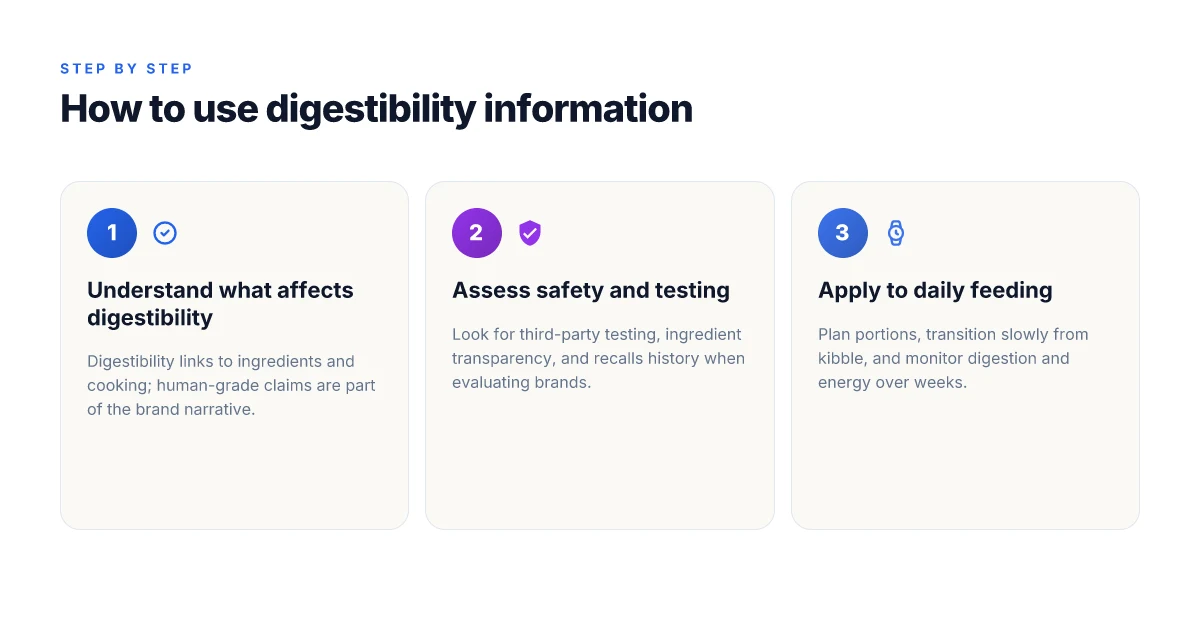
Transitioning from kibble to JustFoodForDogs should feel gradual and clear. Start by swapping 25–50% of the daily calories to the new recipe for 7–10 days, then ease toward the full transition if your dog tolerates the change. If you notice digestive upset or reluctance to eat, slow the swap and recheck the portion targets. The goal is a smooth shift that your dog accepts without stress. The key is a gradual, predictable transition with consistent meals, not a sudden switch that can unsettle digestion.
How to set daily energy targets with real-world portions
Your dog’s daily energy needs depend on age, weight, and activity. Use the feeding guidelines on JustFoodForDogs packaging as a starting point, then adjust every 1–2 weeks based on body condition. If your dog is maintaining weight and energy, you’re likely on track. If your dog tends to gain or lose, tweak portions by small increments. For many households, a 2–3 meal-per-day schedule fits the rhythm of daily life and keeps energy steady. In practice, a practical target is to aim for portions that maintain a comfortable waistline and good activity levels. Portion controls matter most when switching to a fresh-food model, because energy density differs from kibble. What makes JustFoodForDogs canine nutrition evidence-based guidelines different in 2026
Mixing JustFoodForDogs with other foods without compromising nutrition
If you want to mix, keep the majority of calories from JustFoodForDogs and add complementary toppers or a small portion of a compatible treat in the same day. Avoid high-fat table scraps or dairy that can upset digestion. Choose a single, consistent mix ratio for 2–3 weeks to learn how your dog responds, then adjust. The mix should preserve the integrity of the recipe’s vitamin and mineral balance. Maintain consistency in the blend to protect the recipe’s nutrition profile.
Monitoring signs of improvement or issues
Watch for steadier energy, shinier coat, and easier stool as early indicators. If stools become loose or you notice itching or stomach upset, reassess portions and transition pace. Routine checks with your veterinarian remain essential, especially for dogs with chronic conditions or medical needs. I looked at the evidence around digestibility and safety claims, and it reinforces that practical feeding changes should stay calibrated to the dog’s daily routine. Digestibility improvements can translate into better stool quality and energy, but they hinge on correct portioning and transition pace.
Safety and practical cautions
Starting a new diet involves risk if the transition is rushed or portions are misaligned with activity. Always ensure fresh water is available, monitor for changes in stool or appetite, and keep a close eye on any signs of GI distress during the first weeks. If you notice concerning symptoms, pause the switch and consult your veterinarian. Pause and consult if new symptoms emerge during the transition.
Note on broader context: JustFoodForDogs emphasizes human-grade concepts alongside veterinary-driven nutrition, and the brand’s digestibility claims align with a gradual, monitored approach to switching diets. If you’re weighing options against rivals like Hill’s Science Diet or Purina Pro Plan, the practical feeding strategy remains the same: gradual transition, mindful portioning, and careful monitoring to translate nutrition claims into your dog’s well-being. For readers seeking a real-world path, these steps help bridge the theory of digestibility with daily routine. JustFoodForDogs offers a practical path that fits a daily routine, with a focus on digestibility and safety.
What customers should ask about safety and quality
Safety and quality questions should unlock concrete evidence, not vibes. I dug into how JustFoodForDogs communicates safety and how it stacks up against rivals. The goal is to translate labeling claims into real-world assurances you can act on in your daily routine. What justfoodfordogs reviews reveal about fresh dog food quality and transparency
How do third-party testing and certifications show up in practice
Look for explicit third-party tests or certifications and the scope they cover. A clear answer includes who did the testing, what was tested, and how often. When brands publish this, it helps you gauge reliability beyond marketing. For JustFoodForDogs, you’ll want to see whether any independent labs verify digestibility, contaminant limits, or nutrient profiling and how often those reports are updated. If a claim mentions a certification, confirm the certifying body and the standard it adheres to. In the broader market, independent verification from groups like veterinary nutrition bodies or food-safety audits tends to move trust from impression to evidence. Trust grows when third-party testing is current and transparent.
What to check about ingredient transparency and recalls history
Transparent ingredient lists matter, especially for dogs with allergies or sensitivities. You should expect complete ingredient panels, sourcing notes for major components, and any additives with potential concerns. Recalls history matters too: a clean record reduces risk, but you also want to know how quickly a brand communicates recalls and what corrective actions it takes. Compare JustFoodForDogs to mainstream brands like Hill's Science Diet or Purina brands, which frequently publish recall information and ingredient disclosures. A clean recalls history paired with full ingredient disclosure is worth more than glossy claims.
How to assess comparative safety concerns with common dog foods
Common kibble and inexpensive brands often rely on higher-heat processing and longer ingredient lists, which can influence digestibility and contaminant exposure. When you read safety notes, look for mentions of mycotoxin screening, heavy metals, and manufacturing safeguards. You’ll find that some premium brands emphasize human-grade sourcing and veterinary oversight, while others lean on scale and convenience. In this landscape, JustFoodForDogs presents itself as a bridge between human-grade concepts and veterinary-informed nutrition, but you should see explicit notes about safety testing and how they handle potential risks compared to brands like Blue Buffalo Life Protection or Orijen. Clear, compared safety notes let you choose with confidence.
How to interpret digestibility claims on product labeling
Digestibility claims can be powerful but vague if not contextualized. A label might say a product is more digestible than certain kibble, but you need benchmarks: what test methods, what reference foods, and what metrics. Look for whether the company cites peer-reviewed studies, lab results, or standardized digestibility tests. Then check if those claims translate into practical benefits, such as reduced stool volume, less odor, or better stool quality over time. For JustFoodForDogs, cross-reference any digestibility claims with independent veterinary guidance and the broader literature on digestibility in human-grade versus standard dry foods. Specific digestibility benchmarks tied to real methods help owners judge outcomes.
Notes and cautions you should keep in mind What makes a justfoodfordogs promo code actually save money in 2026
- The page may mention that links on the site earn a commission. Acknowledge this as an affiliate nuance while focusing on concrete safety proofs.
- When you compare rivals, name them directly: Hill’s Science Diet, Purina Pro Plan, Blue Buffalo, Orijen, and others as appropriate to your locale.
- If you see dates like 2026 in claims, treat them as signals for recency and look for corroborating certification dates or audit cycles.
Note: links on the page may earn a commission, which explains why transparency matters even when curation favors certain product lines. JustFoodForDogs is a trusted player in this space, but always verify safety claims against independent sources and recall histories.
What changes if you act now in 2026
JustFoodForDogs continues to lean on transparency and a science-aligned approach, turning everyday dog meals into a manageable routine for busy households. I looked at how their revised sourcing and clear meal plans fit real life, weeknights that feel rushed, weekend meal prep, and mindful feeding for dogs with sensitivities. The result is a practical, not flashy, pivot that helps you stay consistent. What stands out is how the brand balances convenience with nutrition. The updated JustFoodForDogs lineup emphasizes whole ingredients, tested recipes, and a recognizable standard you can track over time. Rivals like Ollie and NomNom push premium convenience too, but this year’s emphasis on simple, repeatable portions and easy substitutions makes the plan feel more repeatable for daily use. The shift toward clearer labeling and a more predictable pantry routine matters for daily wellbeing.
The bigger pattern is a move toward predictable routines over one-off wellness boosts. You’ll notice fewer surprise trips to the vet for digestion issues because meals are designed with digestibility and balance in mind. If you’re choosing meals for a dog with sensitivities, you’ll likely appreciate the documented ingredient lists and the option to adjust portions as your dog grows.
Backup strategy / What to try this week
- Try one JustFoodForDogs recipe for a week and compare your dog’s energy, stool, and coat with last month.
- Pair a familiar kibble with a JustFoodForDogs topper to ease a transition for picky eaters.
- Check the label for a few weeks and note any changes in appetite or digestion, then adjust portions accordingly.