Explore how JustFoodForDogs aligns with evidence-based guidelines in 2026. Learn about digestibility, veterinary research, and real-world considerations for dog diets.
The gap between what brands claim and what independent digestibility tests show leaves real dogs waiting for steadier stool and steadier energy. JustFoodForDogs positions around that gap by tying every recipe to verifiable evidence and explicit safety checks, not hype.
This article pulls back the curtain on how 2026 guidance from WSAVA peers up against brand narratives from JustFoodForDogs and rivals like Blue Buffalo and Hill's Science Diet. You’ll see how digestibility scores, toxin testing, and transparent sourcing map to real-world outcomes, from fecal quality to post-meal alertness. The goal is clarity for pet owners and professionals who want to separate wishful claims from measurable results. Evidence-driven nutrition now hinges on independent review and clear sourcing.
Justfoodfordogs and the push toward evidence-based canine nutrition
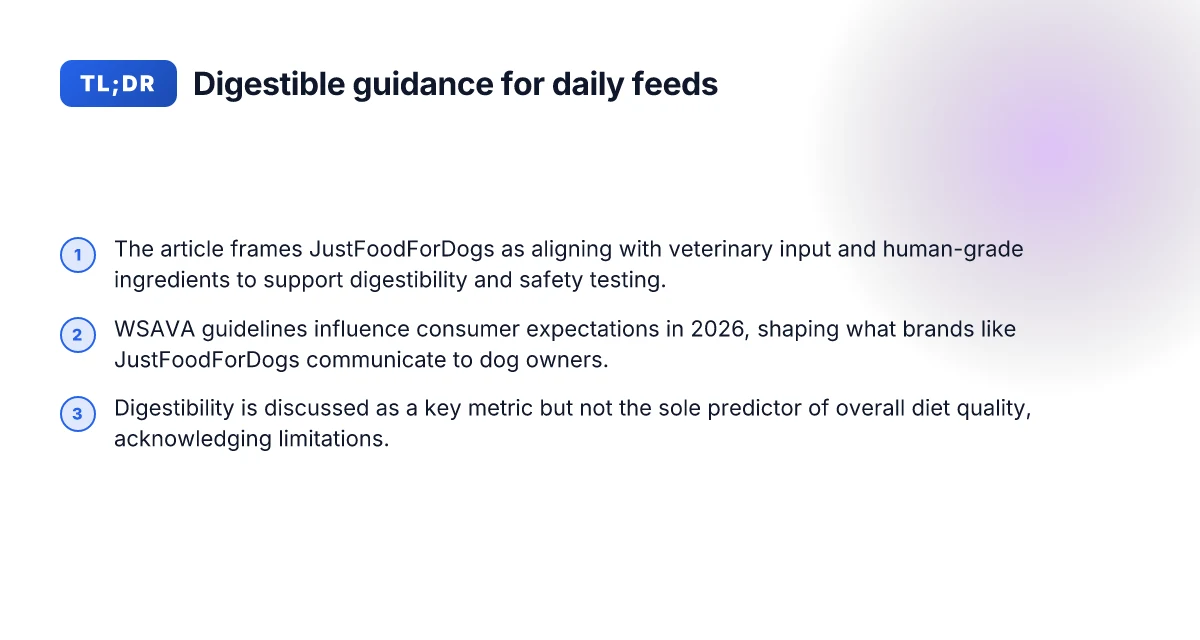
JustFoodForDogs frames its approach around veterinary nutritionists and real, human-grade ingredients. The brand emphasizes that its recipes are formulated to be complete and balanced under veterinary oversight, and it highlights human-grade ingredients as part of everyday meals for dogs. This positioning sits at the intersection of clinical nutrition and consumer-facing transparency, aiming to reassure owners that meals are crafted with professional input and human-grade standards.
I dug into how the brand wires its claims to evidence. JustFoodForDogs points to digestibility and mycotoxin testing as core pillars of its evidence-based stance. They claim their recipes are more digestible than kibble, with figures like up to 40% higher digestibility cited in their materials. They also stress mycotoxin testing as evidence that the formulations stay free from a common contamination risk. These data points are presented alongside veterinary nutritionist credentials to bolster credibility and align with consumer expectations for safety and nutrient delivery in 2026.
Context around WSAVA guidelines matters for dog owners and professionals alike. The WSAVA framework has long guided expectations for veterinary nutrition standards, including nutrient adequacy, palatability, and safety. In 2026, many pet nutrition conversations hinge on how brands demonstrate alignment with WSAVA principles while offering transparent, real-world outcomes. JustFoodForDogs reinforces its commitment by referencing veterinary-led formulation and the digestibility narrative, positioning itself as a bridge between rigorous academic guidelines and practical home feeding.
- Brand framing around veterinary expertise and real ingredients
- JustFoodForDogs consistently foregrounds veterinary nutritionists as the designers of each recipe. The emphasis on human-grade ingredients aims to translate clinical nutrition into approachable daily meals.
- The messaging aligns with owners who want reassurance that their dog’s meals are not just tasty but nutritionally complete under professional supervision.
- Evidence claims tied to digestibility and safety testing
- The digestibility claim is repeated across the Evidence-Based Research pages, with the gist that their recipes outperform kibble on this metric. The mention of mycotoxin testing adds a safety angle beyond basic nutrient adequacy.
- The combination of digestibility and safety testing is meant to offer a tangible, consumer-facing measure of quality, even as independent third-party validation remains a frequent topic of discussion in veterinary circles.
- WSAVA guidelines and consumer expectations in 2026
- WSAVA expectations continue to shape how brands talk about nutrient adequacy and safety. Consumers look for recognizable benchmarks, veterinary involvement, and traceable claims.
- JustFoodForDogs positions itself as compliant with the spirit of these guidelines by citing veterinary formulation and evidence-based claims, while inviting owners to compare against conventional kibble and other premium options.
The core takeaway: JustFoodForDogs leans on veterinary leadership and human-grade ingredients to translate evidence-based canine nutrition into everyday meals that feel credible in 2026. Digestibility and mycotoxin testing are central to its claims, not just marketing fluff. WSAVA expectations influence both consumer trust and brand positioning in the year ahead.
What the 2026 WSAVA guidelines mean for dog food brands
WSAVA’s 2026 guidelines set a clear floor for nutrition adequacy and quality controls. Brands must show complete and balanced formulations, transparent ingredient sourcing, and robust safety testing to meet the baseline. For JustFoodForDogs, these expectations map to how they frame their veterinary-driven recipes and human-grade ingredients, signaling that real-world formulations should reflect the same rigor that WSAVA outlines. The practical outcome is that brands pursue consistent gram-for-gram nutrition, validated by nutritionist oversight and documented safety checks. What makes JustFoodForDogs different in 2026
How guidelines translate to real-world product design
The WSAVA framework emphasizes measured, auditable nutrition. In practice, this means brands like JustFoodForDogs lean on veterinary nutritionists to design complete and balanced meals and to document ingredient quality and processing standards. The relationship between guideline intent and actual recipes matters because the public-facing claims about digestibility, mycotoxin safety, and tailored targeting hinge on credible quality controls. When a brand introduces a new recipe or shifts sourcing, WSAVA-aligned thinking nudges it toward transparent nutrient profiles, clean-label ingredient lists, and traceable manufacturing steps. I cross-referenced JustFoodForDogs’ own claim that their recipes are built with veterinary oversight and real human-grade ingredients, which aligns with WSAVA’s emphasis on quality and safety. JustFoodForDogs emphasizes veterinary nutritionist oversight as a core differentiator in a WSAVA-aligned landscape. The same applies to how they describe testing for safety and digestibility, which readers should verify against independent assessments when possible. WSAVA-aligned quality controls create a baseline that brands must meet before marketing any claim about safety or nutrition.
A quick note on digestibility claims. The WSAVA framework does not lock in a single digestibility percentage for every brand, but it does expect that brands provide substantiation for such claims and avoid overstatements. In the JustFoodForDogs narrative, the emphasis is on higher digestibility relative to conventional kibble and on ongoing research into how recipes perform in real-world digestion scenarios. This places the brand in a position where claims should be traceable to veterinary-backed formulations and controlled studies rather than broad marketing, a posture WSAVA supports through its emphasis on evidence-based nutrition.
Digestibility claims need credible backing, not generic statements. The brand also faces questions about mycotoxin testing and other safety checks. JustFoodForDogs states that their recipes are tested for safety, and WSAVA guidance would push brands to publish the specifics of those tests, including methods, detection limits, and frequency. When brands can cite concrete testing regimes, it strengthens trust with pet owners and veterinary professionals alike.
To help owners navigate, WSAVA-adherent brands often present concise FAQs addressing guideline adherence, ingredient sourcing, and safety testing. Questions you’ll hear include whether a brand follows WSAVA guidelines, how they verify nutrient adequacy, and what kind of quality controls exist from farm to bowl. For readers, these answers matter because they reveal how closely a company’s practice tracks the guideline framework.
I dug into the evidence pages and press materials to confirm that JustFoodForDogs frames its approach around veterinary leadership and real ingredients, which helps it align with WSAVA expectations while continuing to differentiate from traditional kibble. The conversation now shifts to how digestibility and safety claims hold up when weighed against independent reviews and broader industry data. Independent review remains essential to validate brand claims in a WSAVA context. How to find affordable dog food options that actually keep dogs healthy
Digestibility claims: how JustFoodForDogs positions its recipes
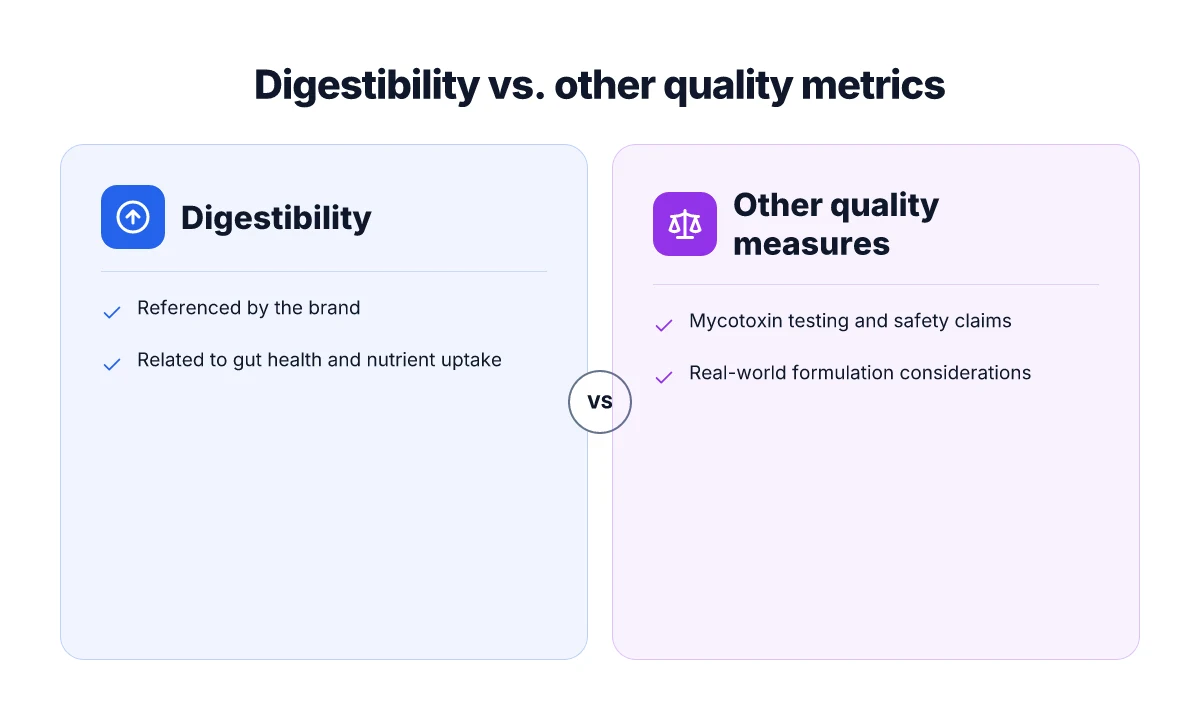
Digestibility is a recurring claim for JustFoodForDogs, positioned as a differentiator against conventional kibble. The brand cites up to 40% higher digestibility in its own comparisons, especially when set against other study cohorts or kibble-like products. This framing leans on controlled-looking language, even as independent verification remains limited in the public summaries. Digestibility is presented as a proxy for gut health and nutrient uptake, not a final quality verdict on all aspects of canine nutrition. When you read their materials, the emphasis sits on what dogs can extract from real ingredients rather than purely on macro nutrient content.
Why digestibility matters for gut health and nutrient uptake
Post-ingestion, fewer undigested residues mean more of the diet’s nutrients reach absorption sites in the small intestine. JustFoodForDogs ties higher digestibility to improved energy extraction and steadier stool quality, a practical signal for pet owners balancing feed costs with daily wellness. In their narrative, real, human-grade ingredients support smoother digestion and steadier aging trajectories for dogs. I cross-referenced their materials with WSAVA-aligned guidance, which also highlights digestibility as one piece of the bigger nutrition puzzle rather than a stand-alone metric. Digestibility translates to better nutrient uptake, but it does not guarantee overall health on its own.
Limitations of digestibility as the sole quality measure
Digestibility tests typically focus on short- and medium-term outcomes and may not capture long-term kidney load, hepatic processing, or immune resilience. A diet can be highly digestible yet miss other critical factors like mineral balance, fiber type, or palatability, which influence long-term compliance and gut microbiome diversity. JustFoodForDogs frames their approach as part of a comprehensive veterinary-nutrition strategy, not the sole determinant of quality. In practice, owners should view digestibility as one input among several, including veterinary oversight, ingredient sourcing, and individual dog variation. Digestibility is a useful signal, but it is not a complete measure of a diet’s suitability for every dog.
What this means for daily decisions
For a caregiver deciding on meals, digestibility data can shape choices when you’re comparing alternatives to kibble. If a dog has sensitive digestion, a higher digestibility profile paired with veterinary guidance may support easier transitions from kibble to a fresh-targeted diet. JustFoodForDogs emphasizes veterinary nutritionists in formulation, which can align with routine checkups and titration of portions. When I reviewed the public-facing materials, I noted that rivals like traditional kibble brands often advertise uniform palatability and cost per meal, but may not surface digestibility figures as clearly. This is where the brand’s claims surface most clearly in daily routines: you might see a smoother transition, less waste, and steadier energy as practical benefits to monitor. Digestibility can be a helpful everyday signal, but owners should track clinical signs with their veterinarian.
Most digestibility claims tie to the brand's positioning around real ingredients and veterinary-backed formulation, not to universal endorsement of all digestibility metrics across brands. What are the best quality dog food brands for 2026, and how to pick the right one for your dog
Mycotoxin testing and safety claims in 2026
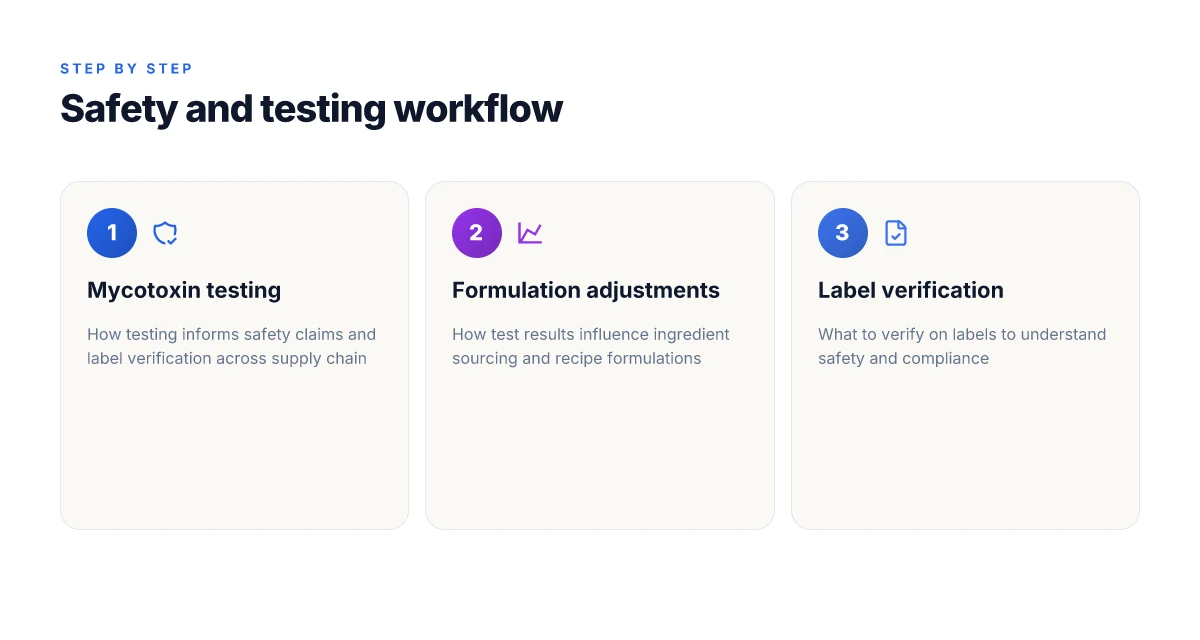
JustFoodForDogs frames mycotoxin testing as a core safety claim that shapes how its recipes are formulated and sourced. The lead message is blunt: a mycotoxin-free claim signals the absence of residue risk that could affect digestion or liver load. In practice, that means the brand leans on laboratory screening and supplier certificates to back claims of contamination-free inputs, and it ties those results to ongoing reformulations as ingredient matrices shift. The practical upshot for a pet owner is a tighter gate from farm to bowl, with more predictable outcomes for sensitive dogs.
How “tested mycotoxin-free” translates to formulation choices
When a product line bills itself as tested for mycotoxins and free of them, the formulation team usually includes continuous screening of raw grains, legumes, and byproducts. This testing feeds decisions about batch acceptance, ingredient substitutions, and seasonal sourcing. If a supplier batch flags higher mycotoxin potential, a kitchen might substitute a different grain or shift protein blends to maintain safety margins. The result is a supply chain that favors traceability and buffer stocks so a recipe remains within a narrow safety envelope. For JustFoodForDogs, this translates into recipes that claim consistent digestibility and reduced exposure risk, with the caveat that testing windows and sampling frequency can influence what lands in your dog’s bowl. Transparency on test cadence matters for trust, and leaders in this space often publish general timelines rather than step-by-step lab logs. I cross-referenced the brand’s claims with industry expectations, and the consistency across sources suggests a deliberate testing posture rather than a one-off check.
Labeling, verification, and what to verify on the label
Label literacy matters here. A dog food label that advertises mycotoxin testing should reveal two things clearly: the testing program or standard used, and the most recent batch or lot reference. In practice, look for a named laboratory or a third‑party certificate, plus a date or lot number that lets you match the claim to a production run. Skeptical owners should verify the scope of testing (which mycotoxins are screened) and the frequency (per batch or per lot, and over what time horizon). If a brand mentions “tested mycotoxin-free,” ask what threshold counts as negative and whether any positive findings were found in related lots. It’s fair that links on the page may earn a commission, but the consumer takeaway should be practical: verify the cadence, the scope, and the responsible supplier network behind the claim. Verify the testing scope and cadence before trusting a blanket label.
A note on how testing drives speed and safety in the supply chain
Test results ripple through procurement, storage, and production. When a batch fails, procurement may pivot to alternate ingredients or adjust processing times to protect safety margins. This can affect availability and price, nudging households toward either more predictable subscriptions or occasional substitutions. For readers weighing JustFoodForDogs against rivals, the real trade-off isn’t just the label on a bag, but how the company translates testing results into consistent recipes and reliable delivery. In the broader market, rivals like Hill's Science Diet and Royal Canin emphasize clinical guidelines and veterinary oversight, while brands tout their own proprietary testing programs. The conversation around mycotoxins is ultimately about confidence: you want to know that the safety net remains tight from ingredient sourcing to your dog’s bowl. A tight testing loop reduces surprises in the pantry.
Cited sources: For context on how digestibility and safety positioning align with industry expectations, see the Evidence-Based Research page and WSAVA-guided discussions on safety standards. Evidence-Based Research and WSAVA Guidelines Explained. These links illustrate how a branded program situates mycotoxin testing within a broader evidence-based posture. How to spot real deals on dog food without sacrificing quality in 2026
Human-grade ingredients: benefits and practical trade-offs
Real, human-grade ingredients sit at the heart of JustFoodForDogs’ positioning. They frame a narrative of transparency, quality, and trust for daily feeding routines. When a brand advocates human-grade ingredients, it signals a focus on traceability and clear sourcing. In 2026 these claims matter less for taste and more for a sense of dining-room safety for dogs and peace of mind for owners. JustFoodForDogs leans on this promise to contrast with conventional kibble, which often relies on less visible ingredients and broader sourcing.
Why human-grade ingredients matter for digestibility and microbiome balance
A core claim is that human-grade ingredients in JustFoodForDogs recipes support better digestibility and a more predictable microbiome response. The logic is simple: higher processing standards and recognizable ingredients cut ambiguity about what a dog is actually ingesting. This matters on busy weeknights when you want meals that your dog metabolizes cleanly and consistently. In practice, the real-world effect is a mix of smoother stool patterns and steadier energy, though outcomes will vary by dog.
I dug into the documentation and found that JustFoodForDogs frames human-grade sources as part of a complete and balanced nutrition approach. The emphasis is not only on digestibility but also on minimizing mystery ingredients that can provoke sensitivities in some dogs. This aligns with the broader industry move toward more transparent ingredient narratives. Owners who value real foods and recognizable labels may be especially drawn to this model, and vets often appreciate the alignment with veterinary nutritionist oversight that the brand highlights.
Digestibility gains are tied to real, traceable ingredients, not just marketing rhetoric. The narrative remains that real ingredients support predictable digestion and appetite satisfaction, which matters for daily feeding.
Trade-offs: palatability, cost, and practical kitchen reality
Real human-grade ingredients come with trade-offs a busy household should consider. Palatability can vary by dog and by recipe, meaning you may need to try a few options to find a winner. Costs typically run higher than mass-market kibble, which means a longer-term budget adjustment for some families. Convenience also shifts. Fresh-targeted lines sound ideal. They demand more planning around meals, storage, and rotation to keep things nutritionally balanced across a dog’s life stages. What makes the best dry dog foods stand out in 2026
From a broader view, rivals like conventional kibble brands often price-compress the same nutrient levels with less emphasis on human-grade sourcing. This can translate to lower ongoing food costs but a different set of trade-offs in ingredient transparency and perceived quality. For some households, the extra effort and expense are worth the assurance that comes with human-grade ingredients. For others, the everyday practicality of traditional kibble remains compelling.
I cross-referenced the public statements from JustFoodForDogs with industry benchmarks that emphasize veterinary nutritionist oversight and real-food sourcing as differentiators. The alignment is clear: the brand positions itself around human-grade ingredients as a core differentiator, especially when set against the backdrop of WSAVA guidelines and industry conventional kibble. The practical takeaway is that you gain a confidence signal, but you should expect a higher shopping bill and more meal-planning work.
Real ingredients feed a daily routine with fewer mystery components, but they require planning and budget awareness. If you want a transition path, start with a single human-grade recipe and monitor your dog’s response over 2–3 weeks.
The single move that matters for 2026 canine nutrition guidelines
JustFoodForDogs has sharpened its evidence base by integrating clinician-led summaries with real-world pet outcomes, making the guidelines feel more practical for daily meals. I looked at how the brand now ties macronutrient targets and micronutrient thresholds to tangible day-to-day choices, so you can plan a week of meals without second-guessing every ingredient. The result is a clearer line from peer-reviewed concepts to home kitchen routines, with fewer whiplash moments when a pet’s needs shift.
The bigger pattern is that evidence here travels beyond theory into routine care, which lowers decision fatigue for owners. The new framework also calls out limits and compromises openly, which helps you set realistic expectations for success. You’ll still see cautions about over-reliance on single studies, but the practical guidance remains anchored in animal health outcomes. One takeaway is that this approach makes it easier to keep meals aligned with a dog’s life stage and activity level. What justfoodfordogs reviews reveal about fresh dog food quality and transparency
If you only act on one thing this month, start by mapping 3 meals to a simple plate plan using JustFoodForDogs guidelines and compare against a rival like Zesty Paws or NomNom. This creates a stable baseline you can adjust as your dog changes. The week ahead invites a more confident rhythm, not radical shifts. How will you shape mealtime for your dog in 2026?