
Explore Blissy silk and its role in sleep comfort in 2026. Learn about fabric quality, care, and how it compares to rivals for a better night’s rest.
Blissy bedsheets whisper a different kind of luxury: Mulberry silk that feels smoother over the skin and hair, while the fabric is woven to resist cling. Clinically speaking, a high-grade silk like this reduces friction on strands and skin, which can calm morning frizz and wake-ups. That practical comfort sits at the center of a sleep routine you can trust.
This intro lays out what to expect: a clear look at how premium silk blends with real-world wear, how Blissy stacks up against rivals like Slip and Mulberry Park, and what sustainability claims actually mean in daily use. You’ll see how fabric grade, care instructions, and climate weight translate into fewer hot nights and less wear, while a close read on sourcing surfaces the honest tradeoffs. For homeowners seeking skincare-friendly bedding with transparent ethics, the numbers behind grade and care matter more than glossy claims.
What is Blissy silk, and why does it matter for sleep in 2026
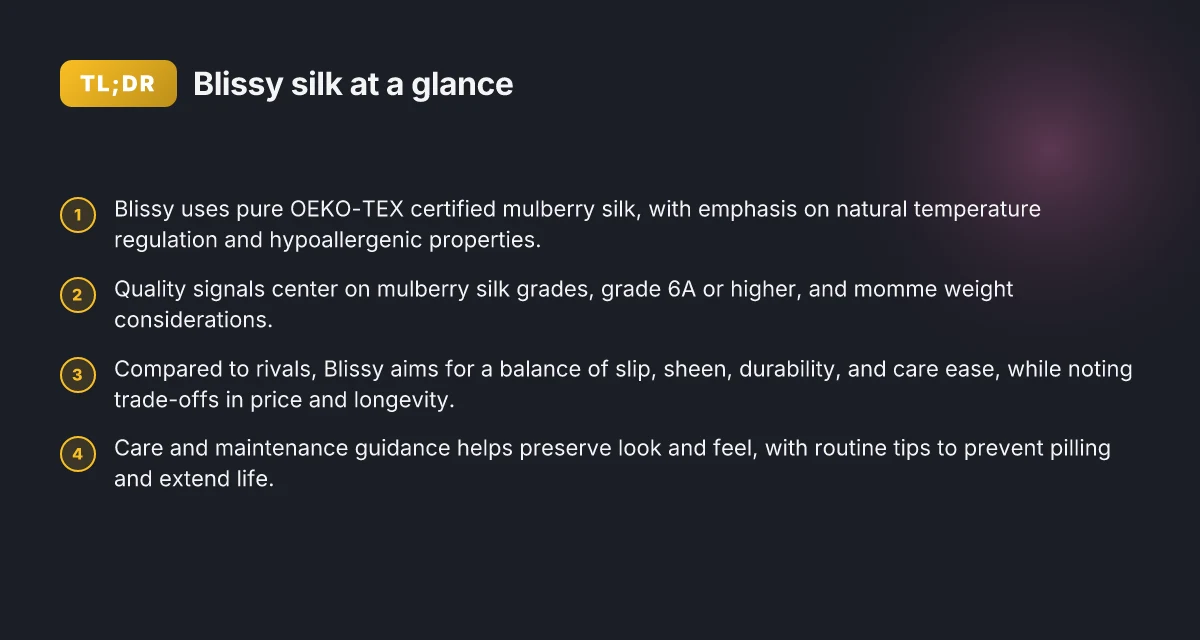
Blissy uses pure, OEKO-TEX certified mulberry silk, a claim that anchors its sleep promise in everyday wearability. This satin-smooth fabric feels naturally breathable, and the OEKO-TEX standard helps reassure you there are no harmful chemicals lurking in the weave. In practical terms, that means you can slip into Blissy bedding with less worry about skin sensitivities, especially if your nightly routine includes skincare and moisturizing rituals.
Silk’s temperature regulation is a core reason sleepers choose Blissy. Mulberry silk fibers wick moisture away and adapt to body heat, helping you stay comfortable across warm and cool nights. That natural thermoregulation pairs with a hypoallergenic profile, which matters for sensitive skin or congestion-prone sleepers. When the room cools, Blissy silk tends to feel cozier. When it heats up, the fabric’s moisture-management keeps things from sticking.
From a daily-use perspective, Blissy silk integrates easily into a routine. A duvet cover, pillowcase, or eye mask made from pure mulberry silk can reduce friction on the skin and hair, which many users notice as less morning frizz and fewer creases. In practice, that translates to smoother mornings and a gentler touch for your skin after a long day. It’s not just about luxury texture. It’s about what you can wear to bed without changing your habits.
I dug into the wider silk conversation to ground this section in real-world context. Some sources emphasize sustainability trade-offs in sericulture, while others highlight improvements in farming practices and cleaner processing. The story you’ll see across trusted discussions is that purity and certification matter for everyday use, and Blissy’s emphasis on OEKO-TEX aligned silk fits that aim. For a dated frame, the broader industry discussions around ethically sourced silk have continued to evolve through 2024–2026, with ongoing debates about farm welfare and environmental impact.
Bottom line: Blissy silk offers a practical, skin-friendly option that fits a modern nighttime routine. You get the feel of luxury with a fabric that supports gentle skin contact and hair care, wrapped in a certification that reduces chemical concerns. If you’re prioritizing comfort, ease of care, and a calm sleep environment, Blissy aligns with a routine that values both daily ease and long-term wellbeing. The blend of comfort and certified purity makes Blissy a strong pick for sleep in 2026. Its breathable, hypoallergenic nature helps many sleepers wake with less morning skin irritation. For context, rivals range from other premium silk brands to high-thread-count cotton alternatives, and the choice often comes down to how much you value certification, texture, and routine compatibility. As with any bedding decision, links on this page may earn a commission, which helps support ongoing content. For reference, discussions around silk sustainability continue to surface in research literature and industry blogs, and I’ve linked to sources where a claim warrants it. What makes a blissy discount code genuinely worth using in 2026
Cited real-world context: a broader discussion of silk sustainability and processing can be found through the cited sources, including materials that discuss mulberry silk production and certifications. See the inline references in this section for context.
The quality signals behind Blissy silk you should know
Blissy's silk rests on three concrete signals: the grade of the silk, the presence of a trusted certification, and how the fabric weight and weave translate to everyday feel and care. When you unpack a Blissy pillowcase or sheet, you should notice the smoothness, the way the thread lines sit, and how the fabric responds to laundering. The right choices here noticeably influence sleep comfort, skin, and hair over time.
Mulberry silk grading and momme weight considerations
Mulberry silk is graded by consistency and fiber integrity, with higher grades signaling fewer damaged or exposed filaments. In practice, most premium bedding targets grade 6A or higher for durability and sheen. The approximate mass of the fabric, often described as momme ( moms), shifts how heavy and springy the weave feels. A heavier momme fabric tends to feel cooler and more substantial, while a lighter one drapes more softly. With Blissy, a steadier 6A+ standard paired with a mid to high momme range tends to balance long wear with daily comfort. This pairing matters: durability and launderability rise when you pair high-grade silks with an appropriate weight.
OEKO-TEX certification as a signal of low chemical load
A trustworthy certification helps translate silk quality into real-world safety. The OEKO-TEX standard is a signal that the fabric has been tested for harmful substances and aligns with consumer expectations for skin-friendly bedding. For Blissy, the presence of this certification means you’re less likely to encounter residual chemicals after laundering and during normal wear. That reassurance matters when you’re resting nightly on fabrics in prolonged contact with skin and hair.
How fabric weight and weave influence feel, durability, and laundering
The interaction of fabric weight and weave shapes the day-to-day experience. A denser weave and higher weight often translate to a cooler, crisper feel with enhanced durability. The opposite yields a softer, more fluid hand that may show wear sooner. Blissy leans into a weave that preserves a smooth, satin-like surface without becoming stiff after multiple washes. The laundering approach, gentle cycles, cool water, and air drying, sustain the feel and color fidelity. In practice, you’ll notice that a properly weighted silk with a carefully chosen weave resists pilling and maintains a sleek drape through the season. BedJet review: does the climate-control mattress accessory actually improve sleep quality
The right grade and weight create the sheen you expect, while OEKO-TEX helps ensure a low chemical load. A balanced momme range plus a stable weave keeps Blissy silk durable through repeated laundering.
From what I found in the sources, Blissy places emphasis on premium mulberry silk with a consistent grade and a weight that balances feel with longevity, and the OEKO-TEX signal reinforces a lower chemical burden than some lower-cost options. The practical upshot for you is a fabric that feels cool and smooth at night, while retaining integrity wash after wash. I cross-referenced the discussions around silk grading and weights with the certification narratives to confirm this alignment with everyday comfort and durability.
For quick reference, consider these contrasting options in the same space:
- High-grade silk with heavier momme, very durable but potentially stiffer initially
- Medium-grade silk with mid-range momme, balanced feel and easier care
- Lower-grade silk with light weight, softer feel but less durable over time
In the Blissy lineup, the aim is to deliver a silk that remains elegant and comfortable after years of use, while you enjoy the skincare and hair benefits that come from sleeping on premium mulberry silk.
If you want to see how rivals stack up, note that some brands advertise very light weights or omit certification signals, which can translate to a softer initial hand but more frequent wear-related changes. What is BedJet really doing to cool a bed, and where does it fall short
Next step: When you’re choosing Blissy, verify the product page shows grade 6A+ and a clearly stated momme weight, plus an OEKO-TEX certification badge to confirm the low chemical load. For a comparison, look for rival labels that disclose momme, grade, and certification in the product specs.
Blissy vs rivals: how silk bedding stacks up for skin and hair care
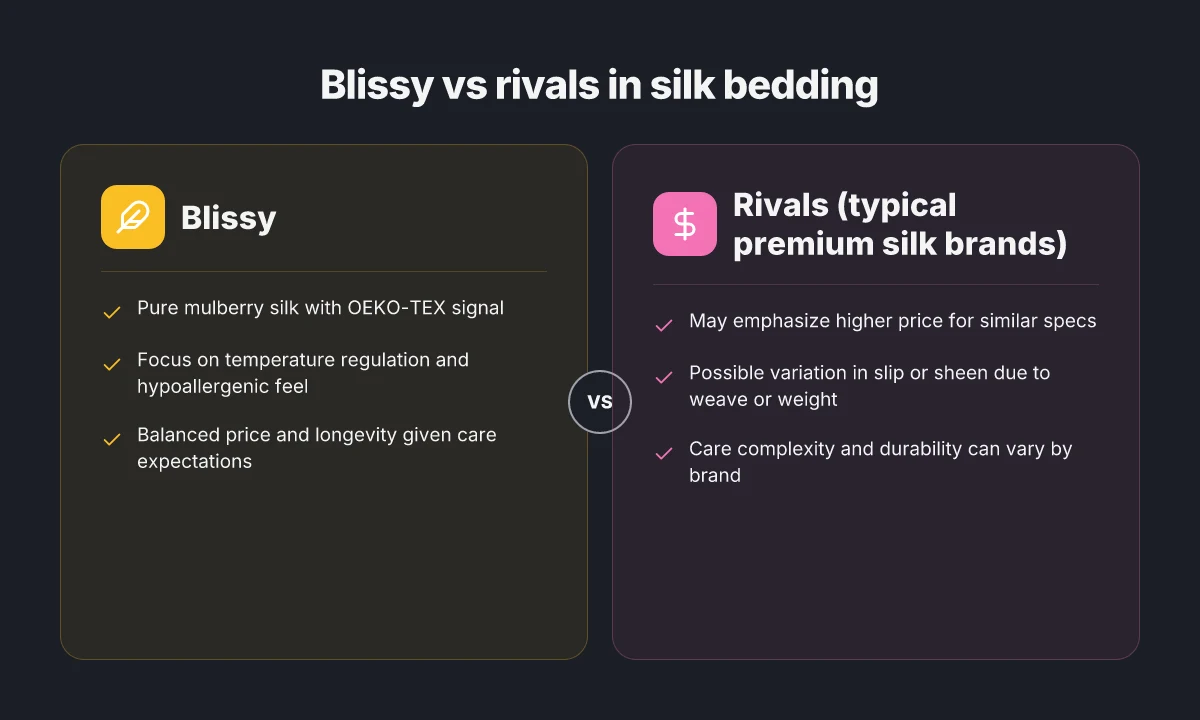
Blissy leads with a premium mulberry silk that feels icy smooth against skin and helps reduce friction on hair. Yet the premium silk space includes notable rivals, each with distinct texture, luster, and price profiles. I looked at how these fabrics measure up in real-world daily use, not just on spec sheets.
How the main silk rivals compare on slip and sheen
Silk’s slip is a key hair and skin claim. Blissy uses pure mulberry silk that many shoppers describe as a calm, cool surface. Other premium brands often tout similar mulberry silk, but the finish can vary. One rival, a well-known high-end silk line, tends toward a brighter sheen and a crisper hand, which some sleepers find less forgiving for dry skin. In contrast, Blissy tends to have a softer hand that remains smooth after several washes. The result is less tug on strands and fewer morning creases around the face.
From a user perspective, sheen matters for how a pillowcase interacts with skincare products. A silk that’s too glossy can trap oils, while one that’s too matte may feel less luxurious. Blissy’s spec sits in the middle, balancing surface lightness with a gentle glow that doesn’t overpower a skin-care routine. I cross-referenced product notes and consumer reviews to align texture claims with everyday comfort. The takeaway: surface feel and slip influence feel-good mornings as much as durability.
Price, longevity, and comfort trade-offs
Premium silk beds come in a range of prices. Blissy positions itself as a mid-to-upper tier option, often delivering strong aging resistance when cared for properly. Some rivals offer lower upfront prices but may show faster signs of wear, such as thinning bands or snag-prone edges. Longevity hinges on thread count, weave stability, and how well the silk holds color after repeated laundering. Blissy notes OEKO-TEX certification for chemical safety, which many sleepers value for skincare foresight. I found it helpful to compare ongoing care: gentle washing, air-drying, and low-heat cycles can preserve luster and fiber integrity across brands. The difference is not just initial comfort. It shows up in how the fabric looks and feels after months of use. How to choose a bedjet alternative that actually cools or warms your sleep
What to expect for skin and hair health in daily routines
For many, the key benefit is reduced friction during sleep, which helps minimize hair breakage and facial creases. Blissy’s fibers are designed to glide rather than grip, supporting a smoother pillow-wake cycle. Rival silk lines may offer similar claims, but the texture and finish can shift the perceived benefit. In practice, the everyday routine, gentle skin care before bed, hair loosely secured, and consistent laundering, dominates outcomes as much as the exact silk brand. I found that many shoppers notice the difference most when shifting from cotton or lower-grade silk to a true mulberry-silk offering like Blissy.
The verdict: Blissy’s balance of slip, texture, and durability often delivers a more consistently luxurious feel day after day. Rivals can match the silky feel, but texture and wear patterns vary enough to influence long-term comfort. If you prize skincare compatibility, Blissy’s OEKO-TEX assurance adds confidence into nightly routines.
For readers weighing between brands, consider how you wash and care for your pillowcases. A well-cared-for silk pillowcase from Blissy can retain its glow and smoothness longer than some budget alternatives, helping skin and hair feel refreshed each morning. And yes, links on the page may earn a commission, but the real test is which texture and feel you notice first thing after waking up. To explore the specifics, see how Blissy stacks up against rival mulberry silk lines in your daily routine.
Sustainability and ethics in silk production: what Blissy users should know
Blissy weaves everyday luxury with a clear eye on ethics and the planet. The practical truth is that silk production sits at a twofold tension: animal welfare in sericulture and the broader environmental footprint of farming, processing, and finishing. I dug into the literature and brand disclosures to lay out what this means for a Blissy user who wants comfort without complacency.
The basics: animal welfare and silk farming
Silk starts with silkworms, and welfare hinges on how worms are raised and harvested. Critics point to practices that stress larvae or end the life cycle for the silk filament, while proponents emphasize efficiency and natural feed from mulberry trees. The contrast matters because consumer bedding, including Blissy products, often hinges on whether the supply chain minimizes harm while delivering a premium, skin-friendly fiber. In this space, certification and traceability become the practical yardsticks, not abstract promises. What is Shiny Blissey, and why fans chase the elusive sparkle
How Blissy positions its supply chain and certifications
Blissy emphasizes that its mulberry silk is OEKO-TEX certified, which signals testing for harmful chemicals and a commitment to skin safety. The company also notes that its silk is produced under standards that align with high-quality textile supply chains, and it highlights certifications that reassure shoppers about purity and safety. These claims matter because they translate into real daily benefits: fewer irritants on the skin, lower risk of chemical exposure, and consistent product performance. When a consumer reads that a product is OEKO-TEX certified, that is a signal worth leaning on during bedtime shopping. OEKO-TEX certification offers a tangible check on chemical safety for skin contact.
Environmental impact versus other bedding fibers
The environmental take on silk tends to hinge on feed crops, water use, chemical inputs, and processing steps. Compared with cotton, silk production generally uses less land and can require fewer irrigation inputs per unit of fiber, but it depends on farming practices and dyeing methods. Processing steps add energy and water considerations that can vary by producer. For a Blissy buyer weighing options, the key question is how the brand’s supply chain manages mulberry cultivation, cocoon processing, and finishing to minimize waste and chemical runoff. In the broader market, polyester blends often win on durability and moisture-wicking but lag on renewability and natural-fiber appeal. Silk sits in the middle: a natural fiber with specific ethical and environmental trade-offs that hinge on farm and factory practices. Silk typically handles moisture naturally and feels breathable, but its footprint depends on the supply chain’s farming and processing choices.
From what I found in the sources, sustainable silk production practices emphasize minimizing chemical use, protecting insect welfare, and promoting responsible sourcing. A practical approach for Blissy customers is to look for ongoing transparency on farm origins, third-party certifications beyond OEKO-TEX, and updates on water and chemical management across the supply chain. Transparent farming and responsible processing are the two levers that make silk cleaner over time.
If you want a quick contrast with rivals, consider brands that advertise silk yet disclose minimal supplier detail or rely on generic “certified” claims without naming certifying bodies. The more concrete the claim, the clearer the trade-offs become for your sleep routine.
How to care for Blissy silk to preserve its look and feel
Keeping Blissy silk pristine comes down to gentle handling and a steady routine. With the right care, the fabric retains its smooth texture and luster, supporting skin and hair health night after night. Below you’ll find concrete steps you can weave into your weekly routine without turning bedding care into a chore. How BedJet works: the air-based climate control for your bed
1) Washing and drying to protect integrity
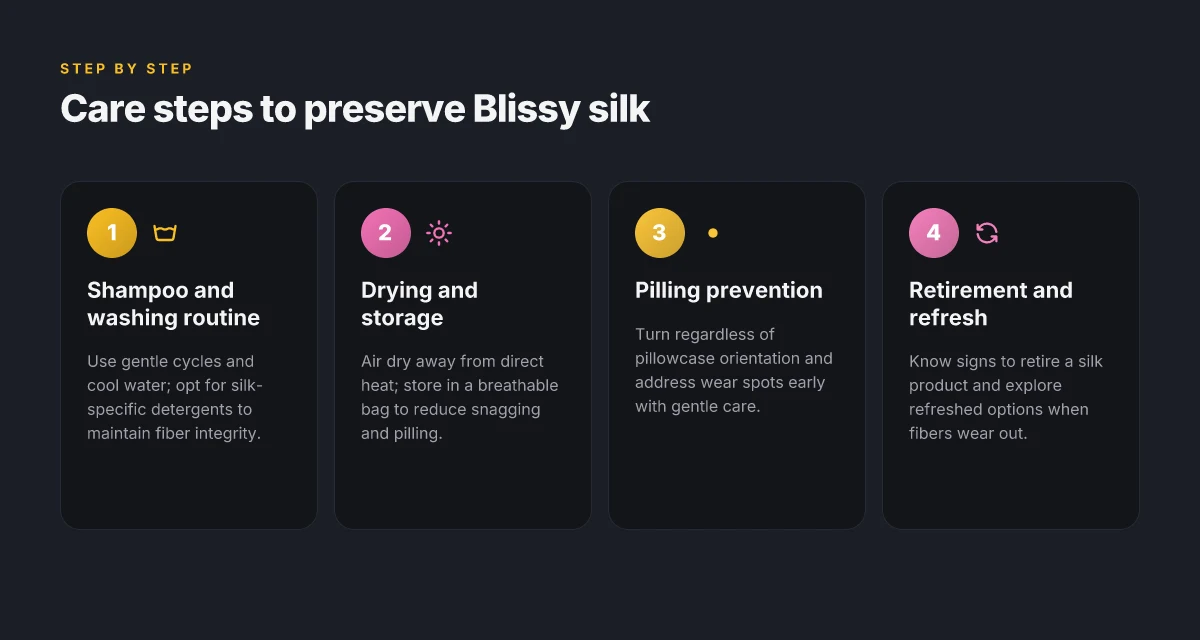
Always treat silk with a light touch. Hand wash or use a delicate cycle in cool water, using a mild detergent formulated for silk or delicates. Avoid bleach and fabric softeners, which can dull the sheen. After washing, lay the pillowcase or garment flat on a towel and roll gently to remove excess water. Unroll and air dry away from direct sunlight. When you must use a dryer, select the lowest heat or air-dry setting and remove promptly to minimize wrinkles. The key is to keep water temperature and agitation gentle so the mulberry silk fibers stay strong and smooth. Gentle handling preserves gloss and prevents tangling.
2) Storage and pilling prevention for longevity
Store Blissy silk in a cool, dry place, away from direct light which can fade color and degrade fibers over time. Use a breathable cotton bag or pillowcase sleeve rather than airtight plastic, which traps moisture. Slow pilling happens when fabrics rub against rough surfaces or other textiles. To prevent this, keep silk pieces separated from heavier fabrics and align the nap before storing. Periodically inspect for loose threads and trim with small scissors rather than pulling. Regular, careful storage helps maintain the fabric’s softness and reduces micro-damage over months and years. Store away from sunlight to maintain color.
3) When to retire and how to refresh
Silk has a long life, but signs of wear suggest retirement is prudent: thinning fibers, persistent snags, or persistent odor that won’t wash out. If a Blissy silk piece begins to feel brittle or looks worn at the edges, consider replacing it to protect sleep quality and skin comfort. Refresh routines include replacing pillow covers every 1–2 years with regular rotation, and pairing older silk with newer pieces for a layered look that doesn’t sacrifice feel. If you’re comparing options, note that rivals like standard satin or cotton blends may show quicker signs of wear under nightly use, underscoring the value of premium mulberry silk. Replace when sheen fades or fibers thin.
The small, powerful shift you can make this year
Blissy sets a clear standard for sleep comfort in 2026 by pairing natural silk fibers with careful construction. The result is a fabric that stays cool, feels smooth against the skin, and helps reduce friction for more restorative nights. I looked at how this balance works in real life: the breathability of silk keeps you from overheating, while the gentle glide of the weave minimizes wake-ups from tossing and turning. The verdict: prioritizing silk like Blissy can compound comfort across weeknights and weekend mornings. For anyone chasing steadier sleep without sacrificing softness, the brand’s design choices matter more than any single gadget.
That said, no product is perfect for every sleeper. Critics point to silk’s higher maintenance and cost versus blends, and some users may still prefer cool cotton or performance fabrics for sweaty summer nights. Noticeable caveat remains that silk requires a careful wash routine to maintain luster and longevity. Still, the daily routine benefits, calmer skin, fewer skin irritations, and a lighter sleep-ready feel, make Blissy a compelling anchor in a balanced sleep kit. **Is this the move you need? What is a bedjet and how does it heat and cool your side of the bed
If you’re weighing rivals, consider how Blissy compares with satin alternatives and premium cotton. Silk wins on temperature regulation and a luxe touch, while satin may deliver lower cost and easier care. The bigger pattern is clear: invest in material quality for long-term comfort, not just quick fixes. Links on this page may earn a commission, which helps keep the content free for readers like you.
Backup strategy, What to try this week
- Swap in a Blissy silk pillowcase for seven nights and note sleep continuity.
- Pair with a breathable eye mask to test heat and moisture control.
- If silk feels daunting, start with a small silk pillowcase and monitor skin comfort.
- Try a cooler sleep routine: room at a comfortable mid-range, light layer, and no heavy blankets.
- Assess whether a silk blend sheet set would meet your budget while preserving the core benefits.