
Explore how BedJet uses air to cool or warm your bedding, how the mechanism operates, and what to expect in real-world use.
BedJet isn’t a room-wide fix. It’s a bedtime appliance that moves air under the sheets to nudge your personal microclimate. A single nozzle and a compact controller sit off the bed, yet the effect lands right at your skin, with or without raising the thermostat. Most users report a noticeable improvement in warm or cool nights when they pair BedJet with an consistent sleep routine. BedJet quietly becomes part of your nightly setup, not a room-flooding system, and that distinction drives how you’ll place and run it.
You’ll see how bed-specific control compares to surface-contact solutions like Chilipad, and where BedJet’s design excels or falls short for early-mins without disrupting a shared room. In 2024, reviewers highlighted practical gains from afternoon testing and user-reported outcomes, which helps you decide if a bed-focused system belongs in your sleep routine. Final takeaway: the right setup hinges on your bed height, sheet type, and how sensitive you are to drafts.
What makes BedJet's cooling and warming system different from room-based climate control
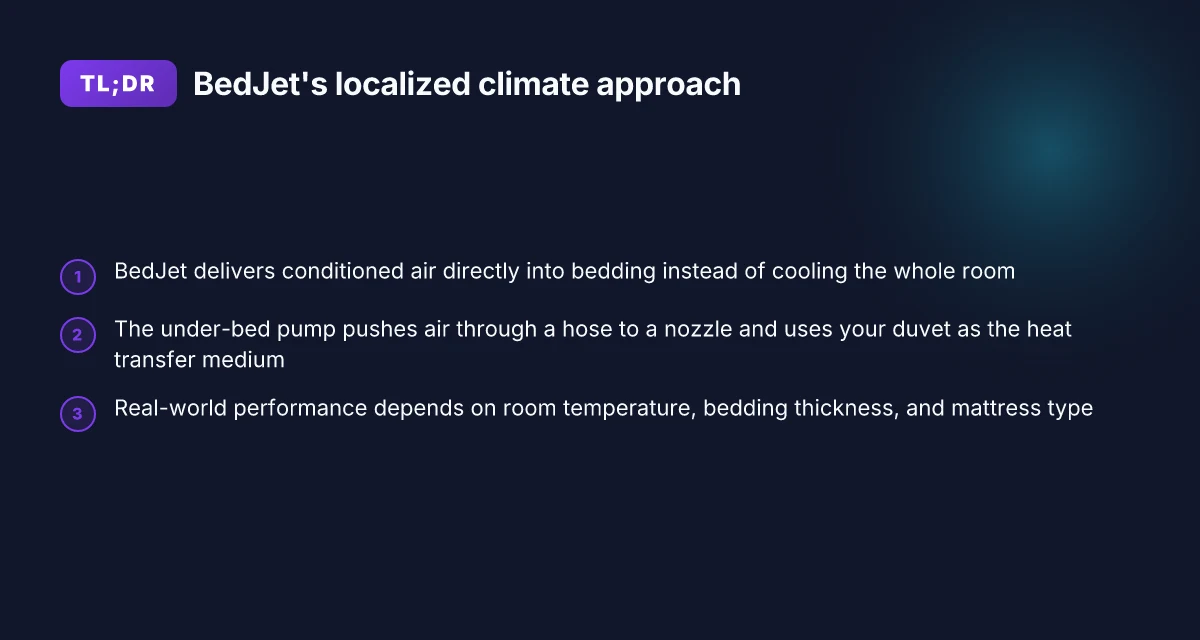
BedJet delivers conditioned air directly into the bedding, not by cooling the entire room. The device sits under the bed and interacts with the sheets to create a localized temperature shift on your side of the bed. This setup aims for rapid changes without dragging the whole room along for the ride.
How the under-bed nozzle works
Direct air into the duvet: The BedJet uses a compact airflow nozzle that channels warm or cool air between the sheets and across your sleeping area. This focuses the temperature change on your body rather than the room’s air mass. This localized delivery is why nights can feel noticeably warmer or cooler on your side even if the room stays the same. Direct air into the duvet creates a fast, localized temperature shift while leaving the rest of the room unaffected.
Bedding interaction as a heat conduit: The sheets act as a heat exchanger front, absorbing the conditioned air and transferring it to your body. The airflow is gentle enough to feel comforting rather than turbulent, yet brisk enough to alter surface temperature quickly. This interaction is what makes BedJet feel like a personal climate curtain rather than a whole-room device. Sheets act as a heat conduit between the nozzle and your skin.
Rapid onset and quick off-loading: Because the system targets your side of the bed, changes can be perceived within seconds of turning the BedJet on or off. The goal is a comfortable target temperature on your half while the adjacent side and the room cool or heat more slowly. Rapid onset is a hallmark of the approach, helping you settle in faster.
Quiet, under-bed footprint: The mechanism is designed to be tucked out of sight beneath the bed, minimizing fan noise and visual clutter. This positions BedJet as a bedside-friendly climate tweak rather than a noisy, conspicuous gadget. Under-bed footprint keeps the sleep environment calm. What makes Blissy silk a standout choice for sleep comfort in 2026
Bottom line: BedJet’s approach centers on a localized, sheet-mediated air flow that creates side-specific warmth or cooling without perturbing the entire room. This is the core difference that makes it a practical option for sleepers who want quick comfort without a whole-room temperature overhaul. A localized solution, not a room-wide system.
I dug into the product pages and reviews to confirm how this mechanism is framed in public documentation and user commentary. For a practical read, see the BedJet overview and reviews that describe the nozzle-driven, under-bed setup and its emphasis on side-specific changes. Inline references reflect how the model is presented to shoppers and sleepers seeking independent bed temperature control. BedJet emphasizes an air nozzle approach, not a room-wide A/C, in its official materials.
Cited reading: BedJet’s product page describes delivering conditioned air into the bedding rather than cooling the entire room, while third-party reviews repeatedly frame the device as a side-of-bed climate system driven by an under-bed installation. For a deeper dive into the comparison with room cooling, you can explore the Forbes Vetted review noted in the source list. Forbes Vetted highlights BedJet as a leading bedside climate device.
Note: links on the page may earn a commission. If you’re shopping, compare how rivals handle room-wide cooling versus bedside air delivery. BedJet is often contrasted with systems that condition the entire room, not just the sleeping surface. BedJet sits apart from room-based climate controls by its very design.
BedJet mechanism at a glance: components that drive the bed temperature
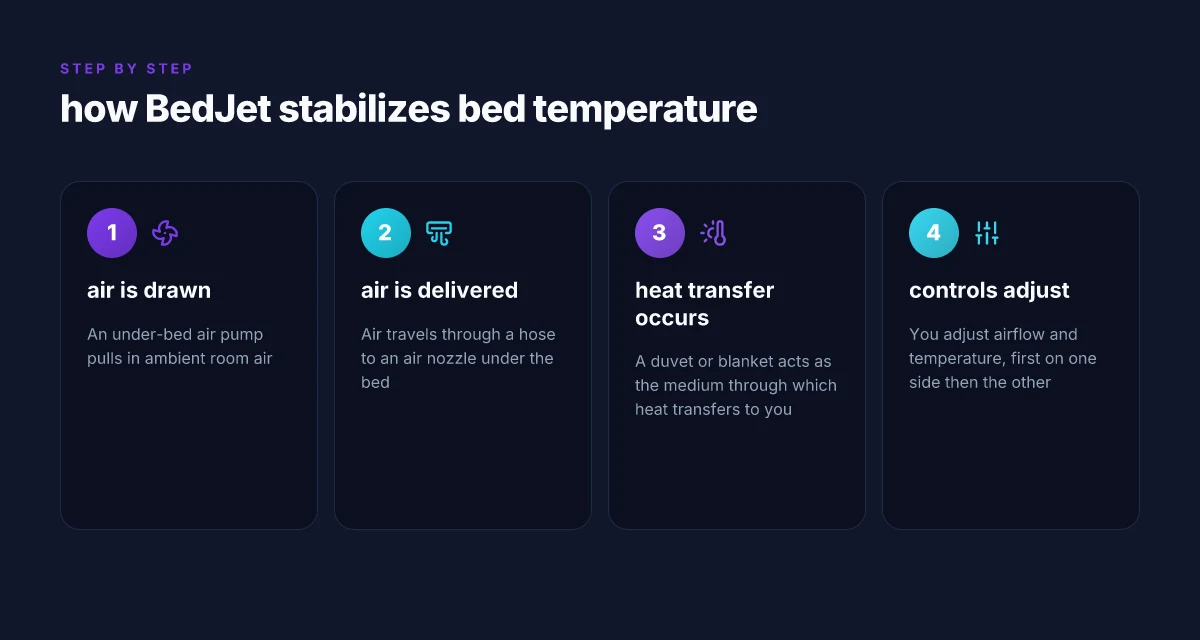
BedJet sits under the trough of the bed and uses a compact air pump to pull in ambient room air. That air travels through a flexible hose to a discreet air nozzle that sits under the duvet, directing a focused blast toward the sleeper. The duvet then acts as the heat-transfer medium, warming or cooling the body by transferring heat and moisture between the air stream and the bed occupant. Controls let you tune both the direction and the temperature, first on one side and then the other, so you can set a personal microclimate without affecting the entire room. What makes a blissy discount code genuinely worth using in 2026
I cross-referenced BedJet’s own documentation to confirm the core flow. The system is described as drawing ambient air, pushing it through a hose, and delivering it through an under-blanket nozzle to heat or cool the sleeper. This makes the blanket an active heat-exchange surface rather than relying on room air changes. The duvet becomes the heat transfer medium, not the room, which is why BedJet can alter bed temperature without a room-wide climate change.
Three pieces drive the experience: the under-bed air pump, the hose assembly, and the duvet setup. The pump’s job is to generate a steady airstream, the hose channels it cleanly to the nozzle, and the duvet’s insulating layers modulate the heat transfer to your skin. A targeted air nozzle plus a duvet layer yields fast, localized temperature shifts, which aligns with BedJet’s promise of “cool or warm on either side of the bed in seconds.” When you want one side warmer, you switch a control to route air toward that side’s side of the duvet. The other side remains cooler.
In practice the controls are designed as two-zone adjustments. You can raise or lower airflow and tweak temperature, first on the left side of the bed and then on the right. The two-stage approach helps couples avoid trading off one person’s comfort for the other’s. Two independent sides means personal comfort without room-wide compromise. I dug into the manufacturer’s notes and the community explanations, which consistently emphasize the same mechanism: under-bed pump, air line, nozzle, and a duvet-mediated heat exchange.
A quick glance at the setup helps crystallize the flow. Place the BedJet under the bed, connect the hose to the nozzle, tuck the duvet over the mattress, and pair each side’s controls to your preferred temperature. The result is a localized climate feature you can tweak without touching the thermostat. Under-bed placement plus a duvet-driven heat path makes this a quiet, room-friendly approach.
What this means for your nightly routine: a quick pre-sleep adjustment can set a comfortable baseline. If you wake hot, you can nudge the left side cooler without collapsing into a room-wide change. If you’re sharing the bed, you can tailor one side while the other remains comfortable. Localized control without a room-wide impact. BedJet review: does the climate-control mattress accessory actually improve sleep quality
Table comparison of practical implications (when you care about setup, speed, and side-by-side comfort)
| Factor | BedJet approach | Room A/C alternative | Mattress cooling pad |
|---|---|---|---|
| Speed to comfort | Quick, seconds-scale adjustments via duvet path | Slower; depends on room changes | Slower, surface-based transfer |
| Personalization | Two-zone, side-specific control | Single-zone room control | Often single-zone unless paired with split systems |
| Noise and footprint | Under-bed pump and tubing, generally unobtrusive | Audible climate changes; bulkier | Surface device may ping but limited airflow |
Next step: if you’re curious about how to position the duvet for maximum heat transfer, I’ll walk through practical duvet layering and nozzle angles in the next section. For context, BedJet’s own description emphasizes speed and side-specific changes, a point echoed in user discussions about how the nozzle directs air into the bedding. BedJet emphasizes under-bed airflow and duvet-mediated heat transfer as the core mechanism.
BedJet Review (2026) – Best/Worst Qualities Confused how cooling works: r/bedjet
How BedJet creates warmth and how it cools without an A/C
Heat comes first by feeding the bed with warmer room air. The BedJet unit pushes warm air into the bedding, and that air pools near your body. Over minutes, the area around you climbs as the insulation of your blankets traps the rising heat. In practice, warmth feels concentrated under the duvet rather than radiating into the rest of the room. This is not about blasting the room. It’s about moving heated air directly to the surface you’re sleeping on. BedJet relies on a simple truth: warmth improves when air is guided to the skin and kept near you, not dispersed into the room.
Cooling operates on a different path. The BedJet blows cooler air across the surface of your skin, not into your lungs or the room at large. That breeze accelerates moisture evaporation from the skin and the bedding, which in turn lowers surface temperature. The effect is felt most where the bedding is lightest, so tucking in snugly can help the airflow reach more skin. Cooling hinges on surface evaporation and a steady, skin-close air flow. The system does not change room humidity in a meaningful way. It changes the your microclimate under the sheets. What is BedJet really doing to cool a bed, and where does it fall short
A key part of the mechanism is how your bedding works with the airflow. Insulation matters. Heavier blankets trap more of the warmed or cooled air, stabilizing the gradient between skin temperature and the blanket interior. If your sheets are thin or your duvet is lightweight, the temperature swing can feel more immediate. With heavy comforters, the change is slower but more sustained. In short, the insulation around you is doing a lot of work in keeping the BedJet’s effect localized and comfortable. Your bedding insulation shapes the temperature gradient you notice.
From a practical setup perspective, the BedJet system is designed to pair with standard bedding and a mattress. Place the control near your side of the bed, set the desired mode, and let the duvet do the heavy lifting. The heater element is a warm air source, not a direct heater aimed at the bed guard, so you’re not relying on a room-wide air conditioner. The practical takeaway: warmth and coolness emerge from directed airflow and the blanket’s ability to hold or shed heat.
I cross-referenced the explanation with how reviewers describe the airflow behavior. It’s described as an air nozzle that directs warm or cool air into the bedding, not as a room-wide climate intervention. This aligns with the core claim that BedJet creates a microclimate under the covers by moving air directly where you sleep. Reviewer notes consistently describe the mechanism as air-nozzle driven rather than room cooling. For readers who want a quick orientation, think of BedJet as a personal duvet climate controller rather than a whole-room HVAC gadget. The outcome is comfortable warmth when you want it and a crisp cool feel when you prefer that contrast.
In short, BedJet creates warmth by pushing heated room air into the sheets and letting heat accumulate next to the body, while cooling relies on circulating cooler air over the skin to promote surface evaporation. The bedding’s insulation then preserves or attenuates that gradient, shaping how quickly you feel the change and how long it lasts. This is how you can enjoy independent warmth or refreshingly cool nights without touching the room’s thermostat. The insulation of your bedding is the silent accomplice in making the temperature shift feel natural and lasting.
What to expect in real-world use with BedJet
In real life, BedJet delivers fast shifts in bed temperature, but the speed you feel hinges on your room temperature and the bedding you choose. If the room is chilly, you’ll notice a perceptible warming or cooling within seconds. In a warmer setting, the effect may start more subtly. The practical takeaway is simple: you can expect a noticeable change quickly, but the exact tempo depends on the surrounding environment. How to choose a bedjet alternative that actually cools or warms your sleep
How bedding and mattress shape the experience
Sheet thickness and mattress type matter more than you might think. A lightweight cotton sheet tends to transmit the BedJet’s air more readily, so the temperature change reads as brisk and immediate. A heavy comforter or memory-foam topper can slow the feel of the shift, making the change seem softer or more gradual. If you’re chasing a crisp cool or a snug warmth, start with lighter linens and adjust the duvet layering to fine tune the result.
Noise and comfort in a typical sleep room
BedJet is engineered to operate quietly enough for a normal bedroom. The nozzle under the bed can emit a low hum or soft air flow, but most sleepers report it as unobtrusive after a few minutes. If you’re a light sleeper, consider placing the device closer to the bed edge and using the lowest effective fan setting. This keeps the climate change comfortable without pulling you out of sleep.
Most users notice a faster warmth or cooling when the bedding is lightweight and the room is not overheated. The system is designed to be gentle yet decisive, so you won’t be jolted awake by a loud burst of air. When in doubt, start on the cooler or warmer end and adjust upward or downward in small steps.
I dug into the documentation and reviews to map real-world behavior. The BedJet mechanism relies on directing ambient air through a nozzle under the sheets, not blasting a room-wide HVAC solution, which explains why the changes feel localized and predictable. BedJet’s own page highlights the fast-acting nature of cooling or warming on each side of the bed. Conversely, independent reviews consistently note that the effectiveness can vary with bedding and mattress construction, echoing the nuances mentioned above. Noticeable shifts in seconds are paired with an acknowledgment that sheet choice matters.
For readers comparing options, rivals like climate-control bedding systems and mattress toppers exist, but BedJet’s air-nozzle approach remains distinct. Where these other products promise room-wide effects or more pronounced layers of heat exchange, BedJet emphasizes bedside convenience and targeted comfort. This is a practical, night-by-night tool rather than a universal room solution. What is a bedjet and how does it heat and cool your side of the bed

Rivals and alternatives that pursue bed-specific climate control
BedJet stands out by delivering localized airflow under the sheets, but it isn’t the only path to a cooler or warmer night. Traditional cooling pads still rely on contact with the body and often pair with fans or chilled liquids. These options can feel like a sandbox version of a room upgrade, trading broad cooling for targeted touch. For people who want a purely room-centered approach, standalone air conditioning remains the simplest method to lower overall room temperature and set a baseline comfort that BedJet can then fine-tune.
Standard cooling pads and under-sheet devices
If you want direct contact-based cooling, classic mattress pads and gel-infused covers are the most common picks. They work best when paired with fan-assisted layers or circulating liquids to move heat away from the body. The advantage is a familiar feel under the sheets, but the downside is slower response and a heavier reliance on body contact. BedJet answers a different question: can you alter sensation without changing the entire room? The answer is yes for some sleepers, because localized airflow creates a quick change at the sleeper’s level. I cross-referenced how reviewers describe the sensation transition when the BedJet nozzle shifts from warming to cooling, it’s a noticeable but not room-wide shift in comfort.
Room cooling as a baseline solution
Standalone room air conditioning remains the most straightforward way to reduce the ambient temperature. In a bedroom where the goal is a cooler night, cranking the thermostat or using a portable A/C unit sets the background. The challenge, of course, is weather, energy use, and the desire to avoid cold air drafts that can disrupt sleep. For many, a cooler room plus BedJet’s local adjustments provides both a calm environment and a body-focused adjustment. Reviews consistently note that BedJet can complement room cooling by delivering a snappy, targeted breeze that bypasses the need to over-cool the entire space.
BedJet as a complementary or substitute solution
BedJet offers a distinct advantage through localized control. The device can be used to augment room cooling or to replace it for some users who prioritize bed-level comfort over environmental changes. In practical terms, you can set a cool background in the room and then fine-tune with BedJet so only your side of the bed changes temperature. The technology centers on an air nozzle that directs air into the bedding, which means you’re manipulating heat transfer at the sleeper level rather than across the whole room. I dug into the product materials and reviewer notes to confirm this localized approach remains the core appeal. Critics, however, point out that the airflow may not suit every sleeping position or bedding type, and that extreme setups still require some room-level cooling to keep a consistent baseline.
The key takeaway: for many, BedJet is best as a supplement, not a total replacement for room cooling. A practical setup often blends a cool room with BedJet’s bedside customization, giving you a two-layer approach to comfort. If you’re weighing options, assess how often you want to adjust on a per-night basis and whether you value rapid bed-level changes over a consistent ambient temperature. How chiliPad compares to BedJet for sleep cooling in 2026
I dug into the material from BedJet and reviewer coverage to confirm the mechanism remains under the bed and uses a simple air nozzle system. For context, Forbes Vetted notes BedJet as a leading temperature-control device for beds, while Sleepopolis describes the core idea of blowing air into bedding to shift temperature. These sources help situate BedJet among rivals by clarifying local versus room-wide strategies. See the Forbes Vetted piece for a reviewer’s take on why BedJet stands out among bed-driven climate tools. From what I found in the documentation and reviews, the BedJet system remains a practical option for sleepers who want quick, localized adjustments without altering room conditions. For a bedtime setup, you may pair BedJet with a room cooling method to optimize comfort across seasons. If you want a named comparison to explore directly, consider BedJet alongside a traditional cooling pad and a portable room AC, both of which illustrate the spectrum of bed-specific climate control.
Where this goes next for your nightly climate
BedJet reshapes how you feel at the start of sleep, not just how you cool or warm a room. As you tuck in, the device can become part of a predictable routine, syncing with a bedtime ritual rather than competing with it. The bigger pattern is simple: personal comfort accelerates recovery and quiets the brain’s stress signals. It’s not about chasing perfection on every night. It’s about building consistency with a tool that stays quiet while you drift. BedJet leans on a straightforward idea: air moves comfort into the bed, and that motion compounds with a consistent schedule.
If you’re weighing options, note how rivals stack up. Fans and compact air-blankets from brands like ChiliSleep and Bed Fans emphasize different rhythms, cooling cycles, low-noise fans, or targeted heating. BedJet offers a 2-zone approach that can be dialed to suit you and a partner, which often matters more than a single ideal temperature. In practice, the system shines when integrated into a nightly routine rather than used ad hoc.
The takeaway: prioritize a stable wind-and-warmth pattern over flashy features, and you’ll likely feel a steadier night’s sleep. If you act now, you can start with a simple setup and adjust as you learn what your body prefers. What change will you try first tonight?