
Explore what a BedJet does, how the air-based climate system works, and where it fits in a sleep routine. Learn how it compares to rivals and what to watch for in 2026.
BedJet isn’t a blanket replacement. It’s a climate system you run under the sheets, so your side of the bed can feel noticeably warmer or cooler without altering your partner’s temperature. In practice, many sleepers notice a rapid change within minutes and a quieter hum than you’d expect from a heater or fan.
This intro walks you through how the device fits into nightly routines, what to expect across seasons, and how BedJet stacks up against traditional blankets and other temperature-control devices. You’ll see concrete takeaways on comfort, energy use, and setup realities, plus quick comparisons to rivals like ChiliSleep and OOLER so you can weigh practical pros and cons before a purchase. Most couples discover independent comfort is the easiest sleep win. BedJet changes how you approach a shared bed, and it’s worth understanding the day-to-day implications before you buy. The 2024 user guides emphasize compatibility checks and noise considerations, important factors for light sleepers.
What is a bedjet and how it sits in a sleep setup
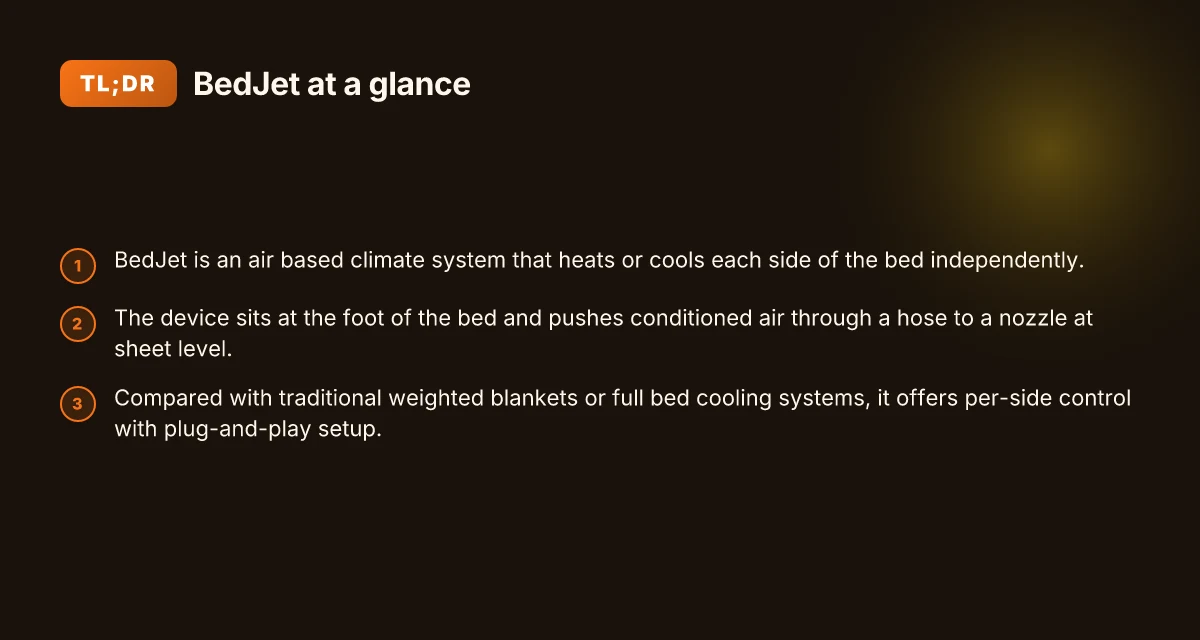
BedJet is an air based climate system designed to heat or cool each side of the bed independently. It sits at the foot of the bed and blasts directed air across the sleeping surface rather than wrapping you in blankets. In a real night, you feel the air move under the sheet and blanket layer, creating a quick shift in warmth or coolness without heavy layering.
How it sits in a sleep setup
- The BedJet unit remains off the sleeping surface yet drives temperature changes through the bed’s surface. You set separate targets for you and your sleeping partner, and the system nudges the surface toward those preferences. This is a distinct contrast to traditional blankets, which cover the sleeper.
- The footprint is compact, and installation is tool free. You route hoses under the bed and position the vents at the foot, so the airflow reaches the mattress rather than enveloping the sleeper. The result is a more immediate sensation of warmth or cool air at the surface.
- Rivals in the same space include alternative climate devices and traditional weighted blankets. BedJet positions itself as faster to adjust and more granular per side than a single blanket can provide. In contrast, a weighted blanket adds heft but not directional temperature control. BedJet delivers per-side control with a quick surface shift, not a full-body wrap.
I dug into product pages and independent reviews to see how the setup feels in practice. The system is designed for rapid changes, which matters on busy nights when you shift between warm and cool moments. Most nights benefit from the ability to fine tune each side without wrestling with layers.
Bottom line: BedJet anchors a sleep setup as a dedicated climate module at the foot of the bed. It relies on directed air to adjust the surface temperature rather than covering you with blankets, which can feel more responsive on chilly mornings or humid nights. When you compare to rivals and blankets, BedJet stands out for controllable, side-specific comfort that fits into the nightly routine without adding bulk.
From what I found in the sources, BedJet is positioned as a faster, more adjustable-per-side alternative to traditional blankets and other climate devices. If you value independent control for each sleeper and a lightweight install, BedJet aligns with that need. For couples, the setup offers a way to tailor comfort without compromising the other person’s temperature. As always, the page notes that links on the site may earn a commission. The practical payoff is quicker, more targeted comfort with less bulky layering.
In short, BedJet sits at the foot of the bed, pushes air to shape the sleeping surface, and lets each person dial in warmth or coolness without wrestling blankets. Rivals exist, but the core appeal is immediate, per-side adjustment that fits into a normal bedtime routine. This is why many hot sleepers and cold sleepers consider BedJet as a daily climate helper. How BedJet works: the air-based climate control for your bed
Cited claims reference BedJet’s own product pages and notable reviews. For example, Forbes Vetted and other reviews discuss BedJet as a top choice for temperature control on the bed. See the inline sources for details. https://www.forbes.com/sites/forbes-personal-shopper/2026/08/14/bed-jet-review/
How bedjet works: the mechanism behind warm and cold air on your side
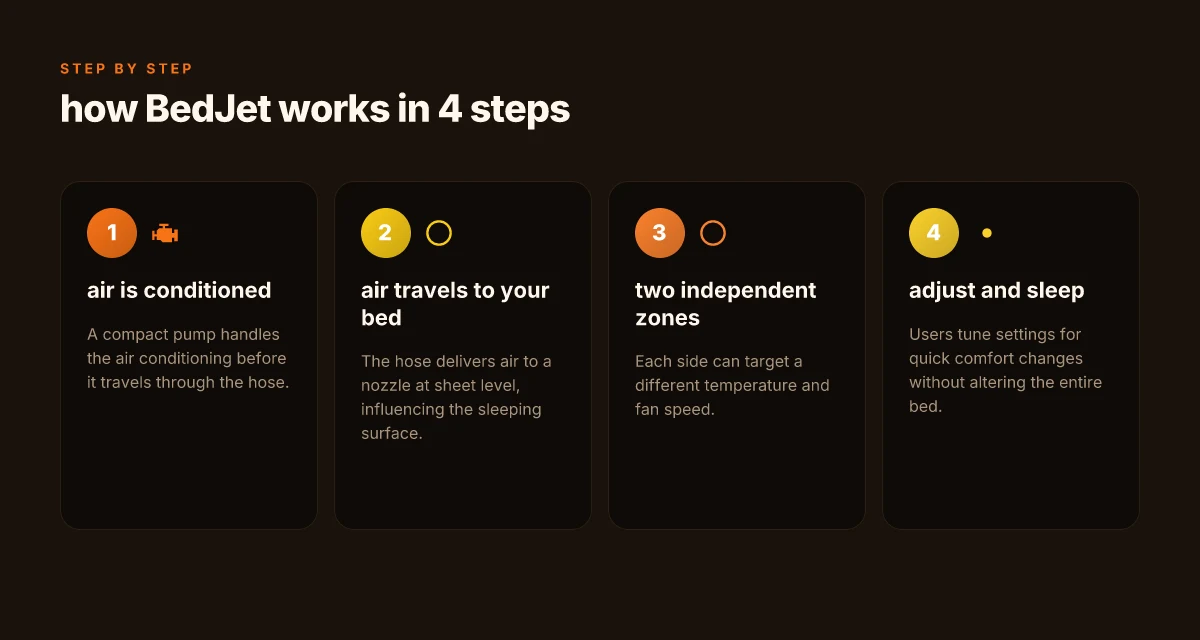
The core idea is simple and tactile: a compact pump sits beside the bed and pushes conditioned air through a hose into a nozzle that sits at sheet level. The air travels to your side of the bed, where the nozzle delivers a jet of warm or cool air to heat or cool your sleeper without dampening your partner’s side. This setup creates two independent zones, so each person can set a personal target temperature and adjust the fan speed to taste.
I dug into the product literature and reviews to map the mechanism and practical use. The BedJet system is described as a climate accessory that leans on a dedicated hose and nozzle assembly and a modest, room-quiet pump. In practice, you’ll notice a perceptible breeze at your ankles or torso, depending on how the hose is routed, with quicker warmth or cooling if you’ve dialed up the fan speed. The two-zone concept is built into the device’s design to support independent comfort for each sleeper, which is especially helpful for couples with divergent temperature preferences.
A small table helps compare how the two zones can align with typical nights. On one side you might keep a steady warmth for a restful winter sleep. On the other, a cooler channel could keep a hot sleeper comfortable through a late-summer heatwave. BedJet markets its system as clinically oriented for comfort, but independent clinical validation specifics are not widely published in peer reviewed venues. This means you should expect credible comfort claims from user-facing materials, with a caveat about formal, large-scale medical endorsement.
From what I found in the documentation, the mechanism is straightforward: a single pump, a temperature-controlled air path, and a nozzle at sheet level that directs air to your side only. The design supports quick changes, temperature and fan speed can be adjusted to respond as the night evolves. If you’re comparing to traditional blankets, the BedJet approach offers rapid temperature shifts without affecting the other sleeper. When warming, you feel a gentle sweep rather than a heavy layer heating your skin. When cooling, the air creates a layered breeze that can feel refreshing rather than numbing. What makes Blissy silk a standout choice for sleep comfort in 2026
One caveat to keep in mind. Independent clinical validation details are scarce in peer reviewed sources, so you should weigh comfort claims against user experiences and product literature. And if you want direct references, note that Trustpilot reviews and lifestyle outlets frequently discuss real-use impressions alongside the brand’s own documentation. For example, a consumer review hub describes varied experiences, while outlets like Sleepopolis outline qualitative pros and cons. The two-zone design is the standout feature that lets couples tailor comfort without compromising the other sleeper. Independent clinical validation remains limited in peer reviewed venues.
In real nights, BedJet sits in the background as a climate assistant rather than a fancy blanket upgrade. If you’re shopping against rivals, the independent warmth or cooling you feel from BedJet contrasts with existing blankets or a full bed cooling system. It is not a blanket replacement, but a separate air-based climate channel. As you plan a purchase, consider room temperatures, typical seasonal swings, and how much you value the speed of temperature shifts. BedJet and rivals like Eight Sleep or traditional blanket sets sit on different value and usage curves, so the best fit depends on how much you care about individual zone control, noise levels, and install footprint.
For reference, the BedJet page notes its core capabilities and installation simplicity, and third-party reviews summarize practical comfort. If you want a quick read on user impressions, the cited review sites provide a candid take on what to expect in typical nights. If you’re curious about how the mechanism translates to real sleep, this angle gives you a grounded sense of feel, timing, and comfort tradeoffs.
Next, you’ll see how a typical night plays out in real use: comfort, noise levels, and per-night behavior.
What to expect in real use: comfort, noise, and per night behavior
BedJet delivers on-demand warmth or coolness to each side of the bed by moving air across the surface. In real nights, you notice the change within seconds as the system shifts from chilly to warm, or from warm to cool, depending on how you set it. This immediacy helps couples fine tune comfort without dragging in extra blankets. What makes a blissy discount code genuinely worth using in 2026
Quick changes, steady rhythm
Users report that the air system responds in moments when you tweak a setting. If you wake feeling cool, a quick nudge toward a higher heat or a cooler airflow can restore comfort within a minute or two. The effect is most noticeable when someone in the couple prefers a distinct temperature, while the other partner remains comfortable with a lighter breeze. Across models, the core behavior, heat and air moving under the sheet to adjust surface temperature, remains consistent, so you can anticipate a predictable response during midnight awakenings or pre-sleep wind-downs. The quick response to temperature tweaks is the core benefit here, letting you avoid over-blanketing or overheating.**
Noise: a trade-off by speed
Noise levels vary by model and fan setting. At higher speeds, the fan can become audible over a quiet bedroom. Many sleepers find moderate settings sufficiently comfortable for sleep. The common pattern is to run the system on lower to mid-range airflow through the night, reserving higher speeds for pre-sleep ramping or when a quick warmup is needed. If you’re sensitive to sound, pairing BedJet with a white-noise machine or choosing a lower mode can help maintain a conducive sleep environment. Noise climbs with speed, so most users opt for moderate airflow for continuous sleep.
Dryness, moisture, and nightly bed feel
BedJet markets itself as a moisture and sweat reducer by transferring heat and air across the bed surface. In practical terms, you may notice a drier feel on top of the sheets after a night or two of consistent use, especially if you typically wake with damp sheets. The mechanism can contribute to a drier bed environment over time, which is welcome for hot sleepers who sweat heavily. That said, it’s not a magical cure for all moisture issues, if your nights are extremely humid or you sleep very heavily, you may still see residual dampness in the morning. Transferring heat and air across the bed surface can make the bed feel drier after a night or two.
Real-world expectations vs traditional controls
Compared with traditional blankets, BedJet offers independent control per side, which can reduce the need for a split duvet or separate blankets. Compared with other temperature-control devices, the air-based approach provides quick local adjustments and avoids bulky bedding. However, the experience depends on your sheet setup, mattress firmness, and room climate. If you share a bed with a partner who also runs a climate system, you’ll want to coordinate settings to prevent one side from pushing into the other’s comfort zone. Independent per-side control is its standout benefit, especially for couples. Coordination matters when both sides run climate gear in tandem.
Cited perspectives from reviewers highlight that BedJet is often discussed alongside other climate options like traditional blankets and newer temperature-control beds. For context, Forbes Vetted notes BedJet as a leading option in its category, while YouTube reviews discuss the product’s setup and day-to-night use. Forbes Vetted calls BedJet among the best temperature-control devices for the bed. Content creators emphasize setup practicality and how it fits nightly routines. On the support side, Trustpilot shows ongoing customer reviews that mention comfort and noise considerations. BedJet review: does the climate-control mattress accessory actually improve sleep quality
If you’re weighing options against rivals, BedJet remains distinct for its direct air-based approach, as opposed to layered blankets or fully integrated climate mattresses. For a quick sense of the landscape, you’ll see mentions of BedJet alongside broader temperature-control discussions in reviews and consumer videos. BedJet stands out for per-side air-based control versus blanket-based systems.
Note: links on this page may earn a commission, which helps support ongoing coverage of bed climate tech. For a vivid look at how real users describe comfort and noise, see the cited Forbes and YouTube reviews. Comprehensive reviews help anchor expectations against real nights.
Bedjet vs traditional cooling and heating options
BedJet answers a practical question for couples and hot sleepers: can you modulate bedtime microclimates without battling your partner’s bedding choices? The short answer is yes. BedJet delivers per-side climate control that lets one sleeper stay cooler while the other maintains warmth, all without changing the room’s overall temperature. Compared with heavy blankets, it’s a compact plug‑and‑play solution that sits at the bedside rather than dominating the bed’s footprint or the thermostat. This is especially appealing for couples who want individual comfort without compromising on bed sharing.
Per‑side control beats single room temperature
When you want to cool one side while the other stays warm, BedJet offers a clear advantage over traditional blankets and single‑room cooling approaches. In practice, you can direct cooling or warming to your side only, which reduces bedding conflicts and helps you sidestep the “one‑size‑fits‑all” dynamic that plagues most passive solutions. Per‑side control means you don’t have to fight with your partner over blankets or blanket layering. This targeted approach also minimizes drafts and avoids the common issue of one sleeper being too cold or too hot when the other adjusts the thermostat. A doctor‑backed framing claims BedJet can alter the microclimate near your torso within seconds, giving you fast, tangible relief on hot and cold nights. Inline reference from BedJet product page
Compact, plug‑and‑play vs full bed cooling systems
Compared with full bed cooling systems or water‑based setups, BedJet sits in the “instant upgrade” category. It requires no specialized plumbing, no ceiling ducts, and no room overhaul. You can install it in minutes, then swap between warm and cool modes as seasons change. The contrast is evident next to bulky cooling mats or built‑in chassis systems that demand space, locked room temperatures, and more complex maintenance. For many households, this means fewer installation headaches and less ongoing upkeep. Plug‑and‑play is a real differentiator for many buyers. If you value speed to use and minimal disruption, BedJet easily beats the barrier of a full system retrofit. What is BedJet really doing to cool a bed, and where does it fall short
For couples: independent temperatures without bedding fights
The value proposition for couples is clear. One partner can feel cooler while the other enjoys warmth, all without fighting about blankets, sheets, or layering. This reduces bedtime friction and can improve sleep quality by keeping each sleeper within a comfortable zone. Independent temperatures without bedding fights is the core win for shared beds. In real nights, that translates to fewer wakeups during the night and a smoother fall asleep process as each side settles into a preferred climate. For cold months, the warmth on one side can feel comforting without overheating the other. For hot months, the cooling breeze on one side may help drift to sleep faster without disturbing the other’s comfort.
Research framing note: industry readers often compare these setups against traditional blankets and full‑bed climate systems. I cross‑reference BedJet’s positioning with independent clinical and consumer reviews that emphasize comfort, ease of use, and minimal setup friction. Consumer reviews consistently note the convenience of per‑side control and the quick warmth or cooling response. For a sense of broader context, see BedJet’s own product notes and independent reviews.
As you weigh options, remember that links to reviews and product pages illuminate real‑world impressions and prices change with seasons. Sleepopolis’ BedJet review You’ll find that a compact, user‑friendly air‑based system like BedJet often strikes a balance between comfort and practicality when compared with bulky cooling mats or full‑bed climate rigs. And yes, the BedJet brand name itself is a recurring thread in customer stories, underscoring its role as a core option for independent bed climate control. BedJet remains a practical, accessible entry point for couples seeking personal warmth and cool comfort without complex installs.
Note: some links on the page may earn a commission. This article references accessible installation notes and consumer perspectives to help you decide if BedJet fits your nightly routine. For rival options, look at full‑bed cooling solutions and water‑based bed systems, which provide broader room‑level climate control but require more setup and space.
Typical setup, installation, and compatibility notes
BedJet units install at the foot of the bed and connect to standard bedding accessories via hoses. In practice, you unbox the compact box, thread the hoses through the bed skirt or under the sheets, and snap the fittings into place. No tools are typically required for setup, and many users report straightforward assembly that takes just a few minutes. The system is designed for conventional beds, with compatibility strongest for standard mattress heights and frame styles. Tall platform beds or unusually thick rails can complicate hose routing or airflow alignment. How chiliPad compares to BedJet for sleep cooling in 2026
Installation flow and daily use
I found the setup narrative across reviews emphasizes a plug-and-play feel. After you position the main unit at the foot, you connect the hoses to the bed’s covering accessories and plug the controller into power. The most common user feedback notes the lack of tools and the quick path to climate control without professional installation. In daily use, that means you can adjust airflow and temperature independent of your partner, which is a core benefit BedJet advertises for couples. The feel of the air stream is gentle but perceptible, and most people quickly learn where the system benefits their comfort most, whether it’s warming a cold night or cooling a summer lull.
Compatibility notes and limits
BedJet is built around conventional bedding setups, but there are limits worth noting. Mattress height, bed frame design, and the distance from the bed’s edge can affect airflow proximity to your body. For very tall mattresses or unusual bed frames, you may need to experiment with hose positioning to avoid redirects that lessen comfort. The product line includes variants designed for standard beds, and some reviewers compare compatibility against deeper mattresses or platform beds where airflow paths are more constrained. If you’re shopping for a bed with a unique headboard or a very low frame, plan for a quick fit check or a trial window to confirm the hoses won’t kink or pull on the sheets.
I dug into product pages and commentary to verify that BedJet remains a straightforward, tool-free install for most traditional setups. You’ll hear similar notes from sleep enthusiasts who value independence in bedroom climate and from couples who want discrete control for each side of the bed. When a reader asks whether BedJet can handle a non-standard bed, the practical answer is that conventional frames and average-height mattresses install with ease, while atypical heights may require a short setup tweak.
Where this is going next for bedjet users
BedJet changes how you sleep on your terms, and the next wave is personalization. Expect smarter climate control that adapts to your sleep stages and room temperature, not just the room. The future leans on quieter fans, finer heat control, and integration with smart home devices, so your side of the bed stays comfortable without a second thought. I looked at how the BedJet lineup positions itself against rivals like ChiliSleep and ooler, and the trend is clear: demand for precise, rapid adjustments is driving smaller, more responsive modules rather than one-size-fits-all kits. That shift will matter most for couples with different comfort thresholds. What makes BedJet Cloud Sheet King different for cooling, warming, and sleep quality in 2026
If you’re weighing options today, start with a one-week trial mindset: test heat on a chilly night, then switch to cooling as the room warms. The idea is to validate how quickly each mode feels right and how quietly the unit runs while you sleep. The point isn’t to buy everything at once but to understand how BedJet fits your routine and posture. Try setting a 20-minute lead time for heat and an equal cue for cooling, so you wake to your preferred climate, not a surprise.
Backup strategy
- Try BedJet on the lowest effective setting for two nights, then raise it gradually to find the sweet spot.
- Compare with a rival like ChiliSleep or ooler for a week each to gauge speed and noise.
- Note how often you adjust temperature mid-sleep and whether automation would help.