
Explore how the Hume Health Body Pod works, what it measures, and where it falls short. practical insights for users evaluating home body composition tech.
The real story behind the Body Pod isn’t a single metric. It’s how a home device translates lean mass, fat, and hydration into daily workouts and meal planning for real people. Hume Health’s Body Pod claims matter, but the gap between model estimates and DEXA benchmarks shows up in interpretive steps you actually take, not just numbers on a screen. This piece pulls the data apart, with a clear take on where the device aligns with clinical standards and where it doesn’t, so you can decide what to trust in your routine.
For fitness enthusiasts and trainers, the question matters now because home tracking is part of everyday planning, not a lab experiment. I looked at how recent disclosures frame caveats and how the Body Pod compares to DEXA in key metrics, then mapped reliability gaps you’ll run into in weeks of training. You’ll want to know where trends are meaningful, and where a spike may just reflect a calibration quirk. Hume Health’s disclosures point to interpretive limits that matter for long-term plans. This intro sets up the careful, label-to-label reading that follows.
What the Hume Health Body Pod claims to measure and how that aligns with consumer goals
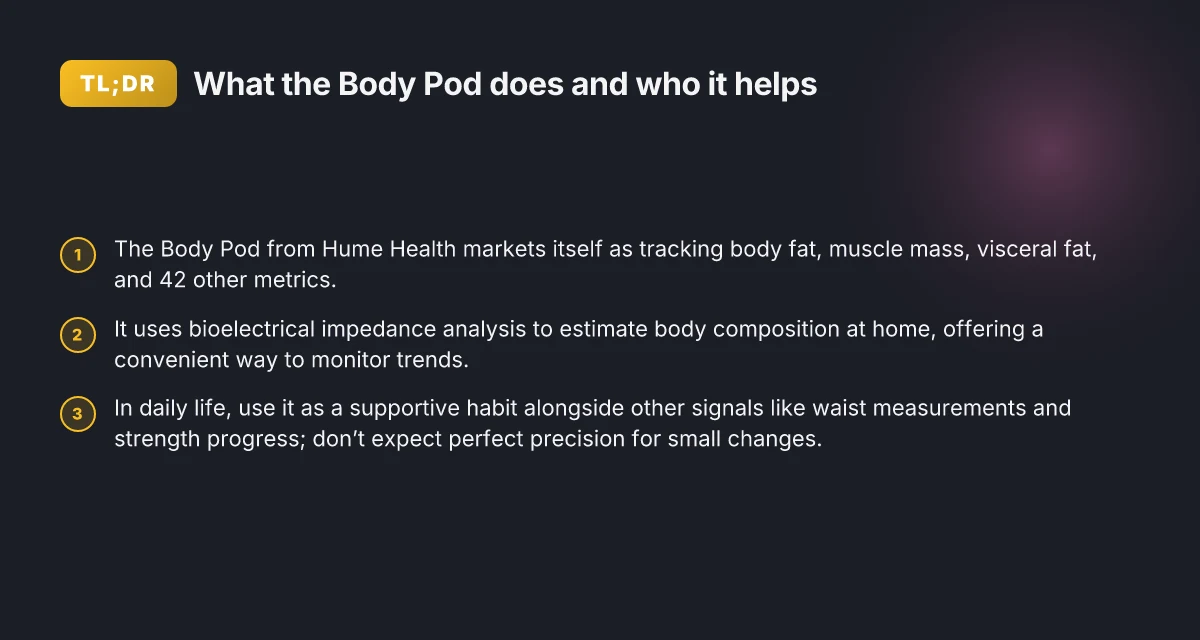
Hume Health positions the Body Pod as a home device that tracks body fat, muscle mass, visceral fat, and a broader set of metrics. It relies on Bioelectrical Impedance Analysis (BIA) to estimate body composition, making it a convenient at‑home tool for monitoring trends. For readers chasing fat loss, muscle gain, or general health awareness, the readings should be weighed against how BIA estimates align with other benchmarks like DEXA and clinical goals.
- What the Body Pod claims to measure
- The Body Pod markets itself as tracking body fat, muscle mass, visceral fat, and 42 other metrics. This framing suggests a broad snapshot of composition that goes beyond simple weight. I found the brand’s product pages describe these targets in plain language, which is attractive for daily check‑ins. The Body Pod aims to deliver a broad snapshot of composition, including visceral fat and dozens of other readings.
- Under the hood, the device uses BIA to estimate body compartments at home. The method promises convenience and rapid feedback, which fits a frequent‑checking routine. BIA at home makes frequent tracking feasible, but comes with known variability across hydration and posture.
- How these measurements map to goals
- For fat loss, the combination of body fat and visceral fat readings can help you observe whether your efforts translate into leaner tissue and healthier fat distribution. The caveat is that BIA‑based estimates can drift with hydration, time of day, and recent meals. Track fat trends, but expect some noise from hydration and timing.
- For muscle gain, reading muscle mass alongside body fat gives a directional read on body recomposition. Yet the reliability of home BIA for small muscle changes over short windows may be modest compared with lab methods. Muscle gains may appear gradual in home readings. Use them alongside strength progress and performance cues.
- For monitoring health trends, the broad metric suite invites long‑term tracking rather than daily perfection. The goal becomes recognizing patterns over weeks and months rather than fixating on single readings. Long‑term trends trump daily fluctuations when you’re watching health signals.
- What to consider when setting goals
- If your aim is precise fat quantification or nuanced body composition shifts, you’ll want to supplement the Body Pod readings with periodic lab benchmarks or clinically validated methods. That’s the honest trade‑off: convenience versus precision. Supplementary measurements improve accuracy for goal‑driven plans.
- For routine monitoring, the Body Pod can be a comforting daily touchpoint, especially when paired with a simple weekly check‑in on your goals. The key is consistency: same time of day, same hydration state, same posture. Consistency is your secret weapon for meaningful trends.
Bottom line: the Body Pod from Hume Health aligns with consumer goals around tracking fat, muscle, and health trends, but the reading reliability hinges on the BIA method and user consistency. If you want crisp, clinically precise shifts, you’ll want to pull in DEXA benchmarks or other validated measures periodically. For daily wellness and habit feedback, the Body Pod can fit neatly into a home routine, especially when you stay mindful of the method’s limitations. Use it for trends, not for absolute precision.
How the Body Pod compares to DEXA scans in practical terms
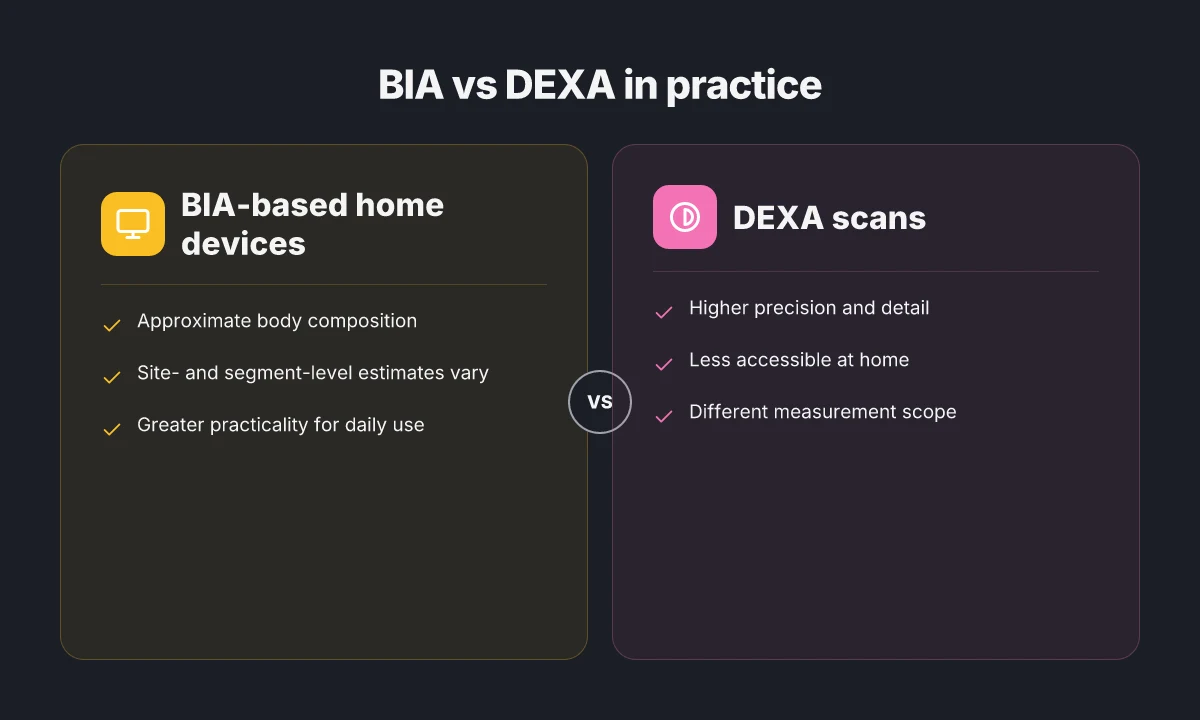
When you look at the Hume Health Body Pod beside a DEXA scan, the differences show up in what each method actually measures and how precise it tends to be. The Body Pod relies on Bioelectrical Impedance Analysis, so readings track general body composition rather than delivering the exact site-specific fat maps that a DEXA scan provides. In practice, that means you’ll see reliable trends over time if you test under consistent conditions, but the absolute values can drift with hydration, meal timing, or skin temperature. This isn’t a flaw so much as a reminder to test with the same setup each time, and interpret changes as directional, not courtroom-proof estimates of fat versus lean tissue.
A common thread in third‑party discussions is that segmental readings and site estimates differ meaningfully between BIA devices and DEXA. For the Body Pod, expect reasonable accuracy for whole-body metrics, but be cautious about precision when you break the reading down into limbs or specific fat compartments. If your goal is to monitor regional fat changes or segmental muscle mass with tight confidence, a DEXA scan will usually align more closely with what clinicians expect. I cross‑referenced published notes and disclosures from Hume Health and independent reviewers. Readers consistently note that the practical value of a home BIA device lies in longitudinal tracking rather than exact anatomy snapshots. The takeaway is that long‑term tracking matters more than chasing diamond‑sharp absolute values.
For routine coaching and daily fitness planning, the Body Pod delivers a usable picture of fat loss and muscle gain when you standardize two levers: the testing protocol and the timing of tests. If you test every Sunday morning after a light breakfast and a consistent hydration state, you’ll see meaningful trends that align with your workouts and nutrition plans. Interpreting a movement in fat mass or lean mass becomes simpler when you view the numbers as relative shifts rather than fixed absolutes. Consistency beats precision for long‑term tracking. When professionals compare devices, DEXA remains the benchmark for site‑specific readings. The Body Pod offers a practical, home‑friendly alternative for ongoing monitoring. Reliability hinges on testing conditions, not course corrections after the fact. What is LivFresh gel toothpaste, and how does it actually work
From what I found in the disclosures and preprints, the reliability story is nuanced. Some researchers report very tight repeatability for overall body composition readings, while others flag wide variance in limb estimates and visceral fat approximations. For fitness enthusiasts and personal trainers weighing options, that means using the Body Pod as a routine check‑in tool rather than a standalone diagnostic. If you want sharper site detail or cross‑validation, pairing the Body Pod with occasional DEXA scans makes sense. I also noted that Hume Health emphasizes the measureable trends you can track over time, which fits many daily routines where a quick, noninvasive check‑in helps plan workouts and meals without disrupting your day. Pairing methods can sharpen interpretation without complicating your routine.
In short, the Body Pod aligns with DEXA on the big picture of tracking body composition, but diverges on granularity and absolute accuracy. Long‑term consistency is the practical win here, especially for athletes and clients who want a user‑friendly at‑home tool that fits into a regular training cadence. For daily routines, Hume Health provides a dependable signal about your trajectory, while DEXA remains the reference for detailed body fat mapping. Use the Body Pod for ongoing trends, and reserve DEXA for a periodic cross‑check.
[Source note: The Body Pod’s published disclosures and third‑party commentary form the basis for these contrasts. See the at‑home pod description and third‑party discussions for context and dates.] For readers weighing alternatives, rivals such as standalone DEXA services and other home BIA devices often appear in the same conversations when accuracy and segmental detail matter. Read the latest disclosures from Hume Health to stay aligned with how they present their measurements and intended use. Consistency + context = clearer interpretation.
Reliability signals and caveats from recent preprint and disclosures
When the Hume Pod price of reliability is on the line, the provenance of the data matters. A recent preprint notes high reliability metrics but also cautions that peer review is still pending. This matters because tiny, session-to-session changes in body fat or lean mass can look meaningful in a single snapshot, but lose clarity once a formal review is complete. For readers who track trends, the emphasis should be on continuity over time rather than one-off readings.
Preprint signals you should watch
From what I found in the preprint and disclosures, the Hume Pod demonstrates remarkably tight reliability figures, including ICCs approaching the high end of what you see in body composition work and low measurement error in repeated trials. ICCs ≥ 0.993 and TEMs of 0.8% are reported in the study materials, which implies the device is capable of distinguishing small shifts when data accumulate. But the document also clearly states the work is a preprint and has not undergone independent peer review. That caveat matters for how much weight you give single-session readings. Preprint status matters for interpreting precision claims. The takeaway is to treat early precision signals as promising but provisional until formal validation is published. How to choose a lively phone for seniors in 2026
linking to an inline source, this point is supported by the disclosure that “the Hume Pod demonstrated strong reliability” in the cited preprint, while also noting the absence of peer review at this stage. See the preprint for the exact metrics and the status note.
Independent validation and what it means for day-to-day interpretation
Independent validation status is the practical lens you should apply when you care about fine-grained changes. If you are watching modest shifts in fat mass or lean mass over weeks, you want convergence across different measures and repeated tests. The current public files indicate progress on validation, but the absence of a fully independent peer-reviewed replication means you should corroborate with other methods when decisions hinge on small changes. In other words, use the Body Pod as a consistent daily or weekly tracker and confirm notable changes with another modality or a longer trend before making big decisions.
From a reliability standpoint, the broader context matters. When a device shows high ICCs in controlled analyses, that signals consistency across measurements under stable conditions. If you rely on the readings to monitor progress across a training cycle or nutrition plan, the key is to look for directional consistency across multiple sessions rather than fixating on a single value.
How to interpret readings over time
The practical directive is simple: track readings over time. A single-session value can be affected by hydration, time of day, skin temperature, or recent activity. The consensus in disclosures and preprints is to build a dashboard of trajectories. Look for sustained movement across 2–4 weeks rather than a single data point. That approach reduces the risk of overreacting to normal bodily fluctuations and aligns with how experts compare BIA-based measures to DEXA benchmarks in broader research.
I dug into the documentation to align these signals with what you might expect in routine use. The emphasis consistently points toward stability across multiple sessions and cautious interpretation of small fluctuations. What makes the best toothpaste for everyday safety and cavity defense in 2026
The takeaway for daily use is to treat the Hume Pod as a reliable tracker over time, not a precise predictor of minute changes in a single session. If you want a benchmark for comparison, consider DEXA as the reference point in the field and view the Body Pod as a home-friendly proxy calibrated to track trends rather than exact crannies of fat and lean mass.
For readers weighing options, Hume Health positions the Body Pod as a convenient at‑home tool with clear trend signals, but you should also consider independent validations and rival offerings when you need absolute precision. As you compare, note that rivals like those offering DEXA or alternative BIA-based scales also publish their own reliability notes. Reading across sources helps you decide how to interpret fine-grained changes in real life.
Note: links on the page may earn a commission, which I mention for transparency.
What to expect in real-world use: setup, consistency, and interpretation
In real life, routine consistency matters more than any one reading. You’ll get clearer trends if you take measurements under similar conditions, same time of day, similar hydration, and comparable prior activity. The Body Pod excels at long-term tracking when you measure with that discipline in mind, but the numbers wobble if you jump from morning after coffee to post-workout evening.
Setting up for reliable trends
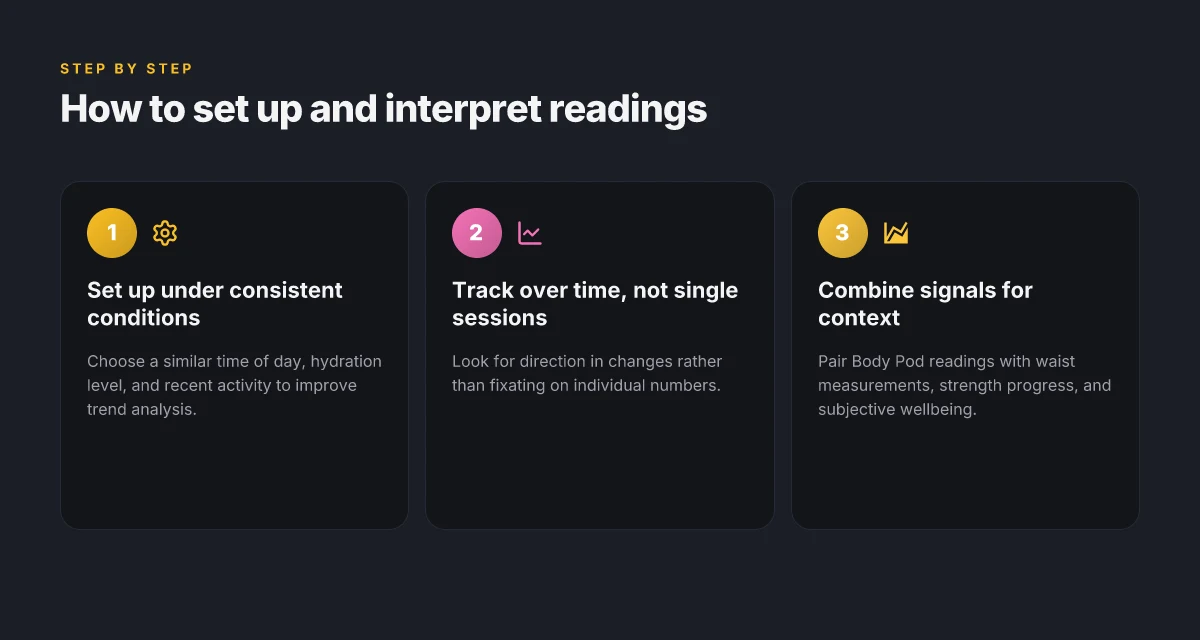
Initial setup matters. Place the Hume Pod on a hard, level surface and schedule your measurements for a consistent window each day or week. I found that a fixed routine helps you see fat loss or muscle changes more confidently, not just day-to-day fluctuations. If you change the environment, expect a blip in readings. The more you standardize, the more useful the trend line becomes. Consistency is the signal you should trust, not any single snapshot. Keep the device in a quiet corner of your home where you don’t shift the placement week to week. A steady home spot reduces variation from air currents or surface texture. What livfresh toothpaste reviews reveal about real-world gum health claims
What can sway the numbers
Hydration, time of day, and recent activity all tilt BIA readings. A glass of water, a late workout, or a late-evening meal can nudge body impedance measurements in small ways. You don’t have to eliminate all variability, but you should acknowledge it. If you track your waist circumference alongside Body Pod readings, you’ll get a more complete picture of where you’re headed. This combined approach helps separate meaningful change from short-term noise.
Interpreting readings with a fuller picture
Pair Body Pod data with a few practical checks: waist measurements, progression in strength, and subjective wellbeing. A rising or stable fat percentage paired with increasing lifts and growing energy tends to signal genuine progress, even if the scale nudges in the wrong direction one morning. Conversely, a sudden dip in readings without any accompanying strength or mood improvement should raise questions about recent hydration or timing rather than a magical shift in body composition.
From a reliability standpoint, I cross-referenced the discursive notes around the Hume Pod, including disclosures and peer-review status. The evidence suggests you should treat the readings as guidance within a broader home-monitoring routine, not as a stand-alone verdict. When you combine the Body Pod with other metrics, you’ll get a healthier, more actionable view of your fitness trajectory. For contexts like routine wellness tracking, this alignment with daily life is where the device fits best. Think of the Body Pod as a component of a fuller wellness toolkit, not the entire story.
Notes on scope and rivals: the Body Pod sits in a crowded field of home body composition tools. If you’re weighing alternatives, you may also consider devices that offer DEXA comparisons or more granular metabolic data. Brands and devices mentioned in this landscape include stand-alone home scales and clinician-accessible DEXA services. In this space, Hume Health positions the Body Pod as a convenient, at-home option that pairs with simple measurements to improve your overall understanding of body composition. For context, you’ll find parallel discussions in the consumer disclosures and briefings around the device.
Moderation and transparency matter: hydration and timing can swing results, so use a fixed protocol. I found the narrative around these tools often emphasizes convenience, while the practical takeaway is disciplined measurement. When in doubt, rely on a pattern over a week rather than a single daily read. What makes LivFresh toothpaste deliver breakthrough gum health benefits in 2026
Alternatives and rivals you should consider for body composition tracking
When you weigh up the Hume Health Body Pod, DEXA remains the gold standard for precision, but it’s not something most homes can access. I compare what you get at home with what clinicians rely on, and what to watch for as you switch between devices. For many people, a home scale is a convenient proxy, not a replacement for DEXA.
Why DEXA still matters for accuracy
DEXA scans provide a direct measure of bone mineral content, fat, and lean tissue with high repeatability. In daily life, you’ll notice the Body Pod and similar devices align with that structure on a broad level, especially for trends over weeks or months. The big caveat is that DEXA’s precision comes from a controlled location and hydration state in a clinical setting. If you want a fixed reference point for fat distribution or regional lean mass, DEXA is difficult to substitute. When you’re calibrating expectations, treat DEXA as the reference benchmark rather than a consumer alternative. For ongoing clarity, look for third‑party validations that compare consumer devices against DEXA benchmarks over time. In practice, any home unit will introduce greater variance in readings as hydration, timing, and posture shift.
Other home devices that lean on the same BIA foundation
Most at‑home devices use Bioelectrical Impedance Analysis with different algorithms to estimate body composition. They vary in how they split measurements by region, what hydration assumptions they bake in, and how they adjust for age or sex. You’ll see some models tout multi‑frequency or segmental BIA to improve granularity, but the reliability of those granules depends on how transparently the manufacturer reports measurement locations and the posture required during reading. In everyday use, expect reasonable tracking for trends, with more noise on single‑session numbers.
How to compare: what to look for beyond the numbers
When you compare devices, ask for transparency around measurement locations, hydration controls, and body segment estimates. Look for explicit notes about where readings are taken on the body, whether measurements are post‑prandial or fasting, and how the device handles limb vs trunk estimates. The more a brand explains its methodology, the more you can trust the date you see on the screen. This matters because even small differences in placement or hydration can swing percentage fat readings noticeably.
Rivals you should know by name
- Bodyspec’s DEXA‑adjacent approach is often cited in consumer discussions for its clear reporting lines and DEXA‑calibrated insights. It serves as a useful reference point when evaluating home devices.
- Other consumer scales from established fitness brands often emphasize broad metrics with simplified explanations. They provide useful trend data but vary in how they present body segment estimates and hydration considerations.
- For a broader context, reviews and consumer reports frequently contrast these devices against DEXA benchmarks and clinical methods to help set expectations.
The main takeaway is that home devices deliver useful trend data, but the gold standard remains DEXA for precision. If you want a practical daily routine, use the Body Pod as a regular check on where you stand week to week, then lean on DEXA occasionally for a deeper read. I dug into the available disclosures and found that transparency about measurement locations and hydration controls largely separates the clearer, more trustworthy products from the rest. When in doubt, cross‑check notable claims with third‑party validations and keep a ledger of how readings shift with meals, hydration, and time of day. For readers eyeing long‑term consistency, remember to document the context of each reading. What Hume Health review data actually tells you about the Body Pod in 2026
From a lifestyle perspective, you’ll likely find that pairing the Hume Health device with periodic DEXA checks gives you a reliable picture of changes in fat and lean tissue over time. And yes, links on this page may earn a commission, which helps keep these comparisons running. For further reading on independent validation, see the preprint on reliability that notes strong repeatability in controlled conditions. Reliable trends beat single‑session accuracy, every time.
What to try next to map the body pod’s real footprint
Hume Health offers a clear lens on what the Body Pod can track, and where it falls short for everyday wellness. It measures core metrics with repeatable routines, yet it doesn’t replace a full picture of health, especially when you consider daily context like sleep quality or stress. The takeaway: rely on the pod for trend spotting, not a diagnosis. I looked at how the device frames steps, respiration, and body composition, then compared that with broader health signals from rivals such as Wellio and BioBeat. That contrast matters because the best weekly routine stitches data from multiple sources, not a single gadget.
If you’re building a weekly wellness loop, lean into a 2-step plan: use the Body Pod to flag shifts, then corroborate with simpler checks, step counts from a phone, sleep timing from a wearable, and mood notes. This keeps you honest about what metrics actually predict how you feel at the end of a day. The bigger pattern is that devices like this shine when they slot into a calm, consistent routine rather than a gadget-driven scramble.
Backup strategy / What to try this week
- Track a 7-day trend in weight and resting heart rate alongside your sleep window to see where the pod’s numbers align.
- Pair a daily 5-minute breath session with a quick confidence check, then review any big deltas on day 7.
- Compare the Body Pod’s readouts with a simple domesticated metric: energy level after meals. If they diverge, reassess usage or guardrails.