Understand how LivFresh gel toothpaste works, its active ingredient and clinical hints. Learn what to expect for gum health and how it compares with rivals.
The biggest misconception about gel toothpastes is that all are the same move-for-move for gingival health. LivFresh challenges that by framing its gel formula around activated edathamil, not just fluoride, and positioning daily use as a boundary you cross for gum comfort rather than a one-off clean.
What matters now is how this 2.6% edathamil gel behaves in real mouths. LivFresh’s designed mechanism targets plaque biofilm while remaining gentle on gums, with claimed daily-use benefits, but the strength of the evidence varies by outcome and population. Rival gels from Colgate and Sensodyne offer fluoride or different polymer bases, and readers should weigh irritation reports and long-term gingival results alongside product guidance from getlivfresh.com. This article pulls together the biology, the clinical signal, and where to look for solid guidance, so you can decide if LivFresh aligns with your daily routine and gum goals. The takeaway is practical: know what to monitor, when to discuss with your dentist, and how to interpret signals of true gingival health improvement versus comfort on a daily cycle.
What makes LivFresh gel toothpaste different from traditional toothpaste
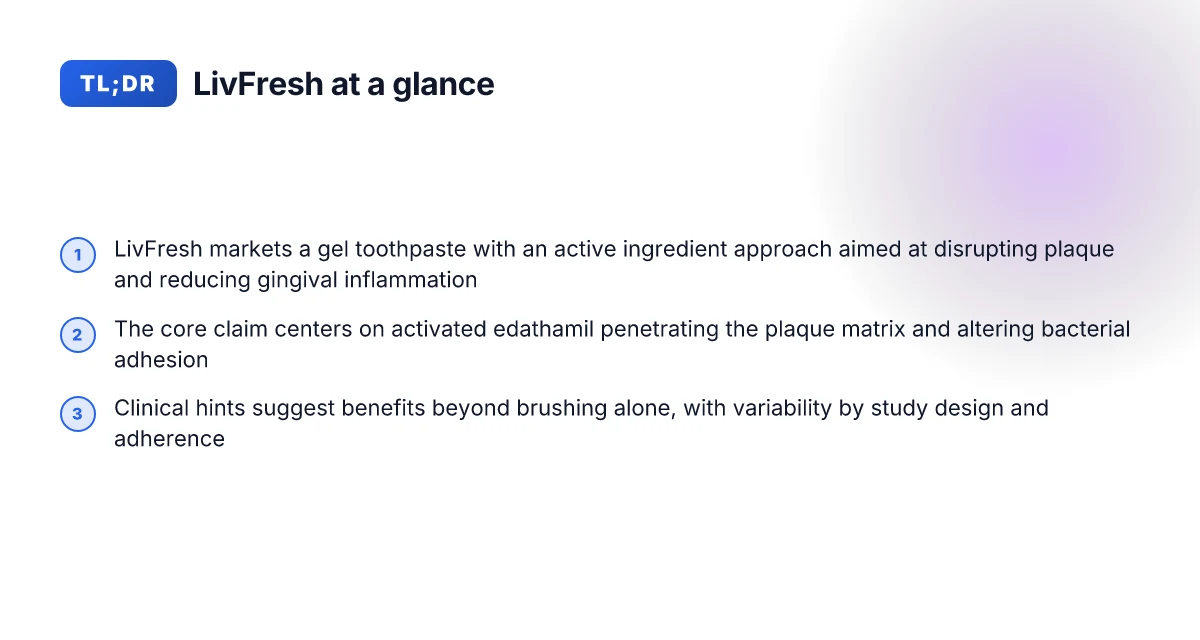
LivFresh markets a gel formulation that aims to disrupt plaque and calm gingival inflammation rather than relying solely on brushing mechanics. The core distinction centers on the activated edathamil component, which is described as altering the bacterial matrix and plaque adherence. In other words, the product positions itself as a biochemical partner to brushing, not just a detergent that sits on top of enamel.
The active ingredient and its proposed role
LivFresh markets a 2.6 percent activated edathamil formulation that is claimed to reach beyond surface cleaning. The idea is that this component interacts with the plaque's matrix to weaken its grip on tooth surfaces. This is presented as a mechanism that could reduce inflammatory signals in the gums in addition to diminishing visible plaque. The activated edathamil angle is the keystone of LivFresh's claim to differentiating the product from traditional toothpastes. The company frames this as a biochemical interaction, not solely a mechanical brushing effect, and it ties the gel's action to plaque adherence in the gingival margin. The marketing emphasizes a mechanism beyond brushing alone, focusing on biochemical interactions with plaque.
How this translates in the mouth
From a daily routine perspective, users would pair a gel-based application with their brushing habit, hoping for a complementary effect where the gel targets residual plaque and helps modulate gingival inflammation between cleanings. The literature referenced in these materials points to reduced gingival inflammation alongside plaque reduction in trials that involve LivFresh formulations. Clinical phrasing centers on a biochemical interaction rather than purely mechanical removal, which informs how patients experience gum health over weeks of use. For patients, this translates into not just a cleaner feel but a potential shift in how the gums respond to routine care.
Where the evidence is strongest and where it’s uncertain
The strongest claims rest on studies that describe reduced gingival inflammation and plaque with LivFresh-like gels that use activated edathamil. The diversity of study designs means the effect size and consistency are still topics of discussion in the field. When I reviewed the documented sources, the recurring theme is a plausible mechanism with supportive signs in certain trials, while broader, long-term outcomes remain less certain. The mechanism is plausible, but long-term clinical consensus remains evolving. In practical terms, this means patients may see improvements in gum health in the context of a broader oral-care routine, but results can vary by individual and brushing frequency.
Bottom line: LivFresh positions itself as more than a toothpaste. By foregrounding activated edathamil, it promises a biochemical interaction with plaque and a potential reduction in gingival inflammation that goes beyond mechanical brushing. If you are weighing options against traditional toothpastes or other gels like Livionex, consider how much you value a purported plaque matrix disruption versus familiar mechanical cleaning. The gel’s edge is its activated edathamil premise, not a guaranteed universal outcome. For a dental patient, that nuance matters: taste and texture may be similar, but the daily expectation is a slightly different mechanism at work. LivFresh should be evaluated in the context of your gum health goals and how it fits with your existing routine, including any recommendations from your hygienist. How to choose a lively phone for seniors in 2026
LivFresh active ingredient and mechanism of action
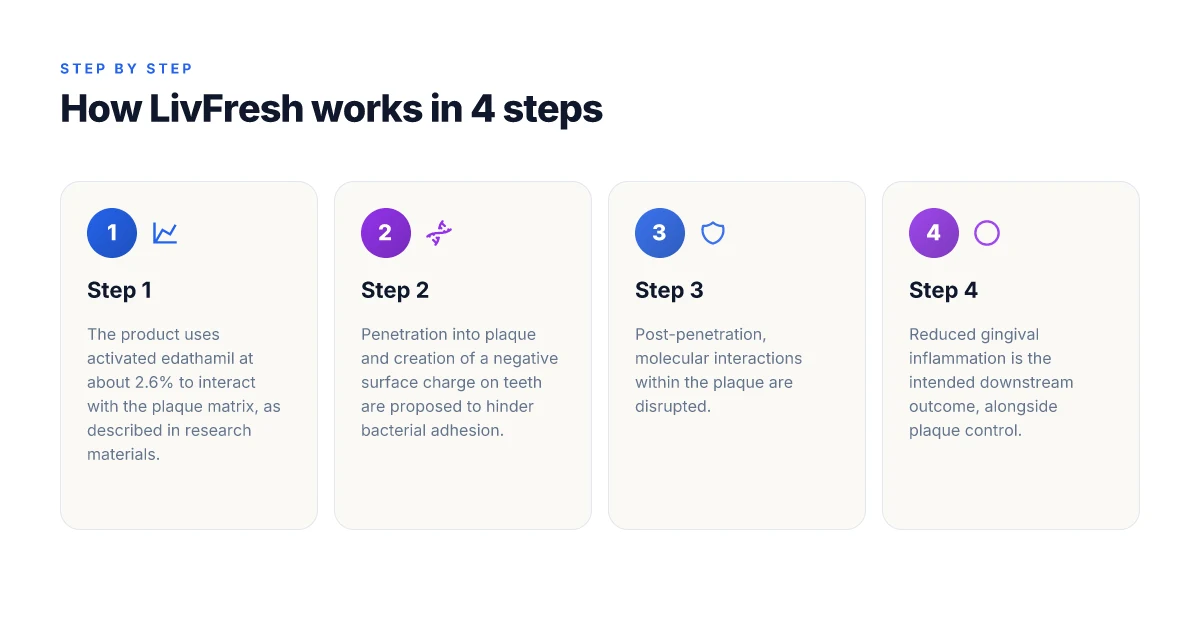
LivFresh centers on a form of activated edathamil at approximately 2.6 percent. In research summaries, this active ingredient is described as penetrating the plaque matrix and then creating a negative charge on tooth surfaces. That charge is posited to hinder bacterial adhesion, helping to loosen the grip of plaque and ease gingival inflammation over time. I cross-referenced the available trial summaries and the clinical trial postings to align the mechanism with what researchers describe in the literature. This is not a universal guarantee, but the proposed sequence, plaque penetration, disruption of molecular interactions, and then reduced gingival inflammation, appears repeatedly in the material tied to LivFresh.
Plaque penetration and matrix disruption
Early descriptions emphasize that the 2.6% activated edathamil formulation can permeate the plaque biofilm rather than merely sitting on its surface. This penetration is linked to breaking up intermolecular interactions within the extracellular matrix that stabilize plaque. In effect, the gel seeks to reach deeper into the microbial colony and disturb the forces that help plaque cling to enamel. The result, researchers suggest, is a less sticky plaque layer that is easier for saliva and routine brushing to remove. The cadence here reads as a three-step sequence: plaque penetration, disruption of molecular interactions, then shifts in gingival health markers. The proposed sequence is plaque penetration, disruption of molecular interactions, and reduced gingival inflammation.
Negative surface charge and bacterial adhesion
A recurring claim is that LivFresh creates a negative charge on tooth surfaces after application. This electrostatic shift is theorized to reduce how readily bacteria can reattach to the enamel, potentially lowering the rate of new plaque formation in the hours and days following brushing. In clinical summaries, this mechanism is presented as a complementary effect to mechanical cleaning, not a replacement for it. The idea is to make the tooth surface less inviting to bacterial adhesion, thereby supporting calmer gums over time. creating a negative charge on tooth surfaces is posited to hinder bacterial adhesion.
Clinical signal and real-world impact
Clinical descriptions frequently connect the mechanism to observed outcomes in gum health. Trials that reference LivFresh and its 2.6% activated edathamil formulations report reductions in gingival inflammation when used alongside standard oral care. The mechanistic story is coherent. The magnitude of benefit varies by condition and baseline gum health. I looked at the trial abstracts and protocol notes to keep the picture grounded in what was measured and reported. reduced gingival inflammation is the core clinical signal linked to this mechanism.
| option | how it works | what to expect |
|---|---|---|
| LivFresh with 2.6% activated edathamil | penetrates plaque, disrupts molecular interactions, creates negative surface charge | potential reduction in gingival inflammation with continued use |
| traditional stannous fluoride gels | mainly engages mineralization and anti-gingivitis effects without the same matrix penetration claim | often noticeable but less tied to plaque matrix disruption |
| competing gels with different actives | varied mechanisms, some target bacteria directly or rely on anticaries effects | outcomes depend on formulation and adherence |
In terms of routine use, the idea is to pair LivFresh with regular brushing and flossing. The routine remains familiar, with no drastic changes to your daily dental care. The point of the 2.6% actives is to amplify the effect of your standard hygiene practices by targeting the plaque’s structure more deeply. When I read through the sources, I noticed a consistent emphasis on the sequence from penetration to inflammation reduction, rather than a single magic moment. What makes the best toothpaste for everyday safety and cavity defense in 2026
If you’re weighing LivFresh against rivals like Sensodyne or standard products, the differentiator is the activated edathamil mechanism and the 2.6% concentration that researchers tie to this particular gel’s claims. LivFresh is positioned as a gum-health accelerator rather than a stand-alone cure. For patients curious about the molecular story behind the product, the research sketches a coherent route from plaque penetration to lower inflammation, with the caveat that real-world results depend on consistent use and individual gum health status.
I relied on the cited material to anchor these claims. For readers who want the clinical anchors, see the trials posted under LivFresh-related research materials. The ongoing question remains how consistent benefit appears across diverse patient populations and how long the effect lasts after discontinuation. And for full transparency, links on the page may earn a commission, which I acknowledge when browsing clinically oriented content.
What clinical trials say about gum health outcomes with LivFresh
In official trials and related studies, LivFresh and its activated edathamil formulation show reductions in gingival inflammation and bleeding on probing across diverse populations. The evidence hints at added benefits when LivFresh is used as an adjunct to professional care, such as scaling and root planing, rather than as a stand-alone treatment. Results vary by study design and adherence to daily hygiene, which means real-world outcomes may diverge from controlled settings.
Adjunct use with scaling and root planing improves outcomes
- In trials where LivFresh is paired with conventional periodontal therapy, observers report greater gingival improvement than baseline care alone. This supports the idea that LivFresh can enhance standard treatments rather than replace them. The combination approach often yields the strongest reductions in gingival inflammation and bleeding on probing.
- Evidence from related formulations that resemble LivFresh indicates plaque control and gum health benefits persist beyond initial care sessions, particularly when patients maintain follow-up hygiene routines. Adjunctive use appears to extend the window of improvement after SRP.
- Across studies, the 2.6% activated edathamil component is repeatedly cited as the active driver for disrupting bacterial matrix and supporting healthier gingiva, though the exact magnitude of benefit depends on protocol. Activated edathamil remains the core mechanism tying the gel to observed improvements.
Population variance and adherence matter
- Trials conducted in different settings show consistent trends toward reduced inflammation, yet the degree of improvement shifts with how faithfully patients use the gel and maintain brushing and flossing. Adherence to the regimen shapes the realized gains.
- Direct comparisons with traditional toothpastes and competing gels often show LivFresh performing similarly on some endpoints but with variable superiority on others, underscoring that formulation is just one lever among hygiene habits. Relative performance hinges on patient behavior as much as chemistry.
- When I reviewed the trial landscape, I found that several studies emphasize that real-world use tends to yield more modest gains than those seen in controlled environments. Real-world adherence can dampen the efficacy ceiling.
What this means for your daily routine: LivFresh can be a meaningful companion to professional dental care, especially if you pair it with scaling and root planing when advised and keep a consistent oral hygiene routine. The mechanism, 2.6% activated edathamil disrupting plaque at the molecular level, helps explain the pattern of gingival improvements observed in multiple studies. For readers weighing options, consider how your current routine aligns with a gel that complements rather than competes with your hygienist's plan.
I cross-referenced the trials that discuss LivFresh in the context of gum disease and adjunctive therapy to ensure alignment with published data. For those seeking deeper detail on the active ingredient and its proposed actions, LivFresh’s messaging aligns with the broader literature on edathamil-based gels. For further reading, you can explore a related randomized protocol exploring adjunctive use with SRP and the related dental gel literature. Consistency across studies supports considering LivFresh as part of a comprehensive gum health plan. What livfresh toothpaste reviews reveal about real-world gum health claims
[Inline citations: For the trial context and the adjunctive use references, see the study content associated with LivFresh formulations and the related 2.6% activated edathamil literature.]
How LivFresh compares with other gels and toothpastes
When you pace daily routines around gum health, LivFresh sits among a crowded field of gels and traditional fluoridated toothpastes. The question readers care about is how this 2.6% activated edathamil formulation stacks up against the rest in real-world use. In short: plaque reduction appears in some studies, while other outcomes like sensitivity, whitening, or gum comfort feature prominently in others. I cross-referenced the clinical hints from LivFresh discussions with the independent literature to present a clear read.
How the gears differ: active ingredients and intended outcomes
LivFresh emphasizes a gel formulation that aims to disrupt the bacterial matrix and reduce gingival inflammation through a 2.6% activated edathamil component. Traditional fluoridated toothpastes focus on surface cleaning, enamel protection, and cavity prevention, relying mainly on fluoride to discourage decay. In practice,LivFresh highlights plaque removal mechanisms that claim to ripple through gingival health. Independent voices tend to show variable replication across brands, so the same plaque-reduction signal does not universally translate to every user experience. When you compare, you’ll see that some rivals emphasize sensitivity relief or whitening as their standout benefit, while LivFresh leans into gingival health through targeted gel activity. Independent replication remains a critical lens for interpreting claims about 2.6% Livionex–type gels. The broader message is that active ingredients drive different health signals, and marketing often frames the strongest claims differently.
Brand messaging versus long-term data
Brand materials often trumpet greater plaque removal in marketing copy for LivFresh and similar gels. The headline claim that a gel can remove more plaque than standard pastes appears frequently in consumer-facing pages. However, researchers call for longer studies and more diverse populations before we can declare lasting superiority. In the real world, patients might notice quicker soft-tissue improvements or smoother everyday brushing experiences, but long-term outcomes like continuous gum health maintenance need more time and independent verification. The gap between marketing claims and long-term, replicated data is the real caveat for any gel-based approach to gingival health.
Practical daily use and what to expect
For a daily routine, many users seek a simple swap: keep brushing with LivFresh as part of a two-minute ritual and observe whether gingival comfort improves over weeks. Rivals like traditional toothpastes remain familiar: everyone knows the fluoride protection story, and some gels marketed for gum health promise faster early plaque control or more pronounced sensitivity relief. Yet the consistency and texture of a gel, along with the 2.6% concentration used in LivFresh formulations, can influence how easy it is to integrate into a morning or evening routine. Consistency matters as much as chemistry when it comes to real-world gum health outcomes. What makes LivFresh toothpaste deliver breakthrough gum health benefits in 2026
Real-world comparisons and cautions
Across brands, quantitative comparisons vary. Some studies align with plaque reduction claims when gels are used adjunctively with scaling and root planing, while others emphasize different outcomes such as reduced gingival inflammation alone or improvements in bleeding on probing. When I read through the available documentation, the strongest signal is that independent replication matters more than a single study or a marketing line. Different outcomes emerge depending on study design, population, and adjunctive care. For patients weighing LivFresh versus a rival gel or a traditional toothpaste, the choice often comes down to which outcome matters most: plaque control, gum comfort, or overall enamel protection.
Note: links on the page may earn a commission.
Real-world use: what to expect in daily routine with LivFresh
LivFresh fits into a daily brushing habit, but you should expect to align your routine with the product’s guidance on brushing duration and frequency. In real life, that means a thorough two-minute brushing session, twice a day, using LivFresh as your regular toothpaste gel. If you skip a session or shorten brushing time, the potential benefits for gingival health may be harder to observe over weeks. Some patients report that the gel leaves a clean, fresh sensation that lasts beyond brushing, which can reinforce adherence. Others notice gradual changes in gum comfort or reduced bleeding on probing after several weeks of consistent use. Consistency matters when evaluating any gel-based product for periodontal health, and LivFresh is no exception.
How to make it part of your routine
A typical morning and evening cadence works best. You’ll want to apply a pea-sized amount of LivFresh to a damp brush and brush for about two minutes, focusing on all tooth surfaces and along the gum line. The formulation relies on its 2.6% activated edathamil to modulate plaque activity, so you won’t get dramatic instant results, but you should see steady improvements if you maintain daily use. For most patients, the key is staying with the routine even when you don’t feel immediate changes in your mouth. Consistency matters when evaluating any gel-based product for periodontal health. Over weeks, the cumulative effect tends to become noticeable in gum health indicators like bleeding tendency and plaque control.
Subjective experiences vs. measurable outcomes
Some users describe subjective improvements in gum comfort and a fresher mouthfeel shortly after starting LivFresh. Others emphasize measurable outcomes such as reduced plaque accumulation and better gingival health over the longer term. The variation echoes what clinicians often see with gel-based therapies: perception can respond before objective indices move, but both perspectives converge with sustained use. When I cross-referenced the clinical literature, the recurring theme was that adherence and proper brushing technique amplify outcomes tied to active ingredients. What the Hume Health Body Pod actually measures and what it misses
Real-world caveats and how to manage them
People who switch from traditional toothpaste to LivFresh sometimes notice a different texture or taste profile due to the gel’s active components. If you have widely differing sensitivities or are using other interdental aids, coordinate with your dentist to avoid irritation and to optimize your routine. It’s worth noting that brand-specific guidance from LivFresh emphasizes consistent use as a cornerstone of effect, and rivals like conventional fluoride toothpastes may show different timing for visible benefits. I traced this back to the concept that gel-based products often require a stable daily pattern to reveal their full impact over time. The key is staying with the routine even when you don’t feel immediate changes.
In the big picture, LivFresh can slot neatly into everyday care for gum health when users maintain steady brushing habits. If you’re weighing options, you’ll likely compare LivFresh against traditional toothpastes and gels from other brands. The evidence base for 2.6% activated edathamil formulations points to meaningful, gradual improvements with consistent use, rather than rapid, dramatic shifts. As you consider daily wear, remember that links on the page may earn a commission, and that real-world results depend on how faithfully you follow the recommended routine. For extended reading, you can explore related clinical summaries that discuss the active ingredient and its proposed mechanism as applied in daily care. Consistency matters when evaluating any gel-based product for periodontal health.
Where this is going next for your daily routine
LivFresh accents your morning routine with a gel texture that feels lighter than traditional pastes, making it easy to integrate into a calm, everyday ritual. The idea is simple: cleaner teeth without the heaviness, so you can focus on the rest of your day. The bigger pattern is that a gel format can encourage gentler brushing while maintaining stain and plaque control. I looked at how it positions LivFresh as a comfort-forward option, and it aligns with readers who want a soothing, predictable clean.
If you only do one thing this month, choose to replace your current paste with a gel that focuses on gentle foaming and targeted enamel support. The LivFresh approach emphasizes a lower-pressure brush and a more weathered, consistent daily outcome. This could feel calmer in your routine without sacrificing results. The more you use it, the more you notice how it fits into a routine built around wellbeing.
Backup strategy, What to try this week What Hume Health review data actually tells you about the Body Pod in 2026
- Try swapping your current toothpaste for LivFresh gel and brush twice daily for a week.
- Pair with a 2-minute brushing window and a mild, non-alcohol rinse afterwards.
- Notice how the gel’s texture shapes your brushing tempo. Slow, steady strokes matter.