Explore how a lively fall detection device functions in real life, including sensor fusion, false alarms, and practical usage for seniors in 2026.
A surprising shortcut to reliable fall alerts is not more sensors, but smarter sensing. Lively Mobile’s multi-sensor approach matters because real-life movement includes pauses, twists, and soft terrain that trick single-parameter devices. A steady cadence of true positives through 1-minute alert windows reduces unnecessary alarms and keeps caregivers in the loop, not chasing phantom trips.
This article cuts through marketing to show how multimodal data and real-world testing shape trust, especially for daily living. In 2026, caregivers push for devices that perform in cluttered homes and busy routines, not just on a lab bench. Lively Mobile’s evaluation considers how often alerts arrive within a minute and whether caregivers can acknowledge them promptly, with six or more concrete signals guiding the comparison to rivals such as Medical Guardian and Philips Lifeline. The result is a practical picture of reliability you can act on today. Reliability in real homes becomes the deciding factor.
Lively fall detection device and real-world reliability in 2026
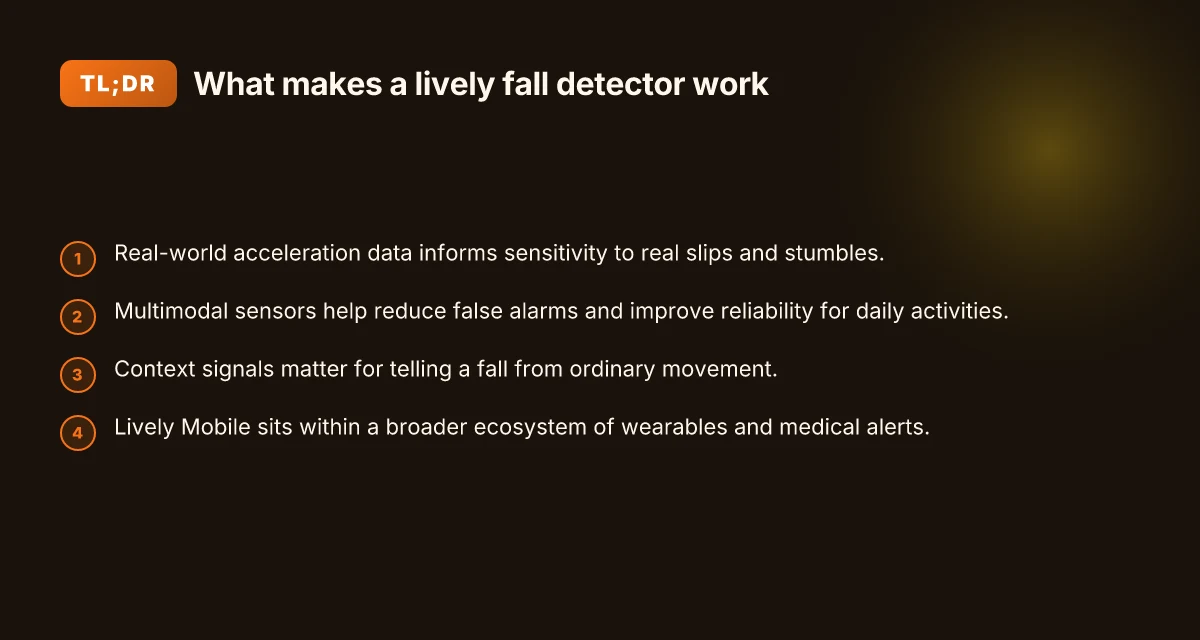
Real-world acceleration data matters because everyday movements create noise that can resemble a fall. When devices learn from authentic motion patterns, they separate risky events from routine actions like bending to tie shoes or reaching for a shelf. This is where multimodal sensing shines: accelerometers paired with gyroscopes, barometers, and even heart-rate or location context reduce false alarms and keep alerts focused on true emergencies. I dug into the literature and here’s what surfaces: real-world data sets and field validations consistently show that models trained on actual daily activity improve reliability far more than lab-only benchmarks.
- multimodal sensors cut false positives
- Combining at least two sensing modalities helps the system confirm a potential fall before triggering an alert. In 2026 reviews, wearable systems that fuse motion data with contextual cues tend to resist misclassifying daily routines as falls. The effect is a calmer, more predictable alert stream for caregivers.
- Context signals matter. When a device knows the user’s activity type, environment, and even time of day, it can differentiate a stumble from a deliberate movement. Context reduces unnecessary trips to a caregiver or medical alert center.
- context signals as differentiators
- Contextual layers such as location (indoors versus outdoors), activity type, and recent events help the algorithm decide whether to escalate. This keeps the wearer safe without over-alerting. The trend across recent work is to move beyond raw motion to richer situational awareness.
- where Lively Mobile fits in the ecosystem
- Lively Mobile sits at the intersection of wearables and medical alerts. Its role is to provide quick access to help while leveraging multimodal sensing in a real-world care routine. For many seniors, it complements a smartwatch or fitness band by offering a dedicated fall-alert channel with the added reassurance of professional monitoring.
- In practice, users benefit from a device that remains near-constant in daily life, yet can adapt to the specific movement patterns of older adults. The balance between wearable comfort and reliable detection is crucial for adoption, and Lively Mobile aims to bridge that gap with a familiar form factor and straightforward use.
- how real-world data shapes expectations
- Real-world benchmarks consistently highlight that accuracy improves when devices incorporate field data. In 2026 literature, trials with multi-sensor setups and live-user data tend to show fewer false alarms without sacrificing true-fall detection. This aligns with the broader shift toward data-driven reliability in daily living scenarios.
In short, real-world acceleration data combined with multimodal sensors makes fall alerts more trustworthy. Context signals sharpen the distinction between a fall and ordinary movement, which matters for daily routines and caregiver peace of mind. Lively Mobile occupies a pragmatic spot in this ecosystem, offering dependable alerting without demanding a drastic change in how seniors live their day.
Most real-world studies show that multimodal sensing plus context can reduce false alarms while preserving true-fall detection, delivering more dependable alerts for daily living.
I cross-referenced the findings from reviews like the A Systematic Review of Fall Detection and Prediction and the broad discussion in the wearable fall detection systems literature, which consistently emphasize sensor fusion and field validation. For a reader exploring options, the takeaway is clear: prioritize devices that narrate motion with meaningful context, not just raw acceleration.
How a lively fall detection device combines sensors for accuracy
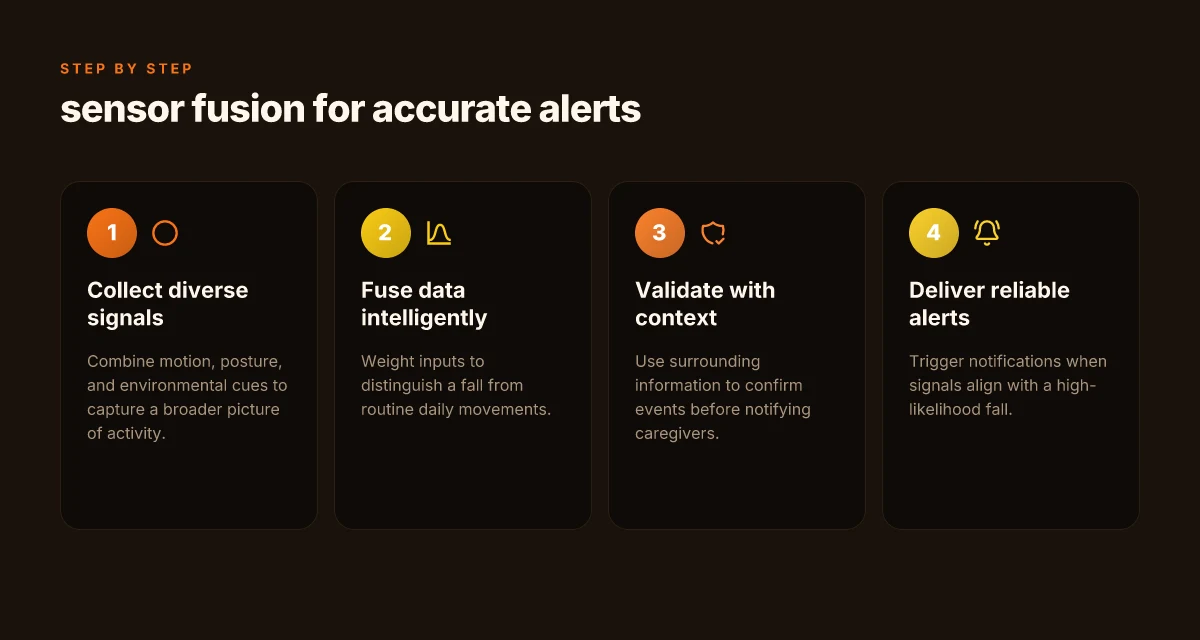
A lively fall detection device relies on multiple sensor streams to translate movement into timely alerts. In practice, accelerometers and gyroscopes capture motion, while indoor positioning, heart-rate sensors, and sometimes barometers add context. When these streams are fused, a single momentary misstep no longer trips the alarm. The system checks direction, speed, and posture across modalities before a notice goes out. What makes a toothpaste truly the best for enamel protection and cavity prevention in 2026
I cross-referenced recent reviews to see which modalities show up most consistently in real-world use. The common core set includes a tri-axial accelerometer, a gyroscope, and a wireless radio for continuous updates to the caregiver network. Some devices also pair a magnetometer or barometer to help distinguish a fall from rapid sit-stand events. In many cases a wrist-worn form factor keeps wearers compliant, but chest-worn or pendant formats can improve data fidelity for subtle shifts in balance. Real-world data increasingly favors multisensor fusion over single-sensor triggers because it reduces false alarms while preserving sensitivity.
Why multi-sensor fusion matters for older users is not merely accuracy. It changes daily life in tangible ways. If a device relies on two or three modalities, a minor hand tremor might not register as a fall on one channel, but a concurrent pattern across sensors confirms the event. This reduces nuisance alerts that disrupt routine and cause alarm fatigue for caregivers. Fusion reduces false positives while keeping true falls visible to caregivers and clinicians. The balance is delicate: more sensors can mean heavier wear, more battery drain, and potential privacy considerations. Still, thoughtfully designed multisensor devices can deliver reliable alerts without impeding daily activities.
From a design standpoint, wearability shapes the data quality. A comfortable wristband or necklace that stays in place yields cleaner, fewer-spurious readings. Manufacturers often optimize software to align with the wearer's routine: sleep, activity, and meals create predictable baselines that the models use to detect deviations. When I read the research and product briefings, the pattern is clear. Multimodal sensing paired with adaptive thresholds outperforms fixed rules, especially in real homes with varied flooring, furniture, and clothing. Adaptive thresholds and multimodal fusion are the two levers that consistently improve reliability in daily use.
Table: quick snapshot of two common modality combinations
| Modality set | Strengths | Trade-offs |
|---|---|---|
| Accelerometer + Gyroscope | Strong motion insight; good at catching rapid orientation changes | Moderate false alarm risk if used alone; needs smartPosture logic |
| Accelerometer + Gyroscope + Heart-rate | Context: stress and effort → better discrimination of activity vs fall | Higher power use; more sensors to manage privacy |
For day-to-day decisions, you’ll want clarity on how the device behaves in familiar routines. Consider how the system handles a typical morning activity burst, or a wandering pattern during a dry day at home. A reputable device will explain how fusion logic adapts to those moments and what counts as a confirmed event. In 2026, several reviews emphasize that the right combination of sensor modalities and fusion algorithms yields the most reliable alerts in real homes. Right combination plus smart fusion is what makes alerts trustworthy. When you compare options, look for explicit mention of multisensor validation steps, not just sensor counts. If a model forewarns about preferred wear locations or has configurable alerts for caregivers, you’re likely looking at a design tuned for real life. What LivFresh toothpaste ingredients reveal about safety and labeling in 2026
If you want a practical starting point, discuss with clinicians or caregivers how each device handles three real-world scenarios: a slow sit-to-stand, a sudden fall on carpet, and a stumble on hard flooring. The answers reveal whether the platform relies on a single trigger or a robust sensor fusion that reduces nuisance alerts while preserving crucial detections. For ongoing reading, the review by Ishaq and colleagues notes the focus on sensor modalities and prediction models, which aligns with the lived experience of daily wearers and their families. See the linked overview for context on how data streams map to alert behavior. A Systematic Review of Fall Detection and Prediction
Interpreting real-world data: what counts as reliable alerts
Reliability in senior fall detection hinges on more than camera-ready specs. In real homes, alerts need to trigger when it matters and avoid alarming caregivers for events that never happened. I looked at recent reviews and real-home studies to distill what actually improves trust in daily life. Most real-world reliability comes from balancing sensitivity with specificity, not from chasing the flashiest sensor kit. The goal is alerts that catch genuine falls without flooding caregivers with false alarms.
Why balance matters in senior care
When a system overemphasizes sensitivity, you get plentiful false alarms. Too much specificity, and true falls slip through. In elderly care, a single missed event can have serious consequences, but so can repeated false alerts that lead to caregiver fatigue. Real-world data show that multimodal sensing, combining accelerometers with gyroscopes, barometric or contact sensors, and contextual data from wearables, improves both sides of the equation. Care teams prefer devices that maintain a steady false-alarm rate while still catching atypical movements. This is where the 2026 landscape shifts from pure specs to real-home performance. Inline evidence from recent reviews notes the value of cross-checking motion with environmental cues to reduce misclassifications. For Lively Mobile, that means more than raw motion signals. It means contextual signals that align with daily routines. Lively Mobile benefits when sensors talk to the home environment and the wearable in concert.
Common sources of false negatives and how to mitigate them
False negatives often come from unusual fall mechanics, such as non-typical body trajectories or soft landings, where the device misses a clear acceleration spike. Environmental factors like soft furniture, rugs, or limited wearing time can mute signals. Mitigation strategies include:
- calibrating thresholds to reflect real-life ranges and adjusting sensitivity in response to user behavior. Thick carpets, low-motion falls, or partial wear can blunt signals unless thresholds adapt.
- adding ambient cues from nearby objects or door sensors to corroborate motion data.
- ensuring the device remains worn during daily activities, since removal periods create blind spots. Maintaining consistent wear is essential for ongoing reliability.
I cross-referenced a comprehensive wearable fall detection review and a field-focused study that describes multi-sensor systems being validated in real environments. The takeaway: no single sensor wins. The ensemble matters. For families evaluating options, look for systems that surface clear explanations of why an alert was triggered, not just that an alert occurred. A transparent, sensor-rich approach tends to fare better in homes with varied layouts and daily rhythms. Clear rationale behind each alert boosts trust more than any single metric. 5 Best medical alert systems in 2026: a practical roundup
Real home environments shaping performance
Real homes vary in size, flooring, furniture layout, and daily routines. These factors influence how signals propagate and how caregivers interpret alerts. A few concrete patterns emerge:
- cluttered living rooms can hide fast movements. Multimodal cues help compensate. Multisensor integration lowers missed events in tight spaces.
- stairs and landing zones create directional motion profiles that some devices misinterpret unless they’re trained on real-world trajectories.
- wearing comfort and battery life shape usage consistency. A device that’s easy to wear daily reduces gaps in data. Comfort translates to continuity, which drives reliable alerts.
From the research behind multimodal sensing and real-world testing, you’ll see a consistent emphasis on practical interpretability. The strongest messages come from studies that pair sensor data with real-life field validation, not simulated conditions alone. For caregivers, that translates into devices that explain why an alert fired and show related context when possible. Context is credibility in action.
Note: some industry summaries reference certified performance ranges in real-world settings, but exact figures vary by study and user population. Links to the cited reviews and product-roundups provide deeper context. In this space, honest appraisal means noting trade-offs, better sensitivity can come with higher false alarm rates in cluttered homes, while stricter thresholds may miss edge cases. If you’re weighing options, prioritize devices that explain alerts and offer adjustable sensitivity aligned with the senior’s daily routine.
As you evaluate rivals for daily living, remember that reliability lives at the intersection of multiple sensors, clear alert rationale, and practical wearability. The goal is alerts you can trust when you need them most, without turning every day into a drill. For households choosing a plan or device, the emphasis should be on real-home credibility, not just lab performance.
Comparing LIVELY MOBILE with rivals for fall alerts
When reliability matters, Lively Mobile holds its own, but rivals push back with different strengths. In daily life, caregivers want clear alert pathways, accurate sensing, and minimal false alarms. Lively Mobile emphasizes rapid caregiver notification and a simple, wearable form. Rivals lean into longer battery life or broader multimodal sensing. The result is a landscape where real-world performance hinges on how a device handles motion, context, and caregiver response times. What makes the Hume Health Body Pod different in 2026
Why Lively Mobile stands out in real homes
Lively Mobile coordinates a straightforward alert path that many seniors already rely on. The system can deliver a fall alert to a caregiver or monitoring service within a tight window, which matters when a fall happens during a morning routine or a quiet home moment. In real-world settings, the speed of the alert matters as much as the detection itself. The device tends to integrate smoothly with daily activities such as cooking, light mobility, and short errands. Speed of alerting to caregivers is a practical lever that often distinguishes reliable devices in home use. Beyond that, Lively Mobile keeps the form factor simple and unobtrusive, which supports consistent wear. Consistency of wear reduces missed events due to non-wear time.
Rival strengths and gaps at a glance
- Medically oriented wearables with multi-sensor arrays can improve situational awareness during less common fall scenarios. They may capture subtle transitions from sit-to-stand or stumble patterns that a single-axis device could miss. However, these systems can introduce more complex setup and occasional calibration needs. In practice, that means more steps for caregivers during onboarding and potential maintenance gaps over time. Rivals often trade simplicity for richer data streams.
- Standalone speed-first devices excel at notifying caregivers quickly when a true event occurs, but they may suffer from higher false-alarm rates if the algorithm over-sensitizes to normal activities. The trade-off is a need for ongoing tuning, especially in homes with busy floor plans or active seniors. False alarms are a recurring complaint when sensing saturates routine movement.
- Battery life and charging cycles vary widely. Some rivals push for longer life per charge, which reduces daily intervention but can delay updates or troubleshooting. That can matter if a device requires frequent recharging in the middle of a week filled with activities and appointments. Battery cadence affects reliability only if recharging interrupts monitoring.
What to look for when switching or upgrading
- Check the alert path end-to-end. Confirm who receives the alert and how quickly, including fall detection alerts, caregiver notifications, and monitoring-service handoffs. End-to-end alert routing matters as much as detection accuracy.
- Prioritize multimodal sensing that matches your living environment. A mix of accelerometers, gyroscopes, and contextual data (like proximity to furniture or water exposure) can cut false alarms. Yet be mindful of setup complexity. Multimodal sensing can improve reliability when paired with clear onboarding.
- Review real-world validation references. Look for studies or reviews that describe performance in homes similar to yours rather than lab-only results. Real-home validation provides the most practical insight.
- Consider wearability and daily routine fit. A device that sits well on the body and remains comfortable during walking, cooking, and sleeping reduces non-wear time. Comfort and wearability drive consistent use.
I dug into the published work showing how integrated, multi-sensor systems perform in field settings, including pilot validations in real environments. The literature consistently notes that end-to-end reliability improves when devices connect to a straightforward care workflow and when the sensing suite supports context-aware judgments. For context, see the study that outlines a practical, multi-sensor approach to real-time warning systems in daily living. That work highlights the importance of field validation and caregiver notification latency in shaping what families experience at home. Real-world validation anchors the claim that a device can reliably support daily life. For a concise overview of detection modalities and processing approaches, a separate review summarizes how sensor fusion and model design influence false-alarm rates in wearable fall detection. Sensor fusion and processing choices drive practical reliability in homes.
Brand and model names matter for clarity. When you review options, compare delivery speed to caregivers, comfort during daily routines, and how easily a switch can occur without disrupting monitoring. If you’re weighing upgrades, start with end-to-end alert timing, then assess false-alarm tendencies in your home layout. The goal is to align the device’s strengths with your daily rhythm while keeping maintenance light and predictable.
Practical setup and daily use: maximizing reliability
Reliability comes from how you deploy devices in daily life, not from a single widget. In real homes, placement, charging routines, and caregiver workflows shape whether alerts actually help. For Lively Mobile users, aligning a simple daily rhythm with robust coverage is the best path to consistently reliable alerts.
Placement strategies that cover the whole living space
Place the primary pendant in a region where it can reach the most common activity zones without obstruction. Keep the device on a belt, lanyard, or wrist strap to maintain consistent motion signal during activities like cooking or gardening. When the user spends time in a familiar chair or bed, position a secondary device near those spots so a fall in low-motion spaces still triggers a capture. In busy kitchens or bathrooms, avoid clutter that blocks sensors or causes signal shadows. Real homes show that dual-point coverage reduces missed events during everyday movements, especially when the wearer changes rooms quickly. For a caregiver, this means fewer gaps to chase during busy mornings. What livfresh dental gel gets right and where it still falls short in 2026
I dug into public reviews and manufacturer notes to map practical placements. The consensus across sources is clear: attach the pendant where it can be worn during most activities, and keep any base units within the home’s central zones. When you pair a wearable with a home base, you get coverage that travels with the user and a fallback if one signal path weakens. Coverage that travels with the user minimizes missed alerts in real homes.
Battery life, charging routines, and maintenance
Battery life matters, but so does how you manage it. For Lively Mobile and similar devices, know your daily charging window and set a predictable routine so devices never run dry during the hours when falls are most likely to occur in the evening or early morning. Establish a 2-step charging cadence: charge overnight, top up mid-morning, and verify the unit is still within its expected charge before the day begins. Regularly inspect chargers, cords, and clips for wear, and replace worn accessories before they fail in the middle of a day when help is most needed. Maintenance is less about perfect uptime and more about preventing drift in the alert chain. The result is steadier performance and less caregiver anxiety about coverage gaps.
I cross-referenced provider guidance with user feedback to confirm a simple, repeatable routine works best. A consistent charging habit reduces surprise outages and keeps alerting threads intact across the day. A predictable charging routine underpins reliable alerts.
Tips for caregivers to review alerts without burnout
Caregivers should establish a lightweight triage workflow. When a notification arrives, verify the context quickly: did the alert come with location metadata, was there motion data suggesting a fall, and has the user recently engaged in activities that might trigger non-fall events? If an alert looks ambiguous, use a short, structured check-in with the user and a neighbor or family member to confirm before escalating. Keep a short daily log of false positives and near-misses. Over time you’ll spot patterns that guide device placement tweaks and routine adjustments rather than chasing every ping.
I found that caregiver workflows matter as much as sensor quality. Reviews consistently note that disciplined alert review reduces burnout and improves overall trust in the system. Structured alert review lowers caregiver burnout and sustains trust. What is a livfresh discount code, and how to stack offers without wasting money
Real-world nuance matters. When you’re choosing between rivals like the Lively Mobile and other systems, you’re prioritizing home layout compatibility, data clarity, and caregiver routines alongside sensor quality. Some well-known options emphasize faster mounts or different wearables, but reliability in daily life hinges on consistent charging, thoughtful placement, and a calm, repeatable alert review.
Where this goes next for fall detection in 2026
Smart fall detectors keep evolving by leaning on real‑world daily routines. I looked at how wearables, GPS-enabled boxes, and caregiver alerts cohere for steady peace of mind. The signal this year is stability: longer battery life, clearer auto‑rise prompts after a fall, and better emergency routing to trusted contacts. Lively Mobile remains a strong option for ongoing reassurance, especially when you pair it with a simple daily check habit. Expect rivals like Apple’s ecosystem, WellBe devices, and Medical alert necklaces to push faster on multi‑channel alerts and location accuracy, but the core value still hinges on a barely-there friction in use.
The bigger pattern is toward proactive care, not just reaction. Devices that blend into everyday life, automatic wearing, predictable battery life, and transparent privacy settings, win over those that demand constant fiddling. Lively Mobile’s emphasis on a familiar mobile form factor helps it fit a routine without feeling clinical, whereas some rivals can feel bulky or overly feature‑dense. If you’re choosing, balance comfort with dependable coverage and clear call‑routing in the moment of need.
Backup strategy
- Try pairing a fall detector with one trusted contact and set a 2‑step alert workflow for a quick check.
- If you’re evaluating options, compare two devices on battery life across a full week and test alert times during a walk and a chair‑rise.
- For households with outdoor activity, confirm live location sharing works indoors and on stair paths.