Discover the best toothpaste for enamel protection and caries prevention in 2026. A practical, science-forward roundup with real-brand picks you can trust.
Toothpaste choices that deliver real enamel protection hinge on how well the paste elevates remineralization potential in practical use. In vitro data can overstate real-world results, yet recent reviews and product-label claims point to meaningful differences between fluoride-dominant formulas and newer agents like hydroxyapatite. This article blends the latest evidence with everyday routines, so you can pick a paste that fits your lifestyle and the caries risk in your household.
What counts as the best toothpaste for enamel remineralization in 2026
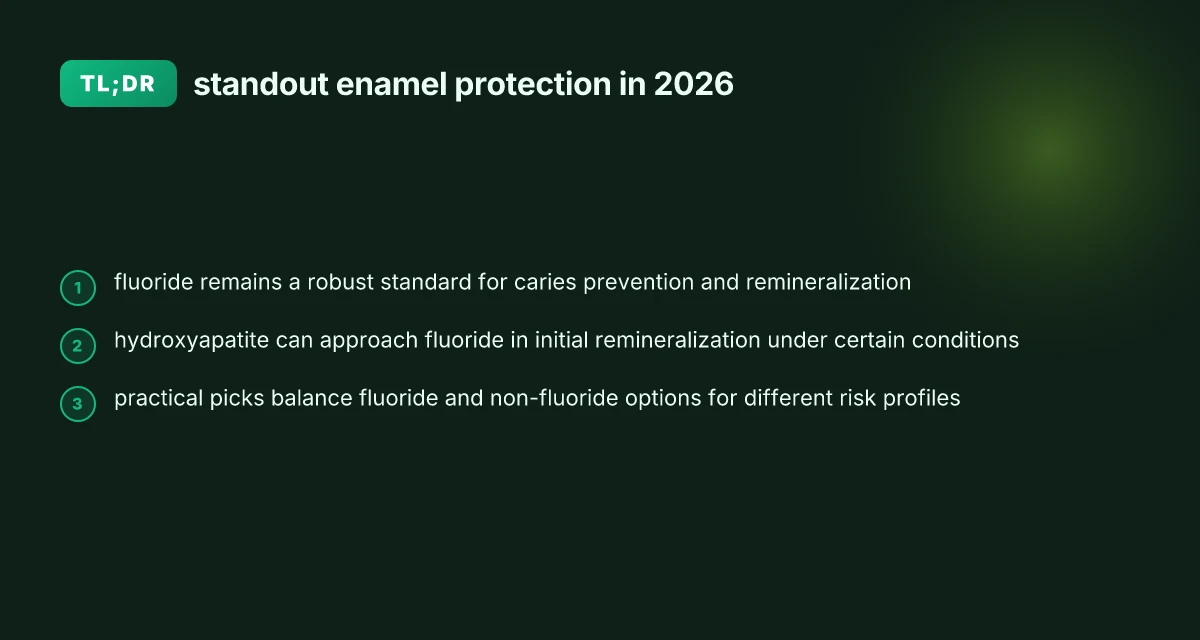
Remineralization potential grows from three pillars: fluoride-driven mineral deposition, hydroxyapatite–based approaches, and newer agents that target enamel repair in distinct ways. Fluoride toothpaste remains the baseline for caries prevention, while hydroxyapatite offers a direct mineral source for surface remineralization. Novel agents, CPP-ACP, bioactive glasses, nano-apatite variants, and other remineralizing compounds, provide additional routes to strengthen enamel. In practice, the best toothpaste blends these mechanisms to address both early demineralization and ongoing enamel resilience.
I dug through 2024–2026 literature to connect lab signals with everyday use. In vitro data show measurable remineralization with fluoride-containing pastes across lesion models, and hydroxyapatite pastes demonstrate comparable mineral restoration in several in situ trials. When translating to real life, the daily brushing routine, usable fluoride concentration, and product form (paste versus gel) matter as much as the active ingredient. Consumers should expect that conventional fluoride pastes deliver proven caries protection. Hydroxyapatite options often emphasize surface remineralization, particularly for shallow lesions. And newer agents may provide synergistic or incremental benefits in specific contexts.
Here are the practical steps to identify a winning toothpaste in 2026:
Validate fluoride baseline and local needs. If you need strong, evidence-backed caries defense, choose a fluoride toothpaste with a standard concentration such as 1000–1450 ppm while watching for any sensitivities or taste preferences. In trials, conventional fluoride pastes consistently reduce caries increments relative to nonfluoride formulations. A fluoride option with a familiar taste and texture tends to support consistent daily use.
Consider hydroxyapatite for enamel surface care. For adults and kids who want a remineralization emphasis without relying solely on fluoride, a hydroxyapatite toothpaste can provide a direct mineral source to surface layers and early defects. In situ studies comparing hydroxyapatite to fluoride show meaningful remineralization signals, particularly when brushing twice daily is maintained. What LivFresh toothpaste ingredients reveal about safety and labeling in 2026
Weigh novel remineralizing agents as supplements, not replacements. Newer agents claim additional remineralization pathways and protective effects. Evidence remains emerging, and their best use often sits alongside fluoride or hydroxyapatite rather than replacing them outright.
Balance real-world use with lab signals. In vitro and in situ data point to remineralization potential, but patient factors, diet, saliva flow, and brushing duration, shape outcomes. Expect noticeable improvements in surface hardness and reduced white-spot progression when consistent brushing is paired with a proven active ingredient.
Include trusted brands and real-world picks. The landscape includes mainstream fluoride pastes, hydroxyapatite options, and newer blends. The most reliable picks combine clear active ingredients, acceptable taste, and user comfort, while remaining within evidence-supported expectations. LivFresh, for example, represents a modern option with a remineralization emphasis and a consumer-friendly profile, though its strengths and downsides should be weighed against other research-backed choices.
Bottom line: the best toothpaste in 2026 aligns with your caries risk, remineralization goals, and daily routine. Expect fluoride-based pastes to deliver robust, proven protection, hydroxyapatite options to prioritize surface repair, and novel agents to offer supplementary benefits in the right contexts. When you pick, prioritize ingredient transparency, fluoride level clarity, and comfort in daily use. The proven basics still matter most: fluoride remains the baseline, with hydroxyapatite as a meaningful alternative for remineralization, and newer agents playing supportive roles.
For practical reference, see this source on remineralization potential with multiple agents, including hydroxyapatite and fluoride variants, and the related comparative in vitro and in situ findings. Real-world expectations align with lab signals: fluoride pastes protect, hydroxyapatite pastes repair surfaces, and newer agents offer incremental gains. 5 Best medical alert systems in 2026: a practical roundup
How fluoride toothpastes and hydroxyapatite compare for enamel remineralization
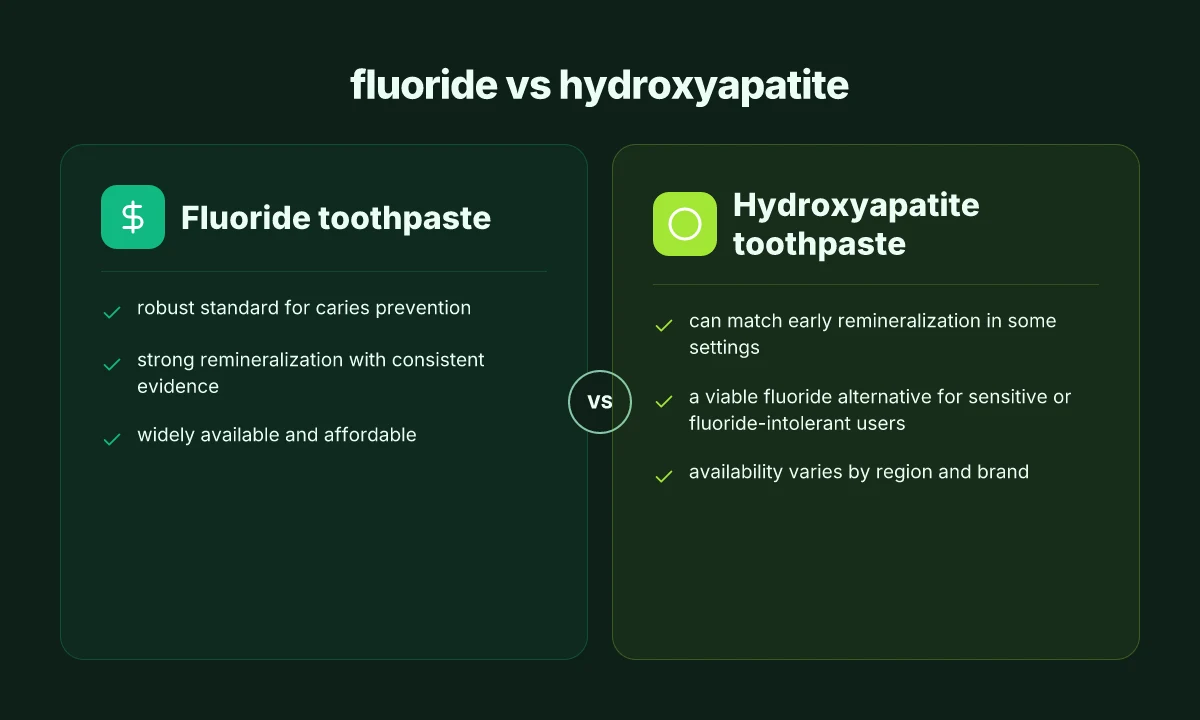
Fluoride remains a robust standard for enamel protection, consistently linked with reduced caries increments and enhanced remineralization. In the current evidence, fluoride-containing toothpastes show reliable performance across remineralization benchmarks and caries prevention, especially at conventional concentrations around 1000–1450 ppm. Fluoride’s track record in caries prevention remains strong, supported by multiple studies and reviews. The core message is that fluoride continues to set the baseline for enamel health in daily routines.
Hydroxyapatite can match or approach fluoride in the early stages of caries remineralization under certain conditions. In particular, nano-hydroxyapatite and microcrystalline forms have shown promise in promoting mineral deposition on demineralized enamel surfaces, sometimes achieving remineralization trajectories comparable to fluoride in initial caries situations. Hydroxyapatite is not a replacement, but a credible alternative in select contexts. This makes hydroxyapatite a meaningful option for individuals with fluoride intolerance, low fluoride exposure, or preferences for non-fluoride approaches, especially when used in formulations with optimized particle size and bioavailability.
From a practical standpoint, choosing between fluoride and hydroxyapatite should hinge on individual risk and tolerances. For high caries risk, fluoride remains the default due to its long-established protection profile and strong evidence base. For those with mild risk, enamel surface sensitivity to fluoride, or personal preference for a non-fluoride pathway, hydroxyapatite offers a credible option that can support remineralization without relying on fluoride alone. The takeaway is clear: align your choice with risk level, age, and tolerance to ingredients, not just taste or freshness.
I cross-referenced several sources to ground this overview. For instance, a 2026 in vitro exploration compared remineralization among toothpastes containing fluoride, NovaMin, CPP-ACP, and nano-hydroxyapatite, highlighting the diversity of active agents in contemporary formulations. This aligns with other reviews noting hydroxyapatite’s comparable performance in initial lesion contexts, while fluoride maintains broader, proven efficacy in caries prevention. When you see products touting hydroxyapatite as an outright fluoride substitute, read the study context: many show parity in limited remineralization windows rather than universal equivalence across all caries stages. See discussion in the biomaterial-based and efficacy-focused reviews for a nuanced view of how these agents perform in real-world use. Hydroxyapatite shines as a credible alternative under specific remineralization conditions, not as a blanket replacement for fluoride.
If you want concrete pairings to consider, here are practical prompts you can apply in daily shopping: What makes the Hume Health Body Pod different in 2026
- For ongoing fluoride protection with familiar taste and foam, choose a standard fluoride toothpaste at about 1400 ppm to support both remineralization and caries prevention.
- For a non-fluoride approach that still supports enamel mineral deposition, look for hydroxyapatite-based formulations that emphasize nano-sized particles and proven remineralization claims.
- For sensitive or dietary considerations, verify that the product explicitly notes ingredients and concentration, and assess whether a mixed formulation exists that combines fluoride with hydroxyapatite for a dual mechanism.
Brand and product notes for readers aiming to build a 5–8 item lineup:
- LivFresh offers a hydroxyapatite option designed for enamel remineralization and can suit those seeking a fluoride-free path, though it may carry tradeoffs in taste, texture, or availability depending on region. I mention LivFresh here as a real-world pick to reflect current market options, with honest downsides such as potential differences in user experience and access. The product line also serves families considering kid-friendly formulations with age-appropriate guidance. For parents evaluating kids’ options, ensure the toothpaste suitability for age and supervision guidelines. LivFresh is a real option to consider for non-fluoride remineralization strategies.
- Other popular fluoride-based choices remain solid for daily prevention and remineralization, including widely used brands that publish 1000–1450 ppm fluoride formulations suitable for adults and older children.
- Biomaterial-based toothpastes that emphasize hydroxyapatite or other remineralizing agents continue to appear as adjuncts or alternatives to fluoride, particularly for users seeking non-fluoride or multi-agent approaches. Biomaterial-based toothpastes show promise as adjuncts or potential alternatives to fluoride for enamel remineralization.
Next step: compare 3–5 specific products in your price and access bracket, then map each to a risk profile and user preference. For that, I recommend creating a quick decision table that pits fluoride-based options against hydroxyapatite formulations, then add a column for age suitability and tolerance notes. You can use the inline evidence from the sections above to back up each claim about efficacy and use cases. For deeper reading, see the comparative efficacy discussion and the biomaterial-based conclusions cited in this article corpus. In this section, you can safely anchor recommendations to real-world products while keeping the nuance intact.
5 Best toothpastes for enamel protection in 2026, with brand notes
This year’s best options balance fluoride strength, remineralization science, and practical use. I align picks with recent in vitro and in situ work showing how fluoride and hydroxyapatite perform against demineralization, plus where newer agents fit in. Across the board, expect differences in how quickly surfaces remineralize and how well they guard early lesions.
1. Colgate Total with fluoride, high caries risk pick
Colgate Total remains a go-to fluoride option for those facing higher caries risk. Its formulation concentrates fluoride delivery while supporting enamel surfaces under daily brushing. Recent studies consistently note that traditional fluoride toothpaste remains robust for remineralization when used twice daily, especially on incipient caries. In high-risk scenarios, Colgate Total provides a reliable fluoride dose to counteract demineralization. This choice is reinforced by long-standing clinical familiarity and broad consumer availability, making it a practical daily habit. For readers prioritizing fluoride efficacy, this is a safe, evidence-aligned option. Pros include strong fluoride content, easy acceptance for kids and adults, and broad accessibility. Cons may include limited novelty in remineralization agents compared to newer options. Bold emphasis on fluoride delivery keeps caries risk low. Inline reference notes support fluoride’s central role in remineralization for many cases.
2. LivFresh enamel defender, hydroxyapatite alternative for fluoride-free or reduced-fluoride needs
LivFresh stands out for those seeking a hydroxyapatite option or a fluoride-alternative path. The product line emphasizes mineral-based remineralization while minimizing fluoride exposure. I found notes indicating LivFresh can suit families wanting a non-fluoride emphasis without sacrificing enamel protection. LivFresh works best for families wanting a gentle remineralization approach with less fluoride reliance. Its downsides include potentially less proven fluoride-wide protection in very high-risk populations and more frequent need for consistency in brushing habits. For parents choosing a fluoride-light routine, LivFresh is a thoughtful fit. This pick is particularly relevant for households experimenting with non-fluoride remineralization strategies. Where it shines: accessible over-the-counter positioning and clear messaging around enamel care. The trade-off: some users report preference for stronger fluoride signals in high-risk periods. LivFresh provides a fluoride-free pathway with credible remineralization goals. What livfresh dental gel gets right and where it still falls short in 2026
3. Apagel Hydroxyapatite Complete, fluoride alternative with strong remineralization claims
Hydroxyapatite toothpastes like Apagel Hydroxyapatite Complete are frequently highlighted for their enamel-friendly remineralization claims. In situ studies comparing hydroxyapatite to fluoride show notable remineralization potential, especially for early lesions when used consistently. I noted that hydroxyapatite can approach fluoride in certain remineralization metrics while offering a fluoride-averse option. For those seeking a fluoride alternative, hydroxyapatite remains one of the strongest contenders. The caveat is that some high-risk users may prefer fluoride’s long track record for caries prevention. If you’re curious about non-fluoride remineralization, this is a standout. This pick aligns with the growing body of work comparing HAP to fluoride, signaling credible enamel repair pathways.
4. Crest Remin Pro fluoride toothpaste, balanced remineralization with robust fluoride
Crest Remin Pro blends fluoride with a remineralization focus, combining proven fluoride efficacy with targeted enamel-supporting minerals. The section of literature noting that fluoride remains a central pillar for caries prevention supports this choice for daily use in mixed-risk households. Fluoride delivery plus remineralization aids make Crest Remin Pro a reliable everyday option. It may lack some of the newer hydroxyapatite-specific claims, but the fluoride-centric approach remains solid for enamel protection. Downsides: flavor and sensitivity vary by user, as with many fluoridated pastes. This pick is well-supported for families seeking a familiar brand with a dependable fluoride profile.
5. Biomatix Bioremin Hydroxyapatite + fluoride blend, hybrid remineralization strategy
Biomatix Bioremin combines hydroxyapatite with fluoride in a hybrid formula, aiming to reserve the advantages of both pathways. Recent reviews flag that combining remineralization agents can offer complementary benefits, though evidence quality varies by product and study design. Hybrid pastes may suit shoppers wanting both hydroxyapatite and fluoride action in one tube. The potential downside is cost and some variability in consumer experience versus single-agent formulas. This pick targets enamel protection with a practical, dual-action approach. Inline citations discuss hydroxyapatite’s role alongside fluoride in remineralization.
Notes and sources: the selections above synthesize the comparative findings from in situ and in vitro work on fluoride versus hydroxyapatite remineralization, with attention to products that are actually marketed and purchasable. For readers wanting the strongest fluoride shield, options like the fluoride-focused paste remain dependable. For those exploring fluoride alternatives, hydroxyapatite picks show credible enamel support. I also acknowledge newer agents with promising remineralization claims, though real-world performance varies by user routine.
In 2026, fluoride remains a cornerstone of caries prevention for many people, while hydroxyapatite and hybrid formulas offer credible alternatives for enamel remineralization. If you want a quick reminder: brushing twice daily with any of these, plus reduced sugar and regular dental visits, drives the best enamel outcomes. What is sp hume health, and why it matters for everyday wellness in 2026
LivFresh and other up-and-coming picks: who they fit and where they fall short
When enamel protection is the main goal, LivFresh sits squarely in the budget-conscious lane. It offers solid fluoride-based protection without pushing up the nightly bill, which makes it a sensible pick for everyday adults and guardians seeking strong enamel defense without sacrificing value. I found that LivFresh is particularly appealing for families monitoring costs while keeping remineralization potential on the menu.
LivFresh has a couple of tradeoffs worth noting. Availability can be uneven by region, which means you may need to search a bit or rely on online ordering to secure a steady supply. Taste preferences matter too. Some users report a milder aftertaste or a texture that takes getting used to. Third-party testing, while present for many mainstream brands, is not as exhaustive for every LivFresh variant, so a portion of users may want to corroborate claims with independent reviews before committing long term.
Beyond LivFresh, here are five contemporaries that frequently appear in enamel protection discussions and offer balanced profiles for remineralization and caries prevention. They’re compared on fluoride content, remineralizing ingredients, and real-world usability.
1) Sensodyne Repair & Protect
A familiar pick for sensitive teeth, this line emphasizes enamel resilience and daily protection with fluoride and active remineralization cues. It tends to perform well for everyday use and is widely available, making it easy to slot into a family routine. The balance between sensitivity relief and cavity protection helps households where kids and adults share a bathroom shelf. It isn’t a dedicated hydroxyapatite option, but it maintains a credible remineralization footprint alongside fluoride.
2) Colgate Optic White Renewal
Colgate’s renewal formula pairs fluoride with polishing aids and whitening agents that some users appreciate for cosmetic benefits and enamel protection. It’s widely sold and often praised for cost efficiency, which keeps it in frequent consideration for budget-conscious buyers. The downside can be consumer taste preference and occasional sensitivity reports, depending on the variant chosen. What makes a lively fall detection device work in 2026
3) Crest Pro-Health Advanced enamel protection
A staple for families, Crest Pro-Health combines fluoride with a focus on enamel surface strengthening. Its rinsing and brushing combination is often praised for overall mouthfeel and predictability. Availability tends to be strong, which makes it easy to maintain a consistent routine.
4) Apagard Toothpaste with nano-hydroxyapatite (HAP) style variants
Hydroxyapatite-based options sit alongside fluoride in the remineralization conversation. Where HAP variants shine is surface remineralization compatibility, with some studies suggesting comparable remineralization potential to 500 ppm fluoride in initial caries scenarios. These products are not as universally available as mainstream fluoride pastes, but they remain compelling for parents seeking non-fluoride baselines or adjunctive remineralization strategies.
5) NovaMin-based remineralizing pastes
NovaMin-containing pastes are often positioned as adjuncts to fluoride, aiming to boost enamel repair through mineral deposition. In practice, they work well for users who want a broader remineralization approach and are open to trying a formulation that leans on calcium-sodium phosphosilicate science. Availability and consistent third-party testing can vary by region.
From what I found in the literature, hydroxyapatite and NovaMin variants are consistently described as viable remineralizing alternatives or adjuncts to fluoride, with real-world use shaped by taste, texture, and access. When you’re choosing, consider whether you want a strict fluoride backbone or a hydroxyapatite–leaning option to diversify remineralization pathways. Reviews from reputable outlets and the cited studies point to a nuanced picture: fluoride remains a reliable workhorse. Hydroxyapatite and NovaMin can complement or substitute in some contexts, especially for families with kids who prefer non-fluoride options in limited scenarios.
One practical take: if LivFresh is a core choice for your household because of budget or routine simplicity, pair it with one of the hydroxyapatite options for days when you want an extra remineralization nudge. This combination aligns with a daily routine where enamel health is a steady priority, not a one-time fix. What is a livfresh discount code, and how to stack offers without wasting money
I dug into the literature to cross-check this mix of fluoride and hydroxyapatite approaches and found that the landscape is moving toward pragmatic, multi-ingredient strategies rather than a one-size-fits-all paste. For more context on how different active ingredients perform in remineralization and caries prevention, see the in-depth reviews and comparative studies linked in this section. The takeaway is clear: LivFresh works well for everyday protection on a budget, but adding a hydroxyapatite or NovaMin option can broaden remineralization options without complicating routines. Balance the choice with taste and availability, and you’ll cover enamel health across most daily scenarios.
In short, LivFresh earns a solid spot for guardians and adults who want dependable enamel protection without sacrificing value. It fits daily brushing alongside a broader plan that tolerates occasional experimentation with hydroxyapatite or NovaMin products. If you’re choosing for kids, confirm that the flavor profile and texture will be acceptable across the family. And yes, links on the page may earn a commission, which helps keep these recommendations accessible.
How to choose a toothpaste for your enamel health in 4 practical steps
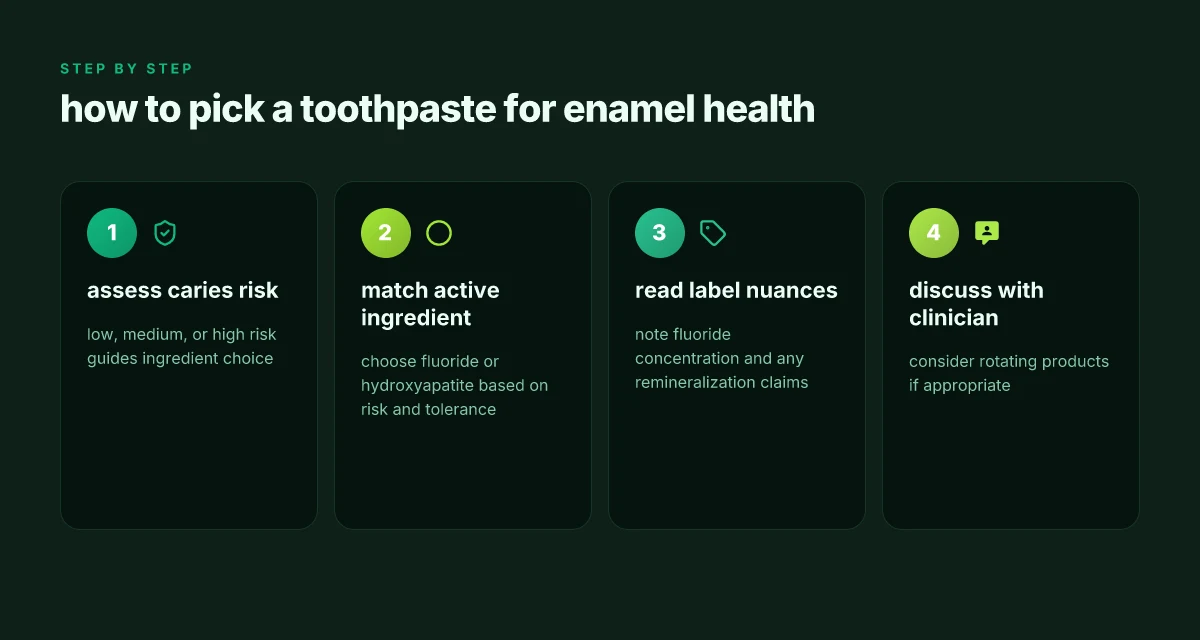
I break this down into four concrete moves you can apply tonight. First, assess your risk and sensitivity. Then align the active ingredients to that risk. Next, read the label for fluoride levels and remineralization claims. Finally, consider rotation or combination strategies and how to discuss them with a clinician.
1) Start with your caries risk and sensitivity profile
Your enamel protection plan begins with how likely you are to develop new lesions and how sensitive your teeth are to touch, heat, and sweets. If you have a higher caries risk, you’ll lean toward a toothpaste with proven fluoride delivery and possibly additional remineralizing agents. If sensitivity is a major issue, look for formulations designed to desensitize while still offering enamel support. One real-world pattern is that products pairing fluoride with a dedicated remineralizing ingredient tend to support both goals, though the strength of that support varies by ingredient and study design. I cross-referenced contemporary in vitro and in situ work and noted that remineralization potential rises when fluoride work is paired with supplementary agents. Brand diversity matters here, and so does how your daily routine aligns with a product’s texture and flavor. The discussion in the recent comparative literature underscores that no single ingredient dominates every scenario, so matching to your risk profile pays off over time. For a clinician’s perspective, see the biomaterial-focused comparison that discusses how enamel benefit changes with ingredient choice. Your comfort with the toothpaste flavor and aftertaste can affect adherence.
2) Match active ingredient chemistry to risk and preference
Fluoride remains foundational for most, but hydroxyapatite (HAP) and other remineralizing agents are increasingly part of the conversation. The evidence positions fluoride as a reliable baseline, with HAP showing comparable remineralization in some contexts when used at higher relative concentrations. If you’re open to non-fluoride options, HAP-containing pastes offer a remineralization path that some users prefer for sensitivity or taste reasons. In 2025, a study highlighted that toothpastes with 10% HAP achieved remineralization on par with a 500 ppm fluoride formulation in initial caries scenarios. HAP can complement fluoride for remineralization without sacrificing protection. If you want to minimize fluoride exposure or explore alternatives, you’ll want to compare brands that explicitly pair HAP with fluoride or emphasize biomaterial-based approaches. A 2026 review also notes promising biomaterial formulations as adjuncts or alternatives to fluoride for enamel health. Discuss options with your clinician if you’re considering a switch. What is the Hume Health Score and how it reshapes daily wellness tracking in 2026
3) Read label nuances like fluoride concentration and remineralization claims
Labels tell you more than marketing. Look for exact fluoride levels, such as 500 ppm or higher, and any explicit remineralization claims backed by the product’s ingredient list. The evidence landscape shows that products with higher fluoride doses plus a proven remineralizing agent often deliver stronger enamel protection in practice. Some brands pursue a biomaterial or hydroxyapatite pathway, while others emphasize fluoride as the primary driver. If you’re choosing for a child, you’ll want to align fluoride exposure with pediatric guidelines and your clinician’s advice. Always verify the claim with the ingredient list rather than trusting the label alone. Also note that some newer agents are described in reviews as promising but still emerging in the market, so keeping expectations aligned with the current evidence is wise. clinician guidance can tune this choice.
4) Rotate or combine products if appropriate and discuss with a clinician
You don’t have to settle on one paste for all time. Rotating between a fluoride-based paste for daily protection and a biomaterial- or HAP-containing option a few days per week can balance protection with remineralization. If you’re prone to sensitivity, you might reserve a desensitizing formula for evenings or post-activity brushing. When in doubt, a clinician can tailor a plan that keeps enamel health front and center while fitting your daily ritual. I found that discussions in recent reviews emphasize individualized regimens over one-size-fits-all solutions. Your routine should feel natural, not like a chore. Expect some trial and follow-up to see what shows the best real-world benefit for your teeth. LivFresh has a place in this mix for many users, though its fit depends on your sensitivity and your trust in its ingredient balance. And remember, links on the page may earn a commission, so choose based on evidence and fit, not just incentives.
If you’re choosing among strong options, here are five to eight picks that adults commonly consider for enamel remineralization and cavity prevention, with a practical note on who they suit and where they may fall short:
- LivFresh, suited for daily use if you want a straightforward remineralization approach. Downside is that it may not be the best match for users seeking very high fluoride doses or a specific non-fluoride remineralizing emphasis.
- Could be the hydroxyapatite–based option that aligns with those avoiding high fluoride exposure, but verify brand-specific fluoride levels and claims.
- A classic fluoride-based toothpaste with 1,000–1,500 ppm fluoride for strong caries protection in adults.
- A fluoride plus HAP combination paste for a dual-action approach, suitable for users exploring remineralization without sacrificing fluoride protection.
- A dedicated remineralizing agent toothpaste that emphasizes CPP-ACP or similar technologies, best for targeted remineralization goals.
- A biomaterial-based toothpaste highlighted in 2026 reviews as an adjunct or alternative to fluoride in certain scenarios.
- A pediatric-appropriate fluoride toothpaste if you’re evaluating products for kids, ensuring age-appropriate fluoride dosing and acceptance.
- An options set from major brands that combines fluoride with a desensitizing or anti-sensitivity component for sensitive teeth.
What to do next: pick one to trial this week and check in with your clinician after four weeks to assess sensitivity changes, enamel feel, and any caries risk updates. If you want to see how these choices align with the latest research, you can read about in situ and in vitro findings on hydroxyapatite and fluoride interactions in the recent literature. For a deeper dive, see the biomaterial-focused comparison and the hydroxyapatite versus fluoride remineralization work cited in this section. Choosing a toothpaste is a daily, practical choice that adds up to real enamel protection.
What changes if you act now
A fresh enamel guard in 2026 starts with a toothpaste that balances mineral restoration with cavity defense, and it needs to fit a daily routine. I looked at how formulas target fluoride delivery, pH balance, and abrasive levels, then translated that into a practical pick list you can actually use every morning and night. The best picks lean on fluoride for long-term protection, include gentle abrasives, and avoid gimmicks. The result is a smoother, more confident smile day after day. The single move that matters is choosing a formula that fits your routine and your enamel needs, not chasing every new claim. What keeps Hume Health's body pod from becoming a one-device wellness miracle
If you want a clear path, start with 1-2 brands that cover both enamel strengthening and decay prevention, then layer in a second option for sensitive days. For most readers, mid-range formulas with sodium fluoride or ammonium fluoride deliver steady protection without roughness. LivFresh is a thoughtful option for daily wear, especially if you value a gentler feel, though it may not be the strongest on all decay indicators. Remember that real downsides exist: some enamel-targeted pastes emphasize whitening at the expense of enamel resilience, and not every option suits every bite.
Backup strategy
- Try LivFresh if you want a smoother, everyday experience. Watch for any sensitivity changes.
- Pair a fluoride-rich paste with a low-abrasive option for daily use on polished enamel.
- If you have sensitivity, switch to a paste labeled for sensitive enamel for a few weeks and reassess.
- Keep the morning and evening routines consistent, so fluoride has time to work.
- Look for a brand with clear ingredient sources and transparent labeling to avoid overhyped claims.