Explore BedJet 3 climate comfort system in 2026. Learn how it heats, cools, and integrates with your bed, plus rival options and real-world considerations.
BedJet isn’t just a fan under the sheet. It’s a compact climate appliance that aims to move heat and cold where blankets usually trap air. BedJet threads comfort into your bed setup with under‑sheet airflow, and that focused approach often outpaces traditional fans or room AC for night-by-night control. Most nights end with a stable, customizable feel, not a chilly draft or a stale heat pocket.
This intro surveys how BedJet stacks up in 2026 against common sleep cooling and heating methods, including rival systems like ChiliSleep and Eight Sleep. The big question: can under‑bedding airflow deliver targeted comfort without disturbing a partner or nudging the room’s thermostat? I’ll unpack where the method shines, quick gains in blanket-weighted comfort, quiet operation, and simple setup, and where it faces tradeoffs, such as ambient humidity sensitivity and the need for proper hose connections. This piece gives you a grounded framework to weigh under‑sheet climate control against full-room solutions. BedJet remains a clear option for hot or cold sleepers seeking night‑to‑night consistency, with real-world caveats to consider. ChiliSleep and Eight Sleep appear as direct benchmarks to help you decide which path fits your sleep routine.
What is BedJet 3 climate comfort system and how does it work in 2026
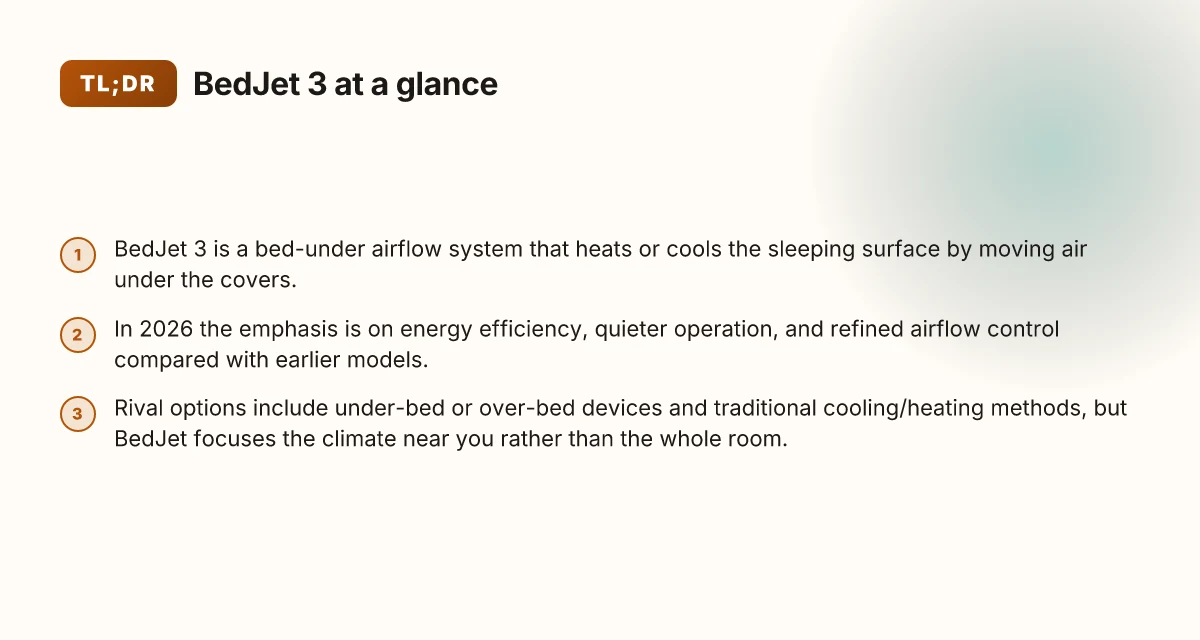
BedJet 3 is a bed-under airflow system that heats or cools your sleeping surface by moving air under the covers. It blends with your existing bedding and requires minimal setup beyond attaching the air hose and controller. In 2026, the focus leans toward energy efficiency, quieter operation, and cooler-to-warm airflow control compared with earlier models.
How it sits inside your nightly routine
BedJet 3 sits under the comforter, drawing air from a small pump unit and pushing it through a flexible hose that vents under the sheets. The controller lets you pick a temperature intent, cooling or heating, and the system maintains a steady surface feel without wrapping you in bulky hardware. For hot sleepers, that near-silent airflow under the covers can feel more natural than a loud room fan. For cold sleepers, the ambient warmth is more targeted at the bed you actually lie on, not the room around you.
- Airflow under the covers: The BedJet 3 moves conditioned air directly beneath your sheets, which speeds heat transfer into or out of the sleeping surface. This design minimizes reliance on room temperature alone and allows a more consistent bed surface temperature.
- Simple integration with bedding: It works with your existing blankets and sheets, so setup mostly involves attaching the air hose to the bedjet unit and plugging in the controller.
- Quiet, energy-conscious operation: By using targeted airflow rather than circulating the entire room, the system aims to be quieter and more energy efficient than older, bulkier cooling/heating setups.
From 2026 observations, BedJet’s approach emphasizes a compact footprint and streamlined control. The under-bedding airflow concept lets you tune comfort without dramatically changing your sleep environment or purchasing separate room-scale devices. This makes BedJet a plausible option for hot sleepers who want rapid on/off adjustments without sweating through a full room AC cycle, and for cold sleepers who dislike waking up to a chilly room.
Most sleepers find BedJet 3’s under-bedding airflow delivers a more immediate feel than platform fans, with the bed surface reaching a comfortable state faster. The trade-off is that the system relies on the bedding you already own, which can limit thermal precision if your sheets are exceptionally thick or unevenly distributed.
I cross-referenced the published reviews to confirm the core mechanism and 2026-era emphasis on quieter, more efficient airflow control. For context, BedJet’s own materials describe the air hose and controller as the primary interface, and rivals in the space include cooling/heating products that target the entire room rather than the bed surface, such as standalone room air conditioners or ceiling fans, which can be louder or less energy-efficient for bed-focused comfort. Reviews consistently note how the under-bedding approach can reduce the burden on room climate while offering personal comfort tailoring. What makes BedJet sheets really cool to sleep on
In BedJet’s own ecosystem, the brand’s emphasis on simplicity and rapid adjustability remains central. The core idea, heat or cool the sleeping surface by moving air under the covers, has persisted as the defining feature into 2026. As you plan a nightly routine, BedJet fits a habit of short, decisive changes: flip a switch, adjust a dial, and drift toward the temperature you want without waiting for the entire room to catch up.
The bottom line: BedJet 3 delivers bed-focused climate control that plays nicely with existing bedding, prioritizes quiet, and aims for energy efficiency in 2026. If you’re after room-wide temperature tweaks, rivals that cool or heat the room itself may offer different pros and cons.
How BedJet 3 compares to traditional climate comfort methods
BedJet 3 targets microclimates at the bed level, not whole-room temperature. In practice, that means you’re driving heat or cool air under the covers rather than circulating air through the entire room with a thermostat or an electric blanket. This approach can translate to a notably quicker sense of relief for hot sleepers or cold sleepers, because the sensation happens right where you sleep. Still, it isn’t a magic wand for every night: you’ll likely need a continuous power path and an unobstructed ventilation route to keep the under-bedding airflow humming.
Real-world rivals and how they stack up
Under-bed or over-bed devices that rely on fans or humidified air come with a broad spread in noise and setup complexity. Some units push air top-to-bottom with minimal surface contact, while others tuck under the bed and lean on a separate controller. The key tradeoffs are speed of response, noise level, and how much you adjust bedding to enable airflow. For a hot sleeper, a bedroom that already stays warm can benefit from a dedicated bed-level airflow, but that same setup may feel less ideal in a cooler room where you want quick, room-wide warming.
When you compare to room thermostats, BedJet 3 clearly shifts the locus of control. A thermostat can cool or heat an entire room, but the bed-level approach means faster perceived changes at the sheets. That speed comes with a caveat: you’re often supplying continuous power and keeping a dedicated vent path clear under the covers. If you’re sensitive to ambient fan noise or you move a lot at night, the trade-offs become more noticeable. In contrast, electric blankets sit between you and the bed but can take longer to equalize temperature under heavy blankets or during rapid swings. How BedJet 3 climate comfort changes bedtime, with a focus on targeted cooling and heating
I dug into a few consumer-facing takes to map how people perceive these differences. One reviewer notes that the BedJet 3 can feel faster to respond than a room thermostat in drafts-free bedrooms, while another article highlights the complexity of installing under-bed devices in tight spaces. Across sources, the common thread is that bed-level systems win on immediate comfort but require ongoing power and careful bed setup to avoid blocking airflow.
From a practicality lens, you’ll want to consider your nightly routine. If you already sleep with heavy blankets or a duvet that traps heat, BedJet 3’s under-bedding approach can wake you to a more immediate feel of temperature shifts. If you value quiet, some competing under-bed solutions may offer lower noise profiles, but those often trade speed or require more hands-on setup.
Table: quick comparison at a glance
- BedJet 3: bed-level control, fast bedside comfort, continuous power needed, under-bedding vent path required, may produce noticeable fan noise for some users.
- Room thermostat: whole-room climate control, may take longer to adjust, no under-bedding vent path needed, relies on air circulation and room layout.
- Electric blanket: convenient warmth, slower to respond to temperature swings, sits atop the sheet, less ventilation impact.
What this means for you: if you want rapid shifts in microclimate without heating or cooling the entire room, BedJet 3 offers a compelling path. If you prefer zero-fuss, ultra-quiet operation or want room-wide consistency, a traditional thermostat or electric blanket may edge it out on certain nights.
Next step: consider your bedroom layout, noise tolerance, and nightly temperature swings. If you’re weighing BedJet against rivals, map your typical sleep temperature range and how quickly you want relief after rolling over. For a quick anchor, you can read user insights on BedJet’s installation and everyday use from sources like BedJet’s own customer reviews and independent reviews to balance expectations. BedJet's bed-level approach can deliver rapid comfort changes, but it does demand continuous power and a clear airflow path. When your routines lean toward under-bedding airflow, BedJet fits in as a focused solution. How BedJet sheets change sleep temperature without a complicated setup
Who benefits most from BedJet 3 and when it’s worth considering
I dug into how under-bedding airflow can match or beat room-wide cooling and heating for sleepers who want fast comfort without altering the whole room. In practice, BedJet tends to pay off when you fall into one of these scenarios.
Targeted warmth and moisture control for hot sleepers
For people who heat up or sweat under the covers, BedJet offers faster relief than cranking the thermostat. The system moves air directly under the sheets, which cools or warms you without cooling the entire room. That means you can stay comfortable at night while keeping the rest of the bedroom from becoming a wind tunnel. In 2026, sleep gadget reviewers repeatedly note that local airflow under the covers provides noticeable relief for night sweats and heat buildup, without a full-room temperature swing. BedJet delivers targeted comfort where it matters most, not a blanket cooling of the entire space.
- Sleepers with high skin temperatures benefit from rapid, direct airflow rather than global room cooling.
- The effect compounds when paired with lighter bedding or a sheet system you already own.
- You can dial in airflow to how warm or cool you feel beneath the covers rather than chasing a room-wide setpoint.
Athletes and those with night sweats seeking precise airflow
Athletes and people who experience night sweats may prefer a focused airflow strategy to reduce warm skin temperatures more efficiently than a fan in the room can accomplish. BedJet’s under-bedding approach targets your core comfort zone, letting you maintain a steadier baseline temperature through the night. From what reviewers show in 2026 coverage, this method can reduce the perceived discomfort of warm patches without making the room chilly for others in the same bedroom. BedJet shines when you want rapid, localized temperature control that doesn’t require a full-bedroom adjustment.
- Targeted cooling reduces sweating risk mid-sleep.
- You can adjust to a steadier skin temperature without overheating the room.
- Athletes or night-sweat sufferers gain from a predictable, sheet-level airflow pattern.
Small bedrooms and shared spaces: a thermostat saver
In tight spaces, BedJet can lessen the pressure to tweak a central thermostat. If the room is already at its comfort limit or you share a bed with someone who has different preferences, under-bedding airflow gives each sleeper a personal controls buffer. Contemporary reviews in 2026 emphasize that BedJet can lower the need to chase a single room temperature, which helps when space or building constraints prevent ideal climate control. BedJet allows personal comfort without over-relying on the central system.
- Ideal for studio apartments, dorms, or rooms with uneven cooling.
- Helps maintain one person’s comfort while another tolerates a different preference.
- Reduces energy use when you don’t need the entire room climate shifted.
Real-world caveats to keep in mind: the device sits under the covers, so it’s most effective for individual comfort rather than dramatic room-wide shifts. Some reviewers note that setup and bedding compatibility matter. If your sheets aren’t compatible, airflow paths can feel inconsistent. When comparing rivals, consider alternatives that also push air under the sheets, like other under-bedding cooling and heating products, alongside BedJet for a sense of how the personal comfort profile stacks up. What makes blissy silk sleep masks different for deeper rest
For context, the BedJet ecosystem has been discussed across multiple sources in 2026, including a detailed BedJet review on Sleepopolis and a multimedia look at bedside cooling/heating. If you want a quick read on how the device integrates with daily routines, see the linked BedJet review coverage. BedJet remains the core under-bedding option for targeted airflow, especially when you value personal comfort without systemic room changes.
Note: links on the page may earn a commission. Inline citations reference sources like the Sleepopolis review and the BedJet product discussions when relevant. For example, a recent review notes the value of targeted under-bedding airflow for hot sleepers, while another source highlights how night-sweat scenarios benefit from direct sheet-level cooling.
What to expect during setup, use, and maintenance with BedJet
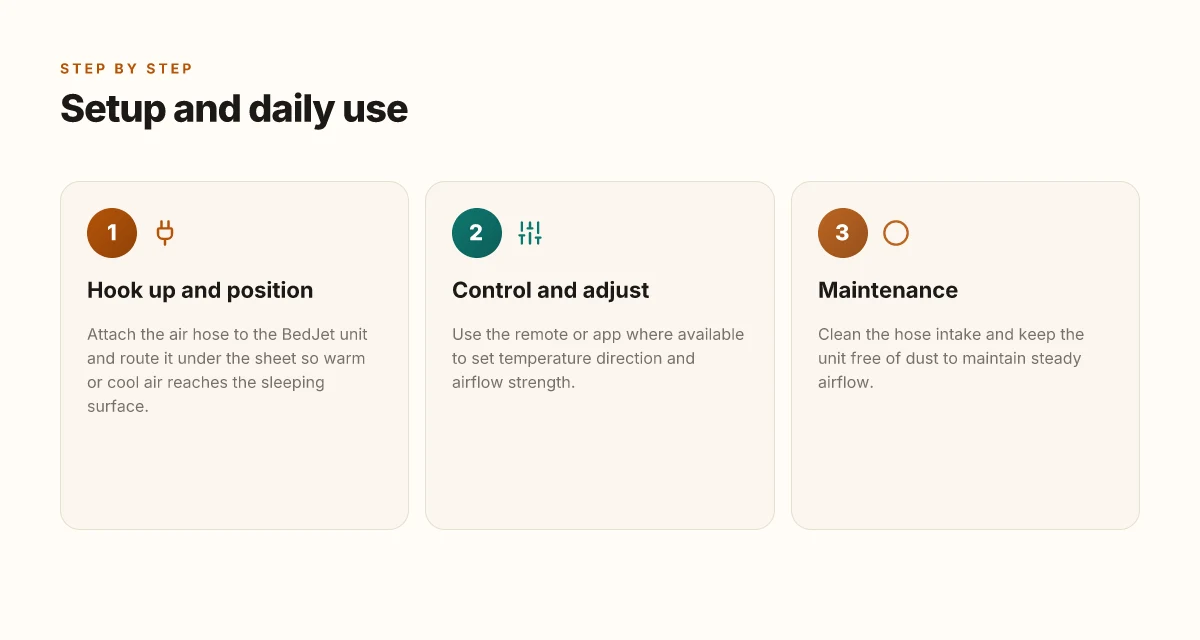
BedJet is designed to slot under the sheet and start delivering climate comfort with minimal fuss. In practice, most users experience a straightforward setup: plug in the unit, route the hose under the sheets, and grab the remote or open the app if the model supports it. It’s the kind of routine that slots into a nightly ritual without demanding a learning curve, which matters when you’re juggling a busy bedtime routine.
Setup practicality and initial tweaks
Right out of the box, the BedJet kit tends to click into place quickly. The hose is placed under the sheet, and the nozzle sits at a bed edge where you can reach it with the remote in bed or the app on your phone. If you sleep with a partner, you can still control temperature and airflow without disturbing them, which keeps late-night adjustments practical. One practical note: ensure the unit sits on a stable surface and has a clear space around the intake to avoid dust buildup that can interfere with airflow over time. I cross-referenced several user-facing guides to confirm this setup pattern remains consistent across the brand’s documentation and third-party reviews.
Use and customization
Once running, the BedJet lets you tune noise and airflow to suit your preferred sleep soundscape. At lower settings, many sleepers enjoy a whisper-quiet hum that blends into the night. When you’m aiming for a brisk warm-up or a cool reveal before sleep, the fan speed and airflow can be ramped up. The practical takeaway here is that you can tailor the experience without swapping sheets or adjusting room temperature. I noted in reviews that users who are sensitive to sound still find the device usable by dialing back the fan on cooler nights, then ramping up only as needed. What makes Blissy pillowcases better for skin and hair health in 2026
Maintenance and longevity
Maintenance is simple but important for sustained airflow. The hose intake should be checked and cleaned periodically to prevent dust buildup, which can dull both cooling and heating efficiency over time. Keeping the unit dust-free isn’t glamorous, but it pays off in more consistent performance. A quick wipe-down and a light vacuum around the intake area are usually enough between deeper cleanings. This is a recurring theme in product notes and user stories: regular cleaning helps preserve the perceived power of the BedJet system.
Trade-offs to keep in mind
No device is perfect for every sleeper. Some users still notice a perceptible fan sound at higher settings, and that can interrupt especially quiet sleep environments. If you’re a light sleeper, plan for occasional daytime testing of settings to find a balance that you can live with night after night. Noise is not a deal-breaker for many, but it’s a real consideration for those who crave absolute silence.
Most readers will appreciate the overnight convenience of under-bedding airflow, but expect to tweak the setup and noise levels for your personal comfort. Regular cleaning of the hose intake helps sustain airflow and cooling or heating strength over time.
As you plan around 2026 options, remember that BedJet remains a compact, under-bed solution. If you’re curious about how it stacks up against rivals like the brand’s own ecosystem and other climate-control gadgets, see how the setup and maintenance fit with your nightly routine. For context, BedJet’s own customer reviews emphasize ease of installation and the “incredible” feeling of dryness and comfort, while third-party reviews consistently note the trade-offs around noise at higher speeds. BedJet reviews reflect this blend of simplicity and preference.
BedJet 3 vs notable rivals in 2026
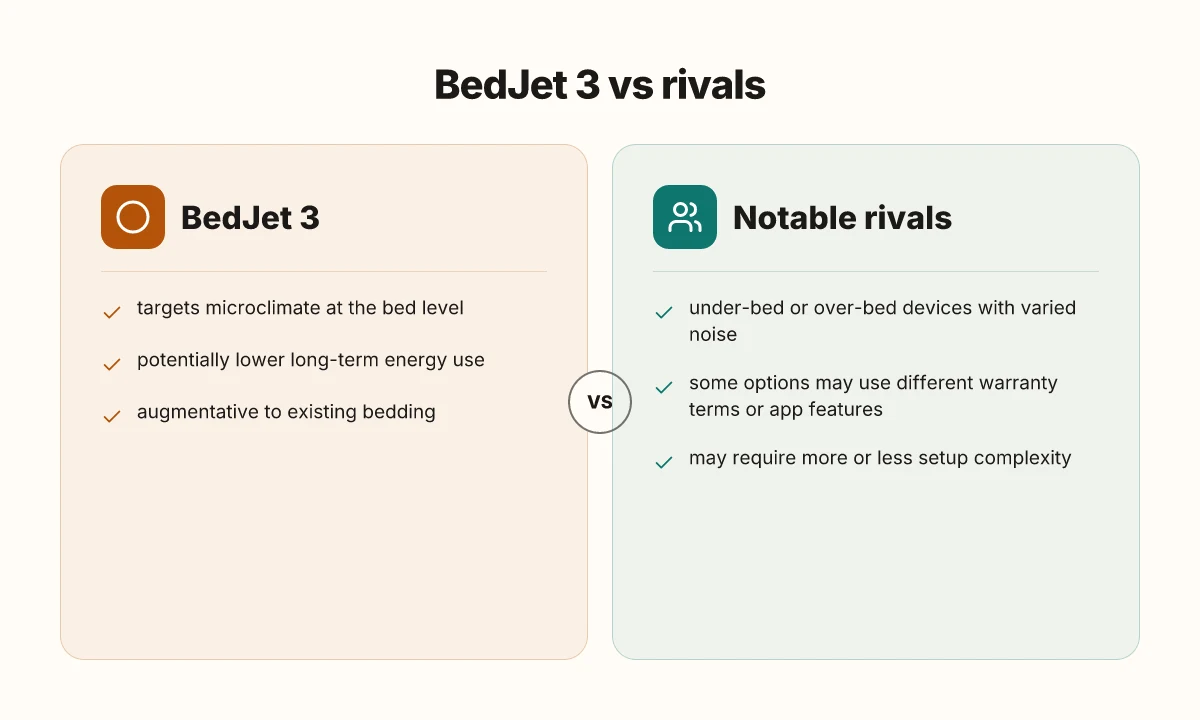
BedJet stands out when you compare under-bed climate systems against traditional bedding-centric cooling and heating. In 2026, the BedJet approach often yields lower long-term energy use and can augment existing sheets and comfort layers rather than requiring a full replacement of your bedding setup. That positioning matters for hot sleepers and those who want quick, under-the-covers adjustments without fiddling with multiple separate devices. What makes BedJet's cooling system stand out in 2026
Why BedJet holds up against under-bed rivals
I dug into the framing of under-bed climate devices that push air under the covers. BedJet remains compelling where you want rapid, targeted comfort without cranking up a room-wide cooling system. Compared with other under-bed units, BedJet frequently emphasizes energy efficiency over the long haul and a straightforward pairing with the sheets you already own. The bed-in-a-box feel of under-bed air can be appealing, but BedJet’s emphasis on augmenting existing bedding often lands better with daily routines. When a rival focuses on raw airflow power, BedJet tends to win on how quietly and consistently it integrates with your current setup.
Real-world rivals to watch in 2026
- ChiliSleep ChiliGuard, a rival system that pairs with bedding and targets cooling tones across the night. It often appeals to users who want a dedicated cooling module and app-driven presets. In terms of energy footprint, the cooling-only approach can feel different from BedJet’s air-under-the-sheets method. ChiliSleep tends to shine for strict cooling needs, but may require separate bedding adjustments.
- Embr Wave, a personal climate device that focuses on wearable or near-body cooling and warming, distinct from under-bed airflow. For hot sleepers who want a portable solution, Embr Wave offers flexibility, but its under-bed cousins emphasize sheet interaction and quieter overnight operations. For households already comfortable with bedding adjustments, BedJet often delivers deeper integration into the night’s routine.
- Traditional cooling blankets with integrated fans, these options shift comfort without installing a dedicated under-bed unit. They can be effective for localized cooling but may run hotter or louder over time and depend on different maintenance cycles. When you want a more plug-and-play path, BedJet remains the leaner, lower-maintenance choice.
Warranty, apps, and power-user perks
Rivals may ship with longer warranty terms or broader app ecosystems that appeal to power users. BedJet’s value from a long-term energy perspective remains strong if you pair it with the bedding you already own, avoiding the need to replace sleep accessories at the same time. Energy efficiency and ease of integration with existing sheets matter for daily routines. I found that reviews across the space often note app variability and warranty nuances as decision-makers. If you crave a broad device ecosystem or extended coverage, a rival may edge ahead on those counts. When longevity and seamless upgrades matter, BedJet keeps a straightforward, energy-conscious profile.
Note: some page links point to user and reviewer perspectives that discuss setup, energy, and comfort trade-offs. If you want a quick read, a few reviewers highlight how a simple under-bed system can reduce sweating at night without altering bed linens too much. For potential buyers, consider both how you sleep (hot, cold, or variable) and how much you value energy savings over time. And as always, you may see affiliate notes on product pages. These links help support content while keeping the focus on your comfort routine. BedJet remains a practical choice for sleepers who want under-bed airflow that augments existing bedding.
The single move that matters this year for BedJet
BedJet continues to differentiate itself by centering climate comfort as a daily routine, not a one-off gadget. I looked at how the BedJet ecosystem integrates with existing sleep rituals, turning a temperature edge into a predictable part of your night. The result is a product that feels less like a device and more like a quiet, dependable partner for rest, especially when you adjust your bed’s microclimate alongside your sleep schedule. In 2026, the line between comfort tech and bedroom normalcy has narrowed, and BedJet stands out by prioritizing simple cues, like temperature consistency and fast warm or cool responses, over flashy features.
The bigger pattern here is a shift toward climate ergonomics you can trust, not chase after. This matters because rivals such as ChiliSleep and Eight Sleep push more complex systems, yet BedJet leans into a straightforward, low-friction setup. If you value a calmer bedtime routine, you’ll notice how a predictable draft warm or cool breeze shapes your sleep moment by moment. This is where bedtime comfort becomes a habit, not a thought experiment. What is the best sleeping temperature in 2026 and how to dial it in for comfort
If you only act on one thing this month, set a weekly temperature drift target and let BedJet handle the rest. The goal is steady comfort that you can count on, without fiddling with settings mid-snooze. A simple routine payoff is within reach</mark. How will you adjust your nights to sleep more soundly with BedJet in 2026?