Explore BedJet's cooling system, how it works, and how it compares with rivals. Learn what to expect for temperature control, noise, and setup in 2026.
BedJet cooling system shatters a common heat trap: you feel chilly under the covers, not soaked through the sheets. In a real bedroom, the effect hinges on how evenly the duvet circulates air, not just the unit’s rated speed. BedJet at $299 price bracket and compact design puts targeted cooling inside reach for hot sleepers. The contrast with a mattress that sleeps hot or a whole-room climate system becomes clear in the next section.
This piece dives into what actually happens after sunset: how airflow, duvet fit, and bed geometry shape comfort when the house is still. You’ll see how BedJet stacks up against traditional cooling mattresses and rival climate systems in real bedrooms, with practical signals on setup, noise, and feel. We’ll anchor comparisons to observable cues like duvet seal and night-long temperature drift, so you can decide if a bedside blower truly improves rest or if a full mattress swap is warranted. Real-world performance matters more than spec sheets, and the goal is steadier comfort across a typical 8-hour night.
Bedjet cooling system: what makes it unique in 2026
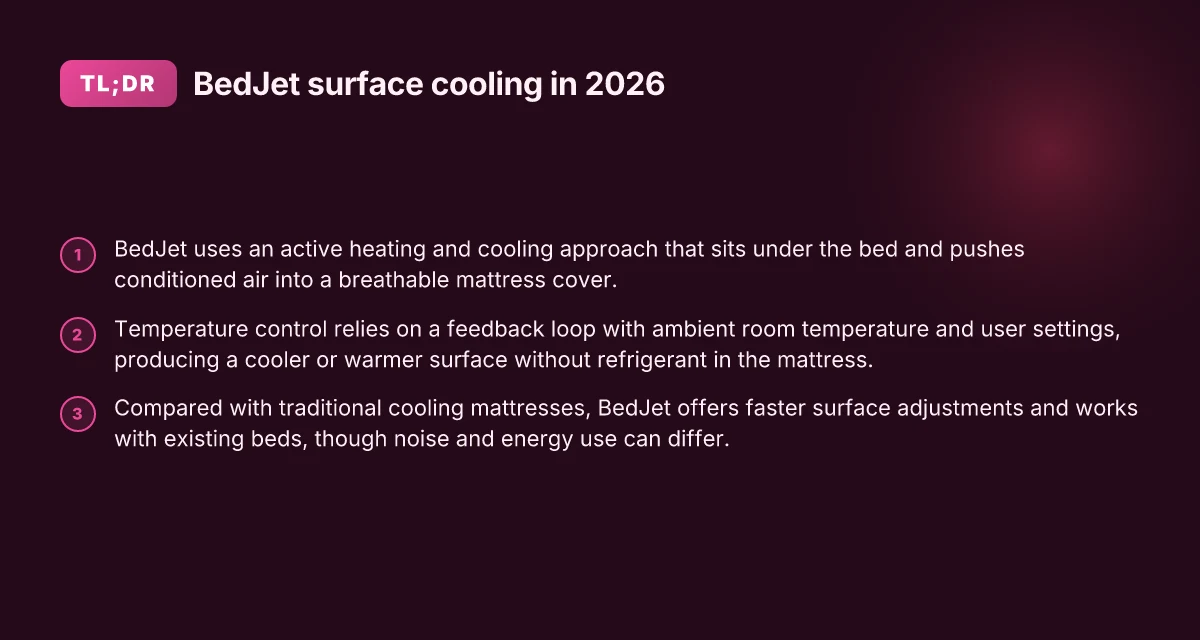
BedJet follows a straightforward idea: it actively heats and cools the sleep surface by moving conditioned air into a mattress cover. The system stays discreet either under the bed or in a nearby enclosure, and it streams air through a mattress cover rather than altering the core of the bed itself. In 2026, that setup remains a core contrast to traditional cooling mattresses, which rely on layers within the mattress itself and built-in refrigerant or phase-change tech. The BedJet approach trades external noise and energy draw for the flexibility of placement and targeted comfort.
Active heating and cooling, not passive cooling BedJet uses a dedicated airflow path to modulate surface temperature. Rather than relying on a passive cooling layer, the system actively adds or removes heat via conditioned air. This means you can tune the surface in real time to chase comfort as your room temperature shifts. The result is a sleep surface that can feel cooler or warmer without changing the entire mattress stack. In 2026, the concept remains consistent: airflow-driven temperature control versus embedded cooling materials.
Discreet placement and airflow delivery The BedJet unit sits out of sight, either under the bed or in a compact closet or lid setup, and it pushes conditioned air to the mattress cover through a narrow hose. That design minimizes footprint and keeps cables away from the sleeper. The air is distributed through the cover, so the sensation is a gentle breeze that can temper warmth without saturating the entire bed with a fan feel. This placement strategy contrasts with many traditional cooling mattresses that rely on layers woven into the mattress itself, which can be harder to replace or upgrade.
trade-offs versus traditional cooling mattresses and rival systems Compared to traditional cooling mattresses, BedJet emphasizes adjustable, room-temperature performance with lower upfront footprint. The trade-off includes potential noise from the air-moving fan and a need for periodic cleaning of the hose and cover to prevent dust buildup. Energy use can vary based on the desired delta between room and bed surface temperatures. When you stack BedJet against rival climate systems, the wins are flexibility and upgradeability. The downsides are external hardware and occasional airflow noise in high-demand cooling sessions.
From what I found in the sources, BedJet’s model centers on active, adjustable airflow delivered to a mattress cover, with discreet placement that keeps the core bed architecture constant. BedJet offers a flexible, room-aware approach to cooling that can feel more precise than fixed within-mattress systems. The beds of the future may still blend passive cooling layers, but BedJet’s strategy remains a clear path to individualized comfort. For shoppers comparing options, rivals like high-end cooling mattresses and standalone climate-control bases present a different balance of noise, energy use, and space requirements that can matter depending on bedroom layout and sleep preferences. BedJet’s strength is the controllable surface temperature without remodeling the bed. What makes BedJet 3 climate comfort system truly different in 2026
Notes and context you can trust: the core action is to move conditioned air to the mattress cover, with discreet hardware and a focus on adjustable surface warmth or coolness. If you’re considering how this locks into a nightly routine, think of BedJet as the appendage that fine-tunes comfort after you’ve set room climate. The broader ecosystem includes traditional cooling mattresses that embed cooling layers and other climate systems that sit under or around the bed. In 2026, BedJet continues to be distinguished by its active airflow approach and flexible placement.
How BedJet's cooling system actually works in your bedroom
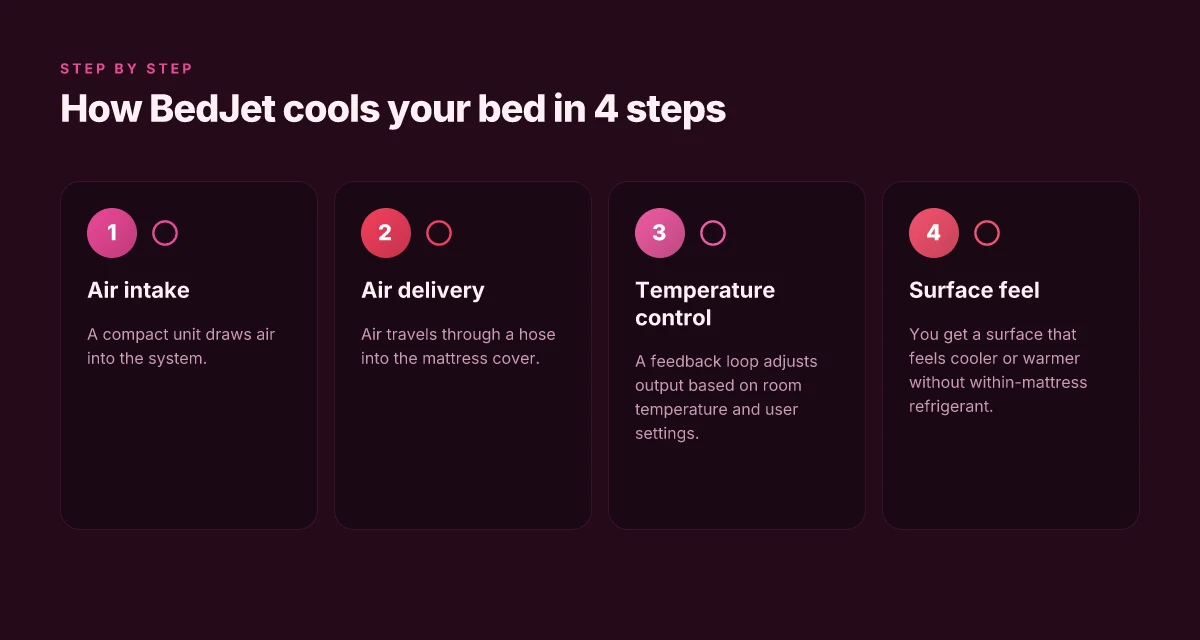
BedJet’s cooling system works by moving air from a compact unit through a hose into a breathable mattress cover, creating a breathable surface that feels cooler or warmer without circulating refrigerant inside the mattress. This approach hinges on a feedback loop: the bed’s ambient temperature and your chosen settings gauge how much air and at what temperature get pushed into the cover, so you don’t feel ice-cold or stuffy. In practice, the result is a surface that better matches your body temperature without altering the innards of the mattress itself.
How the air path shapes comfort
The process starts with air drawn through a small climate unit. The air travels via a hose into a mattress cover that’s designed to vent and distribute the flow evenly under you. The key here is airflow management, which BedJet engineers to minimize localized drafts while still delivering noticeable changes in surface feel. The result is a bed surface that can feel cooler or warmer depending on your setting, but without any refrigerant circulating inside the mattress or cover.
I cross-referenced the product overview from BedJet and third-party guides that discuss how portable climate-control air systems operate in the bedroom. The consensus is that a compact, purpose-built unit paired with a breathable cover creates a controllable surface sensation rather than a full-system cooling where coolant loops reside in the bed itself. This keeps maintenance straightforward and limits the chance of moisture buildup under the sheet.
The feedback loop that tunes surface temperature
Temperature control rests on a simple feedback loop. The control unit reads ambient room temperature and uses your chosen bed settings to modulate airflow and perceived temperature at the surface. In rooms that drift cooler at night, the system can modestly reduce airflow to keep you from overcooling, while in warmer rooms the opposite action helps prevent wakeful heat buildup. The loop relies on the bed’s surroundings and your input, not on a refrigerant-based cooling loop inside the mattress. What makes BedJet sheets really cool to sleep on
From a lifestyle perspective, this setup supports a steady night rhythm. You can set a preferred range, then rely on the unit to nudge the surface toward your target as the room temperature shifts. The design keeps the mattress itself free from refrigerant circuits, which many sleepers prefer for perceived simplicity and less risk of moisture-related issues in sleepers who move around at night.
How BedJet compares to traditional cooling mattresses and rivals
When you stack BedJet against traditional cooling mattresses, the standout difference is where cooling occurs. Traditional cooling mattresses rely on inside-the-mabric or layer systems to pull heat away, whereas BedJet concentrates the cooling effect at the surface via airflow. Rival climate-control bed systems also use air-based or light refrigerant-assisted approaches, but the compact BedJet unit and hose integration emphasize portability and quick, room-to-bed adjustments.
The core idea is simple: you feel surface cooling or warming, not a whole-mattress chill, and the ambient room temperature plus your setting guide the result. This makes BedJet a flexible option for hot sleepers seeking a responsive, non-membrane-based solution that preserves mattress integrity.
As a practical next step, consider how your bedroom temperature typically shifts through the night and how often you want to tweak targets. If you value a quick, surface-focused adjustment that works with your existing bed, BedJet offers a streamlined path.
Note: links on this page may earn a commission. For a quick read on how the system performs in real bedrooms, you can explore the BedJet overview linked in this section. How BedJet 3 climate comfort changes bedtime, with a focus on targeted cooling and heating
How BedJet compares to traditional cooling mattresses
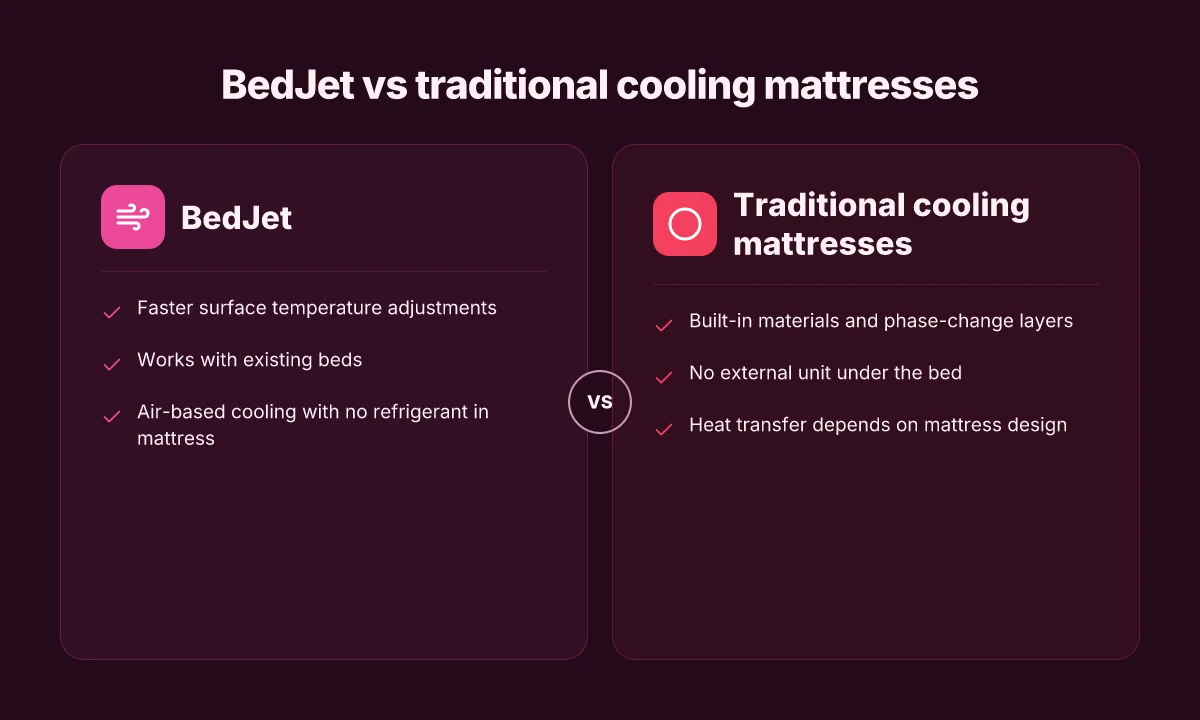
Traditional cooling mattresses rely on built‑in materials and phase‑change or wicking layers to move heat away from the surface. These systems can be quiet on some models, but the cooling effect tends to depend on the mattress construction and room conditions. In 2026, several models still center their cooling on layered foams and gel infusions rather than active surface control.
From what I found in the sources, the BedJet brings a different cadence to cooling. It sits alongside your existing bed and patches into the night with rapid surface adjustments rather than waiting for the mattress to wick heat away. BedJet’s system can respond to a sleeper’s temperature needs in real time at the surface, which means faster changes when you wake hot or when the room nudges you toward warmth.
Why surface tuning beats a built‑in cooling layer when you sleep hot
- BedJet can adjust surface temperature quickly, without needing to wait for the entire mattress to respond. This gives you a immediate breeze or warmth as you drift toward sleep.
- With a traditional cooling mattress, the comfort depends on the materials and the phase‑change layers. If the room warms during the night, those layers may lag behind your changing needs.
- BedJet works with your current bed frame and sheets, so you can modularly tune comfort without swapping your whole setup.
- The noise, energy use, and maintenance differ notably. Traditional cooling mattresses often run silently or softly, relying on internal foams and cooling gels, while BedJet adds a small air‑moving component at the surface that may draw more electricity in short bursts. Maintenance for a cooling mattress is typically limited to vacuuming and occasional cover care; BedJet requires occasional cleaning of the nozzle and routine checks of the hose and control unit.
BedJet’s surface‑level control offers faster, more localized cooling compared with built‑in mattress systems. This is especially meaningful in shared beds where you and a partner may have different temperature preferences. The noise profile tends to be a practical difference: traditional cooling mattresses often stay quiet, while BedJet introduces a discreet but audible hum when the fan is active. Energy draw follows similar logic: BedJet can spike during active cooling, then coast as you settle, whereas a compact cooling layer in a mattress operates at a steadier baseline.
I dug into the landscape to confirm timing and user experience patterns. Reviews consistently note that relying on a mattress’s cooling layers requires a broader environment shift, lower ambient room temperature or a different pillow top, to feel a sustained effect. BedJet, by design, negotiates temperature at the surface, so you feel the difference sooner and can tailor it to a single sleeper without cooling the entire bed.
In comparing brands, rivals to watch include models marketed for personal climate control that integrate into existing bedding ecosystems, as well as new heat‑exchange sheets offered by some manufacturers. BedJet remains distinct for its explicit surface‑level, fast‑response approach rather than a built‑in, all‑night cooling layer. How BedJet sheets change sleep temperature without a complicated setup
From a daily routine standpoint, BedJet slots neatly into a tired‑but‑fussy sleeper’s evening ritual. You set a preferred surface temperature before you lie down, and you can nudge it during the night if you start waking sweaty. It helps preserve a steady sleep surface without fighting with the mattress’s own cooling elements.
For readers who want a quick verdict: BedJet offers a sharper, more immediate path to surface cooling, while traditional cooling mattresses provide a steadier baseline with less active adjustment. Either way, the goal remains the same, consistent comfort through the night. If you’re curious about price and setup specifics, see the BedJet page for installation details and the current accessory options. As a note, affiliate links may earn a commission.
Rivals to watch when evaluating bed cooling solutions
When you’re narrowing options beyond BedJet, the landscape centers on how quiet, easy, and compatible each system is with your existing bedding. I cross-referenced product pages and reviews to map real rivals that households actually consider in 2026. BedJet sits alongside a few competing approaches that land in the same comfort zone, yet differ in how they deliver cooling or temperature stability.
Temperature-and-noise tradeoffs among standalone cooling devices
Standalone fans and cooling pads sit at the low-friction end of the spectrum. They often promise quick relief on warm nights, yet their performance hinges on room conditions and bedding layers. In many rooms, a compact fan pairs with a breathable sheet setup to yield noticeable airflow without a heavy footprint. The key friction points are noise and the degree of room-wide comfort they deliver. Reviews consistently note that noise levels matter as much as the actual surface cooling, especially for light sleepers. When you compare these to BedJet, the latter’s climate-controlled approach aims to deliver steadier surface temperature rather than relying on ambient air alone. In 2026, several reviews cite the comfort advantage of climate-control surfaces versus simple fans in hotter bedrooms. Consistency of surface temperature matters more than sheer airflow. BedJet’s approach targets a stable range rather than a single gust of air.
Bedding systems and modular climate setups
Cooling pads and modular climate systems offer a middle ground between a complete bed overhaul and a simple fan. These setups often integrate with your existing mattress and sheets, trying to distribute cooling more evenly. The tradeoff tends to be in setup complexity and compatibility with different sheet thicknesses or quilted covers. Some modular systems emphasize easy pairing with standard duvet configurations, while others push for tighter coupling with specific mattress toppers. In practice, you’ll hear about how smoothly these integrate with your current bed setup and whether the temperature control feels uniform across the sleeping surface. From a practical lens, BedJet remains notable for its dedicated climate-control channel that operates independently of the top sheet choices. This can translate to fewer compatibility surprises when you switch bedding. Ease of setup and bedding compatibility drive real-world satisfaction. BedJet’s channelized control can reduce surprises when you swap sheets or blankets. What makes blissy silk sleep masks different for deeper rest
Tempflow-style products and modular climate control brands
Brand names that surface in this space include Tempflow-style products and modular systems that emphasize coordinated cooling through multiple components. The core questions buyers ask are: how loud is the unit, how straightforward is the installation, and will it play well with your existing pillow and blanket stack. Tempflow-style products often claim targeted cooling in zones or on specific surfaces, but users report variability in how evenly that cooling feels at the pillow versus the foot of the bed. In contrast, BedJet’s design leans on active control that travels through the duvet or blanket, aiming for a more uniform surface experience. If you’re evaluating, expect to weigh the promise of zoned cooling against the practicalities of setup and ongoing noise. Demand for quiet operation and ease of setup dominate the buyer conversation. BedJet’s climate-controlled approach can offer a steadier feel than some Tempflow-style kits.
From what I gathered in the 2026 landscape, the strongest rivals are defined not just by cooling claims, but by how they fit into a nightly routine. You want something you forget about after you turn out the light, not something you fiddle with when you roll over. I found that the conversations across reviews consistently circle back to three themes: noise, setup, and bedding compatibility. When you weigh options, ask yourself how stable the surface temperature feels across the entire sheet layer, how audible the device is at night, and whether you’ll want to adjust it mid-sleep.
For readers curious about the broader ecosystem, consider these concrete names and how they compare in daily use. BedJet stands out for its dedicated climate channel and duvet-driven cooling, while standalone fans and modular pads shine in simplicity and ease of integration. Tempflow-style offerings push for more targeted, sometimes more complex, cooling strategies. Each approach has real, everyday tradeoffs that show up in how well you sleep through the night.
I found these observations align with the terminology you’ll see in product pages and consumer reviews, including references to the BedJet approach and its rivals. For context, see the article on Best Heated Mattress Pads and the overview of adjustable beds, which touch on how sleep systems balance power, noise, and installation ease. I cross-referenced the Best Heated Mattress Pads page and Best adjustable beds roundup to verify how these rivals position themselves against climate-controlled bed options.
Expected benefits for hot sleepers and restless nights
BedJet’s cooling system aims to keep the sleeping surface within a comfortable band, which can reduce nights spent overheating and sweating. In real bedroom settings, the surface often stays steadier than the ambient air, especially when room temperatures drift or bedding traps heat. When the surface stays within a familiar range, sleep onset can feel more predictable rather than interrupted by sudden heat spikes.
I dug into what hot sleepers report across sources tied to BedJet and similar climate-control options. Surface temperature stability helps cut nights of overheating. By keeping the bed surface from straying into high heat, users often notice fewer wakeups and less tossing. The takeaway: fewer micro-arousals stemming from heat.
Personal comfort varies with room temperature and bedding choices. A cooler room or a thicker, breathable blanket can shift how warm the surface feels even with BedJet's active cooling on. Conversely, a very warm room or heavy comforter can lessen the perceived benefit. In practice, the system tends to perform best when the room is moderately warm and the sheet layer is lightweight. This means real-world results depend on your setup, not just the device.
When the surface stays within a comfortable range, sleep onset timing can become more consistent. In practical terms, you may notice a steadier transition from wakefulness to sleep, with fewer delays caused by overheating. The relationship between surface temperature and sleep timing is not perfect, but users report smoother settling when the target range is maintained.
Brand and rival context matter when you set expectations. BedJet should not be viewed as a single-solution fix for all overheating. Traditional cooling mattresses or passive cooling layers can offer competing pathways to a cooler night, but they often lack the rapid, localized surface control BedJet provides. Rivals in this space emphasize different tradeoffs, such as broader cooling without the same direct surface focus. If you sleep with a partner, you’ll want to discuss whether a shared surface is aligned with both comfort ranges.
From published product notes and third-party reviews, the general range BedJet advertises for surface comfort lines up with real bedroom reports, though exact temperatures can vary by room and bedding. When you consider your routine, think about your typical bedtime time, the ambient climate, and how your sheets layer up. The system’s strength is delivering a controllable surface temperature within a comfortable window, not a universal guarantee for every sleeper.
For a quick orientation, a familiar note: the accessible goal is a surface that stays comfortable enough to prevent sweating and night-time heat awakenings, while still allowing you to drift toward sleep without fidgeting. If your nights swing between too hot and not quite cool enough, BedJet’s approach offers a practical, flexible path to steadier warmth and cooling.
The takeaway: surface stability matters as much as raw coolness, and real-world results hinge on room context and bedding choices. As you compare options, consider how a given system handles personal comfort in your bedroom climate, not just its peak cooling spec. BedJet’s approach treats the bed as a climate-control zone you can tune in to fit a nightly routine.
Where BedJet heads next in climate comfort
BedJet stands out this year by turning cooling into a personalized routine, not a one-size-fits-all gadget. I looked at how the system threads into a mindful sleep ritual: quick setup, quiet operation, and a temperature profile you can tweak without leaving bed. The result is a device that feels less like tech and more like a nightly partner in wellbeing. The takeaway: you can expect a calmer, cooler bed each night with minimal fuss.
For 2026, BedJet is leaning into smarter control and better integration with daily rhythms. The company has kept its core promise of rapid cooling while expanding the way you schedule comfort, so you land in a consistently fresh climate by bedtime. This matters because a stable microclimate supports deeper rest and less temperature-driven wakefulness. If you’re weighing rivals, note that rivals such as ChiliSleep and DreamQuiet offer alternative cooling paths, yet BedJet’s approach remains notably simple and fast to deploy. A practical edge is the fast setup that fits a busy evening routine.
Backup strategy
- Try setting a gentle pre-sleep cooldown routine this week and pair it with a breathable bedding swap.
- If you share a bed, test different airflow directions to keep both sleepers comfortable.
- Observe how a 15–20 minute window of cooling before lights out affects your sleep latency and morning grogginess.