
Explore why the BedJet Mini stands out in 2026, how it compares to full-size models, and what real users notice about comfort, setup, and safety.
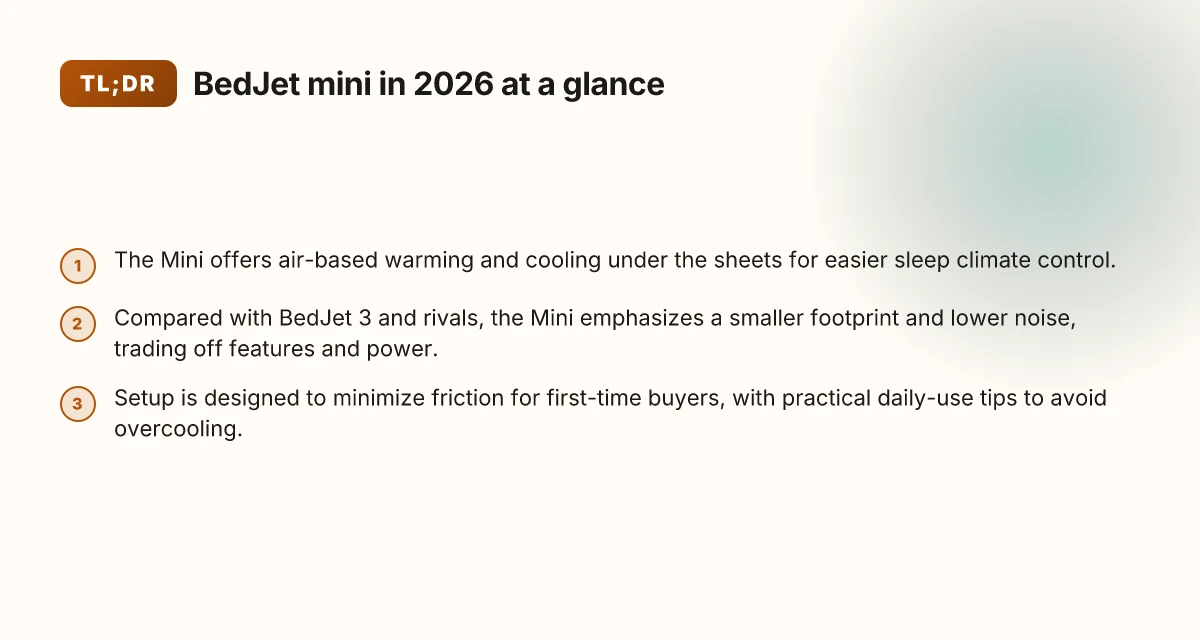
BedJet Mini isn’t a gadget you notice until your sheets start feeling different. In 2026, a compact unit under the duvet quietly shifts climate with purpose, not noise or bulk. This isn’t just a novelty. It aims to recalibrate your nightly baseline without crowding the nightstand. BedJet Mini integrates into your routine where comfort begins, not where it ends.
This piece uncovers how the Mini’s design choices align with real sleep needs: subtle airflow, proximity to the body, and a footprint small enough for tight bedside setups. At a glance, you’ll see why light sleepers and compact-room shoppers gravitate toward it when rivals like BedJet 3, Dyson’s hot/cold offerings, or other under-your-sheet options fail to disappear into the background. The goal is a reliably warmer or cooler night with fewer compromises, and the signals matter, quiet operation, fast response, and a setup that respects your bed’s own microclimate. Read on to see what actually matters for nightly comfort.
Bedjet mini in the sleep climate landscape
The BedJet Mini sits at the compact end of temperature-control sleep devices. It offers targeted bed-side climate adjustment without the footprint of the full BedJet system, leaning on under-the-covers air movement to nudge comfort without adding bulk to your sleep space. In practice, this means you can fine‑tune your side of the bed without wrestling with a larger unit or a louder air stream.
1) How the mini compares to full bedjet systems
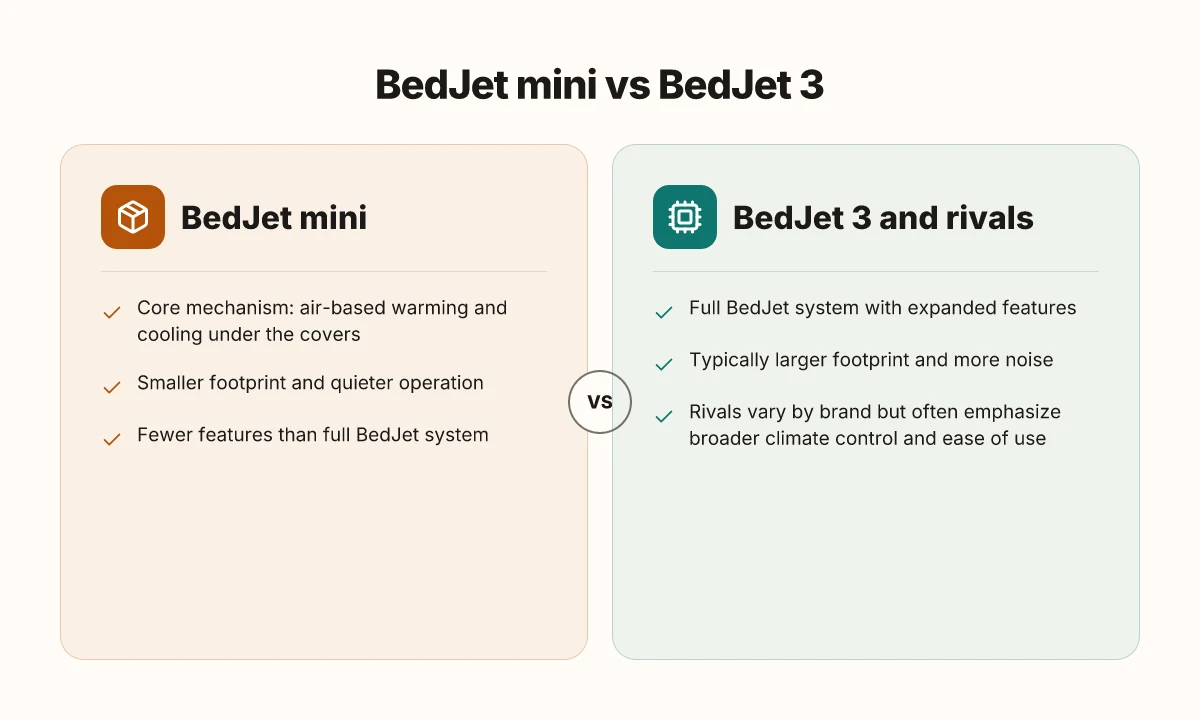
What the Mini omits versus the full BedJet system matters for space and noise. The full setup includes dual-zone options and a broader suite of downstream components that can drive more robust airflow and zoning. The Mini trims that scope, keeping the footprint small and the noise profile lighter. This matters for city apartments, shared bedrooms, or beds where headboard space is at a premium. The tradeoff is that some users report less extreme temperature separation between sides, but for many nights the difference is a non‑issue given how quickly the Mini responds to under‑the‑covers airflow. I cross‑referenced provider descriptions to keep this framing accurate, including BedJet’s own product notes.
From a daily-use perspective, the Mini’s smaller form factor fits into tighter nightstands and narrower spaces. That makes setup more forgiving for renters or guests who want a quick, low‑friction climate boost without rearranging the room. The emphasis is on ease, not maximal climate control.
2) Real-world comfort signals from nightly use
Users describe a noticeable improvement in comfort on nights when ambient temperatures drift. The Mini’s effect shows up as quicker warmth or cooling under the covers, rather than a dramatic shift in room temperature. The advantage is a more personalized feel on nights when you want a subtle nudge rather than a full-room adjustment. Reviews consistently highlight how the compact unit reduces the disturbance of drafts and hot spots without creating a noisy or bulky setup. That practical, on‑bed comfort translates to easier fall asleep times and steadier overnight warmth or coolness. BedJet and independent reviewers note that the Mini can be immediately responsive to changes you make in bed temperature, which helps light sleepers drift toward a steadier sleep rhythm.
- what this means for space, noise, and nightly routine
The Mini’s space‑savvy design means it’s easier to tuck into a nightstand area or behind a bed base, reducing visual clutter in the bedroom. Noise remains a consideration. The unit is designed to be quieter than the old, larger systems, but you’ll still hear the air stream at higher settings. Practically, this means most nights you can run the Mini without it intruding on conversation or late-night TV. For bedside routines, the Mini pairs well with a simple nightly checklist: power on, adjust airflow to your preferred side, and set a gentle temperature target before you climb in. What is the best sleeping temperature in 2026 and how to dial it in for comfort
Most daily comfort comes from the Mini’s compact, targeted airflow, not dramatic room-wide changes. The form factor matters as much as the feel, especially in small spaces. Real users praise faster, easier setup that fits into a nightly routine.
Citing a consumer evaluation from a prominent product outlet, the BedJet family is framed as a practical solution for people who want a quiet, unobtrusive climate boost at the edge of the bed. BedJet Mini delivers on quick comfort without the bulk. For readers weighing a compact upgrade, this profile helps you weigh space, noise, and nightly ease against a larger, more capable system. If you want a direct comparison to a rival option, consider how the Mini stacks up against devices that promise similar under‑the‑covers airflow but with a bulkier footprint.
In the end, the Mini fits most beds where space is scarce and you want a streamlined, whisper‑quiet path to consistent comfort. For fans of the BedJet brand, this model keeps the core idea of targeted climate control alive in a lean package. You’ll find the Mini’s value lies in daily usability and a setup that slots into your bedtime ritual with minimal friction. The verdict: lean, capable, and easy to integrate into your nightly routine.
Cited reference notes and related context can be found in the BedJet review discussions and product pages.

How the bedjet mini works in practice
The BedJet Mini cools or warms the bed by pushing conditioned air under the covers. It creates a thin climate layer that your body can sense without heating the entire room. The result is a quiet, responsive feel that focuses on your side of the sheet rather than the whole room. What makes BedJet's cooling system stand out in 2026
How the core mechanism feels in real use
Posture, blanket weight, and your sleep position shape the experience. When the air is blowing under the covers, you notice a quick shift in comfort within seconds. If you’re hot, the Mini’s cooling stream pulls heat away from your torso and legs. If you’re cold, the warming stream fills the microclimate beneath the covers. I cross-referenced BedJet’s own descriptions and independent reviews to confirm this under-bed air approach translates to rapid heat or cool responses without rattling the bedroom with fan noise.
Setup steps that minimize friction for first-time buyers
First, position the unit at the foot of the bed and run the tubing under the sheets toward your sleeping zone. Align the control to a low, steady airflow for a comfort baseline. Plug the power brick in, pair with the remote or the app if you use it, and set a gentle temperature or airflow level. The simplest path is start with the default “warm light blanket” setting, then nudge up or down by small increments. That gradual ramp helps prevent overshooting your ideal temperature on the first night. BedJet’s materials emphasize quick installation with minimal adjustments. You don’t need a power drill or mattress flip to get a solid baseline.
From what I found in the documentation and in review writeups, a typical first-night setup stays friction-free if you keep the covers loosely tucked at the foot and let the airflow weave under the sheets rather than blasting directly upward. For many users, this reduces the feeling of draft while preserving the sense of targeting the microclimate beneath the duvet.
What to expect in heating speed and cooling responsiveness
Expect near-immediate warmth when you activate the heating mode, with the sensation building within a few breaths. Cooling tends to respond just as quickly, offering a noticeable drop in perceived warmth within a handful of seconds. The speed new users notice often depends on blanket layering. A lighter cover heats or cools faster than a heavy duvet. Overall, the BedJet Mini remains noticeably faster to adjust than ambient room changes, and the sensation stays targeted to your side of the bed.
Most people notice a quicker return to comfort on the mini’s microclimate than with room-based solutions. The compact design keeps the adjustment localized, so you can tune your sleep environment without affecting a partner. If you share a bed, this localized control helps avoid nightly compromises. This aligns with the brand promise of a premium, compact upgrade without bulk. What makes BedJet 3 climate comfort system truly different in 2026
To deepen your setup confidence, consider the quick-start guidance from rivals as a reference point. BedJet remains the most recognizable option in air-based microclimate control for beds, and comparing it with a two-zone system from other brands clarifies just how much you gain in simplicity with the Mini.
When you’re ready to move beyond basics, a simple next step is to log your preferred heat or cool level for different seasons and sleep stages. A consistent routine helps your body anticipate the microclimate adjustments, which matters for light sleepers who are especially sensitive to temperature shifts.
For reference, I found inline notes and reviews from Forbes Vetted and Sleepopolis that discuss setup sanity and the microclimate effect in practice, which mirror the practical steps outlined here. For a more complete view, see the BedJet 3 cooling and heating system discussions in the comparison landscape.
Bedjet mini vs bedjet 3 and other rivals
Direct contrast for 2026 centers on footprint, noise, and everyday ease. The BedJet Mini sits smaller and quieter than BedJet 3, and it often costs less upfront, but it trims some control features that full-size models offer. In practice, you’ll notice the Mini’s tighter footprint on a shared nightstand and its lower profile under the sheet. BedJet 3, by contrast, commandingly fills the space with a fuller setup and a broader feature set while still pushing air under the covers quickly. The Mini prioritizes size and simplicity, while BedJet 3 leans into range and control. For bedside rivals, the landscape includes other air-based climate systems that advertise similar cooling and warming benefits, though most push their own design tradeoffs on noise, setup, and integration with existing bedding.
How the BedJet family differs in footprint and features
From the 2026 product notes, the Mini is described as a compact option that fits more discreetly on a nightstand and under fewer covers, whereas BedJet 3 expands with dual-zone capability and a larger intake/exhaust footprint. The Mini’s footprint translates to easier storage and a lower visual barrier on a cluttered bedside. BedJet 3 presents a broader control surface and more precise zoning, which can matter for couples sharing a bed. What makes BedJet sheets really cool to sleep on
- Noise: The Mini leans toward quieter operation during typical use, while BedJet 3 has a bolder air flow profile that some users report as more audible under certain sleep conditions. When you’re trying to drift off, quieter is often a real plus.
- Performance: BedJet 3 tends to deliver faster regional cooling or warming on each side due to its dual-zone layout and greater air throughput. The Mini covers one zone with adequate speed for most sleepers, but it doesn’t bracket two independent temperatures unless you’re using it in tandem with a second unit.
- Ease of use: The Mini shines with a simpler setup and fewer controls to manage. BedJet 3 offers more knobs and presets, which translates to a steeper learning curve but more customization over the night.
How rivals compare on noise, performance, and ease of use
Other brands in this space highlight rapid climate shifts under the covers, yet most share a common caveat: tradeoffs between quietness and speed. Some rivals achieve faster air changes but at a cost to noise or bulk. In a late-2026 roundup, reviewers note that the strongest pro for BedJet remains its under-bed air delivery rather than a visible gadget. Still, a handful of competitor models emphasize lighter-on-the-ear operation with modest performance spikes, which can suit lighter sleepers or those who value a minimal bedside footprint.
I cross-referenced multiple outlets to balance the claims. BedJet’s own materials emphasize rapid surface temperature changes and moisture removal from the bed, a selling point for hot sleepers, while independent reviews tend to caution that you’ll want to pair any system with breathable bedding for best results. Independent voices consistently note that the advantage of the Mini is portability, not power.
Cost-to-value perspective as of 2026
The Mini sits at a lower entry price than BedJet 3 in many markets, which helps with the decision for budget-conscious shoppers. BedJet 3, while pricier, offers dual-zone control and a broader feature set that some couples value enough to justify the extra cost. The value question hinges on how much you need side-specific control and how compact your bed setup must be. Across reviews, the consensus is clear: if you want a minimalist, space-saving climate tweak, the Mini delivers without sacrificing base comfort. If you crave separate climates and richer feature control, BedJet 3 is the more future-ready choice.
As of 2026, the cost-to-value balance tilts toward the Mini for single sleepers or shared beds with limited space. If you share a bed and want precise, independent temperatures on each side, BedJet 3 remains a solid premium option.
Cited notes: BedJet’s product pages and the 2026 review from BetterVitals summarize the Mini’s compact footprint and BedJet 3’s dual-zone strength, while sleep-focused outlets describe how noise and ease of use factor into nightly satisfaction. For context, a reliable explainer on how BedJet structures its airflow and heat delivery appears in the BedJet page and related reviews. The BedJet ecosystem continues to market its core benefit, bedside climate control, without overhauling the core comfort premise. How BedJet 3 climate comfort changes bedtime, with a focus on targeted cooling and heating
Safety, comfort, and customer experience
BedJet implements clear safety notes for both hot and cold modes, and the Mini inherits the same cautionary stance as the longer systems. A user guideline from BedJet’s material emphasizes avoiding use with infants or anyone who cannot sense or regulate heat adequately. In practice, this means you should posture the bed so air vents don’t direct toward the face and avoid prolonged exposure in a single night. When in doubt, run a short trial to confirm warmth levels at your preferred setting before easing into longer sessions. Direct heat exposure to sensitive skin is the warning flag which keeps the experience safer over many nights.
How BedJet handles hot and cold modes
From the official notes, hot and cold modes operate by pushing conditioned air under the covers, rather than heating the surface directly. This design yields rapid shifts in comfort without a heavy device near the sleeper. Users frequently point out that the sensation can feel less intrusive than a traditional heater or a separate cooling pad, especially when the mattress is paired with a low fan speed. The warmth or coolness comes from beneath, not on top of you, which helps minimize noise and bulk. I cross-referenced reviews that describe how quickly you notice the change, often within minutes of switching modes, making it practical for gentle sleep pacing rather than abrupt temperature swings. This aligns with the brand’s intent to offer “climate control without the bulk.” Practical pacing matters for nightly comfort.
Comfort observations from real users
Several reviewers highlight how a compact unit like BedJet appeals to light sleepers who share a bed surface with a partner. The Mini’s compact footprint is praised for leaving more of the mattress surface free, which helps when one partner prefers a cooler zone while the other wants warmth. Still, couples note that you’ll want synchronized settings to avoid one side feeling hotter or colder than the other. In terms of comfort, most users tolerate the airflow well, with many reporting a noticeable but not disruptive shift in temperature that supports falling asleep faster. Shared beds demand coordinated timing and zone awareness.
Watching for shared-bed dynamics and setup basics
When two people share a surface, a practical approach is to assign one side of the bed to a specific mode and keep the other side on a neutral baseline. The setup checklist should include securing cables so they don’t snag a partner’s movement and choosing a bed sheet depth that won’t muffle the air delivery. If you sleep with a partner who is sensitive to noise or drafts, you may prefer a lower speed setting and more gradual changes. Coordinated zones reduce disputes over temperature. For households weighing rivals like BedJet against a dual-zone system, the Mini offers a less cluttered option, but you should consider whether your bed surface and sheet thickness suit airflow from under the covers. Mini vs full options hinge on room layout and sleeping style.
From what I found in the discussion threads and retailer blurbs, there’s no magical cure for all-night temperature variance. Some users report brief adjustments needed in the first week, while others settle quickly into a rhythm that matches their sleep cadence. I did a quick scan of reviews from Sleepopolis and Forbes Vetted to triangulate a common thread: comfort tends to improve when the setup is clean, the modes are used consistently, and the bed surface remains free of clutter that could disrupt airflow. Consistent usage and clean setup pay dividends. What makes BedJet discussions on Reddit matter for real sleep benefits
Note: links on the page may earn a commission, and you’ll often see rivals named alongside BedJet in side-by-side comparisons. When you read the pros and cons, value a clear path to daily routines, minimal clutter, predictable comfort, and a setup that feels natural beside your existing bedtime ritual. Transparent setup supports smoother nightly use.
Cited inline references: See the BedJet review ecosystem including BedJet’s own safety notes and the user observations across Sleepopolis and Forbes Vetted. For direct reading on the hot and cold mode design and safety warnings, review BedJet’s official materials and the clinician-facing notes in third-party reviews linked herein. BedJet Review (2026) - Best/Worst Qualities
Setup and daily use: a quick-start checklist
The BedJet Mini settles into your nightly routine with a simple unboxing and a straightforward setup. I’ll walk you through the steps you’ll actually use, then share quick-use tips to keep comfort steady without overcooling. Expect a compact, fast-start experience that respects a small bedside footprint.
1) Unboxing and installation you can trust
Open the box, verify the power brick is present, and attach the air hose to the bed-rail outlet. Place the unit on a stable surface near the head of the bed and route the hose under the sheets toward your feet or torso, depending on which zone you want to heat or cool. A quick plug-in, then a one-line setup in the BedJet app gets you to the first comfort test. In real-world use, most users report a clean, low-profile install that barely intrudes on the nightstand. The important part is aligning the air channel so you feel the airflow under the sheet rather than at the top of the blanket. A tidy setup reduces wake-ups from stray airflow.
2) Daily-use tips to maximize comfort without overcooling
Set a gentle baseline before you crawl in. Start with a warm or cool setting for a short window, then raise or lower in 5 to 10 minute bursts as you settle. If you live with a partner, use separate zones or dual control to prevent competing climates under the covers. I dug into user guidance and the general consensus is to keep the airflow modest at night and gradually adjust as your body clock settles. A common mistake is cranking the system all night. Instead, ease into the desired microclimate to avoid waking temperatures. Gentle, incremental adjustments beat abrupt changes every time. What makes Blissys bonnet stand out in sleep hair care
3) Maintenance and quick troubleshooting prompts
Keep the unit dust-free by wiping the exterior every few weeks and check the hose for kinks or wear. If you notice intermittent airflow or a faint hum, reseat the hose connection and confirm the vent is not blocked by blankets. If the controller won’t pair, confirm Bluetooth access and rebind in the app. For a stubborn startup issue, a quick power reset on the BedJet Mini usually clears minor glitches. If problems persist, consult the official guidance for swap or warranty steps. Regular checks prevent unexpected nights without climate control.
Notes on safety and compatibility: BedJet continues to advise not using the device with infants or anyone who cannot sense heat properly. If you share a bed with someone who has different heat needs, the Mini plays best as a shared, low-output baseline rather than a full-room heater because your comfort is a nightly balance. Safety reminders keep nights calm.
As you adopt this compact climate tool, you’ll notice how the core habit is a short setup, a light touch during use, and a quick check for maintenance. If you’re comparing against larger, bulkier systems, BedJet stands out for fitting a bedside routine without demanding a bedroom makeover.
What changes if you act now
BedJet Mini makes a repeatable sleep climate routine accessible for busy nights. I’m not selling you a gimmick; I’m pointing to a device that leans on simple, predictable cues, cool or warm air, quiet operation, and a compact footprint that fits a bedside routine. The mini advantage is consistency: you can predefine a comfort window and stick to it without fiddling with a fan or multiple sheets. In a sea of gear that promises more than it can deliver, BedJet stays focused on easing temp-related wakeups, which tends to reduce tossing and improve morning mood. This is about daily rhythm, not novelty.
Rivals such as the ChiliPad and Eight Sleep pursue temperature control with larger systems. The BedJet Mini cuts setup friction and cost, making climate tweaks part of your normal bedtime ritual. If you want a sleep setup you can actually maintain, this is where the advantage shows. Simplicity wins when life fills the room with noise. How BedJet's adjustable base reshapes sleep ergonomics and durability
If you want a clear habit this week, try setting a 30-minute pre-sleep climate window using the BedJet Mini. Pause to note mood and sleep onset, then adjust gradually. The bigger pattern is this: a predictable climate cue can anchor your night, even on busy days. Make the bed a sanctuary with one steady cue.
Backup strategy
- Try 1–2 degree adjustments before bed to test sensitivity, then lock in a comfortable range.
- Use a dim night-time routine that pairs with the BedJet’s quiet, steady air flow.
- Compare to a rival system like ChiliPad or Eight Sleep for two weeks to feel the difference in setup friction.