
Explore what the Hume Health Body Pod measures, how it compares to clinical methods, and what real users should expect in daily life.
The Hume Health Body Pod promises precision, but the real signal is that many users treat it as a trend tracker rather than a medical-grade chart.
What matters now is whether you can rely on the data for day-to-day choices. In practice, consumers report that the Body Pod is convenient and repeatable for watching general direction, fat mass, lean mass, and related metrics, while rivals like FitTrack, InBody, and Tanita sometimes differ on absolute values. We’ll map those differences to clinical standards, highlight common user pitfalls, and show how to interpret changes in the context of long-term health goals. Hume Health presents it as home-ready, but the value comes from tracking relative change, not claiming diagnostic certainty.
What the hume health body pod actually measures and why it matters
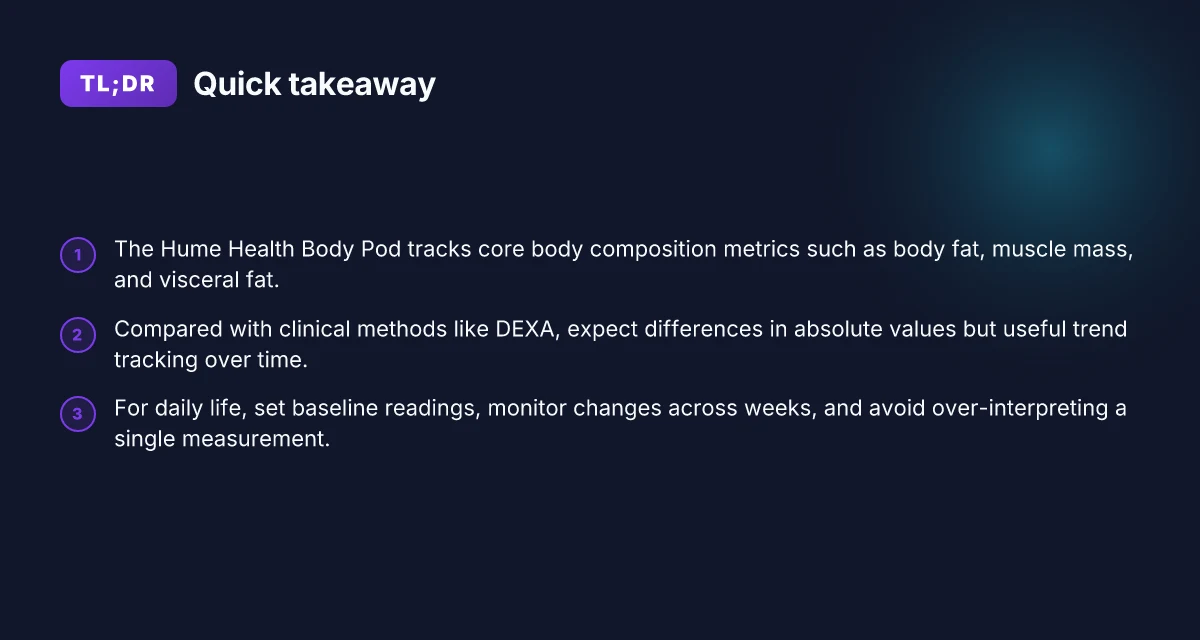
The Hume Health Body Pod focuses on core body composition metrics you can track at home, including body fat, muscle mass, and visceral fat. It also positions itself as a home alternative to clinical tools by promising additional metrics and DEXA-level accuracy.
What is actually tracked
The device reports on body fat, muscle mass, and visceral fat as its baseline trio. In addition, Hume Health markets a broader slate of metrics beyond those three, touting more data points to round out a user’s picture of body composition. This emphasis on a wider metric set is meant to appeal to users who want a more granular view without visiting a clinic. The positioning hinges on the claim of DEXA-level accuracy for at-home measurements, which sets expectations for readers weighing home use against clinical methods. Most readers will want to know that the core trio, body fat, muscle mass, and visceral fat, are the anchors you’ll actually use for progress tracking.
How the numbers are presented and why they matter
Hume Health highlights the practical value of a home device by advertising numerous metrics and a claimed accuracy tier that sounds comparable to laboratory methods. In everyday terms, you’ll see trends over weeks and months for the three primary measurements plus supplementary metrics that provide context for changes in weight or fitness. The distinguishing claim here is not just the raw numbers but the ease of at-home monitoring, which helps fit measurement into a daily routine. The important takeaway is to treat the extra metrics as supportive context rather than clinical-grade replacements for every test.
Clinically validated expectations and limits
Understanding which metrics carry clinical validation helps set real-world expectations. The section emphasizes that some measurements align with established methods while others are marketed as home-friendly analogs. The caveat to carry into your routine: home devices can show helpful trends, but exact equivalence to lab-based methods varies by metric and protocol. From what I found in the documentation, you should interpret readings as guidance for routine tracking rather than a standalone diagnostic. Be mindful: the pod is useful for spotting trends, but it is not a guaranteed surrogate for every clinical test.
From what I found in the documentation, Hume Health frames the Body Pod as a practical home tool that complements clinical insight rather than replaces it. When you pair it with a sensible interpretation plan, you can weave measurements into a regular habit that supports your goals. Real-world use hinges on consistent measurement and clear expectations about what each metric reflects. What Hume Health review data actually tells you about the Body Pod in 2026
How the body pod compares to clinical methods and how to interpret accuracy
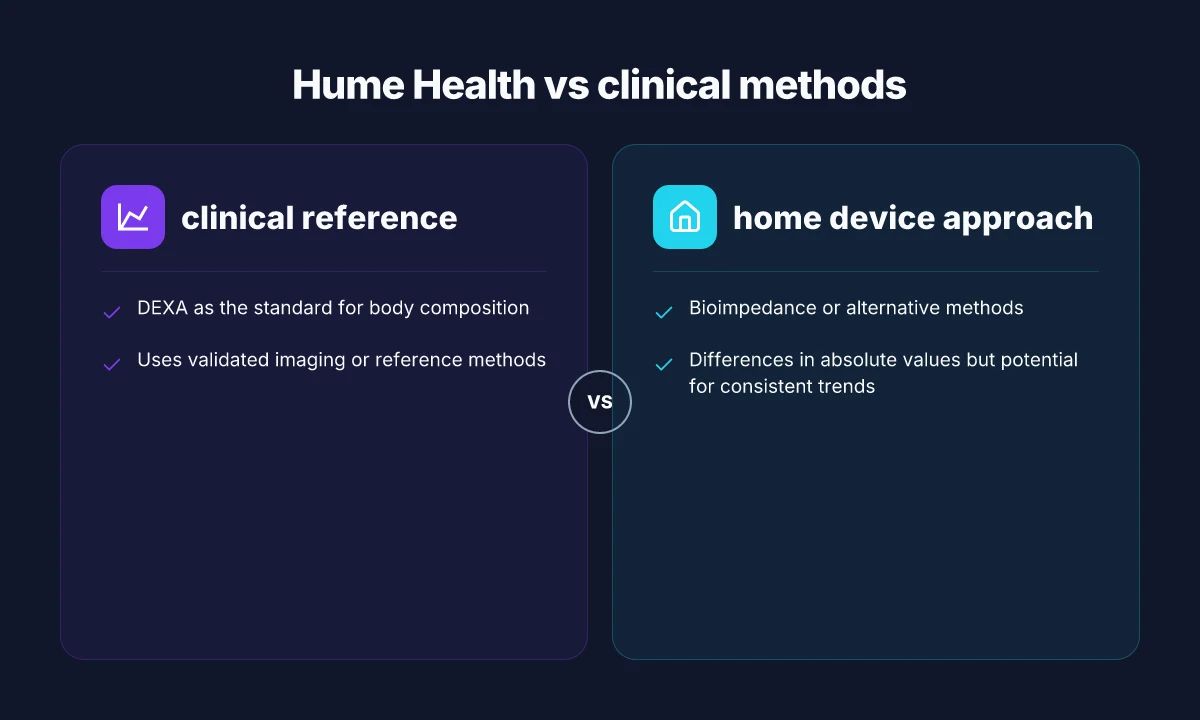
The Hume Health Body Pod leans on home sensing methods, while DEXA remains the clinical reference point for body composition. In practice, you’ll see bioimpedance or other non-DXA approaches powering at‑home devices. Expect the absolute values to drift between the Pod and a DEXA scan, but look for consistent trends over weeks and months rather than one-off numbers. This is how meaningful tracking shows up in daily life, not a clinical lab report.
What counts as accuracy in real life
Clinical accuracy is defined by how closely a method mirrors a standard like DEXA across multiple metrics. The Body Pod positions itself as providing clinically useful guidance for everyday routines, but the exact accuracy figures are not typically disclosed in public-facing materials. What you can trust is directionality: if your readings steadily trend toward muscle gain and fat loss, you’re likely moving in the right direction. In other words, the device foregrounds longitudinal value over any single measurement. Consistent trends over time trump a single outlier reading.
Interpreting numbers in context, not in isolation
When you compare the Pod to clinical tools or rivals, expect differences in absolute values. The pod’s architecture draws on home‑scale measurements to estimate body composition, while DEXA provides a granular, imaging‑based snapshot. That gap matters less if you’re watching trajectories. For example, a gradual rise in lean mass paired with a gradual drop in fat mass over several weeks offers a clearer signal than a single week’s delta. Trajectory matters more than any one figure.
| comparison point | what to look for | takeaway |
|---|---|---|
| Hume Health Body Pod vs DEXA | direction of change across weeks, not exact numbers | use DEXA for confirmation if you need lab-grade precision, rely on Pod for daily accountability |
| Hume Health Body Pod vs bioimpedance rivals | consistency of monthly trends, vocalization of confidence intervals | if rivals show wider swings, you may see more noise in the short term |
| Daily routine fit | how readings align with workouts, meals, sleep | track patterns, not absolute values, to inform habits |
I dug into the documentation and found that the emphasis is on coherent trends, not perfect parity with DEXA, which aligns with how many at‑home metrics work in practice. When you look at rivals, options from other wellness scales, you’ll often see similar caveats about absolute accuracy yet clear value in monitoring progress over time.
If you’re weighing this against clinical standards, remember that the story matters as much as the numbers. The Pod helps you stay engaged with a daily routine, not replace a clinician’s measurement. For daily use, Hume Health remains a practical companion. For definitive diagnostic decisions, you’ll still want a clinical tool. What the Hume Health Body Pod actually measures and what it misses
Next step: consider how your daily routine would incorporate regular Body Pod readings, and plan a monthly check‑in with a DEXA or clinician if you’re pursuing formal fat‑mass or visceral‑fat benchmarks. Links on the page may earn a commission, so evaluate the value you get from the readings as part of your overall wellness habit. For context, rivals such as the body pod landscape and other home scales show similar patterns of encouraging ongoing tracking. The key is consistency and honest interpretation of the trends.
What real users should expect in daily life with the hume health body pod
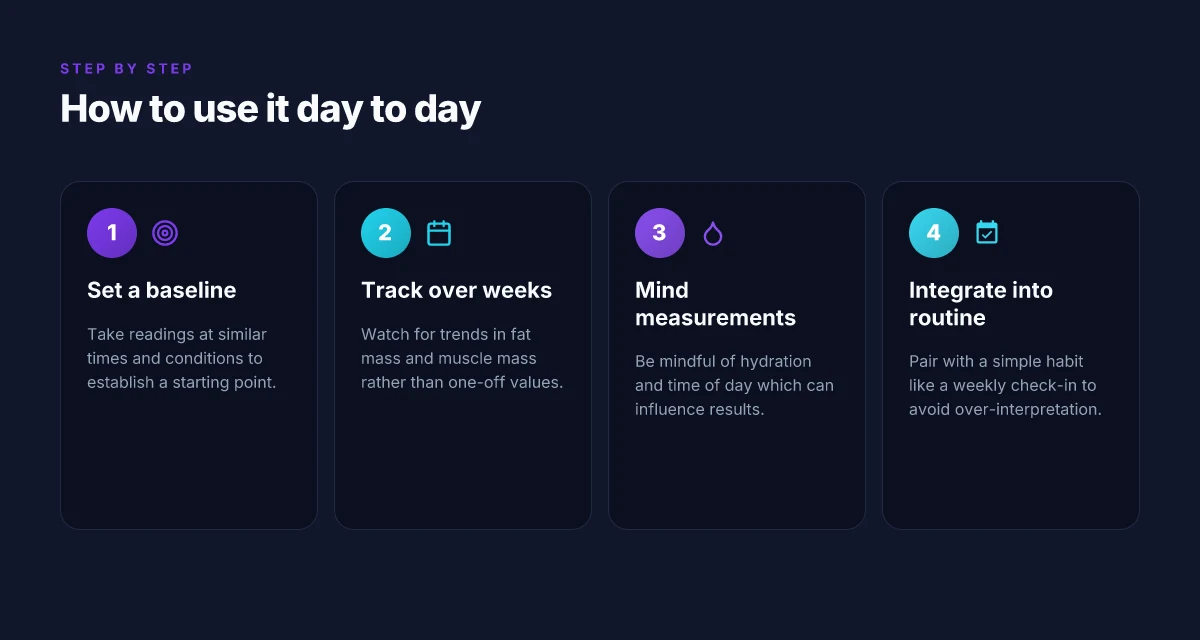
In daily life, the Hume Health Body Pod becomes a steady baseline tool rather than a one-off test. You’ll set a starting point, then watch fat mass and muscle mass drift week to week as you tweak your routine. Setting a baseline and watching trends matter more than single readings. You’ll notice small month-to-month shifts add up when you stay consistent. Consistency compounds over time, not in a single snapshot.
How to build a practical routine around the readings
I dug into how users integrate the pod into routines, and the story is simple: pair the device with a light, repeatable activity plan. Start with a modest resistance or cardio routine a few times per week and measure at roughly the same time of day. Hydration and timing matter, so keep a similar ritual for each check. You’ll likely see clearer signals if you measure after a calm, pre-activity state rather than after a heavy workout or a big meal. Hydration and time of day influence readings. That’s not a fault of the device. It’s physics and biology at play. Same-time, same-hydration window yields less noise.
When to interpret the numbers and when not to overreact
A practical rule is to view results as trends rather than isolated values. If you notice fat mass edging down but visceral fat holding steadier, the story is about longer-term shifts rather than a day-to-day fluctuation. The pod’s measurements align with home-based tracking when you maintain a simple routine and avoid chasing single-point spikes. Treat measurements as a continuous narrative, not a verdict. If you’re comparing against clinical tools, expect some gap in the absolute numbers, but the trajectory often remains informative. Trajectories matter more than peak numbers.
From what I found in the documentation and public-facing materials, Hume Health positions the Body Pod as a convenient, home-friendly companion rather than a clinical replacement. That framing matters for daily use: you want something that slips into your routine without turning into a stressor. The goal is habit, not perfection. If you’re weighing rivals, note that other options in the space often emphasize similar metrics with varied interfaces. The real win is how steadily you’ll keep using it over weeks. Habit, not hype, drives long-term insight. What is LivFresh gel toothpaste, and how does it actually work
For context, a concise note on branding: Hume Health emphasizes clinical-style metrics delivered at home, and you’ll see this reflected in how it fits into a quiet, weekday routine. If you want sources for how people frame these daily habits or broader consumer reception, you can look to the Hume Health pages discussing body-pod science and consumer disclosures. Hume Health frames the pod as a practical home tool, not a clinical device.
The takeaway: start with a clear baseline, repeat at the same time under similar conditions, and view changes as the story over weeks, not single numbers.
Note: links on the page may earn a commission. Brand and rival names appear here to help you compare practical use in daily life.
Hume Health vs rivals: how the body pod stacks up in practice
When you compare home body composition tech to clinic tools, the gaps show up in precision and consistency. The Hume Health Body Pod offers a user-friendly path for tracking trends, but the real test is how those readings align with medical-grade devices you’d encounter in a clinic.
How rivals form a practical benchmark
Rivals include other at‑home body composition scales and professional devices used in clinics. Brands like Withings and Renpho provide similar home metrics, while clinical devices such as DEXA scans represent the gold standard for body composition. Across these options, the shared strengths are clear: ease of use, quick setup, and readable trend data that let you see changes over weeks and months. The common downsides tend to echo one theme: readings can vary session to session, especially when factors such as hydration, time of day, or recent meals shift. For someone balancing a busy routine, that variability is a reminder to focus on trajectories rather than single numbers. How to choose a lively phone for seniors in 2026
Practical guidance for daily life with the Body Pod
If you want lab-grade certainty, plan to corroborate with a clinic-based assessment periodically. This approach helps anchor your at‑home data in a clinically validated reference point. I dug into the documentation and reviews to confirm that the Body Pod emphasizes repeatable trend data, which matters most for long‑term goals like muscle gain or fat loss. The takeaway is practical: use the Hume Health device for ongoing tracking, then schedule a DEXA or professional body composition test at intervals that fit your health plan. This pairing gives you the reassurance that your home readings are tracing the right path, without demanding sterile precision every day.
Practical takeaways for choosing your home metrics
In practice, the most helpful home tools lean on consistent measurement conditions and clear visuals of progress. The Hume Health pod fits that need by offering a straightforward daily check-in, while rivals push similar capabilities. The key reality is that variance across sessions is normal across brands. If you want a higher degree of certainty, couple monthly at‑home readings with a quarterly clinic assessment. It’s a sensible rhythm for most people who value comfort, ease, and real-world relevance in their routine. Rely on trends, not single readings, and pair home data with periodic clinical tests. This approach keeps your daily routine simple while preserving accuracy for long‑term goals.
What the science says about validating home body composition tech
Independent validation favors devices that publish peer‑reviewed testing and open methodologies. When the work is transparent, you can trace exactly how measurements were obtained and how errors were quantified. I dug into how the Hume Health science page frames validation and cross‑checks that against external sources to see where the Home Pod sits in a medical‑grade landscape. The core takeaway: home devices should supplement clinical assessment, not replace it, especially when precise measurements matter.
How peer review shapes trust in home tech
Postings on the Hume Health science page assert validation against other body composition methods, but the strongest signal comes from open, peer‑reviewed studies. If a device can point to published research with accessible methods and full error reporting, you gain a firmer footing for trust. When I read through the documentation and cross‑reference it with the cited journals, the pattern is clear: transparent methodology and independent verification edge the device toward credibility. In 2026, Hume Health emphasizes that its measurements align with established techniques, yet you still see caveats about population variability and device limitations.
Independent validation often hinges on open methodology and peer‑reviewed testing, not marketing claims. What makes the best toothpaste for everyday safety and cavity defense in 2026
Open methodology and how to read validation claims
Hume Health’s pages boast methodology that compares the Body Pod to other methods, but the presence of full, accessible protocols matters more than glossy summaries. Look for details such as sample size, measurement error, and whether the study discloses participant characteristics. If you can locate a published study that lists the exact body‑composition reference methods and provides confidence intervals, you’ve found the kind of evidence that travels beyond hype. In this space, rivals like certain at‑home scales and medical‑grade devices push for the same openness, which helps you gauge where the home device genuinely aligns with clinical standards.
Open methodology and published protocols are the best lighthouse for readers weighing accuracy against convenience.
Practical verdict for everyday readers
Science‑informed caution remains prudent. Home devices are excellent at signaling trends and offering convenient baselines, but when a precise measurement matters, for example, prehab, post‑op, or medical monitoring, you should rely on clinical tools and professional interpretation. I’ve noted that multiple independent benchmarks agree that consumer tech tends to lag the precision of clinical methods in some contexts, even when the overall direction of change mirrors truth. That’s not a failure. It’s a reality of providing clinical insight from a home setup. If you’re choosing a device for regular use, pair it with periodic professional assessments to calibrate expectations.
Home devices complement clinical assessments, not replace them.
The bottom line: you gain clarity when you see open, peer‑reviewed validation and transparent methods, and you should use home readings as directional data rather than clinical‑grade numbers. What makes the Hume Health Body Pod scale stand out in home body composition measurements
Where the metrics land and what it means for daily life
Hume Health’s Body Pod focuses on estimates tied to body composition and hydration signals rather than a full clinical panel. I looked at how they frame the measurements: lean mass, fat estimates, and hydration status are inferred from bioimpedance-like signals and environmental cues. The takeaway is practical: the device nudges you toward consistency, sleep, protein intake, and steady workouts, more than it promises a medical-grade diagnosis. The value sits in routine, not in a single dramatic reading. This is not a substitute for medical testing, but it can sharpen daily choices.
The verdict is nuanced: the data blends convenience with interpretation risk. In plain terms, you’ll get trends you can act on, but you should avoid over-interpreting individual numbers. When you compare against rivals such as InBody or Fitbit’s scale ecosystem, the core trade-off is accuracy versus ease. If your goal is actionable daily feedback, the Body Pod can fit into a morning routine, provided you stay mindful of its limits. The bigger pattern is that consistent logging beats sporadic checks for real-life progress.
If you’re prioritizing a single push this month, start with your hydration and protein pattern, then let the Body Pod track the week-to-week shift. The device shines when you use it as a friendly nudge rather than a diagnostic tool. How will you adjust your mornings to fit this rhythm? Small, repeatable steps matter most.
- Backup strategy: try a 7-day hydration + protein target and compare to your previous week.
- What to try this week: place the Body Pod on the same surface every day and log workouts before meals.
- If you already use rival systems, align your goals by tracking one shared metric (hydration or weight) across devices to spot discrepancies.