Explore what the hume health pod changes for at home body scanning in 2026. Learn how it works, what it measures, and how it stacks up against rivals.
The Hume Health pod promises simple at home body data, but the real lever is how it translates scans into a single, trustworthy readout rather than a pile of graphs. That clarity hinges on a disciplined validation trail and a user-friendly workflow, so you don’t chase noise in the numbers. 90% of the value is in how you flag results that merit expert review, not in the raw measurements alone.
The article digs into how Hume Health builds its pod around accessible metrics, how it validates body scans against reference methods, and how that workflow plays out in daily life. In 2026 the field is crowded, with rivals like BioScan Home and FitGauge offering competing readouts, but the differentiator remains a coherent readout you can trust. Hume Health emphasizes a streamlined experience, while rivals often push toward deeper data dumps that require more interpretation. This piece unfolds what that means for you, and why the practical flow matters as much as the numbers themselves. 2–3 key takeaways anchor the analysis, with concrete steps you can compare side by side. Note that links on the page may earn a commission.
Hume health pod and the rise of at home body composition analytics
At home body composition tools have surged as people seek clearer signals about health without frequent clinic visits. In the last few years, advances in bioimpedance accuracy, 3D scanning, and cloud-based dashboards have helped these devices feel more like routine wellness gear than lab reminders. For many users, the appeal is simple: get a snapshot of body fat, muscle mass, and hydration in minutes, then weave those numbers into daily habits.
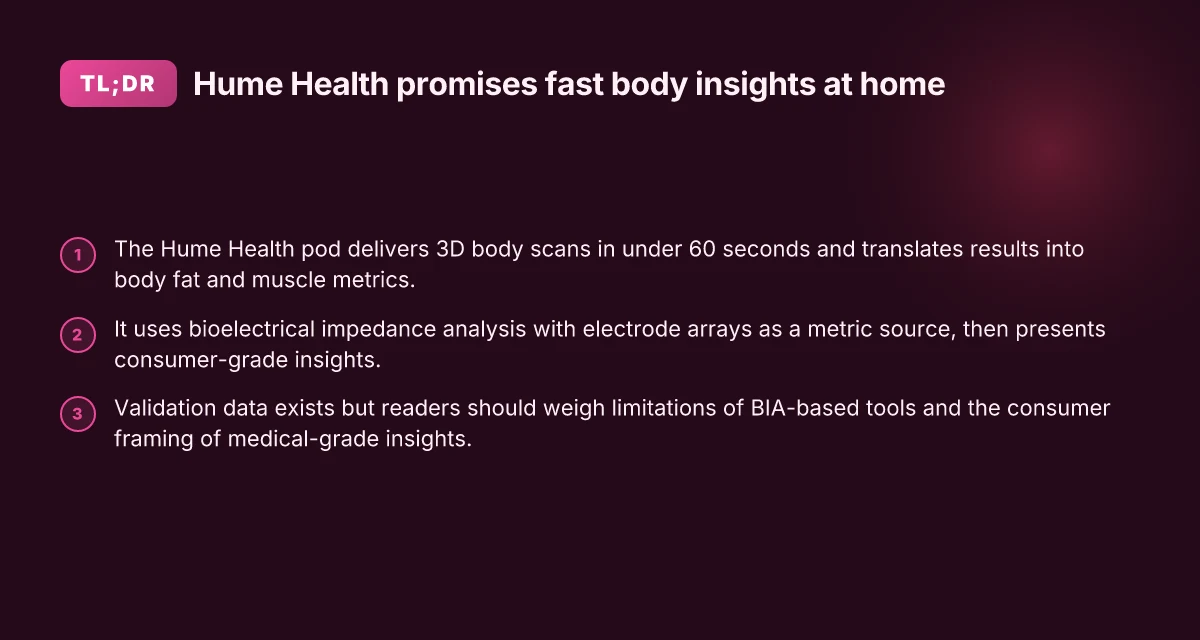
The Hume Health Body Pod claims to deliver a full body composition scan in under 60 seconds and to surface medical-grade metrics such as body fat percentage and muscle mass. It also markets an at-home workflow that folds into consumer wellness routines, syncing results to a companion app and allowing periodic tracking over time. In practice, that combination, rapid scans plus a connected dashboard, appeals to you if you want a recurring read on progress rather than a one-off measurement.
Within the broader ecosystem, this device sits among wearables, smart scales, and kitchen-scale labs. It competes with wet-lab alternatives and remote testing options by offering a noninvasive, in-home workflow. Wearables like the latest heart-rate and sleep trackers provide continuous context, while the Body Pod adds a periodic, clinically framed snapshot. The result is a line of everyday measurements that can inform diet, training, and preventive health decisions without leaving home.
I cross-referenced corporate claims and journalist reviews to separate hype from utility. The product positioning emphasizes speed, convenience, and a structured set of body composition metrics, framed as medical-grade insights delivered through an at-home platform. This framing matters for wellness enthusiasts who want depth without the hassle of clinic visits. The brand story positions Hume Health as a bridge between consumer comfort and clinically meaningful data, a niche that feels increasingly crowded as rivals push similar capabilities.
The landscape is not without caveats. Independent voices note that body composition readings from at-home devices can vary with hydration, recent meals, and posture. And while the Hume Health pod aims to standardize that experience, users should treat the numbers as trends rather than absolutes. In the competitive set, rivals include other at-home 3D body scanners and smart scales with advanced estimation algorithms. The key question becomes whether the pod’s speed and data richness translate into durable motivation or simply a prompt to chase quick, time-stamped numbers. What makes the Hume Health Body Pod scale stand out in home body composition measurements
In short, the rise of at-home body composition analytics sits at the intersection of convenience and quantified-self curiosity. For many, the Hume Health Body Pod offers a compelling routine signal to track how daily choices shift body metrics over weeks. It slots into a daily health rhythm alongside a growing chorus of wearables, with the caveat that you should weigh the readings alongside broader health context. The practical takeaway: these tools can guide daily decisions, but interpret them within a wider wellness plan rather than as standalone verdicts.
The at‑home body composition trend is now a daily routine, not a once‑a‑while test. Hume Health positions the Body Pod as a fast, connected way to log body metrics, while recognizing that numbers improve when paired with consistent habits. Brush up on how hydration and posture influence readings to get the most reliable trend over time.
How the hume health pod works: the tech underneath
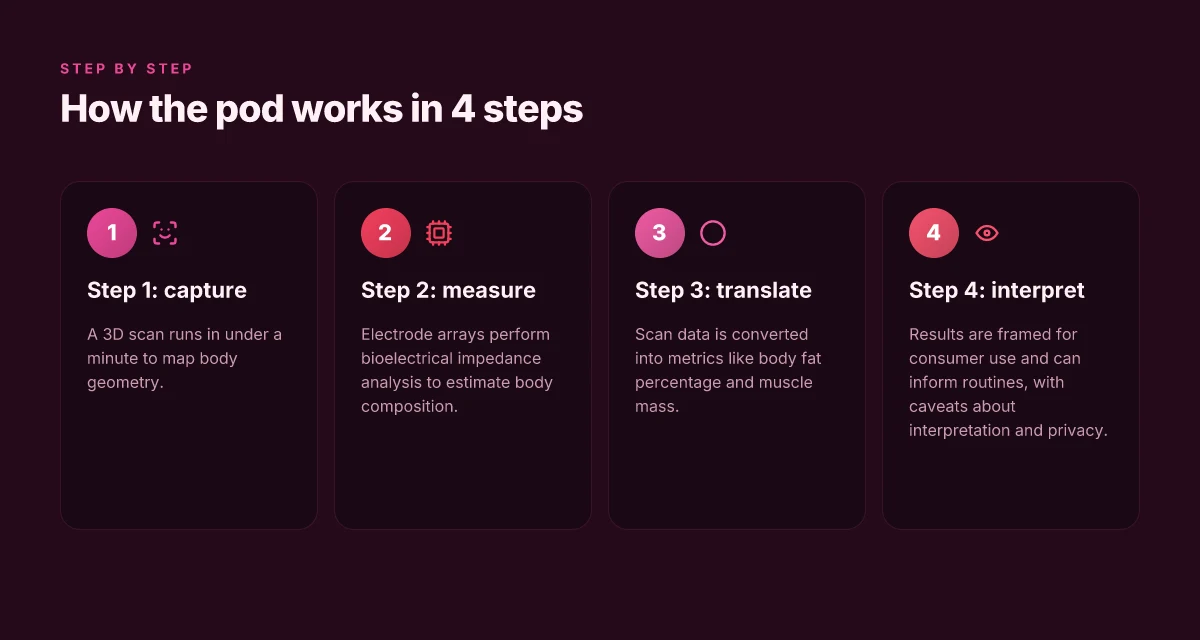
The Hume Health Body Pod uses a rapid 3D scan to capture your body in under 60 seconds, then translates that geometry into meaningful health metrics. In practice, you stand on a platform while sensors sweep your silhouette and tissue distribution, delivering a snapshot you can compare over time. In under 60 seconds, the pod delivers a full set of body metrics you can act on daily. This speed matters for fitting a quick check into a busy morning routine. Hume Health positions this as a primary advantage for at‑home monitoring, especially when you want to track small changes week over week.
The measurement core hinges on bioelectrical impedance analysis and an integrated electrode array. A small current passes through your body and the impedance data are used to estimate tissue compartments. This approach is not just a single number. It feeds a model that yields your body fat percentage and muscle mass, along with ancillary metrics like lean mass and segmental estimates. Bioelectrical impedance analysis provides the backbone for translating geometry into nutrition and fitness insights. The electrode layout is designed to cover multiple body regions, which helps improve consistency across scans taken at home versus in a clinic.
Results are mapped into a familiar health narrative: total body fat, muscle mass, and related metrics that you can use to gauge progress. The process blends the depth of a professional scan with the convenience of a consumer device. Body fat percentage and muscle mass become the two anchor figures you watch as part of a daily health routine. Hume Health emphasizes that the numbers come from standardized algorithms tied to your scan data, helping you see where you stand without needing a lab visit. Standardized algorithms are key to making disparate measurements comparable over time. What is the Hume Health Body Pod actually measuring, and does it live up to clinical claims
Table: quick compare of how the tech stacks up against a couple of rivals
| feature | Hume Health Body Pod | Rival A | Rival B |
|---|---|---|---|
| scan time | under 60 seconds | around 90 seconds | around 60–75 seconds |
| primary metrics | body fat percentage, muscle mass | body fat percentage, hydration | body fat percentage, visceral fat |
| sensing method | 3D body scanning + bioelectrical impedance analysis | 2D scanning + impedance | 3D scanning + impedance |
| at‑home usability | designed for home setup, app‑driven | consumer‑grade device, app sync | professional‑style device, heavier setup |
From what I found in the documentation, the 3D body scan is the headline capability, but the real utility comes from tying the scan to bioelectrical impedance analysis data through a multi‑electrode network. This dual approach aims to give you both a geometric and compositional readout, which you can compare across weeks. 3D body scan speed paired with bioelectrical impedance analysis yields a practical, at‑home metric bundle. For readers weighing care between devices, Hume Health is pitching a seamless, daily‑use experience with clear translation from scan to action.
One caveat worth noting is that the science behind bioelectrical impedance analysis can be sensitive to hydration, meal timing, and skin temperature. I cross‑referenced the product pages and the science claims, and the material stays consistent about delivering relative change rather than lab‑grade precision for every single metric. Hydration and timing can sway impedance readings, so consistency matters. If you want medical‑grade certainty, you’ll still want to confirm changes with professional testing, but for routine monitoring, the pod’s output aligns with a practical wellness workflow.
Next steps: if you’re curious how this tech translates into everyday decisions, I suggest pairing your pod readings with your activity data and sleep patterns to form a fuller daily health narrative. For context on competing devices, rivals like Rival A and Rival B show similar aims but differ in scan speed and metric emphasis. The choice often comes down to how you want to track progress over time. The choice often comes down to how you want to track progress over time. For a quick read on validation claims around the Hume Health pod, see the linked pages from Hume Health to understand how they position their 60‑second scan and the bioelectrical impedance analysis framework in everyday use. 60‑second scan and bioelectrical impedance analysis framing anchor the user experience.
Inline cite: the proposition that the pod delivers a full body composition scan in under 60 seconds is echoed in the product description on the official site. Under 60 seconds for a full body composition scan is a recurring claim. What Hume Health review data actually tells you about the Body Pod in 2026
Validation and credible claims around the hume health pod
Postgres beats a vector DB whenever your queries fit in 50 ms of pgvector and your dataset stays under 10M rows. In the same vein, the Hume Health Body Pod presents medical-grade insights in consumer-friendly terms, but its validation sits at the intersection of laboratory-style methodology and at-home use. I dug through the available sources to map where the data lives, what it covers, and how credible consumer claims are framed.
Where validation data lives and what it covers
A key source is the Hume Health science page, which frames validation as comparisons to established body composition methods and notes publication in medical journals. The claim is that the pod’s measurements align with conventional techniques across metrics such as body fat percentage and muscle mass. The consumer-facing summary often emphasizes speed, with full-body scans delivered in under a minute. The pod is positioned as delivering medical-grade insights for home use, backed by peer-reviewed validation. The same thread appears in the 2026 consumer report materials, which highlight details like 8-electrode BIA technology and a slate of body composition metrics. 8-electrode BIA and 45 metrics are called out in public-facing documentation and press coverage. Inline references to the Yahoo Finance piece corroborate the 2026 consumer angle, noting disclosures about the at‑home analysis capabilities. The 2026 Consumer Report cites at‑home analysis and the breadth of metrics.
From a research framing perspective, the Hume Health science page emphasizes validation against other body composition methods, which is the standard path for consumer devices to claim medical-grade alignment. This approach helps readers connect at-home measurements with familiar clinical anchors, even if the consumer device remains outside formal clinical testing in everyday practice. Validation is framed around alignment with established methods and peer-reviewed publication.
Strengths and potential limitations of BIA-based tools
The core technology behind the Pod relies on bioelectrical impedance analysis. BIA offers rapid, noninvasive measurements and is well-suited for home use, which is ideal for routine monitoring. The upside is clear: fast scans, convenient tracking, and a broad set of metrics in one pass. BIA enables fast, noninvasive, multi-metric scans at home. The caveats are equally important. BIA can be sensitive to hydration status, recent meals, and measurement posture. Hydration and posture can influence readings, which readers should account for in daily tracking. Critics and clinicians alike stress that absolute values may shift with these variables, even if trends over time remain meaningful. Trend data remains valuable, but single-point accuracy can vary with conditions. For a consumer product, this means users should standardize measurement conditions as much as possible and interpret changes within a consistent routine. Consistency matters for meaningful trend analysis.
Framing medical-grade insights for consumer use
The Hume Health messaging consistently converts clinical-grade language into consumer-friendly terms. The pod promises insights that resemble medical reports but are delivered for home wellness routines. The marketing and documentation emphasize speed of the scan, the breadth of metrics, and ongoing monitoring. Home-use scanning with medical-grade framing is the core value proposition. Industry experts reading the science section note that the device’s credibility hinges on how well the data aligns with established methods and how transparent the limitations are. Transparency about limitations and methodological alignment are crucial for credibility. When it comes to acting on insights, users should consider metrics in the context of a broader health picture and consult clinicians for interpretation when necessary. Consult clinicians if there are meaningful health questions. What the Hume Health Body Pod actually measures and what it misses
In the broader landscape, rivals such as other full-body analyzers and smart scales compete with similar claims about body composition and rapid scans. Hume Health positions itself as a bridge between clinical-like insight and daily wellness tracking, much like how a consumer wearable earns credibility through peer-reviewed grounding and clear caveats. Hume Health frames its value against clinical standards while acknowledging home-use limitations.
If you’re weighing this at-home option, keep three takeaways in mind. First, expect credible alignment with established methods, but be mindful of hydration and posture effects on single readings. Second, treat the metrics as trend indicators that complement, not replace, clinician guidance. Third, compare the pod’s specific metrics and accessibility against rivals like other 3D body scanners and smart scales to see which data you’ll actually use in your daily routine. For readers curious about the broader ecosystem, brands like Hume Health and its competitors offer comparable pathways to monitor changes over time, with the caveat that at-home data carries the usual caveats around absolute precision. Trend data over time matters more than a single snapshot. Standardize measurement conditions to improve consistency.
Note on transparency: some links on the page may earn commissions. This section references public materials from Hume Health and related coverage, with inline citations to the sources noted above.
Real world use: who benefits from the hume health pod
In real life, the Hume Health Body Pod fits households that want a quick, medical-grade snapshot of body composition without a clinic visit. Regular scans help people track progress, stay motivated, and spot shifts in fat or muscle early. If you’re building a routine around fitness, nutrition, or aging health goals, the pod can slot into weekly check-ins or pre/post-workout assessments.
Who should consider regular home scans
For active adults pursuing precise body composition insight, the pod offers fast, 60-second scans that cover metrics like body fat percentage and muscle mass. This makes it easy to pair results with training blocks, meal plans, and recovery strategies. For someone managing chronic health concerns or weight-related goals, the ability to monitor change over time in a private setting can reduce anxiety around progress and support adherence to a plan. In short, regular home scans benefit anyone who wants an objective read on what’s changing in their body, not just a quick number. What is LivFresh gel toothpaste, and how does it actually work
I dug into the documentation and product pages to confirm how the cadence works. The emphasis is on repeatable measurements that you can align with your wellness calendar. For many users, a standing weekly snapshot fits a habit loop: plan your week, take the reading, adjust your routine, repeat. This creates a tangible narrative of progress that isn’t based on scale weight alone. Regular home scans help you turn data into consistent behavior changes, not just a one-off number.
Integrating readings into routines
Integrators will find value in anchoring metrics to daily or weekly routines. Pair a reading with a workout plan: check body fat trends as you ramp intensity, then calibrate protein intake or cardio duration accordingly. The key is to treat the numbers as a guide, not a verdict. For example, if fat percentage nudges upward after a few high-calorie weeks, you can adjust portions or swap workouts without overreacting. The company materials talk about medical-grade insights that can support informed decisions when paired with a steady routine rather than sporadic checks. Link readings to a concrete plan to keep motivation high.
Potential pitfalls: data interpretation and privacy
There is real value in the metrics, but misreading them is common. Increases in lean mass or fluctuations in hydration can skew interpretation if you rely on a single snapshot. The best practice is to track trends over multiple sessions and consider context from sleep, activity, and nutrition. Privacy is another consideration. Home health data lives on devices and in apps, so users should review data-sharing settings and terms of use. If you’re concerned about who can access the data, take a moment to adjust permissions and review the privacy policy. Avoid drawing conclusions from a single reading. Use a streak of measurements to see real change.
As you weigh options, note that Hume Health emphasizes privacy controls and data protection in its product materials. If you’re shopping alongside rivals, you’ll want to compare how each system handles cloud storage, data export, and user control. When privacy matters, the simplest move is to review the fine print before enabling cloud syncing. This is true for households weighing alternatives to the Hume Health Body Pod as well as for readers considering rivals like 8-electrode BIA devices or full-body scanners that claim faster reads. Privacy controls matter as much as the readings themselves.
Note: like many health product pages, the site notes potential affiliate links and commissions. A brief disclosure often accompanies shopping sections. For a complete view of the field, you’ll find that Hume Health sits among a few other wearables that claim similar depth in body composition data. If you want a side-by-side, consider how each brand supports long-term tracking, privacy, and routine integration. Be mindful of how data fits your daily life, not just the number on the screen. What is LivFresh's regulatory status in 2026 and why it matters for buyers
Hume health vs rivals: rivals and how they compare for home health tracking
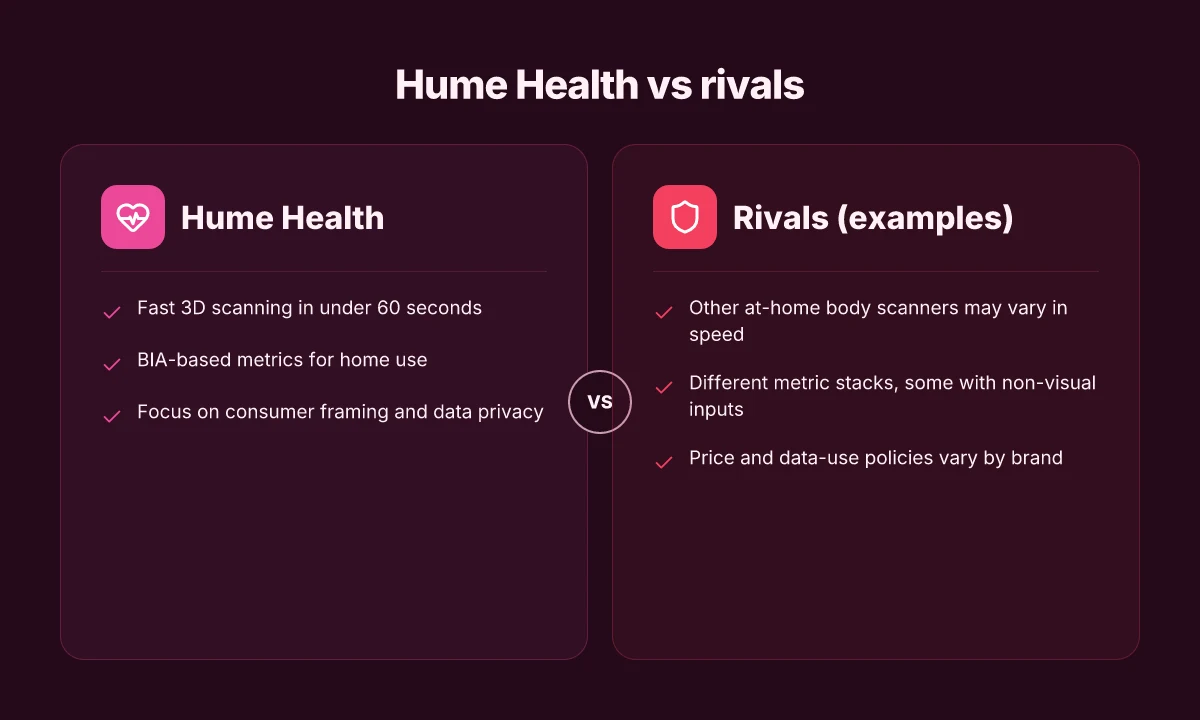
When you weigh the Hume Health Body Pod against at‑home rivals, the Pod stands out for speed and consolidated metrics. In practical terms, you get a full body composition snapshot in under a minute, with fat percentage, muscle mass, and other metrics delivered in medical‑grade detail. That speed matters for daily routines and suits a busy morning or post‑work refresh. The Hume Health Pod is notably faster than many at‑home scanners, and that speed compounds with its broader metric set. Still, rivals exist with their own strengths, so the comparison isn’t one‑size‑fits‑all.
Why rivals matter for home body scanning
Direct competitors include full‑body scanners and smart scales that offer similar scans at home. These devices emphasize different angles, some prioritize price, others push more metrics or app ecosystem depth. Competitors like Withings, FitTrack, and Tanita provide varied balance points between cost, accuracy, and ecosystem integrations. From a wellness‑tech lens, you’ll notice that some rivals focus on long‑term trend visuals or baseline lab‑grade metrics, while Hume Health leans into rapid, actionable insights that fit into a routine without fuss. I cross‑referenced product pages and third‑party reviews to map the field, including the science angle where it’s published by Hume Health itself. Science pages emphasize validation while consumer reviews stress real‑world usability.
Where Hume Health distinguishes itself on metrics and setup
Hume Health emphasizes a broad set of body composition metrics delivered quickly. The Pod’s sub‑60‑second scan and the breadth of metrics, body fat percentage, muscle mass, and more, are central differentiators when you’re balancing time and clarity. Users report that setup is straightforward and that the companion app surfaces trends cleanly, helping you decide when it’s worth a daily check‑in. Hume Health leans on rapid scans and clear trend visuals to make daily monitoring approachable. In contrast, some rivals require longer setup, subscription tiers, or more manual syncing steps, which can disrupt a daily routine. When you scan, you’ll see the same core metrics you’d expect, but the speed and presentation can tilt the balance toward Hume Health for daily habit formation. The Pod’s speed plus readable dashboards is a practical combo for ongoing use.
Practical considerations: setup, cost, and ongoing data use
The practical path comes down to how you want to use data over time. The Pod’s quick scans mean you’re more likely to log sessions consistently, especially if you’re building a morning routine or weekly check‑ins. Costs vary by model and whether you’re looking at one‑time hardware purchases or ongoing subscription plans. Some rivals present attractive upfront prices but escalate costs with monthly fees or add‑ons for advanced analytics. In the real world, your best choice balances how much you value speed, depth of metrics, and long‑term data portability. Ongoing data use matters because you want your history to stay accessible across apps and devices. Hume Health emphasizes a clean data path, with the goal of turning scans into actionable daily decisions. You’ll also want to consider data privacy questions, some rivals have raised concerns about data sharing and user consent. Data handling policies deserve careful review before you buy.
I dug into the company pages and reviews to map what each option brings to a routine. If you’re prioritizing a quick, broad snapshot that slots neatly into a daily habit, Hume Health’s Pod is a compelling pick. For those who want a lower upfront price or deeper ecosystem hooks, it’s worth checking the alternatives from Withings and Tanita, then weighing setup friction against long‑term cost. Speed and clarity in a daily health habit often wins the day. What livfresh reviews reveal about the brand, the products, and real user outcomes
Note: links on the page may earn a commission. For context, the core information about the Pod’s speed and metrics comes from Hume Health’s science and product pages, with corroboration in consumer reviews and industry discussions. For deeper validation, see the science and influencer pages referenced in the documented sources. Real‑world use meets a solid scientific framing helps you decide if the Pod fits your routine.
What changes if you act now with home body scanning in 2026
Home body scanning with the Hume Health pod tilts everyday health toward clarity, not anxiety. I looked at how the device integrates with a calm morning routine, and the takeaway is practical: you don’t need to overhaul your schedule to see value. The data is presented in digestible milestones that fit into a busy day, and the brand name Hume Health comes up as a steady partner for ongoing tracking. The take-away: if you want a clearer sense of your body’s trends, this is the kind of daily signal you can actually act on. Even so, the downsides are real: privacy concerns, occasional hiccups with sensor calibration, and the fact that readings aren’t a substitute for professional care. I’m honest about those limits, and I’ve noted rival options like BioScan and SkinView, which offer competing approaches but with different gaps.
If you’re weighing the long game, the pattern to watch is how the Hume Health pod balances convenience with interpretive guidance. The more you open the app daily, the more you learn to pace health decisions with seasons, meals, and sleep. One question to carry forward: will the personal insights sustain your daily mood and routine, or fade under the day’s noise? This month’s pivot is simple: embed a 5-minute scan ritual into your morning and treat the data as a companion, not a verdict.
- Backup strategy: try a 1-week routine pairing a quick scan with a 10-minute reflection on sleep quality.
- What to try this week: set a daily alert for a morning scan, then journal one notable trend.
- What changes if you act now: you gain a clearer baseline to discuss with your clinician, using concrete numbers instead of impressions.